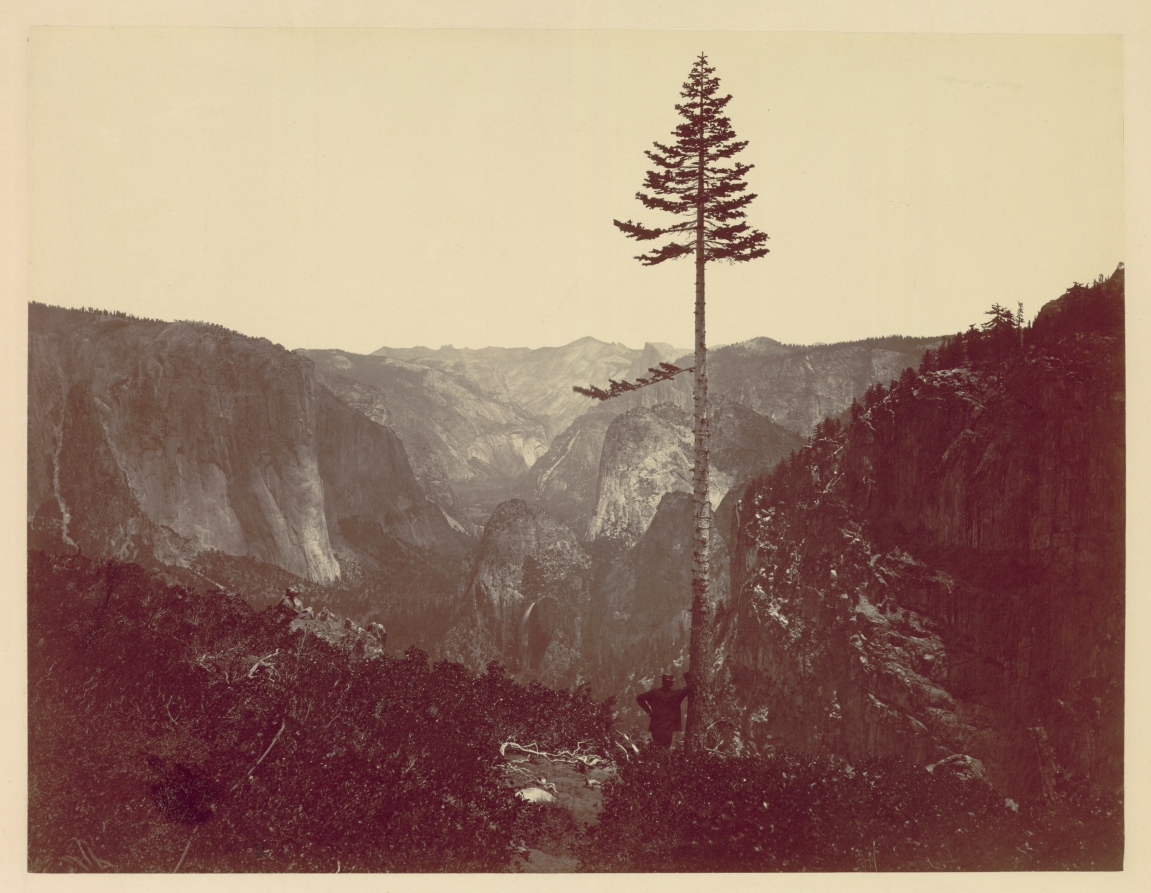
In the collection of Cleveland Museum of Art, Cleveland — check current display status with the museum.
FROM THE CLEVELAND MUSEUM OF ART’S CATALOG
In 1859, Charles L. Weed made the first photographs of the Yosemite region. Using the wet collodion process, he produced 40 stereoviews and some 20 large (10 x 14 inches) glass negatives. His pioneering photographs informed future visitors and artists of the region's scenic splendors. About five years later, in 1864, he returned to create his remarkable mammoth plate views (approximately 17 x 22 inches) of the valley. This image of Cathedral Rocks is among the best examples of Weed's ability to combine sublime subject matter with observation. With graceful precision, he captured the complex landscape, fully reflected in the mirror-like surface of the lake's calm water.
Be the first to share your thoughts.
Sign in to join the discussion.
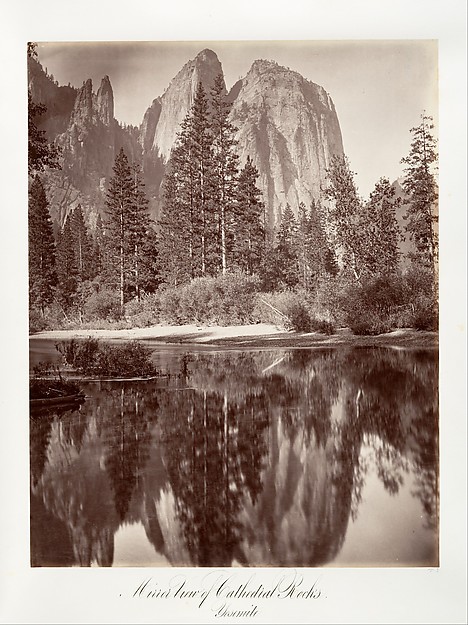 Carleton E. Watkins — Mirror View of Cathedral Rocks, Yosemi
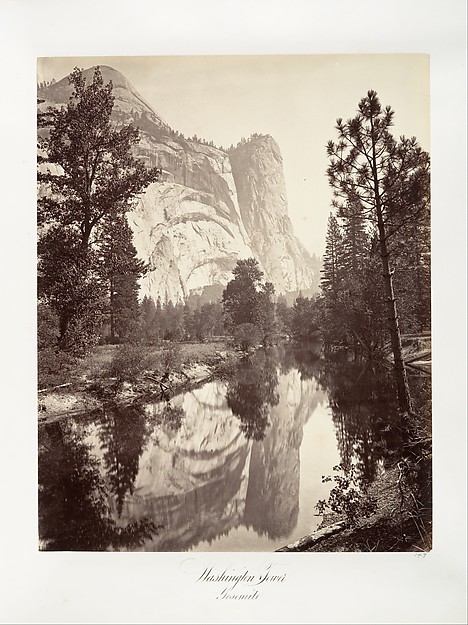 Carleton E. Watkins — Washington Tower, Yosemite
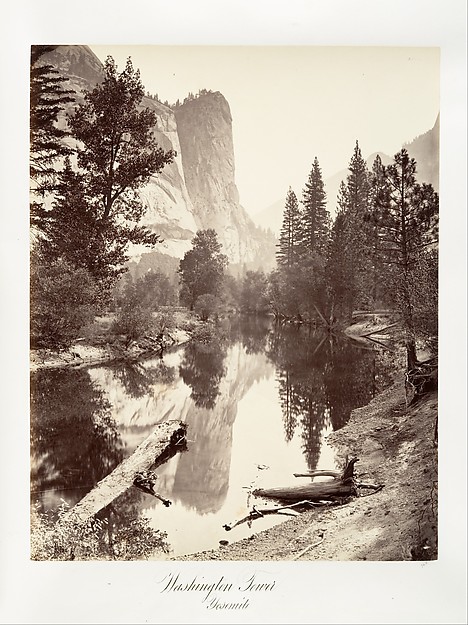 Carleton E. Watkins — Washington Tower, Yosemite
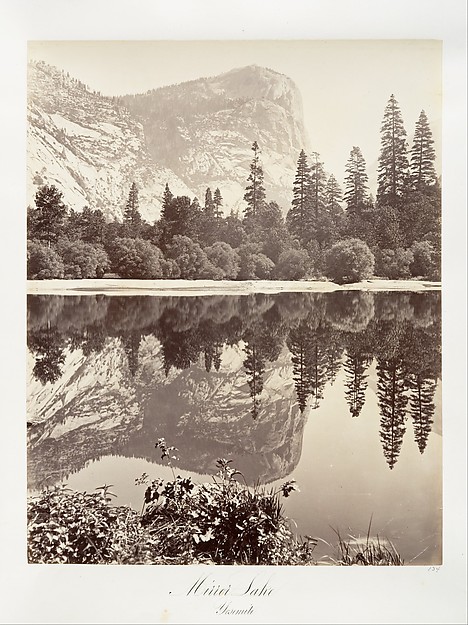 Carleton E. Watkins — Mirror Lake, Yosemite
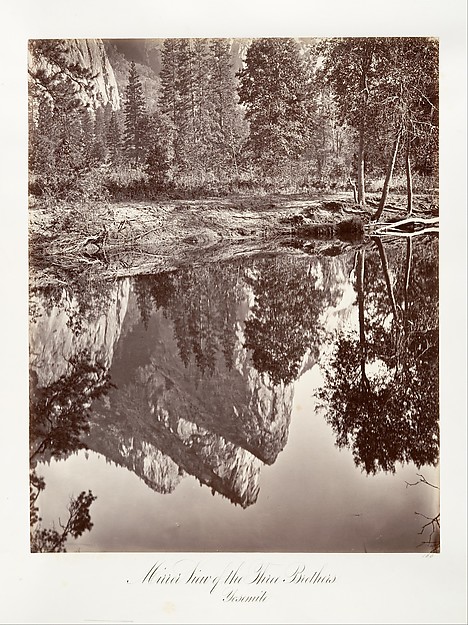 Carleton E. Watkins — Mirror View of the Three Brothers, Yos
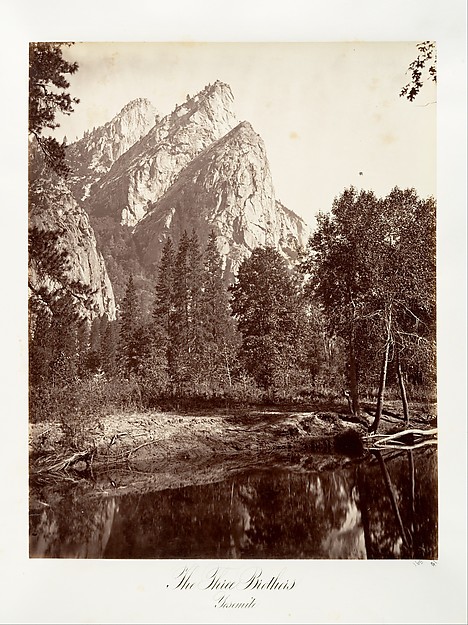 Carleton E. Watkins — The Three Brothers, Yosemite
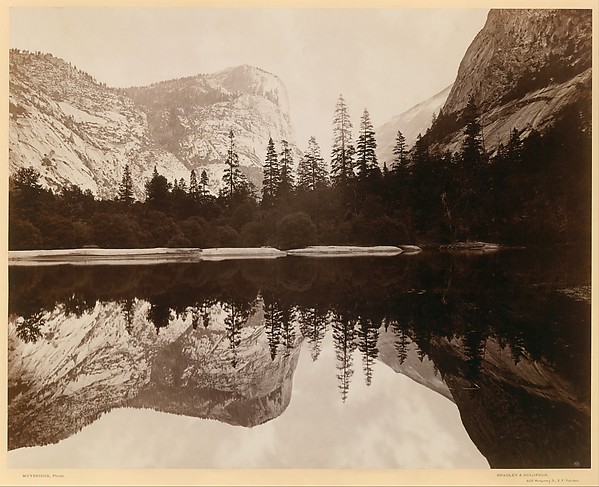 Eadweard Muybridge|Bradley and Rulofson|Henry W. Bradley — M
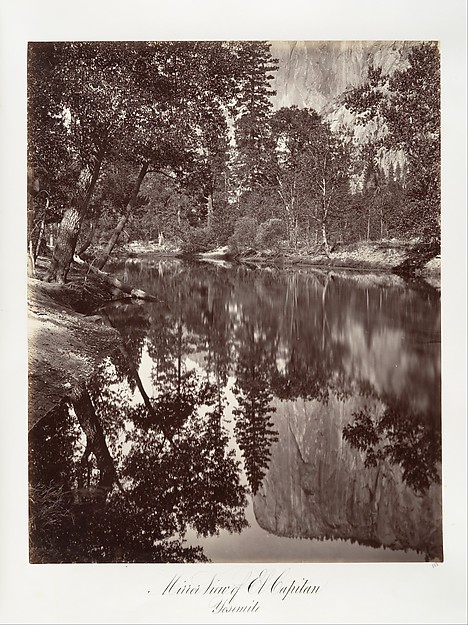 Carleton E. Watkins — Mirror View of El Capitan, Yosemite
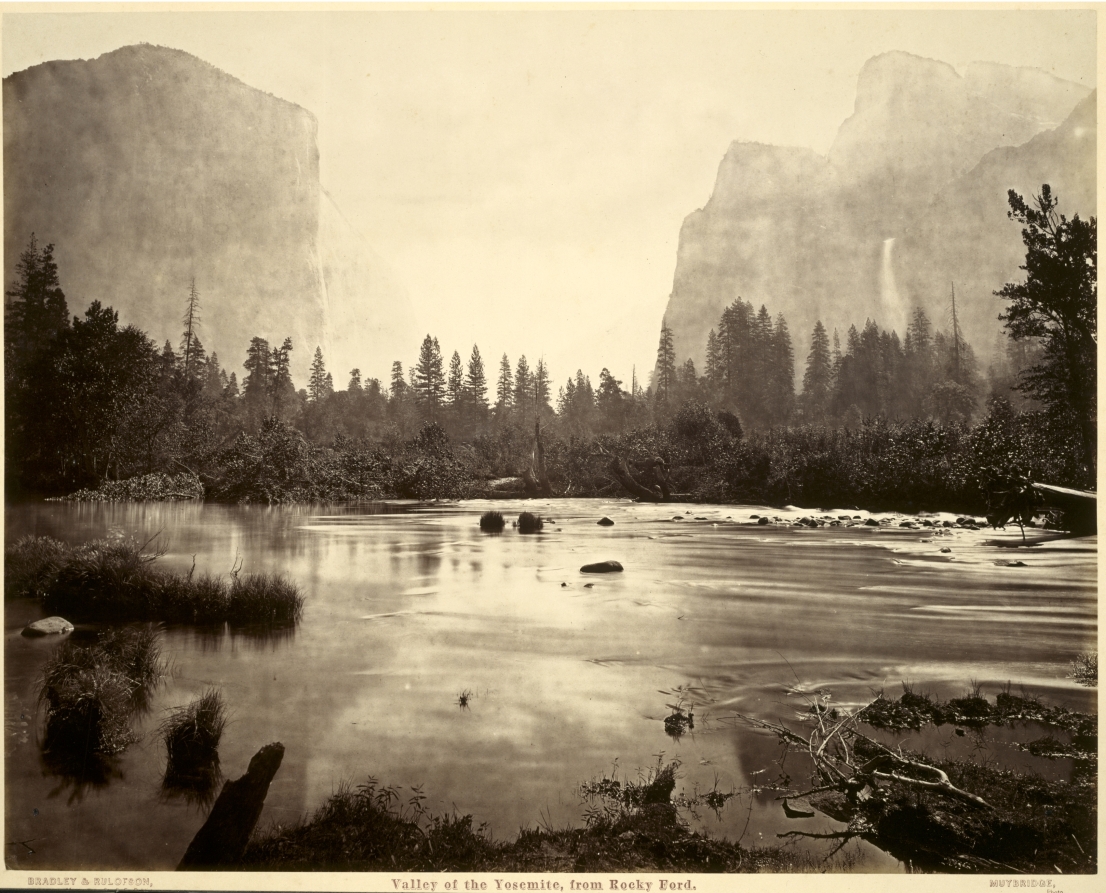 Eadweard J. Muybridge (American, 1830–1904) — Valley of the
 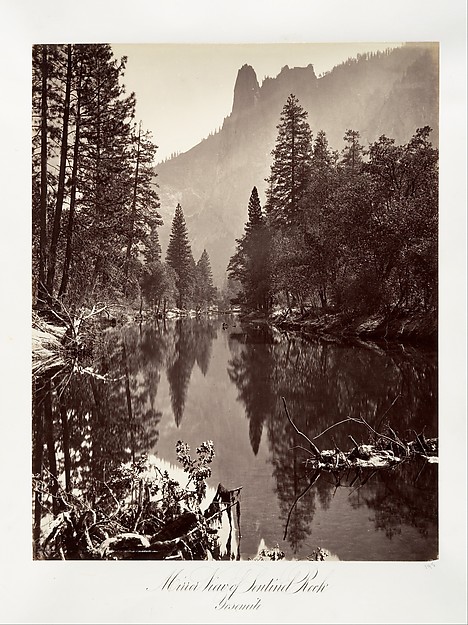 Carleton E. Watkins — Mirror View of Sentinel Rock, Yosemite
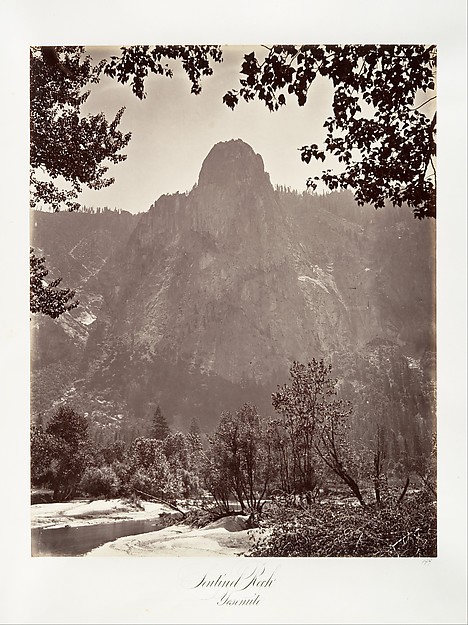 Carleton E. Watkins — Sentinel Rock, Yosemite
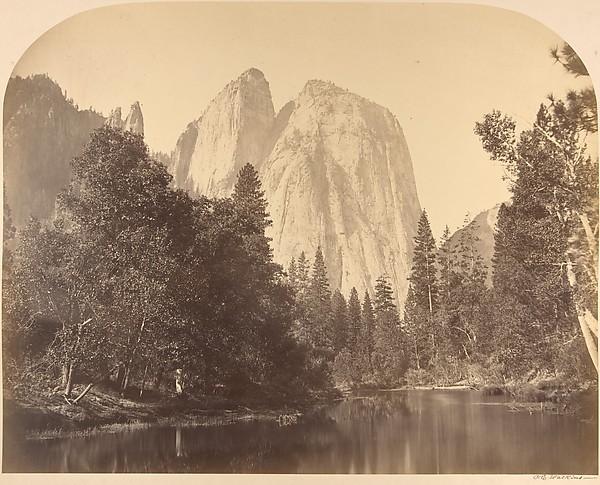 Carleton E. Watkins — Cathedral Rock, River View