Sophronia Enters the Palace of Aladin
SEE IT IN PERSON
Not currently on view
In the collection of Art Institute of Chicago, Chicago · as of July 2026
Discussion
FROM THE ART INSTITUTE OF CHICAGO’S CATALOG
This is one of a number of drawings the artist made to illustrate scenes from Torquato Tasso’s epic poem Jerusalem Delivered (Gerusalemme liberata), first published in 1581. In order to avert a massacre, Sophronia (seen at left) enters the palace of the Muslim ruler of Jerusalem to plead her Christian people’s innocence. Andrea Boscoli’s style is characterized by a heavy use of wash, with a calligraphic line that delineates form with great subtlety. He juxtaposes a plunging perspective at left with the up-close palace colonnade at right to create a sense of negative-positive visual tension.
Be the first to share your thoughts.
Sign in to join the discussion.
More by Andrea Boscoli
 Standing Academy
 Olympias, Mother of Alexander, Visited by Zeus in the Guise
  Kneeling Figure from the Back (recto); Three Half-length Stu
 Saints Peter and Paul Disputing with Simon Magus before Nero
 Annunciation
 Two Standing Female Figures (Studies after Classical Statuar
 Martyrdom of Saint Peter
 Scenes from Ancient History, after Polidoro da Caravaggio
More like this
 Giacomo Guardi — The Courtyard of the Doges' Palace
 Anonymous, Italian, 16th century — Architectural Sketches an
 Francesco Guardi — An Architectural Capriccio, with Classica
 Marco Marchetti — Design for Tomb with Canopy
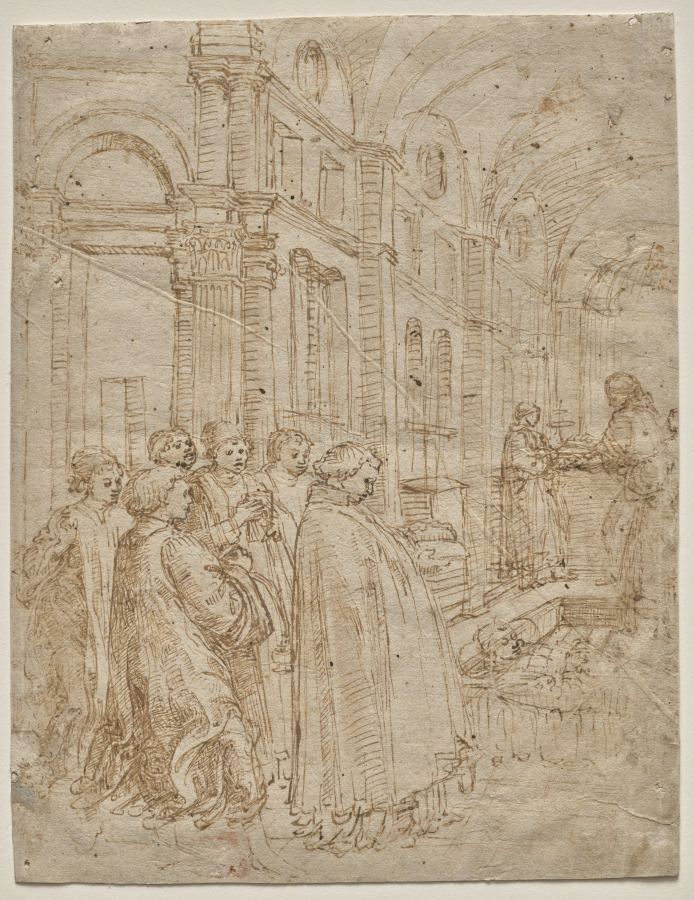 Fra Filippo Lippi (Italian, c. 1406–1469) — The Funeral of S
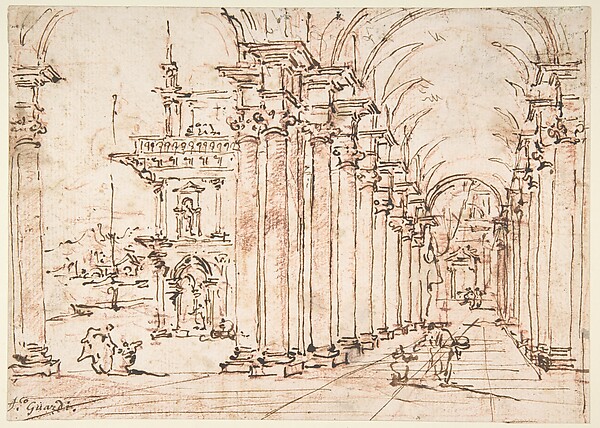 Francesco Guardi — Architectural Capriccio: Vaulted Colonnad
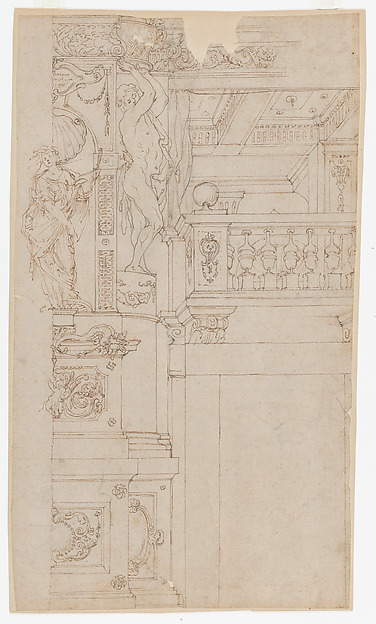 Agostino (Stanzani) Mitelli|Giacomo Chiavistelli — Studies f
 Giovanni Paolo Panini — Roman Ruins and Two Figures
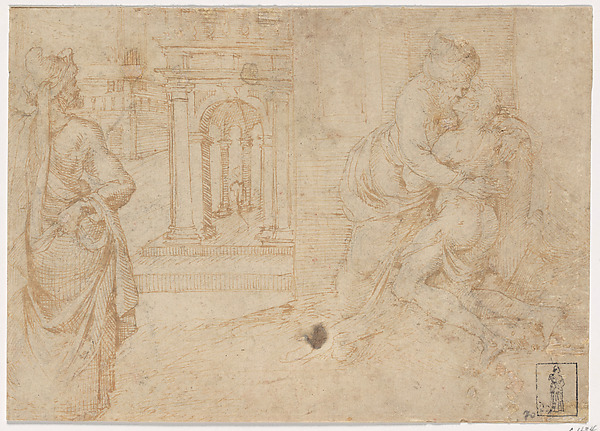 Lombardy- The Veneto — The Return of the Prodigal Son
 Anonymous, Italian, Roman-Bolognese, 17th century — Figures
  Filippo Juvarra — Architectural Study (recto); Separate Shee
 Giovanni Paolo Panini|Charles Joseph Natoire — Architectural