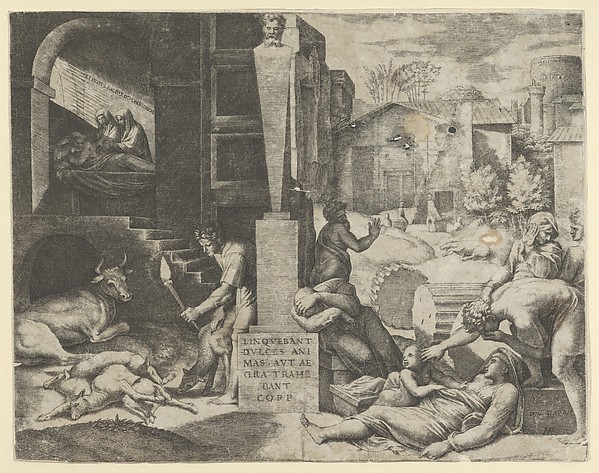
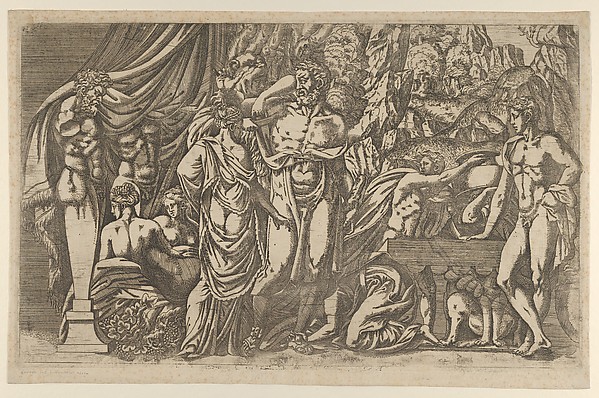
The Morbetto, or The Plague of Phrygia
SEE IT IN PERSON
Not currently on view
In the collection of Art Institute of Chicago, Chicago · as of July 2026
Discussion
FROM THE ART INSTITUTE OF CHICAGO’S CATALOG
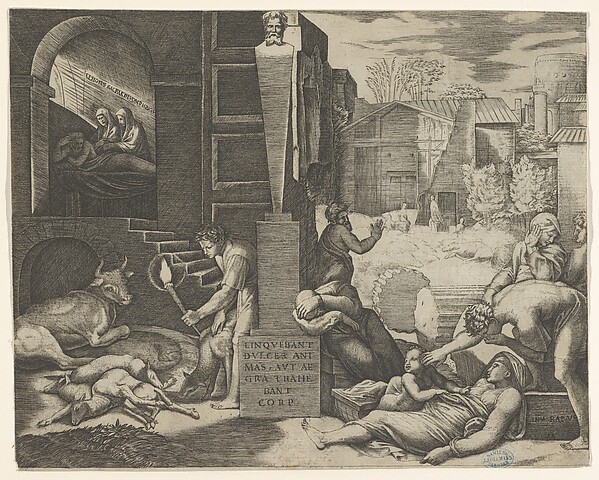
The subject of this print, as identified by the text on the central pedestal, is based on an excerpt from Virgil’s epic poem Aeneid , which follows the hero Aeneas on his flight from Troy to Italy after the Trojan War. In book three of the poem, Aeneas’s father interprets a message from the oracle of the god Apollo to mean that the Trojans should colonize the island of Crete. They build a city, which Aeneas names Pergamum, but are struck by a wretched plague, which brings a year of death to humans and animals. Aeneas then has a dream, as seen in the upper left, in which he learns that Apollo’s oracle intended the Trojans to occupy Italy, where Aeneas will eventually settle, becoming the ancestor of the Romans.
Be the first to share your thoughts.
Sign in to join the discussion.
More by Marcantonio Raimondi
 Speculum Romanae Magnificentiae: Galba, from The Twelve Caes
 Hercules, grasping Antaeus at the waist with both arms and l
 The Massacre of the Innocents (Without the Fir Tree)
 Apollo on Parnassus, Surrounded by the Muses and Poets
 Speculum Romanae Magnificentiae: Nero, from The Twelve Caesa
 Speculum Romanae Magnificentiae: Vespasian, from The Twelve
  Martyrdom of Saint Lawrence
 Two Fauns Carrying a Child
More like this
 Marcantonio Raimondi|Raphael (Raffaello Sanzio or Santi) — A
 Marcantonio Raimondi|Raphael (Raffaello Sanzio or Santi) — A
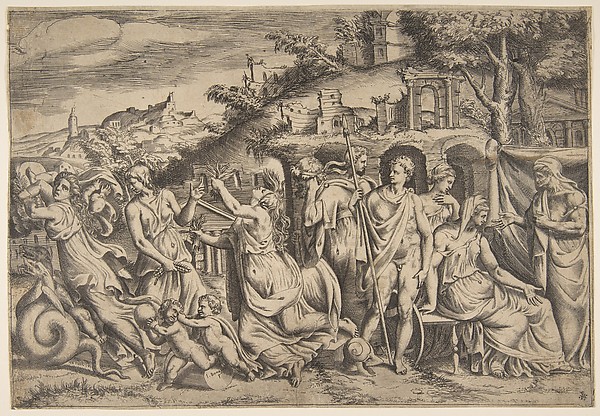 Giulio Bonasone — The story of Jason and Medea at the left s
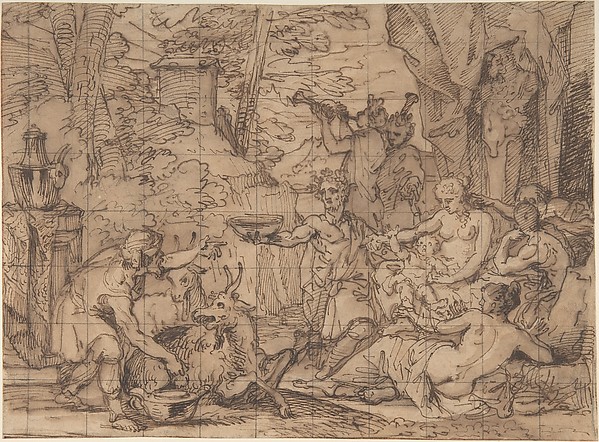 Jean-Baptiste Corneille — The Nurture of Jupiter
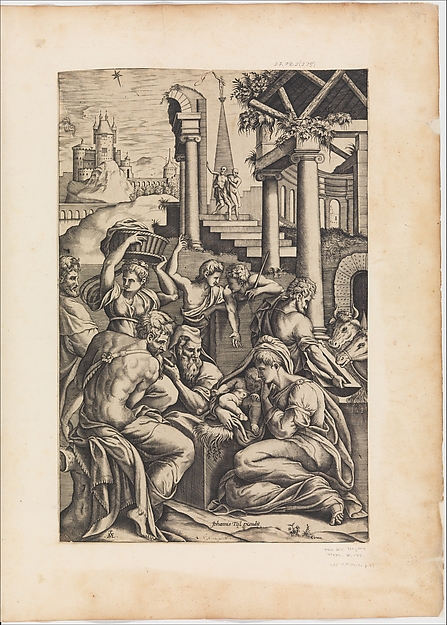 Pieter van der Heyden — The Adoration of the Shepherds
 Jacob Matham — Perseus and Andromeda
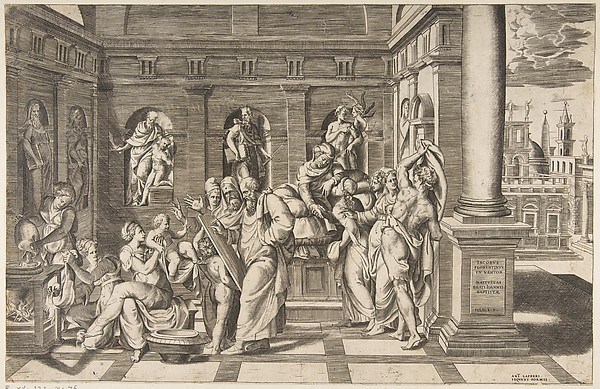 Antonio Salamanca|Giulio Bonasone — The birth of Saint John
 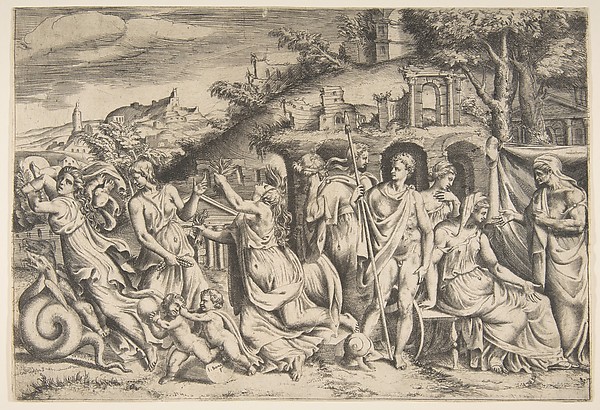 Giulio Bonasone — The story of Jason and Medea: at the left
 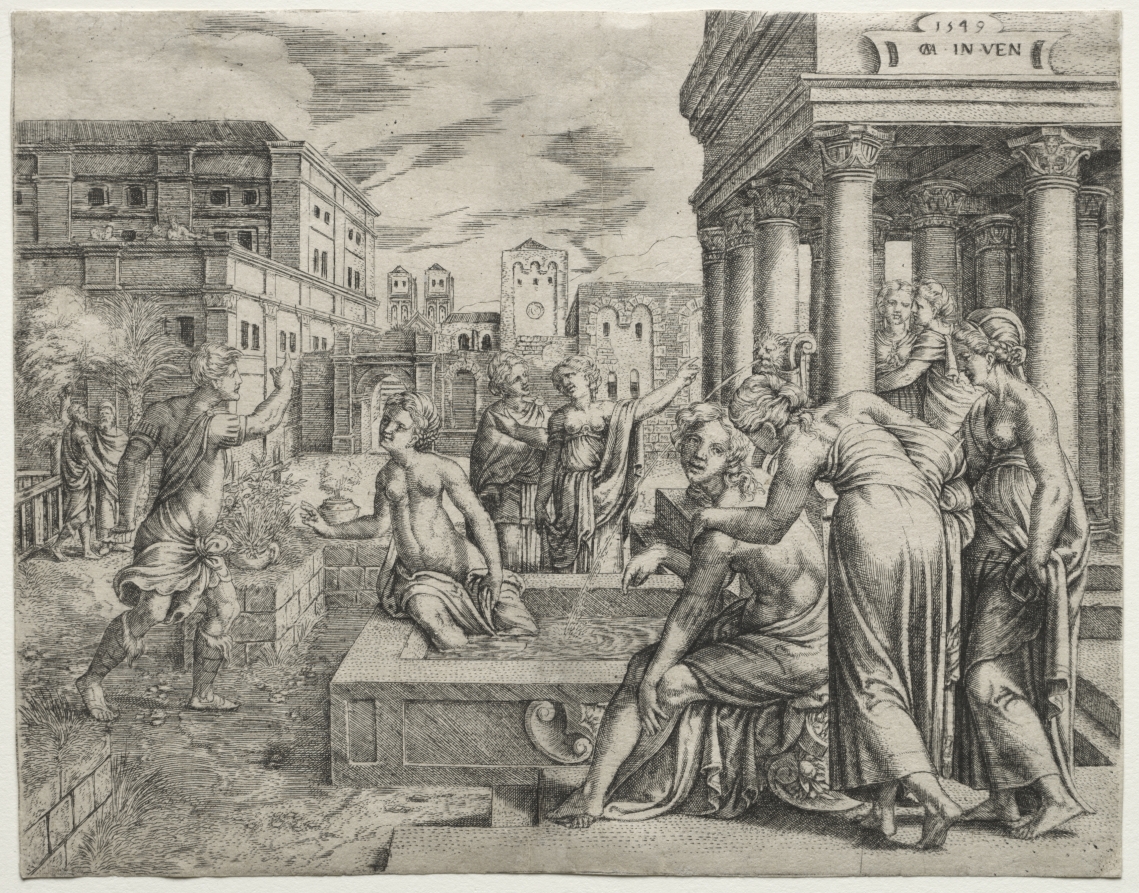 Cornelis Massys (Flemish, 1510/11–1556/57) — Bathsheba in th
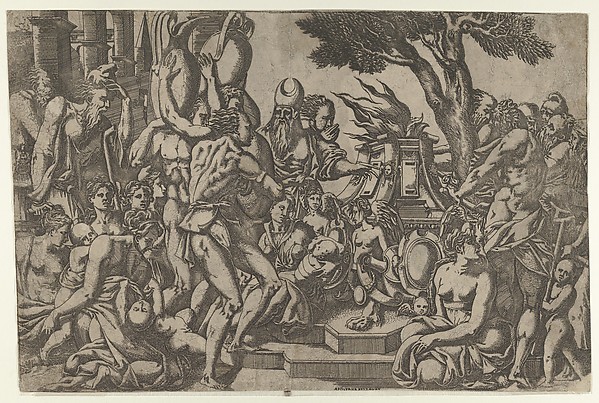 Antonio Fantuzzi|Rosso Fiorentino — The Sacrifice
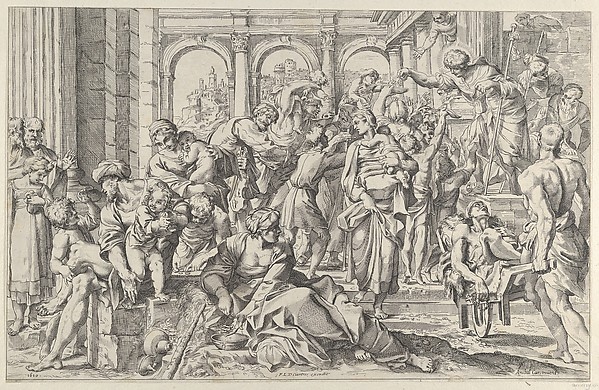 Annibale Carracci|François Langlois|Anonymous|Francesco Briz
 Antonio Fantuzzi|Francesco Primaticcio — Hercules dressed as