Islamic

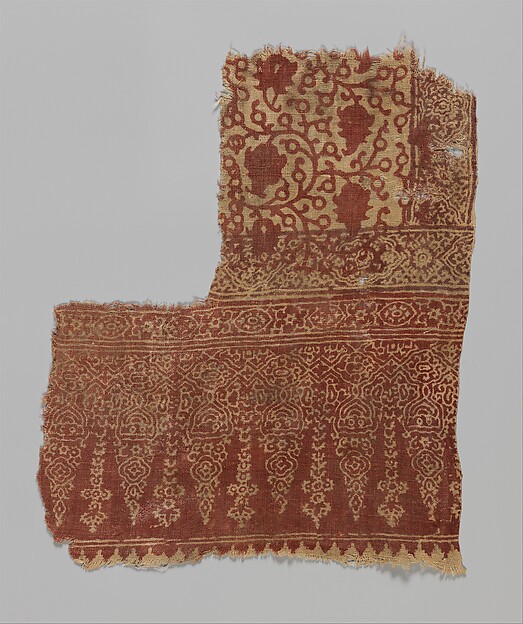
Fragment

Fatimid period (969–1171), late 11th/early 12th century
Silk, tapestry weave
50.8 × 35.6 cm (20 × 14 in)

SEE IT IN PERSON

Not currently on view

In the collection of Art Institute of Chicago, Chicago · as of July 2026

View at artic.eduPlan a visit ↗

Discussion

FROM THE ART INSTITUTE OF CHICAGO’S CATALOG

In early and medieval times (from the late 7th century to about 1200), throughout the Islamic world, state-owned factories produced textiles both for use at court and for commercial sale. Known as tiraz (after the word for embroidery, suggesting the original technique), these textiles were intended as furnishing fabrics or robes, to be conferred as royal gifts. early examples were decorated with narrow bands of ornament and inscriptions that often included the name of the patron and the location of the factory. Later examples tend to be more decorative.

Source ↗

Be the first to share your thoughts.

Sign in to join the discussion.

Community guidelines

More by Islamic

Pen Box (Qalamdan)Pen Box (Qalamdan)Book with lacquer coversBook with lacquer coversManuscript of Kulliyat (Complete Works) by Sa'di with Lacquered CoverManuscript of Kulliyat (Complete Works) by Sa'di with LacquePen Box with Hunting ScenesPen Box with Hunting ScenesPage from a Copy of the Qur'anPage from a Copy of the Qur'anLayla Visiting Majnun in the Desert, page from a copy of the Khamsa of NizamiLayla Visiting Majnun in the Desert, page from a copy of theBook BindingBook BindingAn Album Page with a Battle Scene from BorzunamaAn Album Page with a Battle Scene from Borzunama

More like this

FragmentEgypt — FragmentFragmentEgypt — FragmentFragmentEgypt — FragmentBorderEgypt — BorderFragment (Furnishing Fabric)Iran, Iraq, or Egypt (Persia) — Fragment (Furnishing Fabric)FragmentChancay — FragmentPanelCoptic — PanelTextile FragmentTextile FragmentPair of Cuff BandsCoptic — Pair of Cuff BandsFragmentChancay — FragmentFragmentEgypt — FragmentFragment (Border)Ancient Egyptian — Fragment (Border)