In the collection of Cleveland Museum of Art, Cleveland — check current display status with the museum.
FROM THE CLEVELAND MUSEUM OF ART’S CATALOG
Ways to represent one's self preoccupied Abbott Handerson Thayer throughout his life, playing a large role in both his emotional development and technical skill as a self-portrait painter. His earliest self-portrait is dated May 6, 1879, though he may have begun the piece in 1876, reworking it several times. Becoming increasingly eccentric with age, Thayer expressed his "growing egotism" and didactic, self-righteous ways through his artwork, especially through the group of self-portraits composed toward the end of his life. The work on display here is probably the earliest and most amiable of these later self-portraits. Thayer engages the viewer with his direct, almost defensive stare. In subsequent works, his eyes begin to cloud over in an almost trance-like state, exposing his emotional decline. This painting exemplifies the moodiness so prevalent during this period. Along with his achievements as a painter, Thayer spent many years studying the protective coloration of animals, and in 1909, he produced a book on the subject. His theories led to the development of military camouflage.
Be the first to share your thoughts.
Sign in to join the discussion.
 John Singer Sargent — Portrait of Manuel García
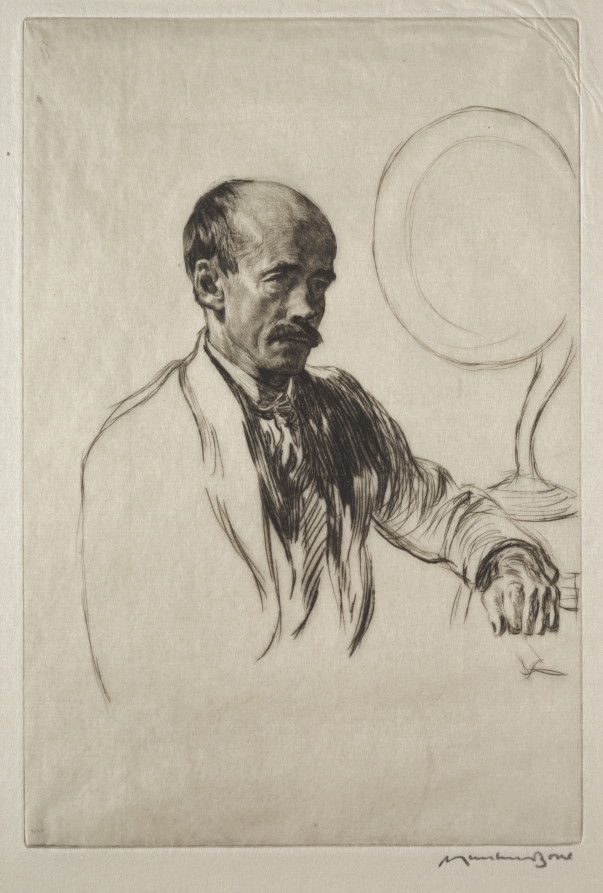 Muirhead Bone (British, 1876–1953) — John Bone
 Joaquín Sorolla — A Member of the Garcia-Castillo Family
 John Singer Sargent — General Charles J. Paine
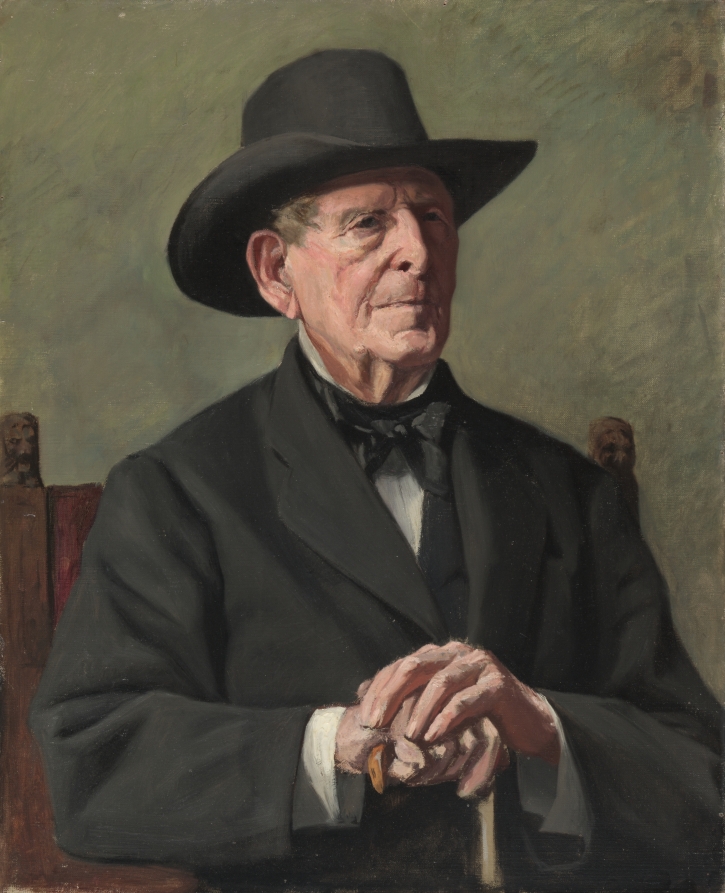 Samuel Isham (American, 1855–1914) — Portrait of an "Old Sea
 Lovis Corinth — Portrait of Alexander Freiherr von Reitzenst
 Edvard Munch — Albert Kollmann
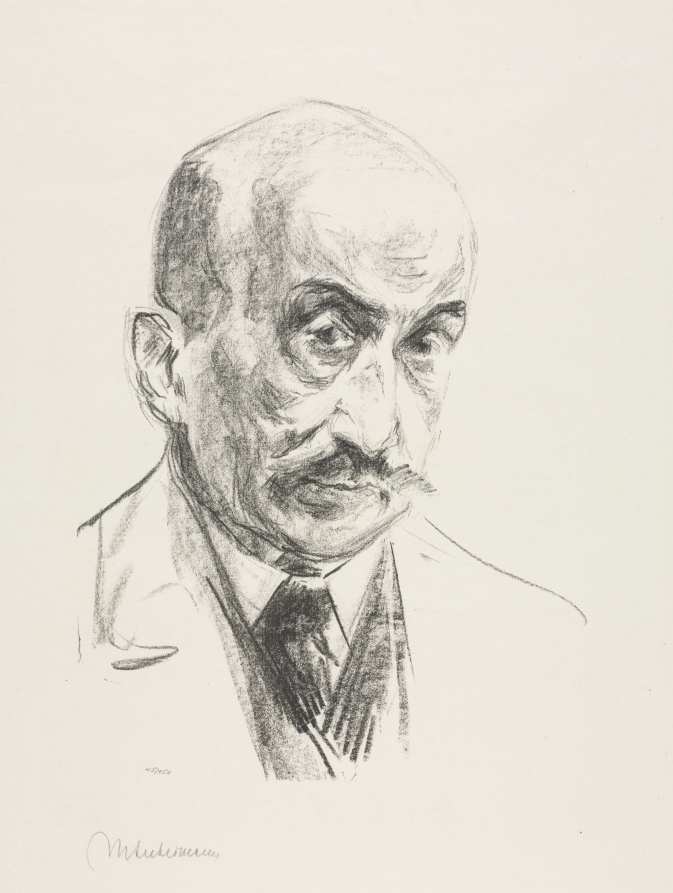 Max Liebermann (German, 1847–1935) — Self-Portrait
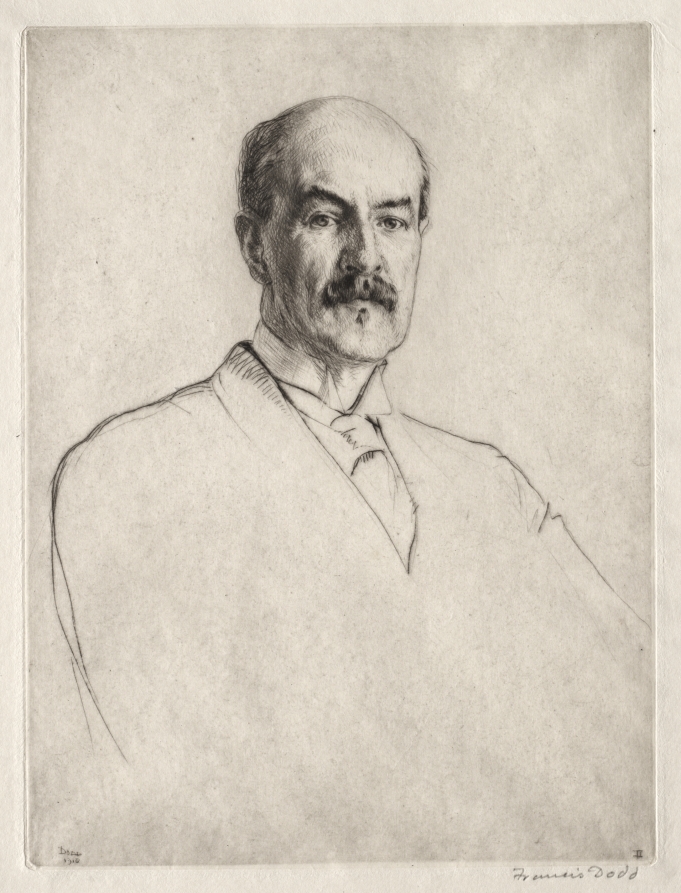 Francis Dodd (British, 1874–1949) — Professor Oliver Elton
 Edvard Munch — Karl Dørnberger
 Joaquín Sorolla — Portrait of Jacques Seligmann
 Edvard Munch — Albert Kollmann


