Stela (Commemorative Stone) Depicting the Funeral of Ramose
SEE IT IN PERSON
● On view now — Gallery 50
Art Institute of Chicago, Chicago · verified July 2026
Discussion
FROM THE ART INSTITUTE OF CHICAGO’S CATALOG
Ancient Egyptians used mummification and ritual to transform the body into a new entity called a sah, a crucial step in preparing the deceased for life after death. A ceremony called the Opening of the Mouth, depicted here, was a pivotal step in the process. As the name suggests, the rite restored function to the deceased’s mouth, allowing them to eat and drink in the afterlife. At the right end of this scene, a jackal-headed figure holds Ramose’s anthropoid (human-shaped) coffin upright. A pair of priests in front of the coffin burn incense and pour libations, while a third recites sacred texts from a papyrus scroll.
Be the first to share your thoughts.
Sign in to join the discussion.
More by Ancient Egyptian


More like this
 Félix Teynard|Imprimerie Photographique de H. de Fonteny et
  Maxime Du Camp — Grand Temple d'Isis à Philoe, Inscription D
 Félix Teynard|Imprimerie Photographique de H. de Fonteny et
  Francis Frith — Sculptures from the Outer Wall, Dendera
 Maxime Du Camp — Grand Temple de Dendérah (Teutyres), Sculpt
 Antonio Beato (British, c. 1825–1903) — Deir el-Medineh, Sac
 Maxime Du Camp — Grand Temple de Dendérah (Teutyres), Sculpt
 Maxime Du Camp|Imprimerie photographique de Blanquart-Évrard
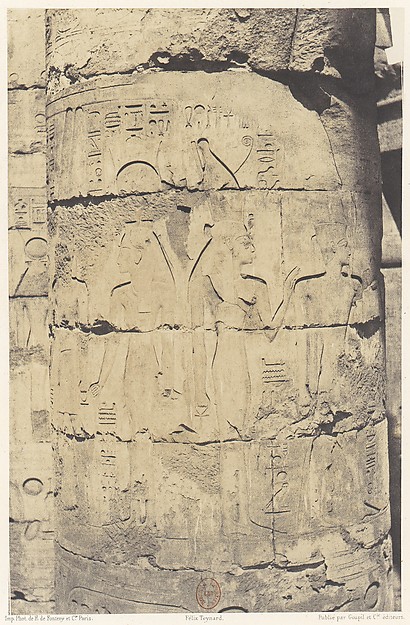 Félix Teynard|Imprimerie Photographique de H. de Fonteny et
 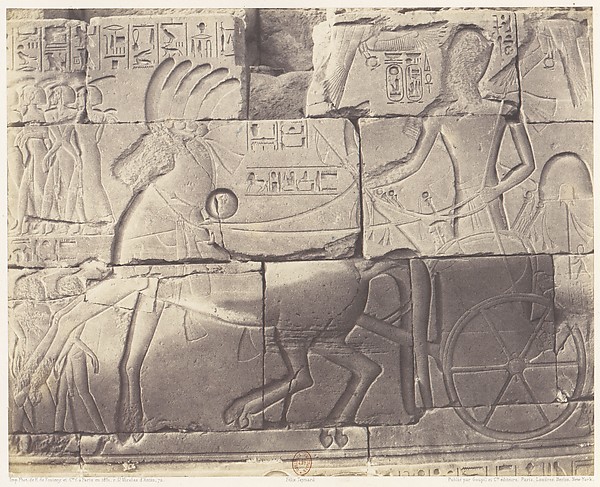 Félix Teynard|Imprimerie Photographique de H. de Fonteny et
  Maxime Du Camp — Kalabscheh, Sculptures De La Façade Postéri
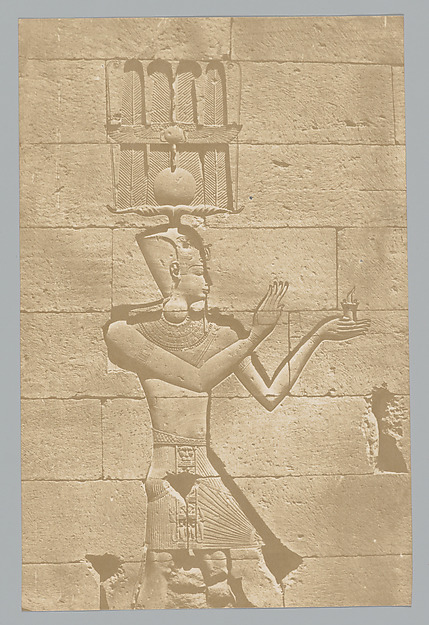 Maxime Du Camp — Kalabscheh, sculpture de la façade postérie