Stela of Tjenti and Nefret
SEE IT IN PERSON
● On view now — Gallery 50
Art Institute of Chicago, Chicago · verified July 2026
Discussion
FROM THE ART INSTITUTE OF CHICAGO’S CATALOG
Seated on a cushioned chair, an official named Tjenti extends his hand toward a table covered in tall loaves of bread. His wife, Nefret, strikes a similar pose opposite him. Scenes depicting families around a table laden with food for the afterlife were a standard decoration in ancient Egyptian tombs for generations. Displayed in chapels where descendants gathered to remember the dead, these images were eternal family portraits, ensuring an afterlife populated with loved ones. Here, Tjenti and Nefret are shown with their son Tjenti (standing on the right) and granddaughter Nefer-Hathor, who holds her index finger to her lips in a gesture symbolic of childhood. Following Egyptian artistic conventions, the figures are represented at different scales that denote their status within the family.
Be the first to share your thoughts.
Sign in to join the discussion.
More by Ancient Egyptian


More like this
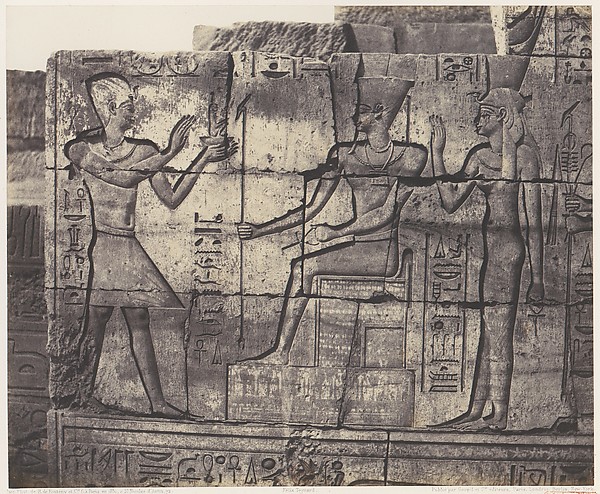 Félix Teynard|Imprimerie Photographique de H. de Fonteny et
 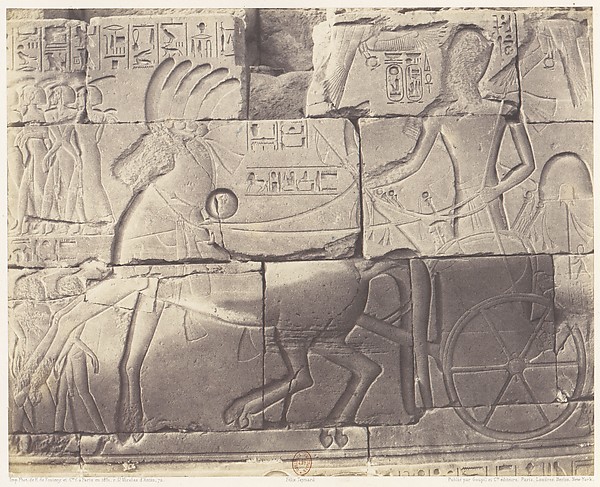 Félix Teynard|Imprimerie Photographique de H. de Fonteny et
 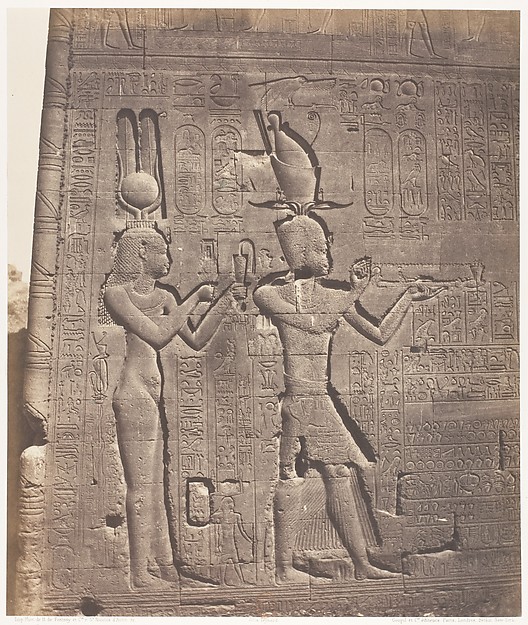 Félix Teynard|Imprimerie Photographique de H. de Fonteny et
 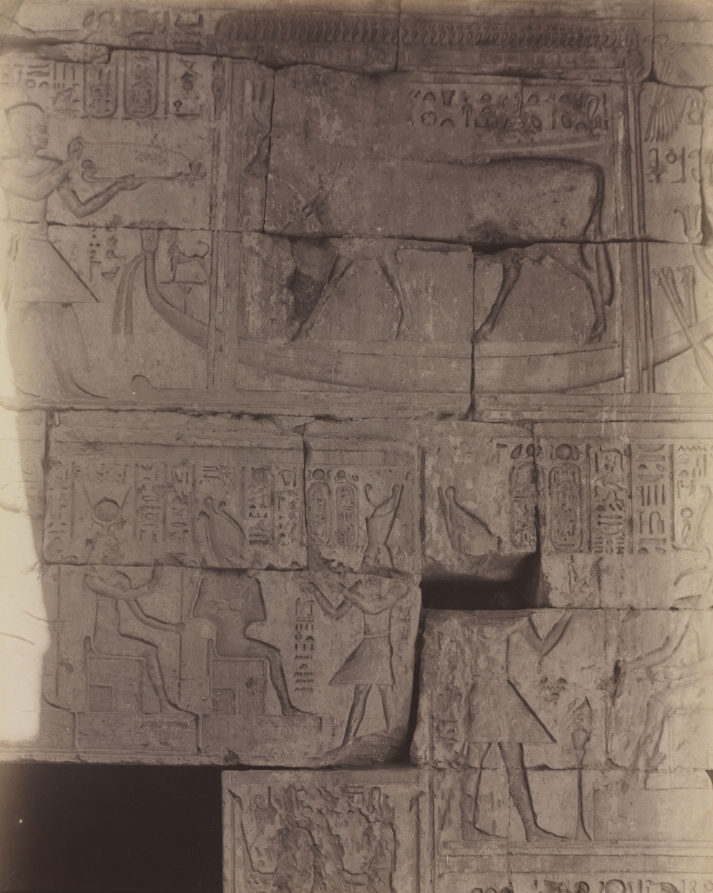 Antonio Beato (British, c. 1825–1903) — Deir el-Medineh, Sac
 Maxime Du Camp — Grand Temple de Dendérah (Teutyres), Sculpt
 Maxime Du Camp — Grand Temple d'Isis à Philoe, Inscription D
 Maxime Du Camp — Kalabscheh, Sculptures De La Façade Postéri
 Maya — Chak Ak’ Paat Kuy ("Red Turkey") Playing the Ballgame
 Maxime Du Camp — Grand Temple de Dendérah (Teutyres), Sculpt
 Maxime Du Camp — Palais de Karnak, Sculptures Extérieures du
 Félix Teynard|Imprimerie Photographique de H. de Fonteny et
  Maxime Du Camp — Kalabscheh, sculpture de la façade postérie