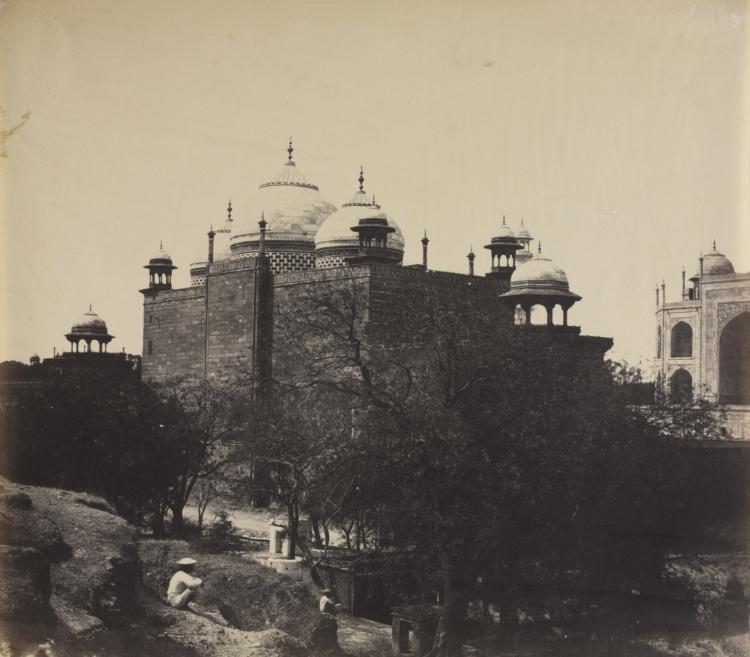
In the collection of Cleveland Museum of Art, Cleveland — check current display status with the museum.
FROM THE CLEVELAND MUSEUM OF ART’S CATALOG
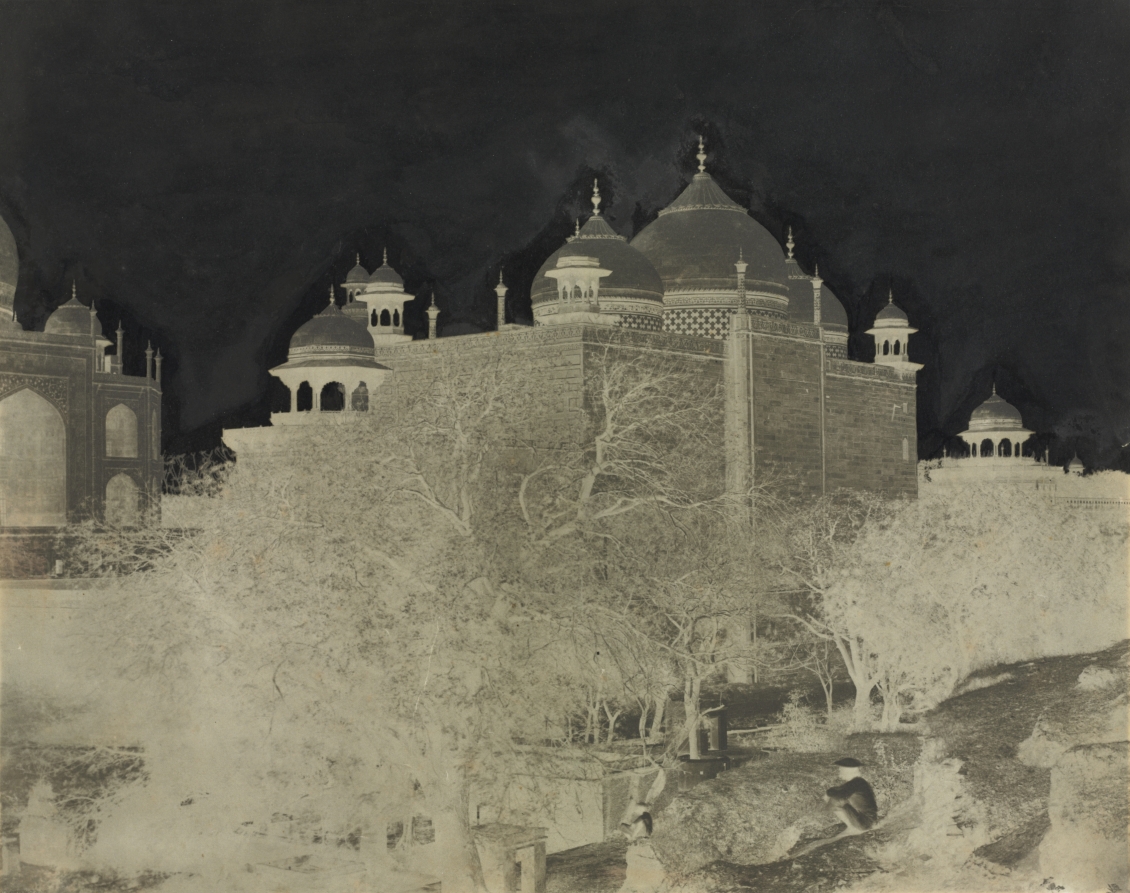
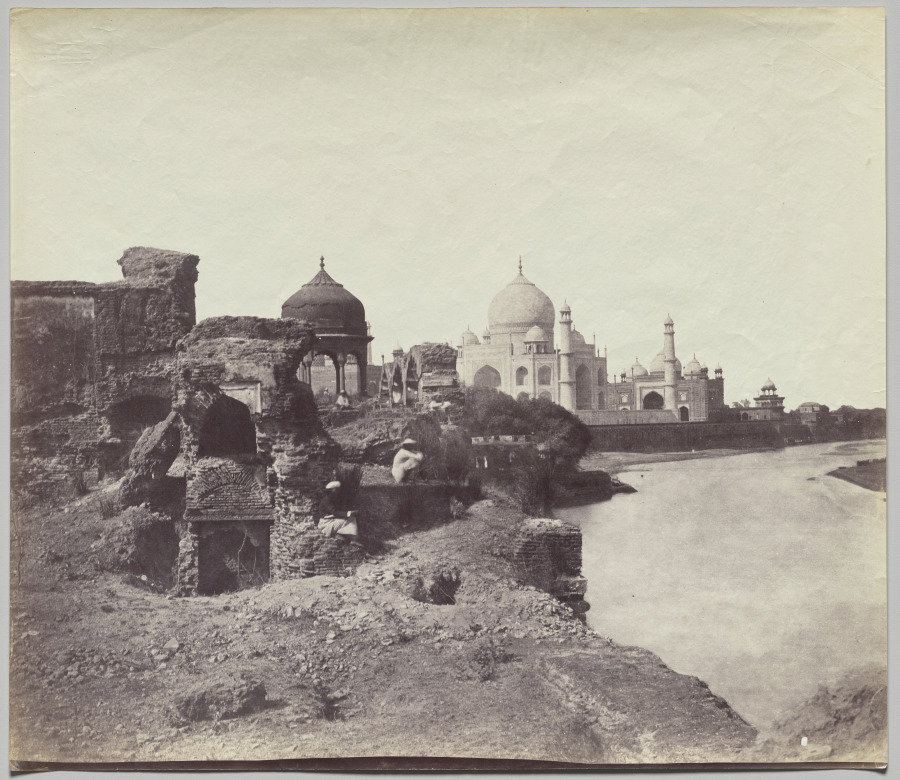
Although Dr. John Murray enjoyed a distinguished medical career as a surgeon, administrator, and leader in the fight against cholera, he is now best known for his superb paper negative photographs of India. Having lived near the Taj Mahal in the city of Agra for 20 years, Dr. Murray took great interest in the monument, photographing it from numerous perspectives and under varying light conditions. In this print, he chose an elevated viewpoint to compose an intriguing rendering of the Rest-House. The paper negative was waxed before sensitizing, improving its translucency and allowing the photographer to render his architectural subject matter in broad areas of light and dark, emphasizing the building's bold geometric forms. The surrounding, picturesque landscape adds both visual interest and complexity to the composition. Seated figures in the foreground provide an indication of scale and the sense of wonder that might be experienced in the presence of this vast monument.
Be the first to share your thoughts.
Sign in to join the discussion.
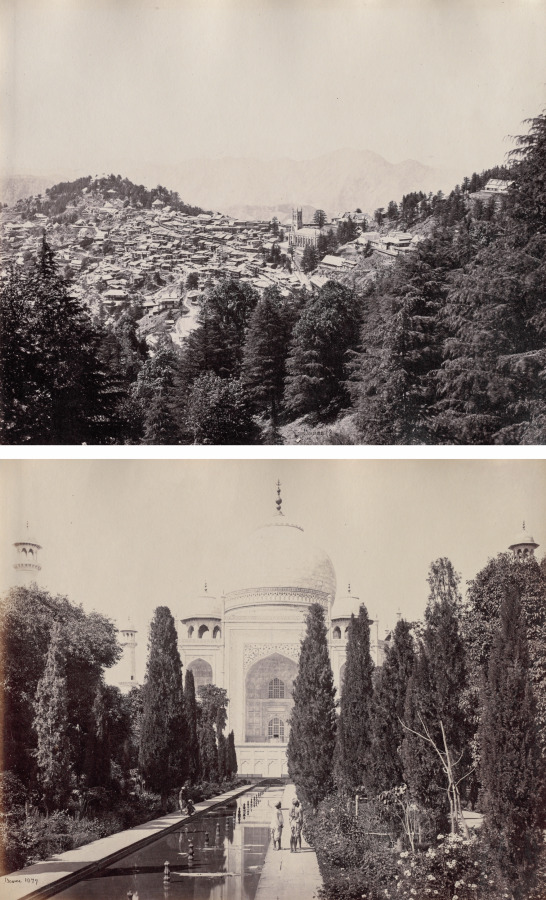 Samuel Bourne (British, 1834–1912) — Shimla and the Taj Maha
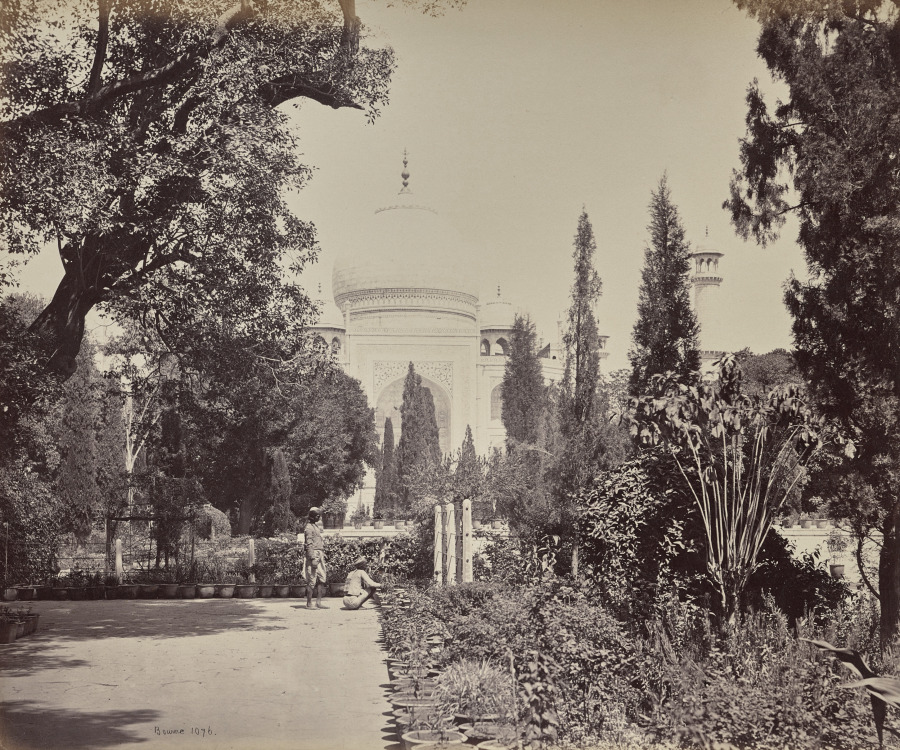 Samuel Bourne (British, 1834–1912) — Agra. View of the Taj f
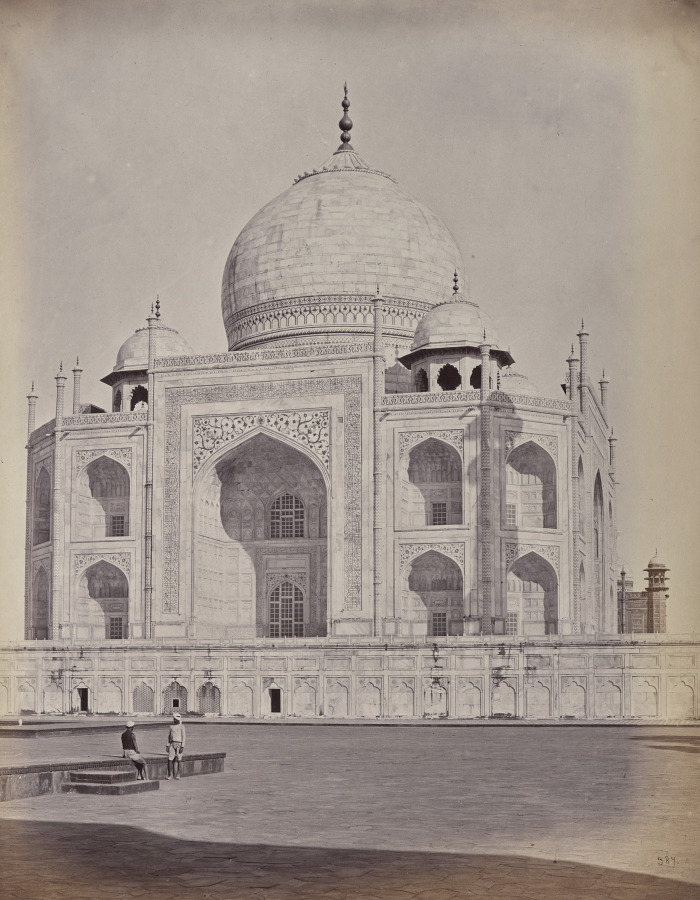 Samuel Bourne (British, 1834–1912) — Agra. The Taj, the Cent
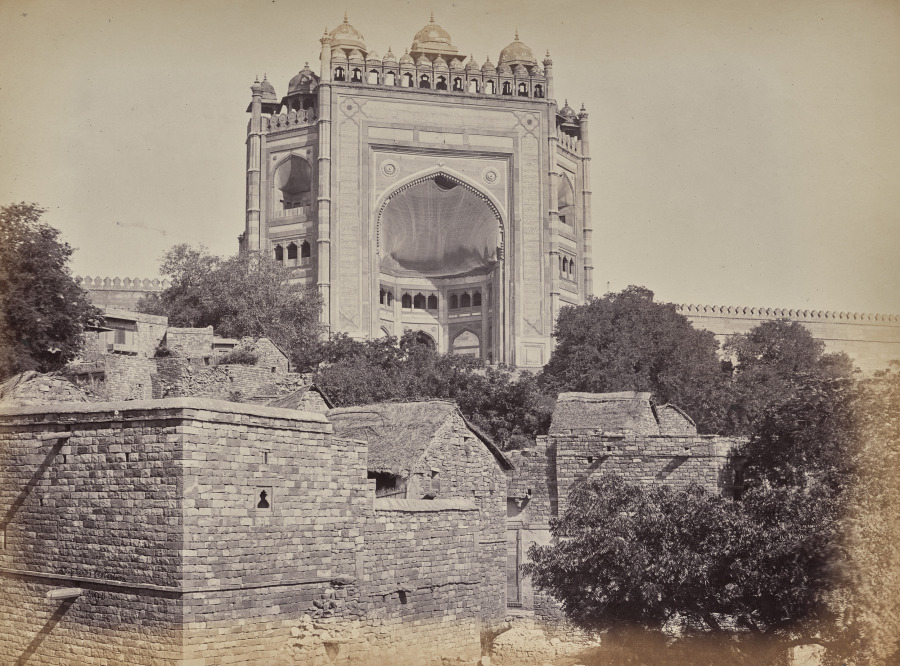 Samuel Bourne (British, 1834–1912) — Futheypoor Sikre Guard
 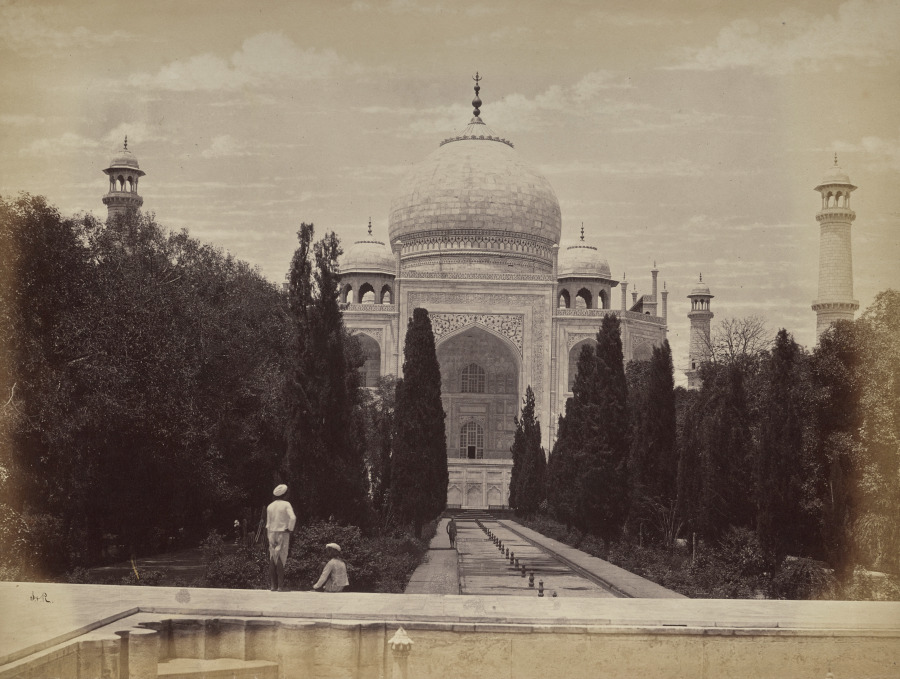 Samuel Bourne (British, 1834–1912) — Agra. View of the Taj i
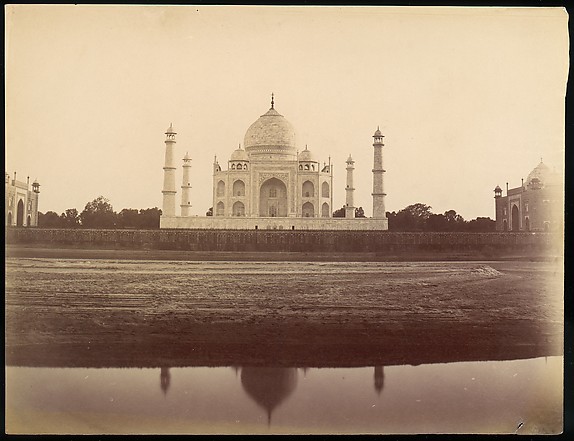 Unknown — View of the Taj Mahal from the Jamuna, Agra
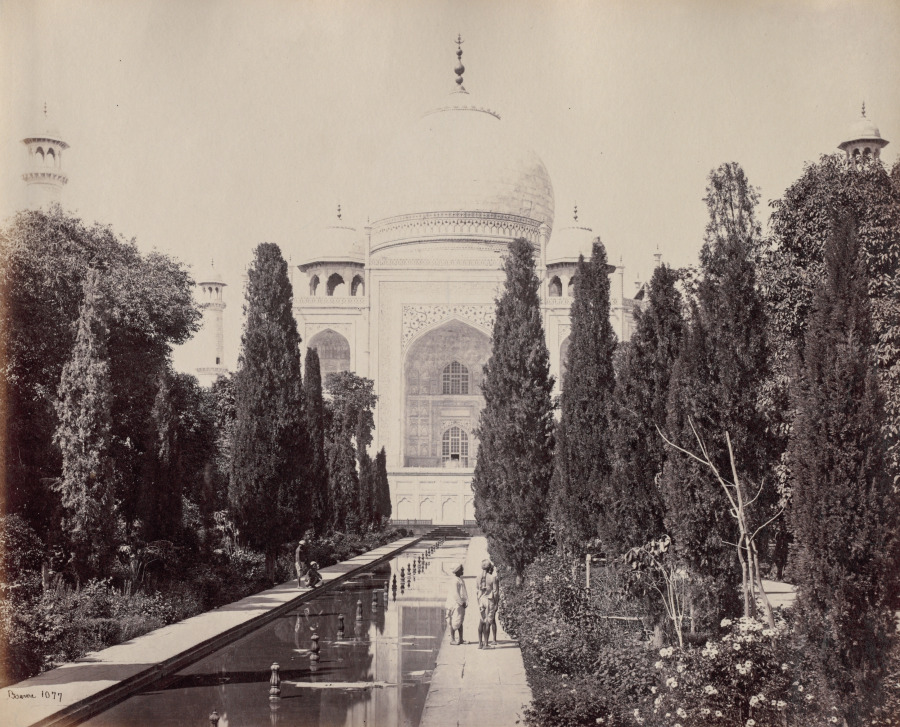 Samuel Bourne (British, 1834–1912) — The Taj
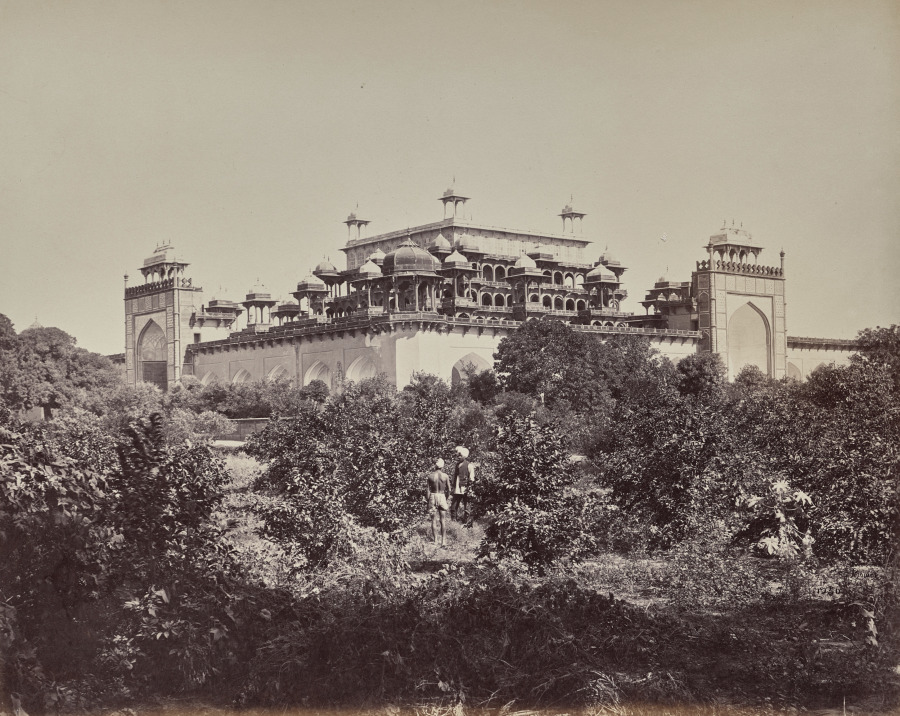 Samuel Bourne (British, 1834–1912) — Secundra Near Agra. The
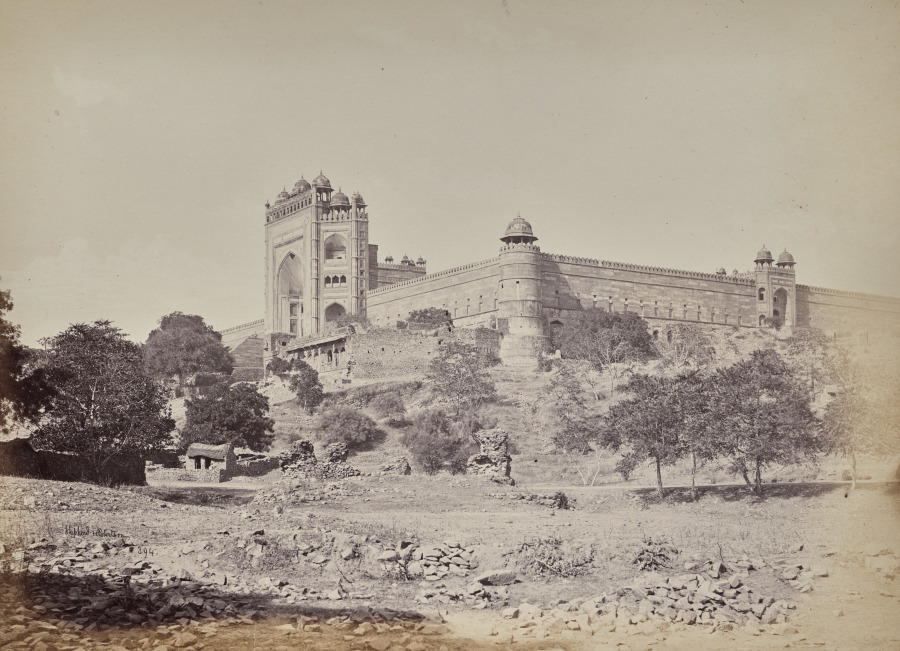 Samuel Bourne (British, 1834–1912) — Fort of Futheypoor Sikr
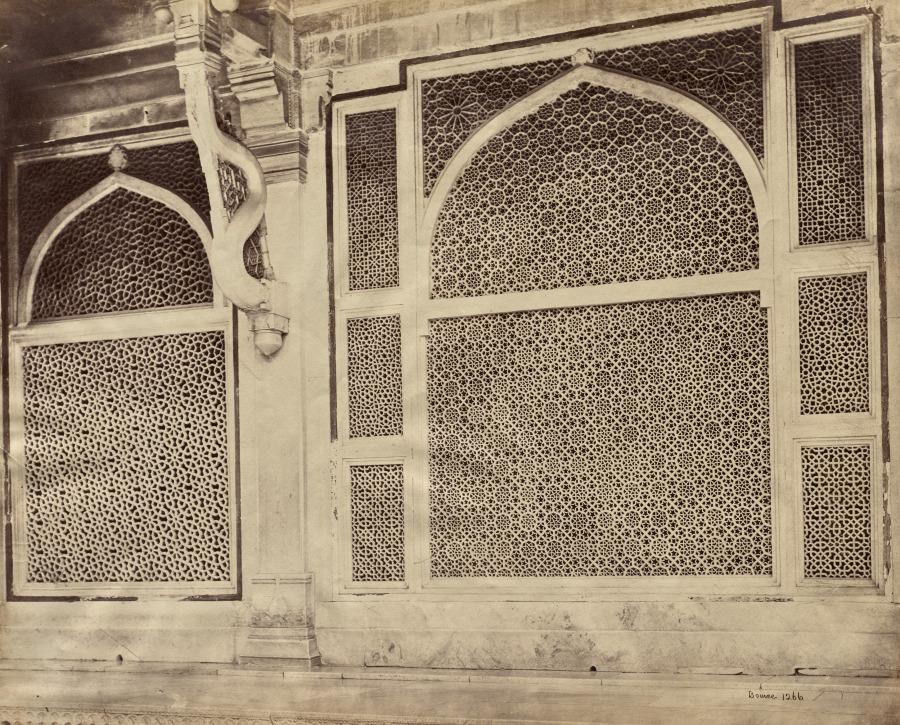 Samuel Bourne (British, 1834–1912) — Futtypore Sikri—Two of
 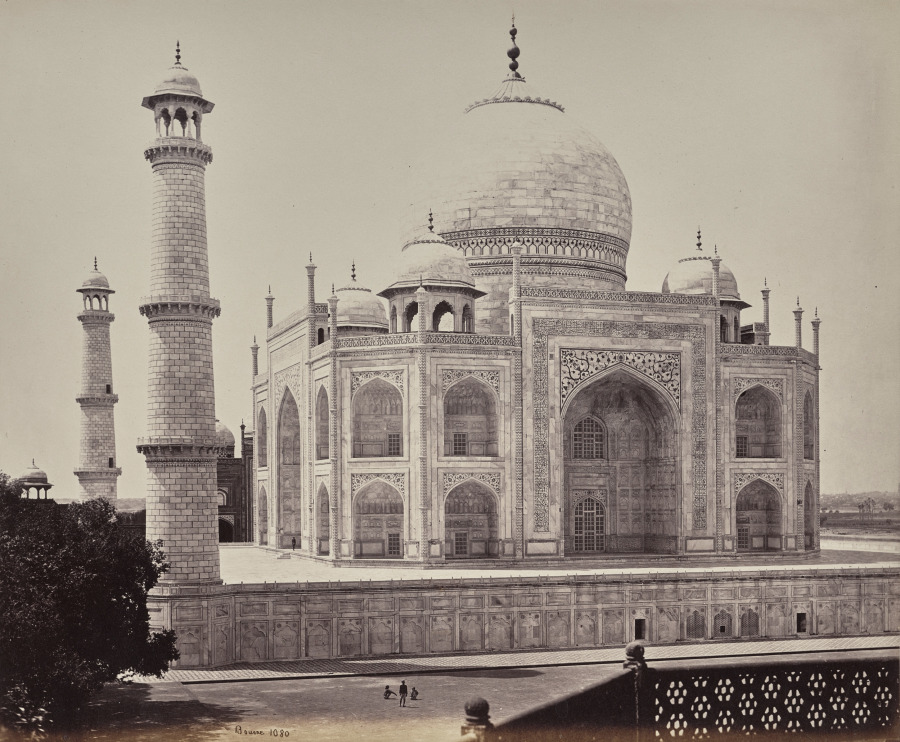 Samuel Bourne (British, 1834–1912) — Agra. View of the Taj f
 Imprimerie photographique de Blanquart-Évrard, à Lille|Augus