FROM THE CLEVELAND MUSEUM OF ART’S CATALOG
Despite the religious subject, the scale and intricate detail indicate that this painting was not for a church setting. Instead, as an independent work of art, a collector would have admired its artistry and unusual combination of Italian and northern European traditions. Likewise, the subject’s novelty would have intrigued a sophisticated patron. Neither Christ’s disrobing before the Crucifixion nor the debate over the plaque identifying him as Jesus of Nazareth, King of the Jews, are common subjects in the Renaissance. Who made this work remains a mystery. The copper surface, complex composition, and atmospheric landscape imply a painter from north of the Alps, as does Christ’s sinuous body. However, the drapery, rich colors, and figures at lower right stem from Venetian Renaissance art.
Source ↗︎
Be the first to share your thoughts.
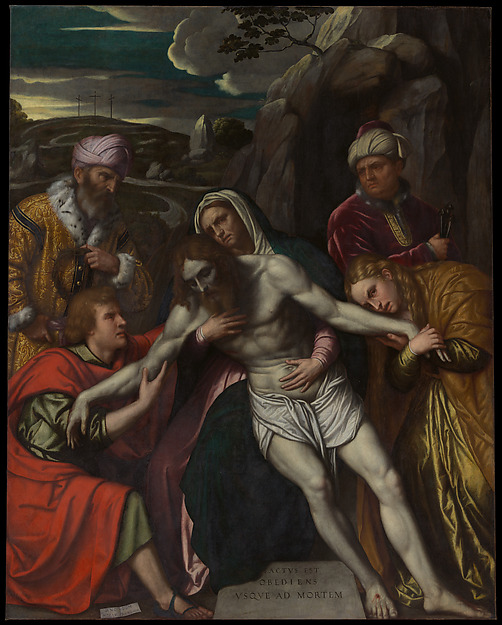 Moretto da Brescia (Alessandro Bonvicino) — The Entombment
 Bartholomaeus Bruyn the Elder — Crucifixion
 Frans Francken the Younger — Road to Calvary
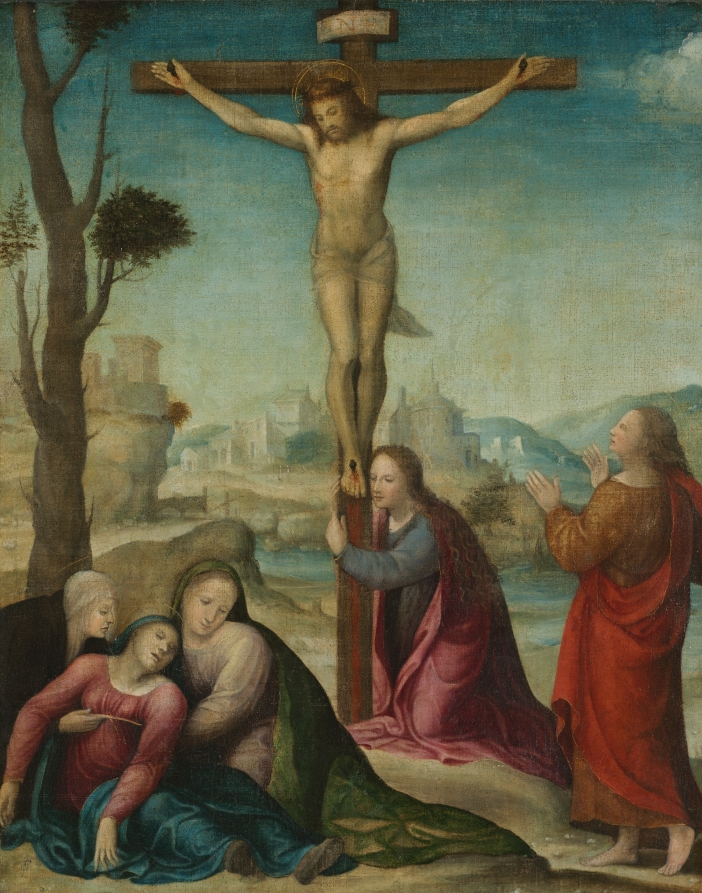 Sodoma (Italian, 1477–1549) — The Crucifixion
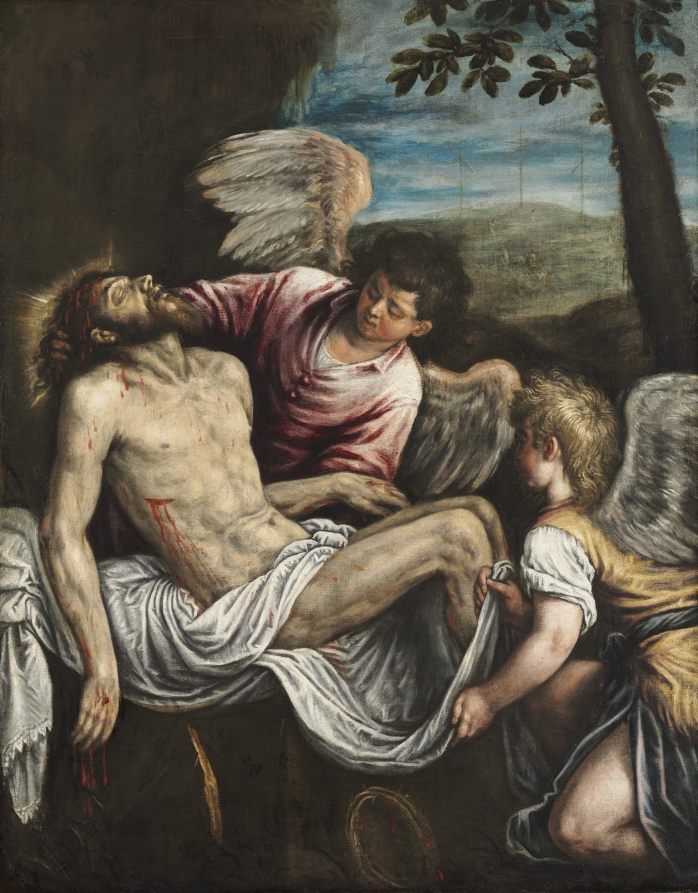 Leandro Bassano (Italian, 1557–1623) — The Dead Christ with
  Sebastiano del Piombo — Christ Carrying the Cross
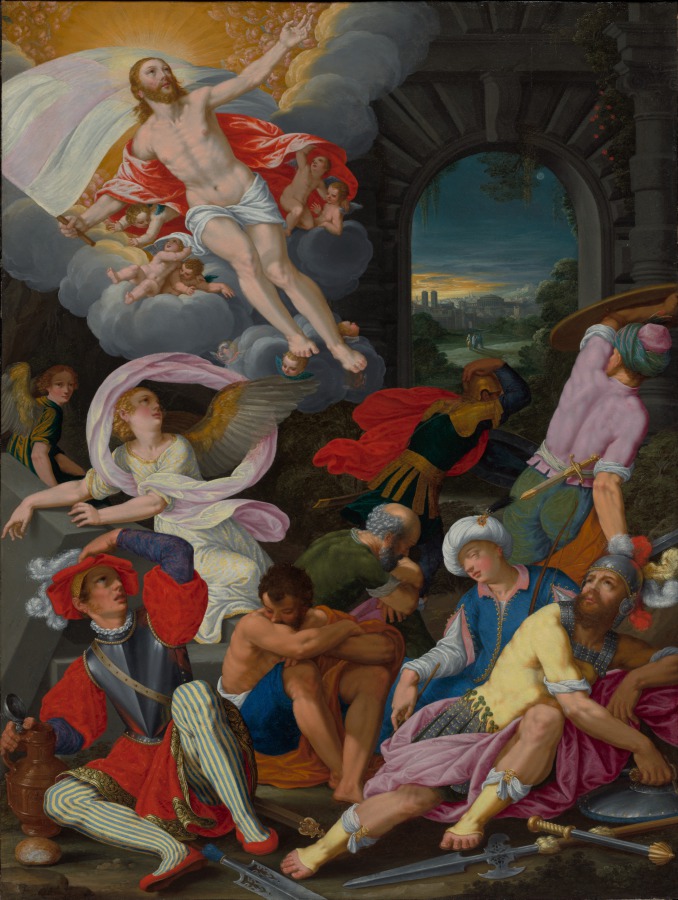 Johann König (German, 1586–1642) — The Resurrection of Chris
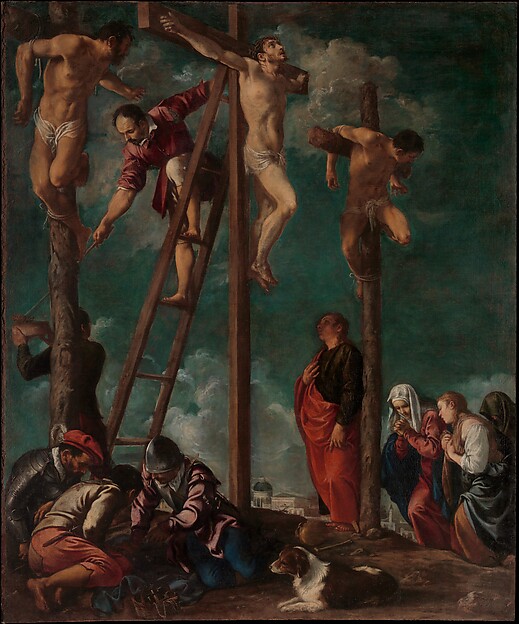 Pedro Orrente — The Crucifixion
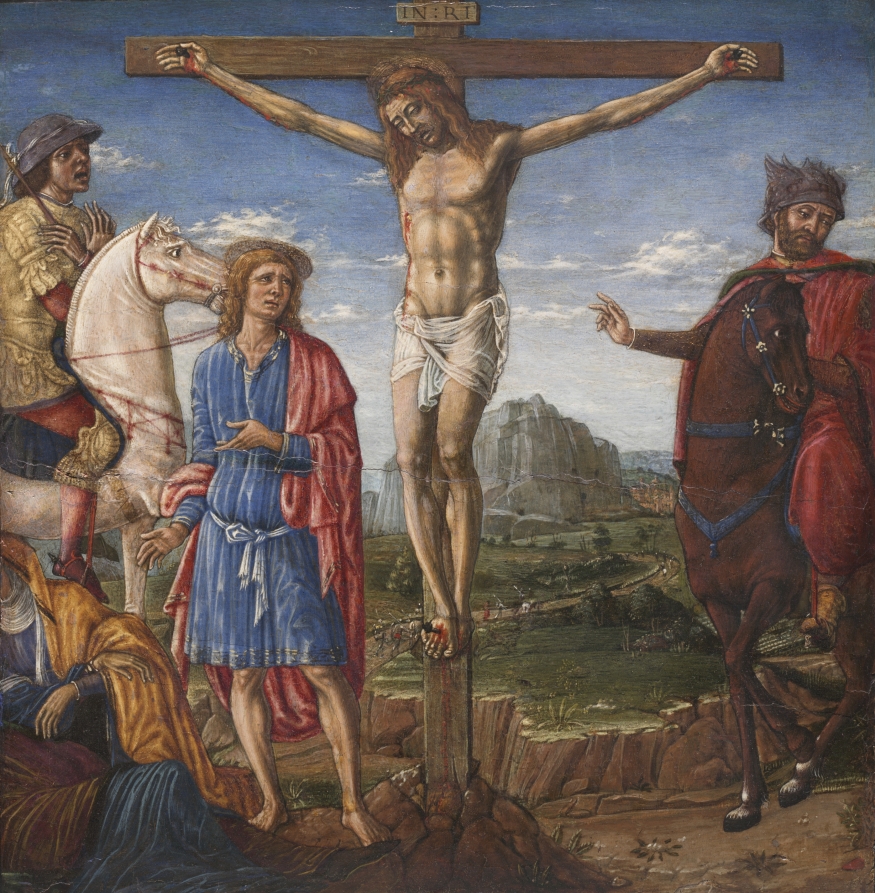 Matteo di Giovanni (Italian, c. 1435–1495) — The Crucifixion
 Frans Francken the Younger — The Crucifixion of St. Andrew
 Jacob Cornelisz van Oostsanen — De kruisiging
 anonymous — Christ on the Cross, with the Mother of Sorrows