In the collection of Cleveland Museum of Art, Cleveland — check current display status with the museum.
FROM THE CLEVELAND MUSEUM OF ART’S CATALOG
According to a legend based on Greek myth, as Saint George passed through Libya, he rescued a king’s daughter who had been left as a sacrifice to placate a vicious dragon. In gratitude for being delivered from the monster’s tyranny, the king’s subjects converted to Christianity. Here George wears armor in the ancient style based on Roman sculpture. Classical armor in Renaissance art was reserved for elite male subjects as a sign of their virtue. As a military saint, George’s attire conveys his antiquity as an early Christian hero (died about AD 303), conferring on him a sense of Roman authority and gravity.
Be the first to share your thoughts.
Sign in to join the discussion.
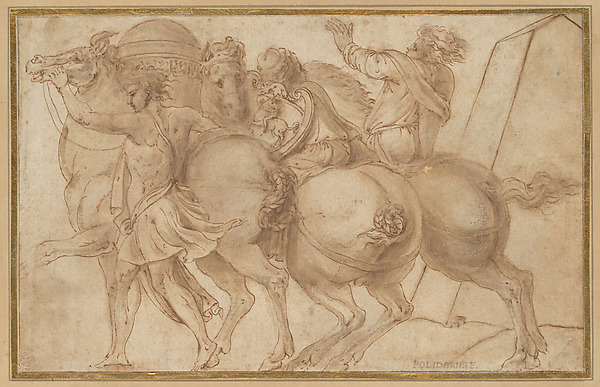 Polidoro da Caravaggio — Frieze with Three Horsemen
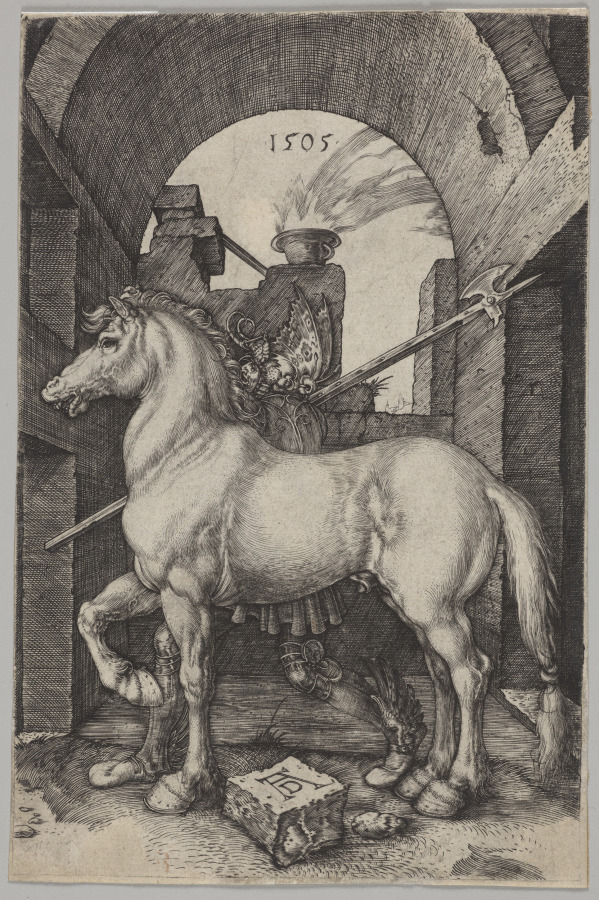 Albrecht Dürer (German, 1471–1528) — The Small Horse
 Jost Amman — Marcus Curtius
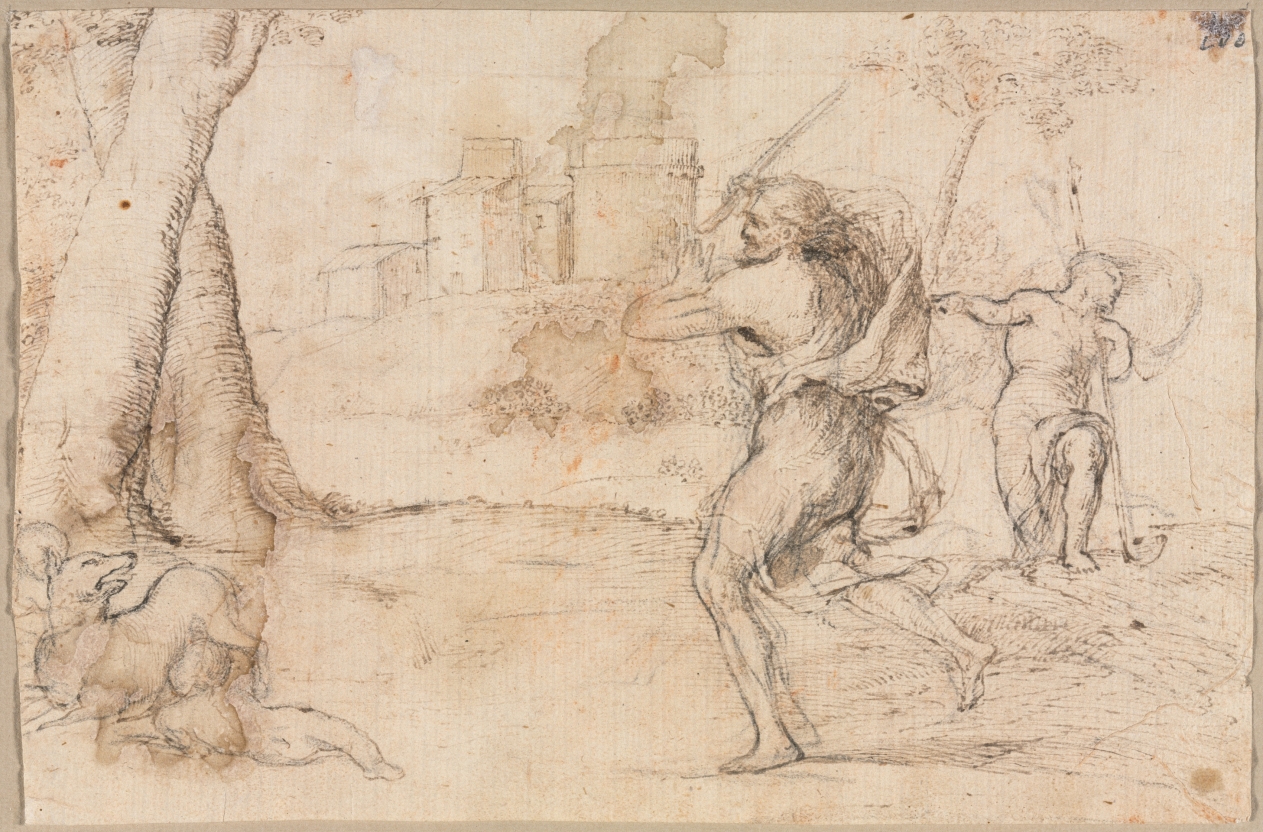 Romanino (Italian, 1484/87–1562) — Romulus and Remus Found b
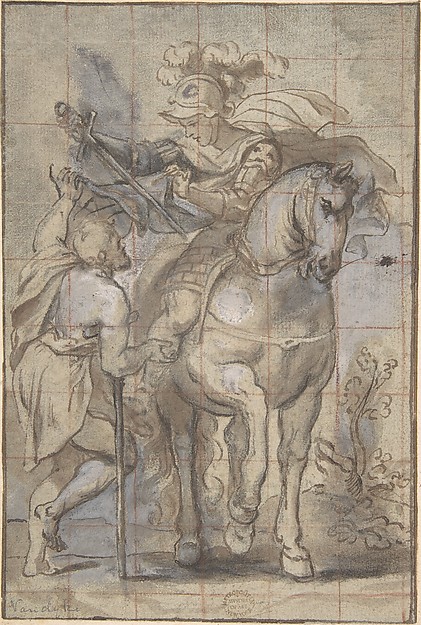 Anonymous, Italian, Roman-Bolognese, 17th century — Saint Ma
 Albrecht Dürer — Knight on Horseback and Landsknecht
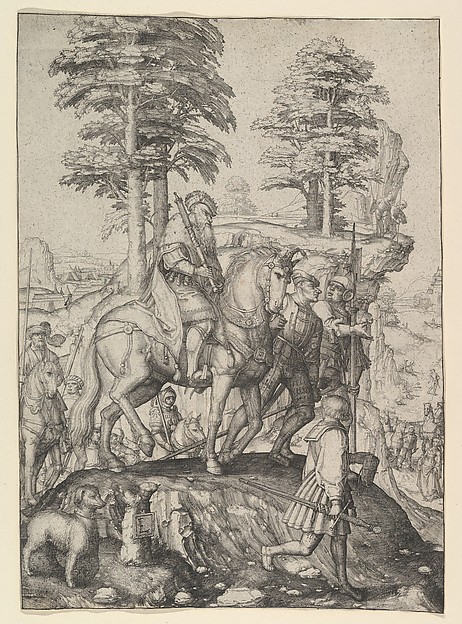 Lucas van Leyden — Abigail Before David
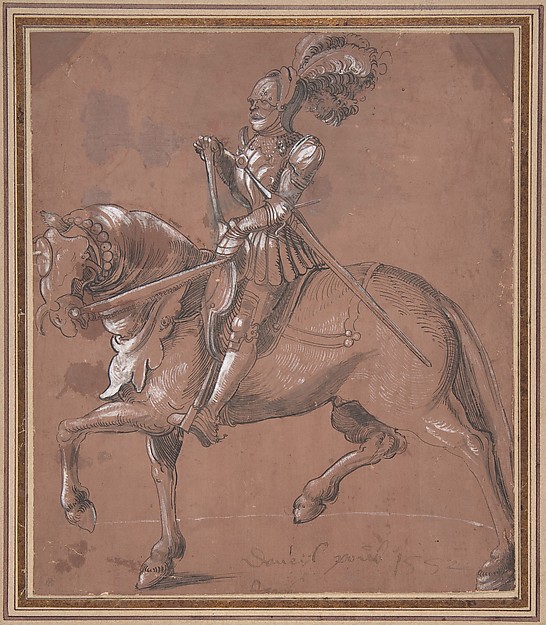 Anonymous, German, 16th century — Knight on Horseback
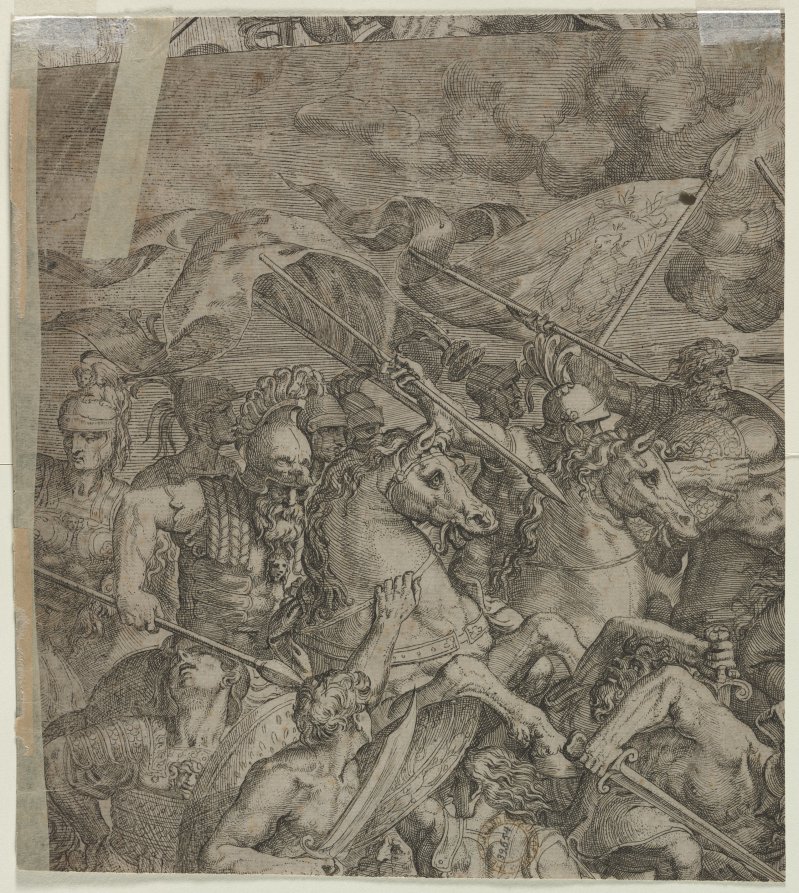 Battle of the Milvian Bridge (fragment) (verso)
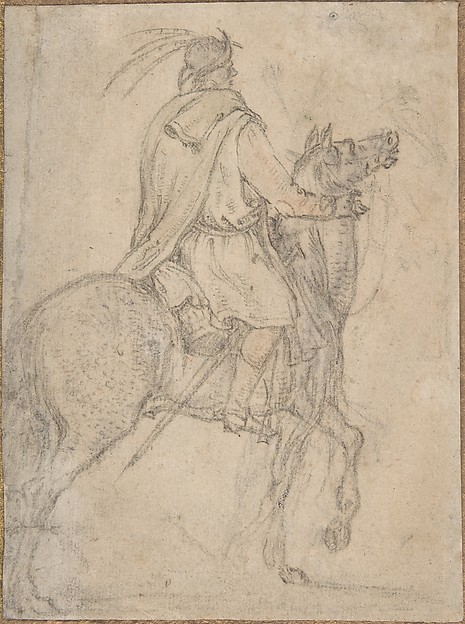 Roelandt Savery — A Hungarian Horseman
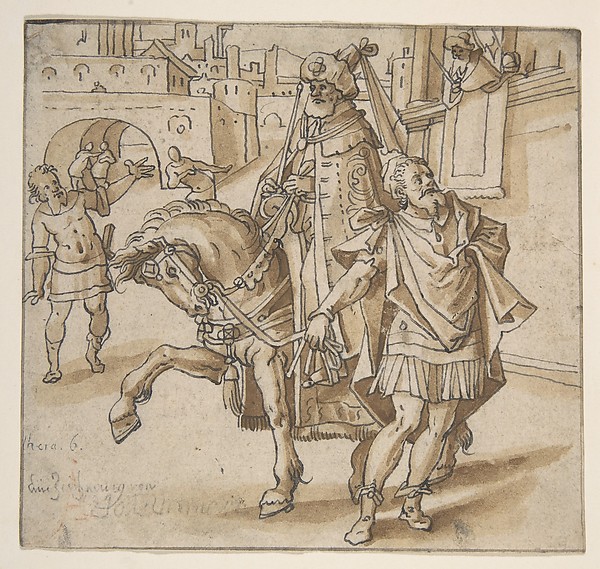 Hans Ulrich Fisch vom Stein I|Tobias Stimmer — Triumph of Mo
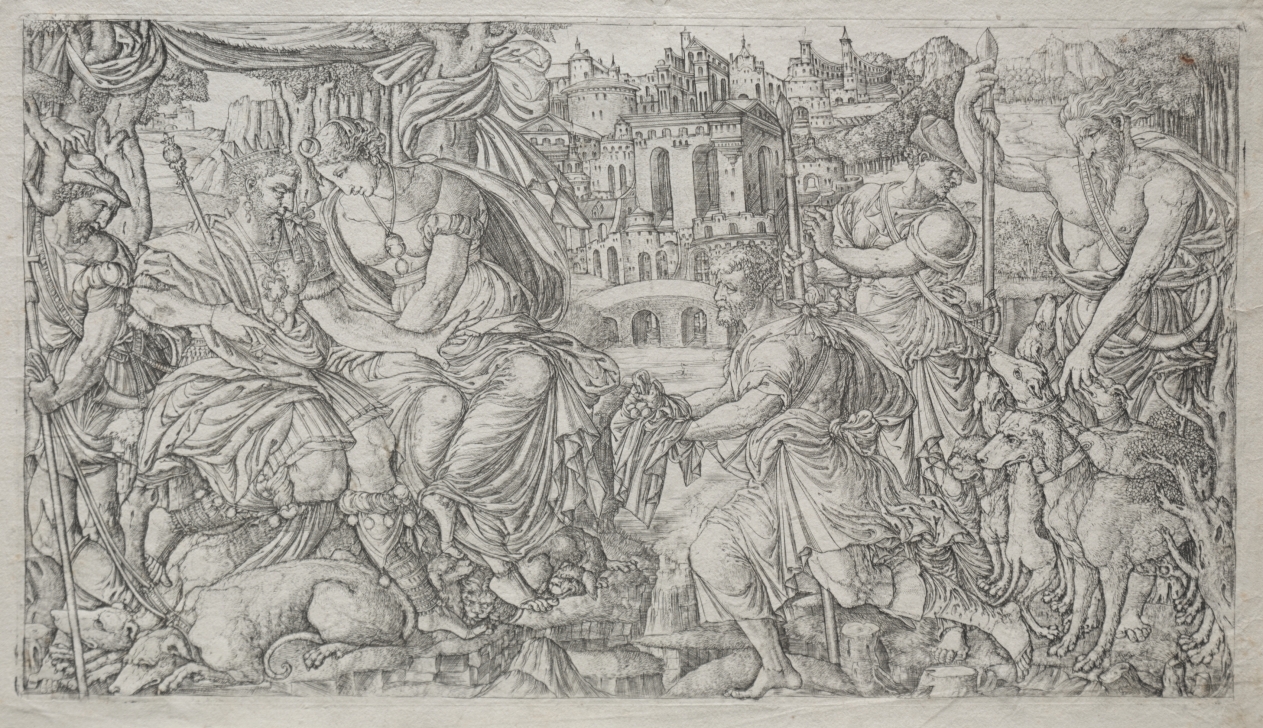 Jean Duvet (French, 1485–1561) — Huntsman Presenting a Gift