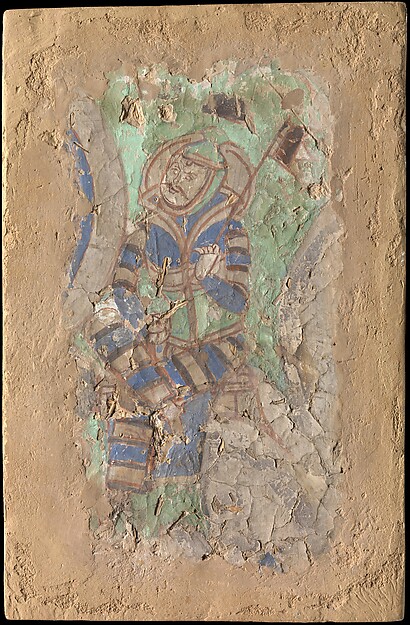
Fragment (Hanging)
SEE IT IN PERSON
Not currently on view
In the collection of Art Institute of Chicago, Chicago · as of July 2026
Discussion
FROM THE ART INSTITUTE OF CHICAGO’S CATALOG
Because many textiles made by early Egyptians were preserved in arid tombs, a substantial number of these fabrics have survived in remarkably good condition. This striking portion of a wall hanging depicts a figure standing beneath a colonnaded, arched opening. With raised arms, which perhaps once held candelabrum, he wears a traditional tunic with clavic bands (the narrow strips extending down from the shoulders, on the front and back, to the waist or hem). This woven piece is distinguished by its large size, imposing composition, and brilliant, unfaded shades of red, green, blue, brown, and yellow. The figure’s commanding frontality, solemn expression, and animated side glance, together with the composition’s bold lines and vivid colors, relate this fragment to hauntingly realistic portrait icons. Also suggestive of icons is the three-dimensional appearance of the warrior’s face and legs and the columns—an effect much easier to achieve in painting than in weaving. Woven of indigenous materials, this hanging is composed of linen warps and wool and linen wefts that create an uncut pile against a plain-weave foundation, a fabric surface less common in Byzantine textiles than the tap
Be the first to share your thoughts.
Sign in to join the discussion.