The Poetess Ono no Komachi, from the series "Six Immortal Poets (Rokkasen)"
SEE IT IN PERSON
Not currently on view
In the collection of Art Institute of Chicago, Chicago · as of July 2026
Discussion
FROM THE ART INSTITUTE OF CHICAGO’S CATALOG
Famous poets of Japan’s classical age have been grouped into sets for centuries, likely as a way to teach their writings. The poet Ono no Komachi was the only woman among the Six Immortal Poets, commemorated in a print series by Katsushika Hokusai. She was born in the ninth century, and very little is known about her. Accounts of her vary: Some revered her as a talented poet and an incomparable beauty, while others portrayed her as an impoverished and unattractive old woman. Here she is dressed in ninth-century court robes as she looks over her shoulder from behind a standing screen. In the poem, Komachi subtly deplores the unreliability of a man’s love, comparing the change in a flower’s color to the changes in one’s heart: What fades But is not seen in color Is in the blossom In the heart of that person In my world. (Translation by Roy E. Teele)
Be the first to share your thoughts.
Sign in to join the discussion.
More by Katsushika Hokusai
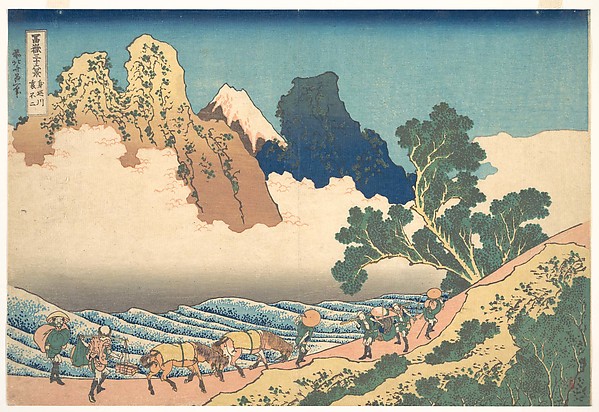 冨嶽三十六景 身延川裏不二|View from the Other Side of Fuji from the Mino
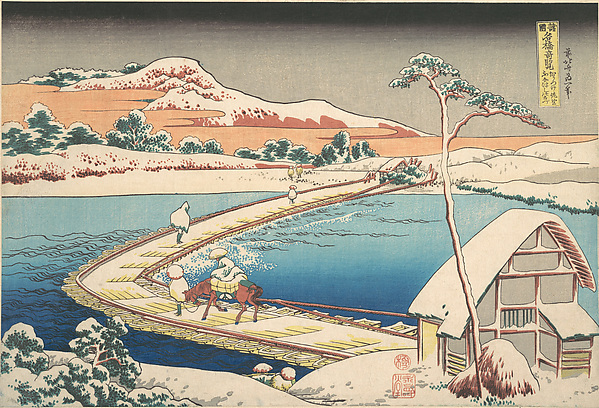 諸國名橋奇覧 かうつけ佐野ふなはしの古づ|Old View of the Boat-bridge at Sano in
 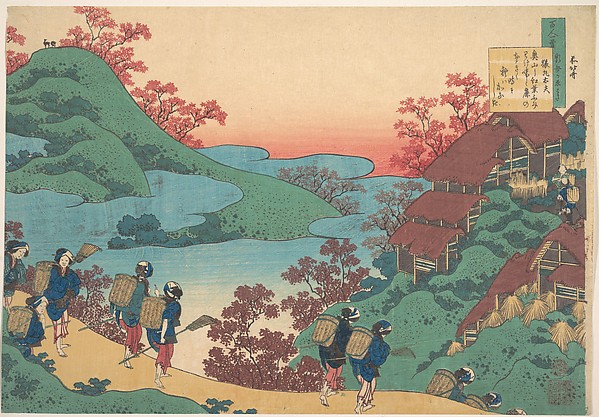 百人一首 乳母かゑとき 猿丸太夫|Poem by Sarumaru Dayū, from the series One
 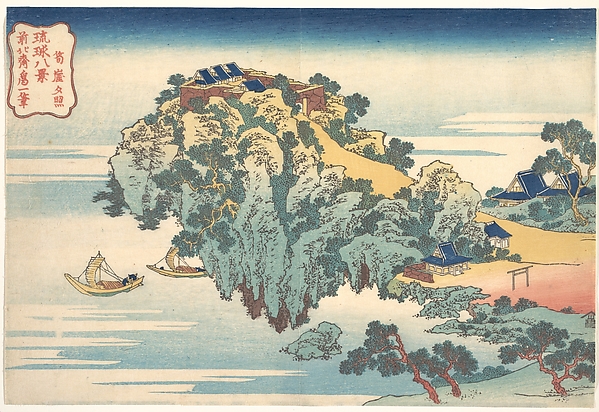 琉球八景 筍崖夕照|Evening Glow at Jungai (Jungai sekishō), from the
 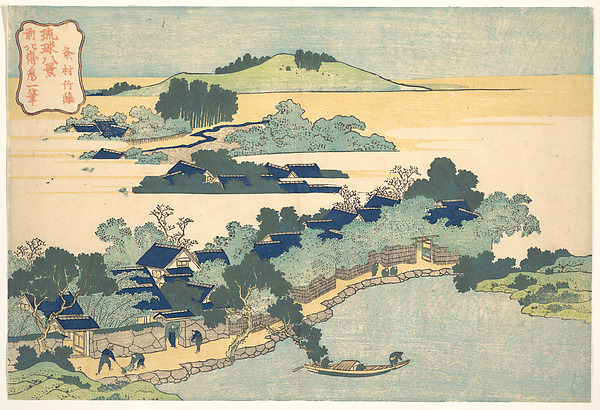 琉球八景 粂村竹籬|Bamboo Hedge at Kumemura (Kumemura chikuri), from
  Togetsu Bridge at Arashiyama in Yamashiro Province (Yamashir
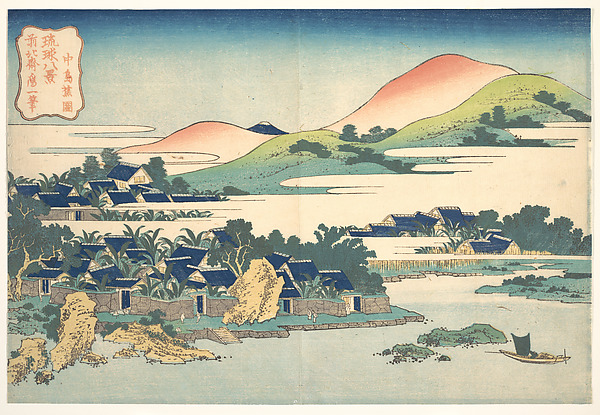 琉球八景 中島蕉園|Banana Garden at Nakashima (Nakashima shōen), from
 The Back of Mount Fuji Seen from Minobu River (Minobugawa Ur
More like this
 Yanagawa Shigenobu I — Scenting a kimono with incense
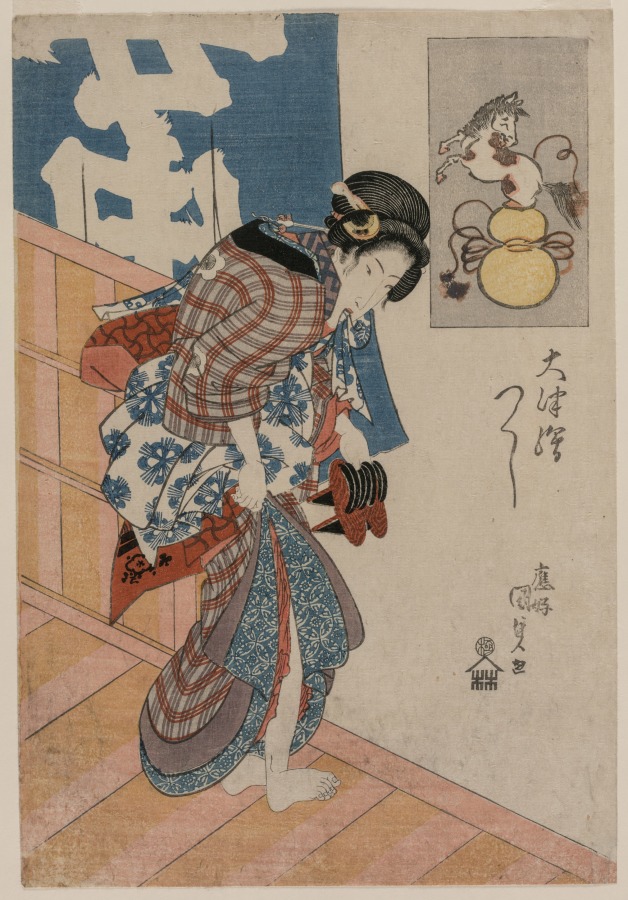 Utagawa Kunisada (Japanese, 1786–1865) — Woman Leaving a Bat
 Ippitsusai Buncho — Hinaji of the Chojiya, from the series "
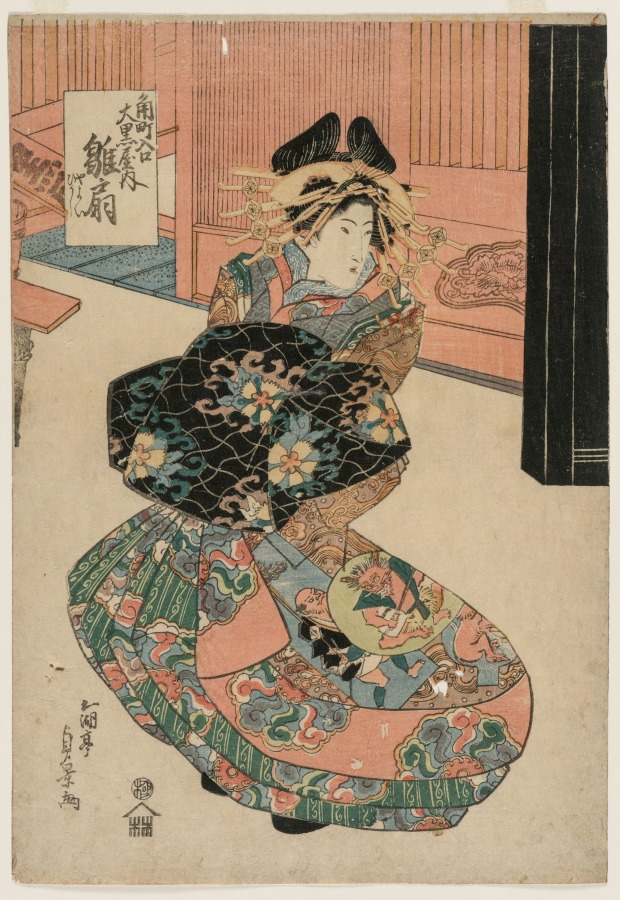 Utagawa Sadakage (Japanese) — The Courtesan Hinaogi of the D
 Kitagawa Hidemaro (Japanese) — Going to the Kabuki Theater i
 Katsukawa Shunsho — The Actors Ichikawa Monnosuke II and Seg
 Ishikawa Toyonobu
 Suzuki Harunobu — The Dance of the Shrine Maidens Ohatsu and
 Unidentified artist
 Utagawa Toyokuni I — The Third Princess (Nyosan no miya)
![Hour of the Ox [2am] (Ushi no koku), from the series "The Twelve Hours in Yoshiwara (Seiro juni toki tsuzuki)"](https://www.artic.edu/iiif/2/383194e4-1eb2-0166-ee78-500d2ef5d875/full/500,/0/default.jpg) Kitagawa Utamaro — Hour of the Ox [2am] (Ushi no koku), from
Kitagawa Utamaro — Hour of the Ox [2am] (Ushi no koku), from Kubo Shunman