Smallsword for a Child
c. 1670
Steel, iron, gold, silver, and wood
SEE IT IN PERSON
● On view now — Gallery 239
Art Institute of Chicago, Chicago · verified July 2026
Discussion
FROM THE ART INSTITUTE OF CHICAGO’S CATALOG
Court culture dictated that young noble children were expected to be dressed like adults, and this led to the production of scaled-down fashion accessories like smallswords. The size of this sword suggests it was made for a boy of between four and six. A seemingly dangerous proposition, children’s swords were often tied firmly into their scabbards so that they wouldn’t hurt themselves or someone else.
Be the first to share your thoughts.
Sign in to join the discussion.
More by French
 Head of a Woman
 Altarpiece from Thuison-les-Abbeville: Saint Hugh of Lincoln
 Panels from the High Altar of the Charterhouse of Saint-Hono
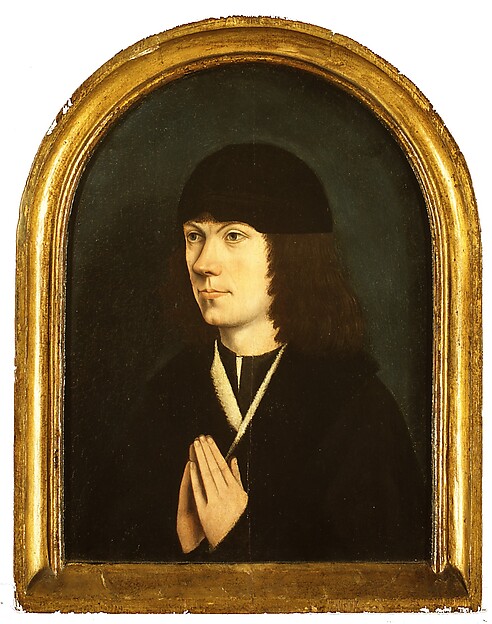 Portrait of a Young Man
 Altarpiece from Thuison-les-Abbeville: Saint Honoré
 Altarpiece from Thuison-les-Abbeville: The Ascension
 Panels from the High Altar of the Charterhouse of Saint-Hono
 The Nymph of Fontainebleau
More like this
 Blade: Peter Munch
Germany, Solingen, c. 1595-1660 — Smallsw
Blade: Peter Munch
Germany, Solingen, c. 1595-1660 — Smallsw Aubry Le Jeune — Smallsword
 Hilt: Flemish or Dutch; blade: French — Composite Smallsword
 Western European — Smallsword
 Northern European, probably English — Transitional Rapier
 Hilt: northern European (possibly Swedish)
Blade: possibly I
Hilt: northern European (possibly Swedish)
Blade: possibly I Melchior Diefstetter — Composite Sword
 German — Cavalry Sword with Calendar Blade
 German
Blade possibly Spanish — Parrying Poniard
German
Blade possibly Spanish — Parrying Poniard Dutch — Sword (Pappenheimer Rapier)
 German — Boar Sword
 Northern European — Rapier