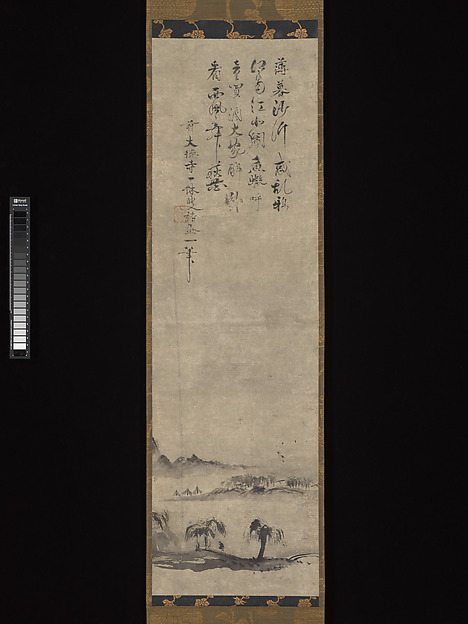
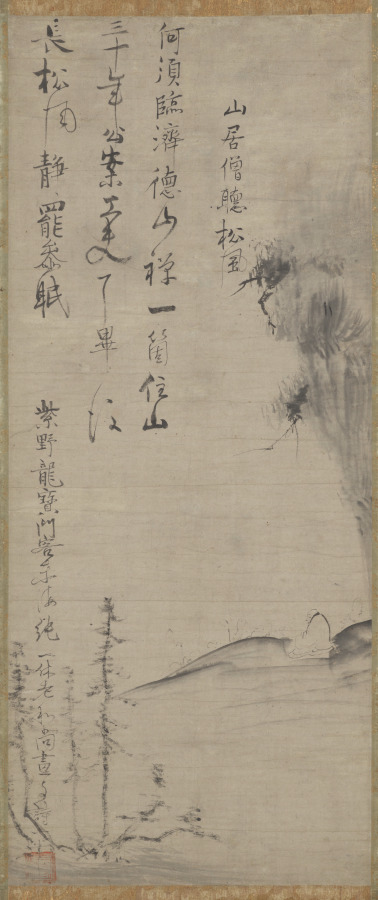
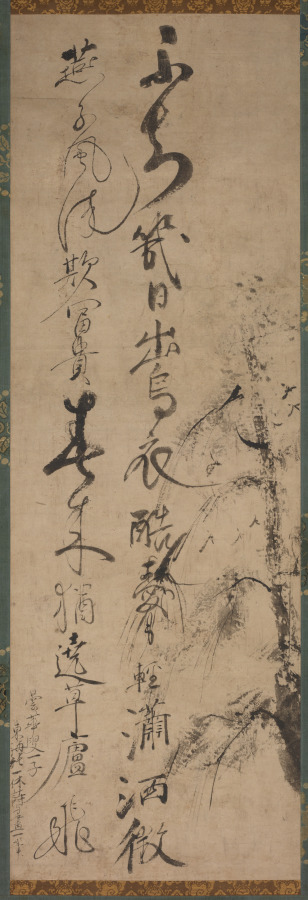
In the collection of Cleveland Museum of Art, Cleveland — check current display status with the museum.
FROM THE CLEVELAND MUSEUM OF ART’S CATALOG
Left by his mother at a small Zen temple in Kyoto at the age of six, Ikkyu later drew on his early studies and experiences for his writings, which focused on his keen interest in the Chinese classics. Poetry in particular was a favorite subject and images from classical poetry or passages from favorite poems or commentaries frequently provided Ikkyu with the core ideas for his own work. A rare example of his calligraphy, this narrow scroll contains a verse in eight phrases, each comprising four characters. The whole verse is organized in three towering lines of brusque, emphatic calligraphy augmented by Ikkyu's signature-the two lines of running script in the lower left corner. The text refers to a passage included in the Chronicle of the Zen Sect that contains a cautionary reminder attributed to the legendary Chinese monk Foyen Qingyuan (1067-1120), long revered in Japan. The initial phrase begins: "Life is a mirage."
Be the first to share your thoughts.
Sign in to join the discussion.
 Matsumura Goshun
 Ike Taiga
 Gao Fenghan — Poem by Gao Fenghan
 Dong Qichang — "Guitian fu" by Zhang Pingzi
 Zhu Yunming — Retreat on an Autumn Day
 Tani Bunchō|Shokusanjin (Ōta Nanpo)
 Ōtsuki Bankei — Chinese Poem: Seven-character-quatrain
 Hakuin Ekaku — 'JOY: In joy lie the seeds of sufferings; in
 Dong Qichang — Calligraphy in the Styles of the Four Song Ma
 Shokusanjin (Ōta Nanpo) — 蜀山人(大田南畝)筆 筍図|Bamboo Shoots
 Unidentified artist
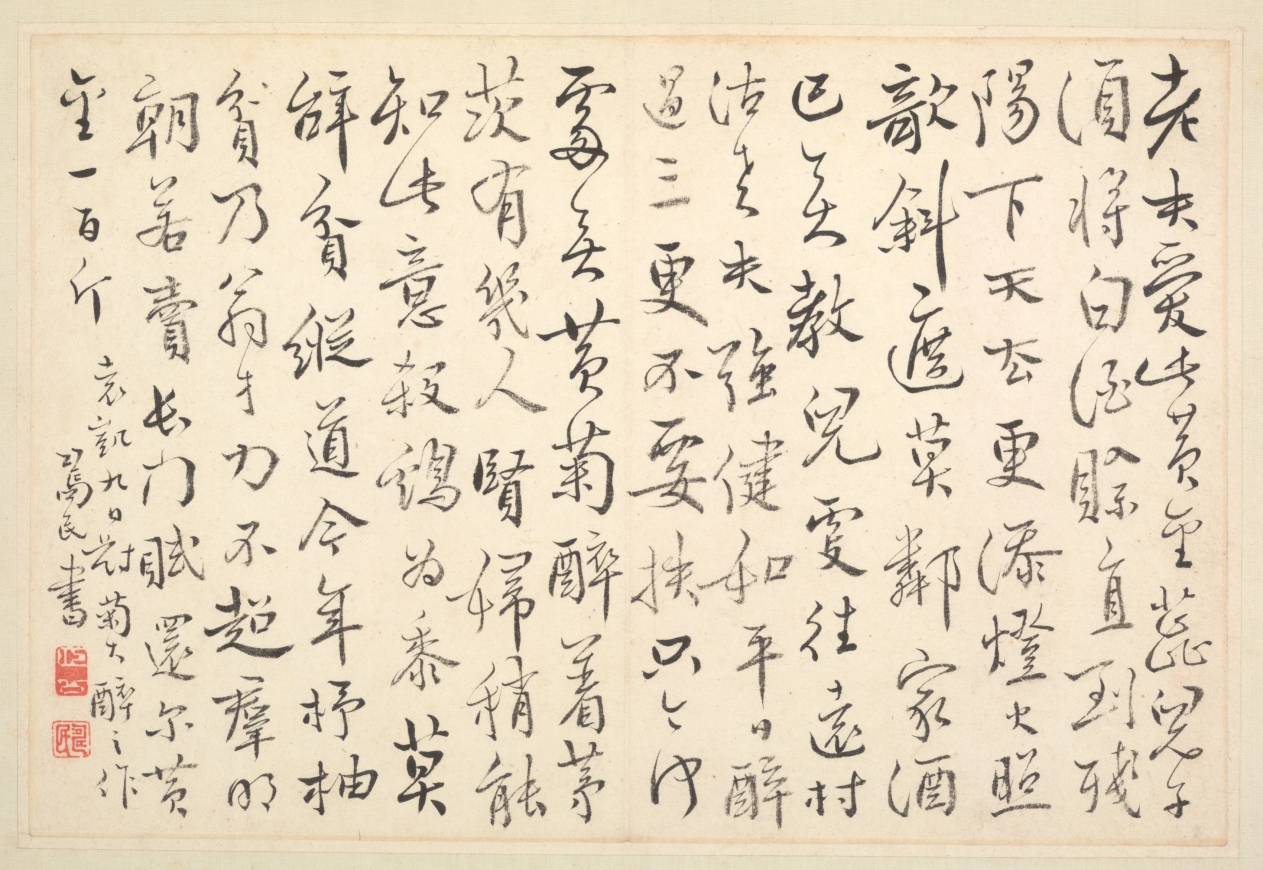 Bian Shoumin (Chinese, 1684–1752) — Album of Calligraphy and