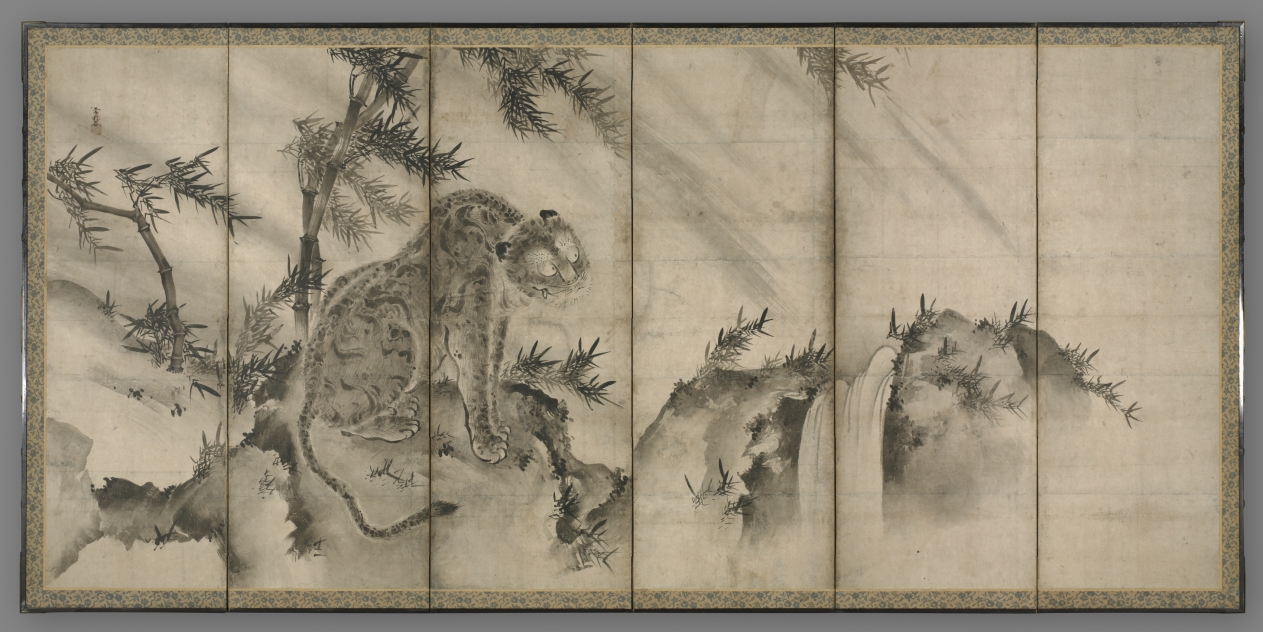
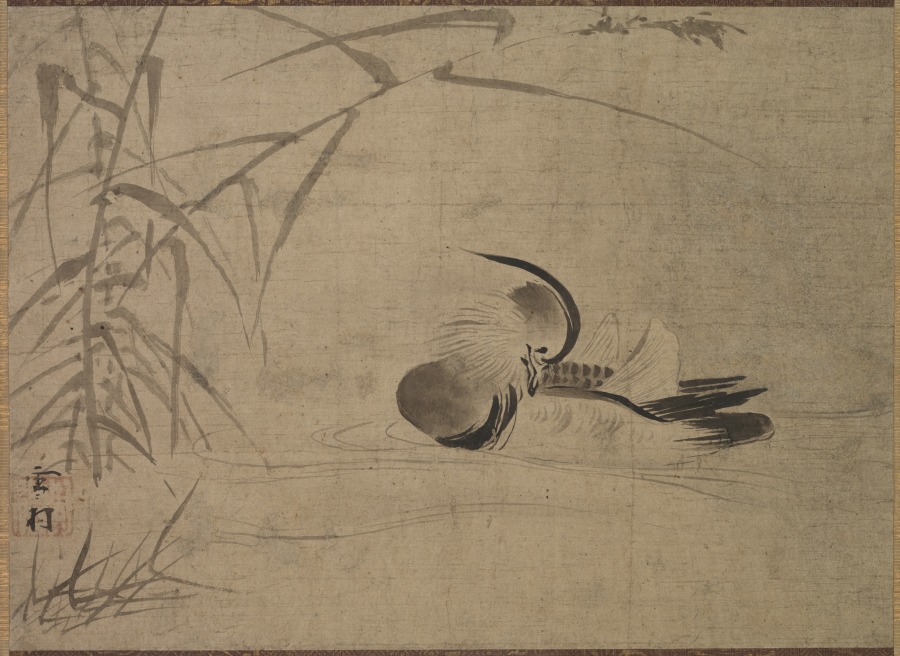
In the collection of Cleveland Museum of Art, Cleveland — check current display status with the museum.
FROM THE CLEVELAND MUSEUM OF ART’S CATALOG
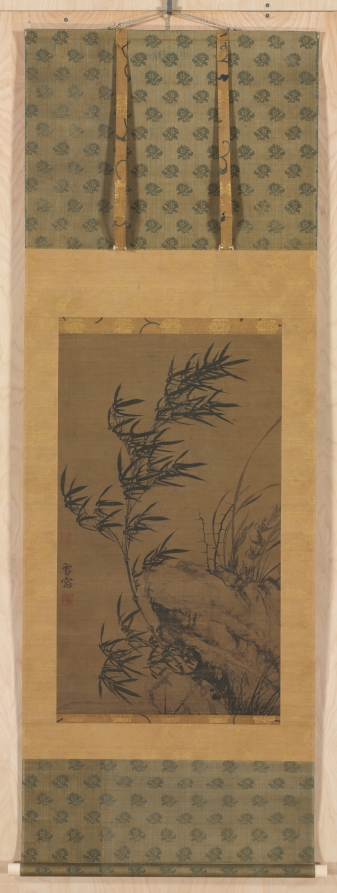
This painting of a white plum (or prunus) and bamboo was once part of a triptych. A central image of the demon-queller Zhong Kui was flanked by this painting and one of a red plum and bamboo. The paintings would have been suitable to hang after the turn of the new year, when Zhong Kui would drive out evil demons, and the year’s first flowers were in bloom. Sesson hailed from what is now Ibaraki prefecture in northern Honshu. A Zen monk, he spent much of his career in the Kanto region, and developed a distinctive style uninhibited by formal training in the Kano atelier.
Be the first to share your thoughts.
Sign in to join the discussion.
 Puming (Xuechuang) (Chinese, active before 1274-after 1329)
 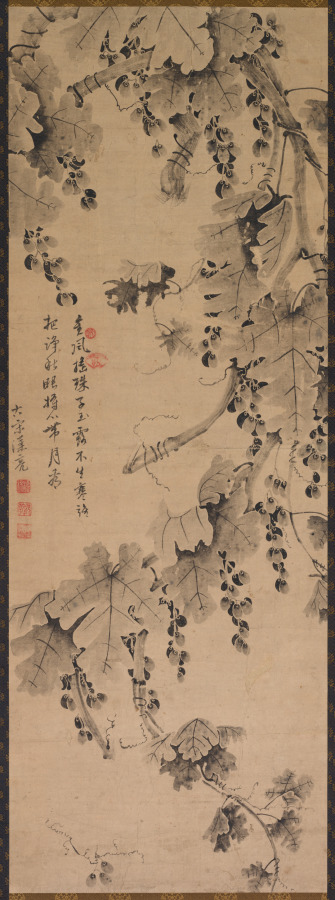 Grapevine
 Chen Chun — Mallows and Garden Rock
 Chen Chun — Narcissus and Plum Blossoms (Meihua shuixian tu
 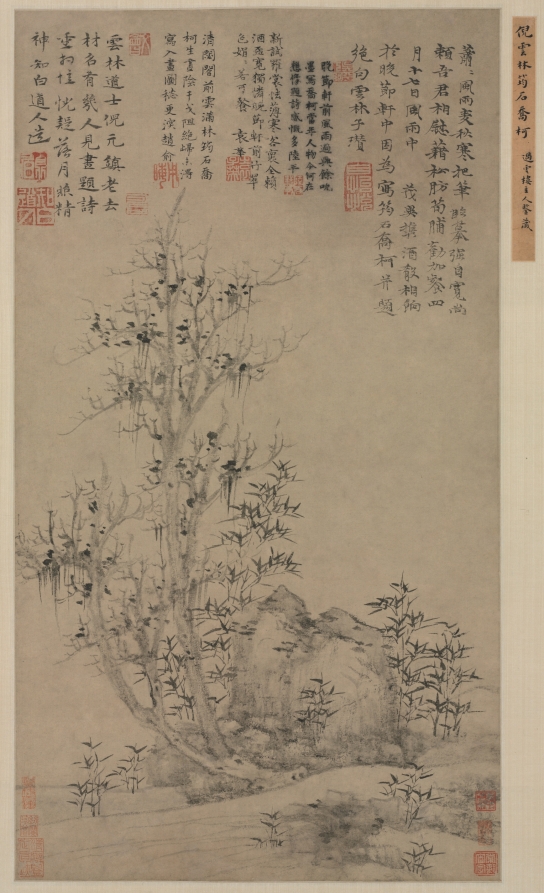 Ni Zan (Chinese, 1301–1374) — Bamboo, Rock, and Tall Tree
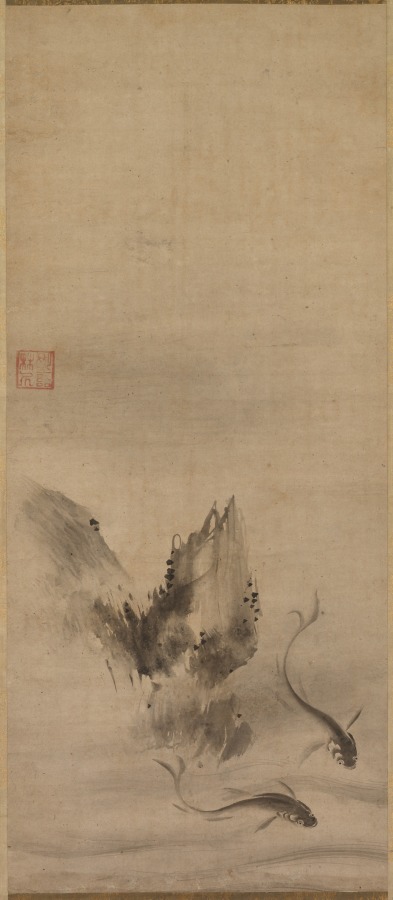 Rinkyo (Japanese) — Fish and Rock
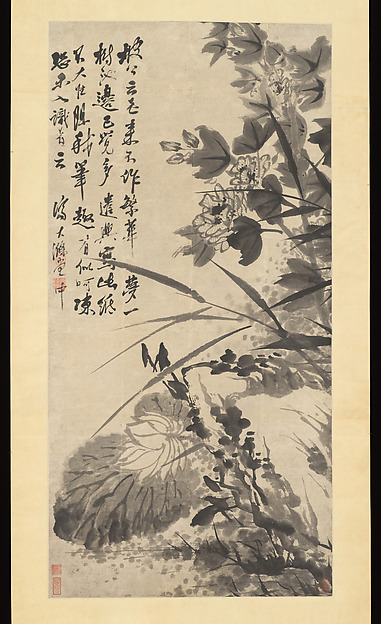 Shitao (Zhu Ruoji) — 清 石濤 (朱若極) 花石圖 軸|Hibiscus, Lotus, an
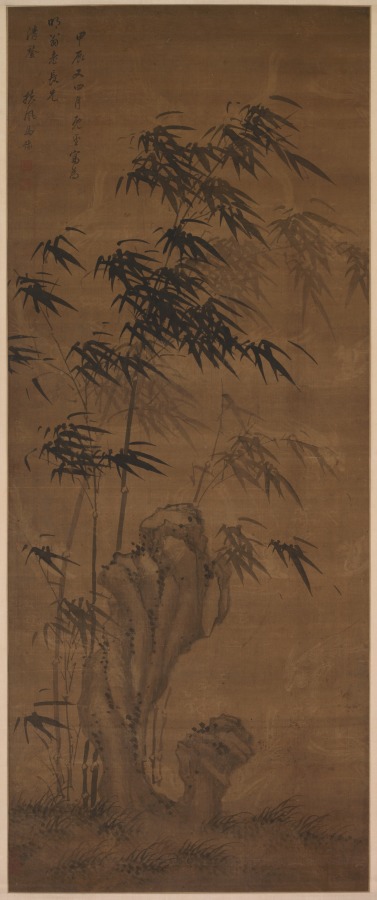 Ma Yu (Chinese, active 1706–1724) — Bamboo in the Wind
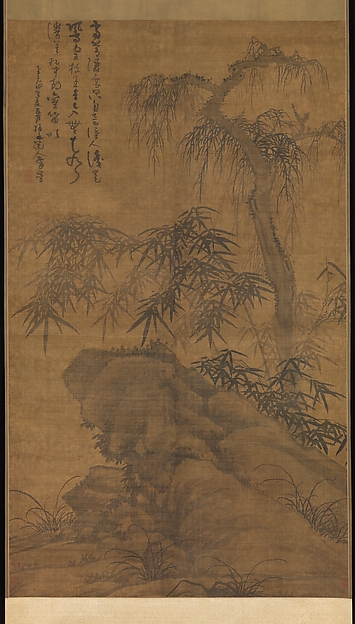 Wu Zhen — 元 吳鎮 高節凌雲圖 軸|Bamboo, old tree, and rock
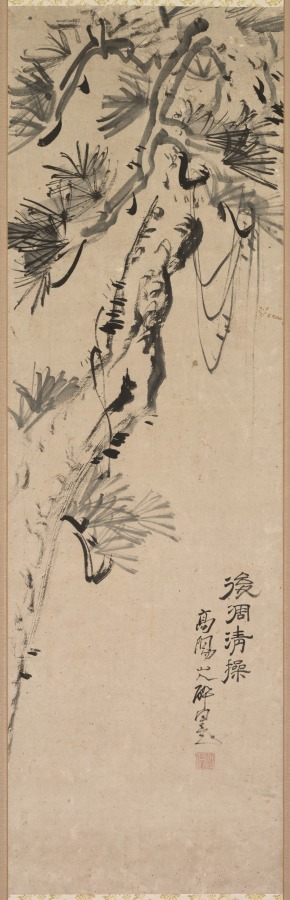 Nakayama Kōyō (Japanese, 1717–1780) — Aged Pine
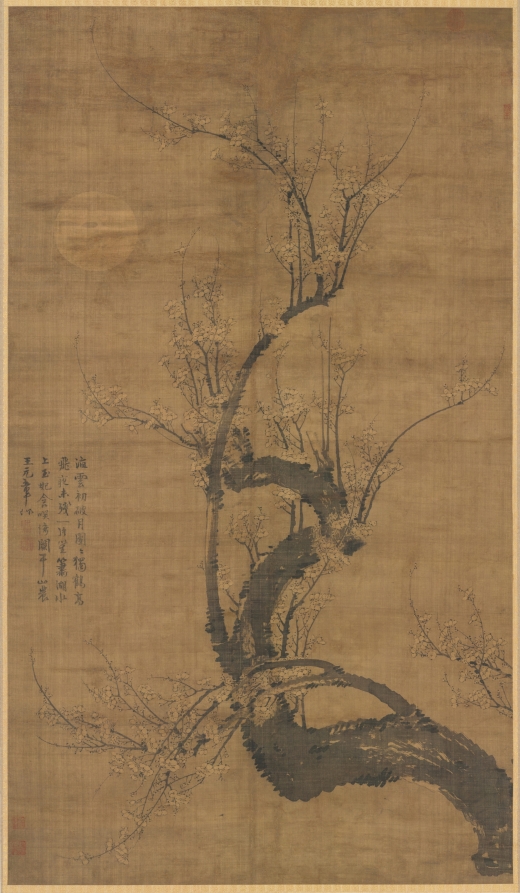 Wang Mian (Chinese, 1287–1359) — A Prunus in the Moonlight
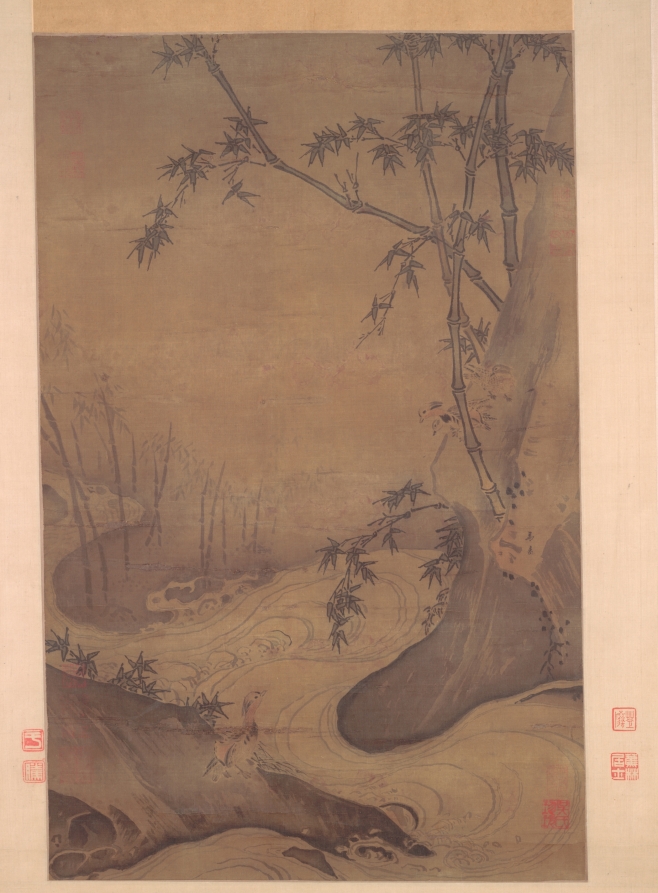 Ma Yuan (Chinese, c. 1150–after 1255) — Bamboo and Ducks by