Foremost in the Envious Race
1885
Gray and white gouache, with touches of brown and black gouache, over traces of graphite, on cream wood-pulp laminate board
18.2 × 35.1 cm (7.2 × 13.8 in)
SEE IT IN PERSON
Not currently on view
In the collection of Art Institute of Chicago, Chicago · as of July 2026
Discussion
Be the first to share your thoughts.
Sign in to join the discussion.
More by Will Hicock Low


More like this
 Pierre Paul Prud'hon — The Triumph of Bonaparte
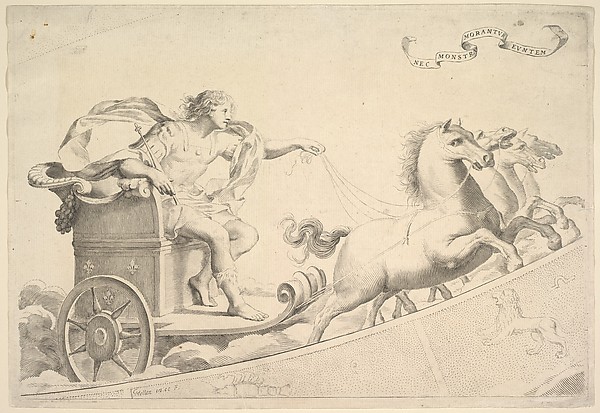 Claude Mellan — Allegory in Honor of Louis XIV
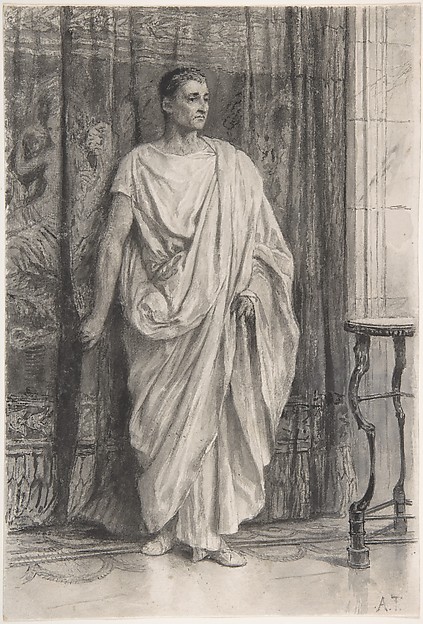 Sir Lawrence Alma-Tadema — Standing Roman
 Étienne Delaune — Triumphal March, from Combats and Triumphs
 Jacobus Smies — Classical Scene with Young Couple in Chariot
 Andrea Andreani — Triumph of Caesar
 Andrea Andreani — Triumph of Caesar
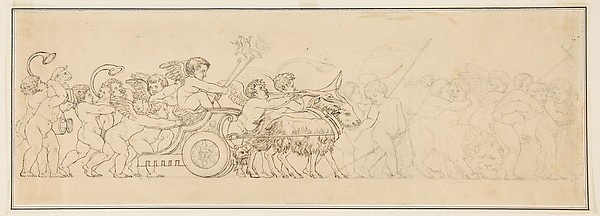 Anonymous, French, 19th century — Design for a Frieze with a
 Luca Penni — Battle before Troy
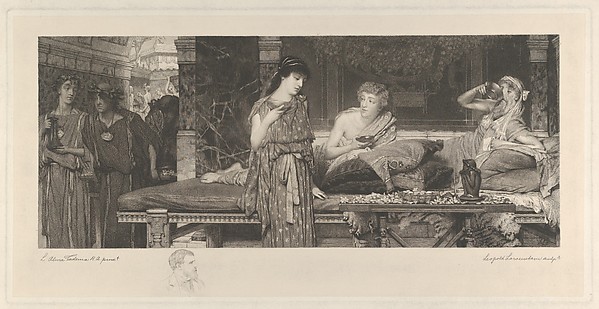 Leopold Löwenstam|Sir Lawrence Alma-Tadema|Sir Lawrence Alma
 James Gillray — Light Expelling Darkness,-Evaporation of Sty
 Jean-Léon Gérôme — Julius Caesar