FROM THE CLEVELAND MUSEUM OF ART’S CATALOG
Kalighat paintings reflect the time and context in which they were created. Kalighat painters used their medium to offer penetrating and insightful critiques of British-influenced Indians as well as the British themselves through satires and caricatures. Newly rich Bengali native Indian clerks (babus) aspired to dress and behave like their British masters, and Kalighat painters taunted them for this. A chinless barber with cleaning pins tucked in his turban is cleaning the ears of a lady customer. A fashionable woman, she smokes a hookah and exposes one breast to her flirtatious barber. As the Bengali babus spent time with their mistresses and courtesans, neglected wives and concubines were portrayed as relying on the company of their servants.
Source ↗︎
Be the first to share your thoughts.
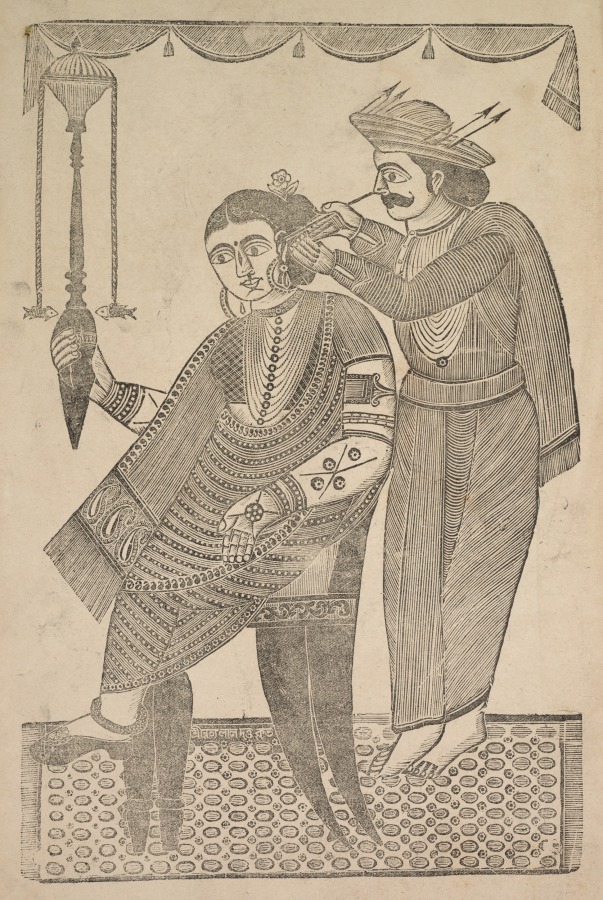 Shri Gobinda Chandra Roy (Indian, active late 1800s) — A Bar
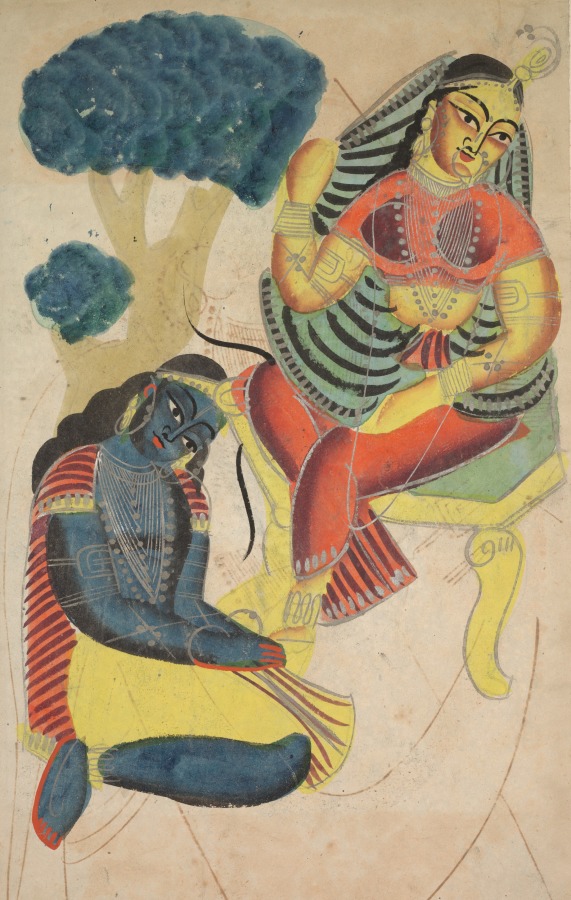 Krishna Stroking Radha's Feet (verso), from a Kalighat album
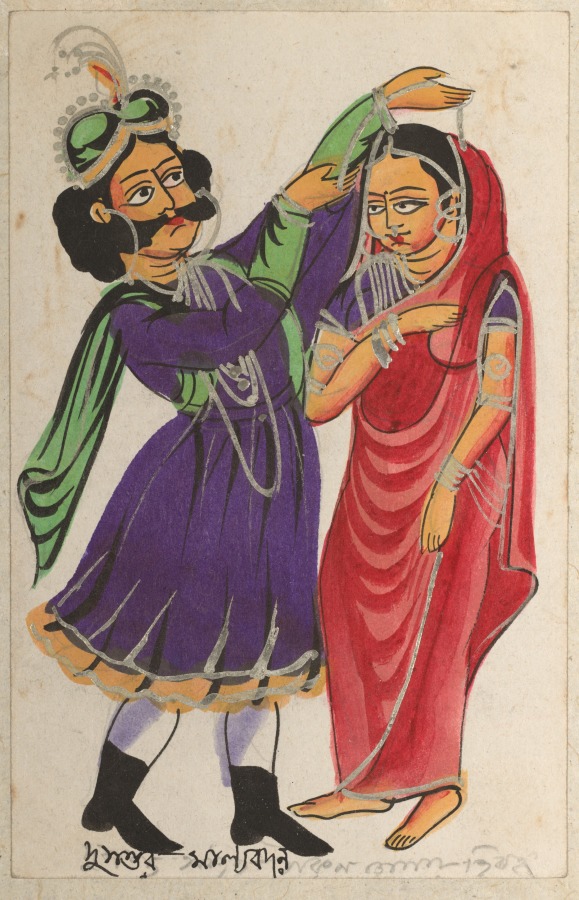 Dusmanta Garlanding Shakumtala
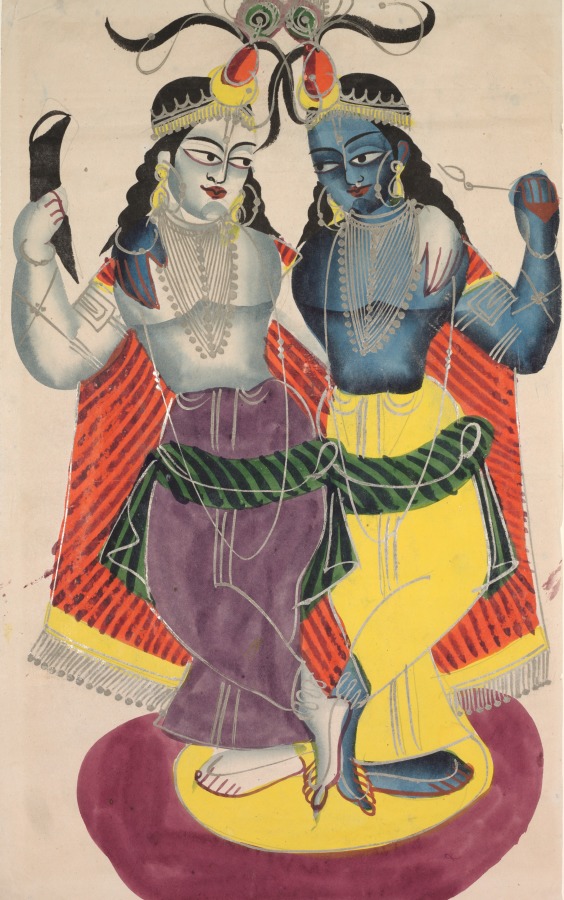 Balarama and Krishna
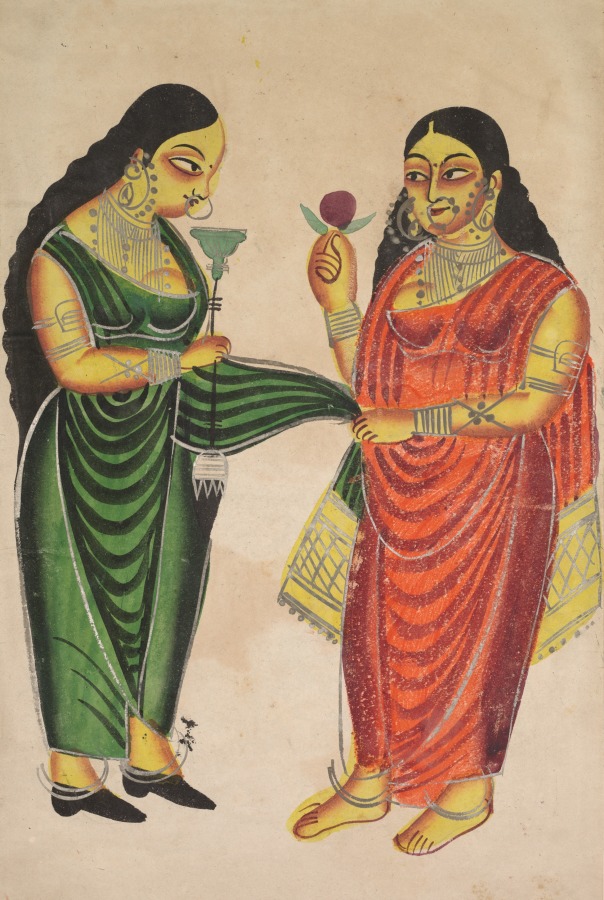 Maid bringing a hookah to a lady (recto), from a Kalighat al
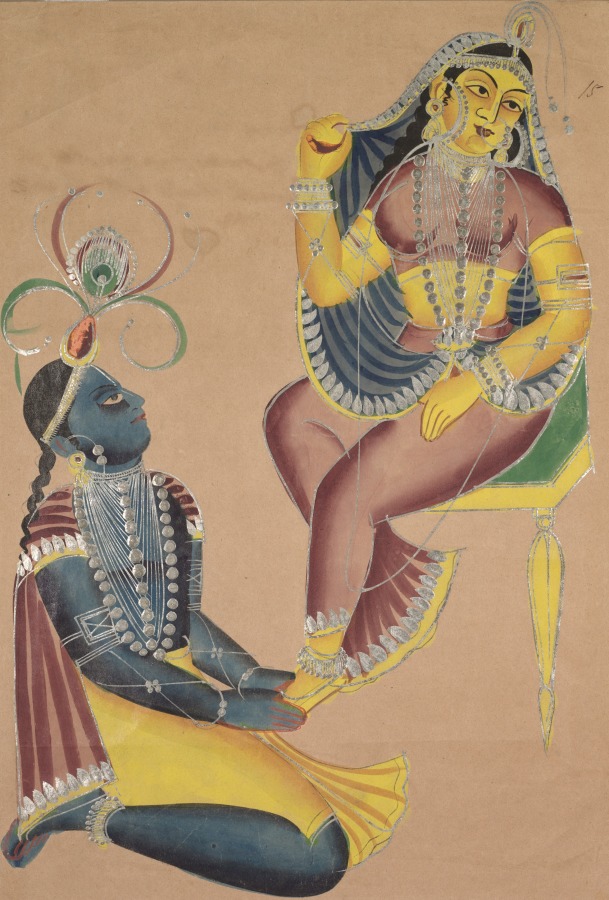 Krishna Stroking Radha's Feet
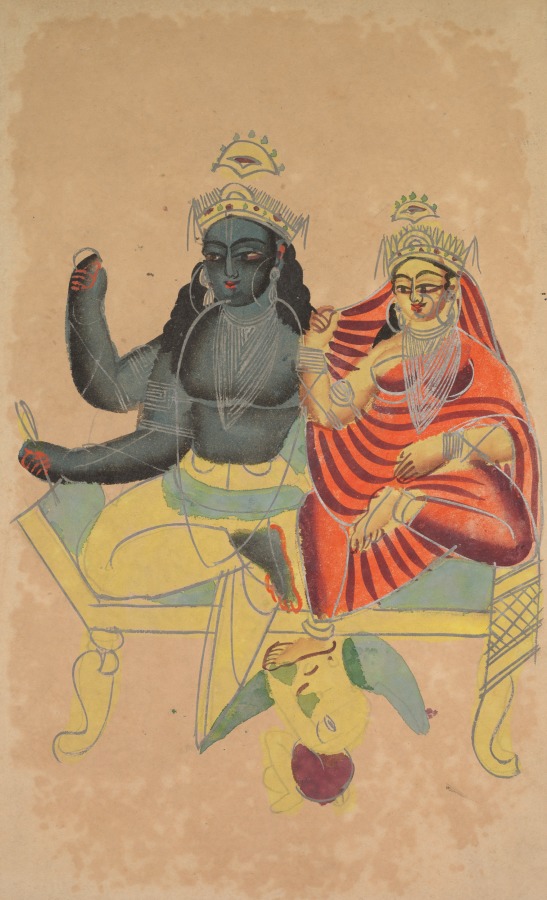 Vishnu and Lakshmi
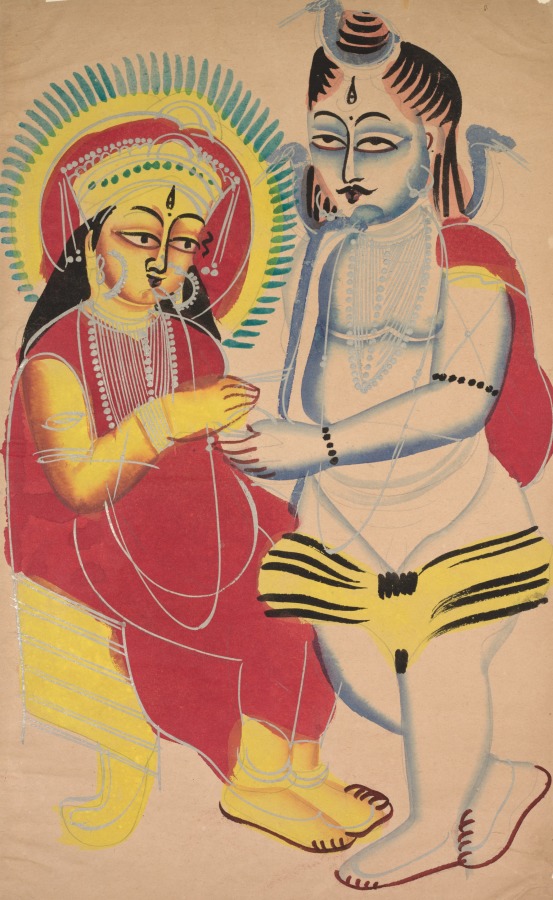 Annapurna and Shiva
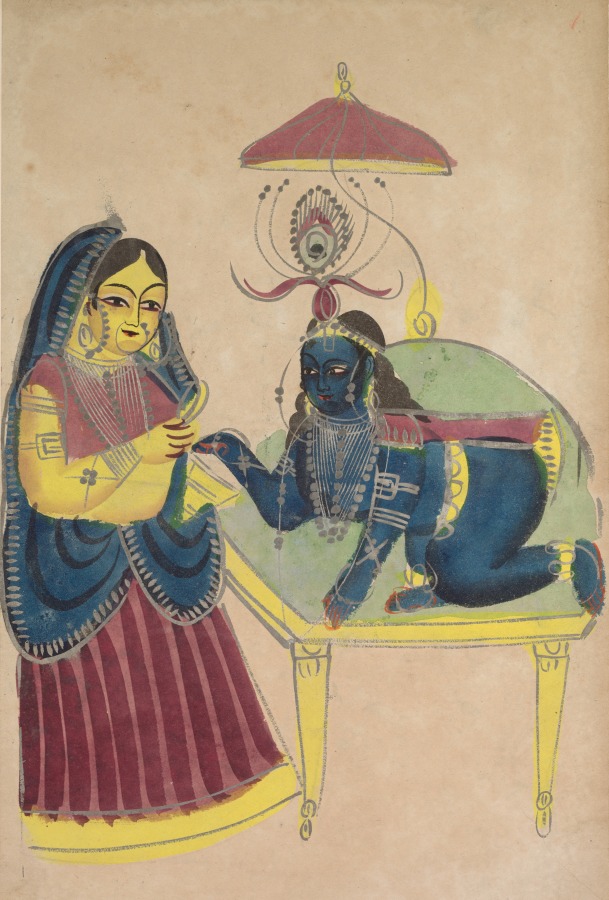 Baby Krishna Asking for Butter from Yashoda, from a Kalighat
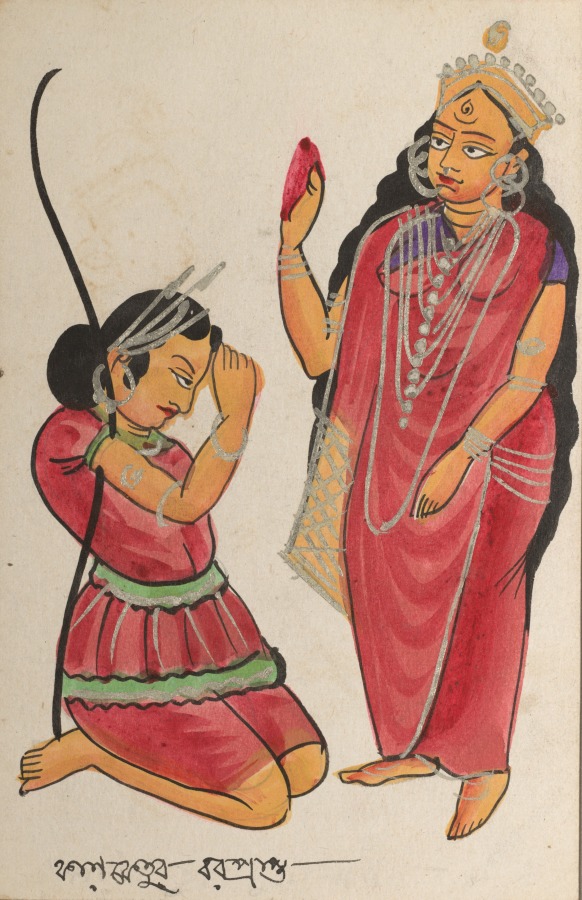 Kalaketu Receiving a Boon from the Goddess Chandi
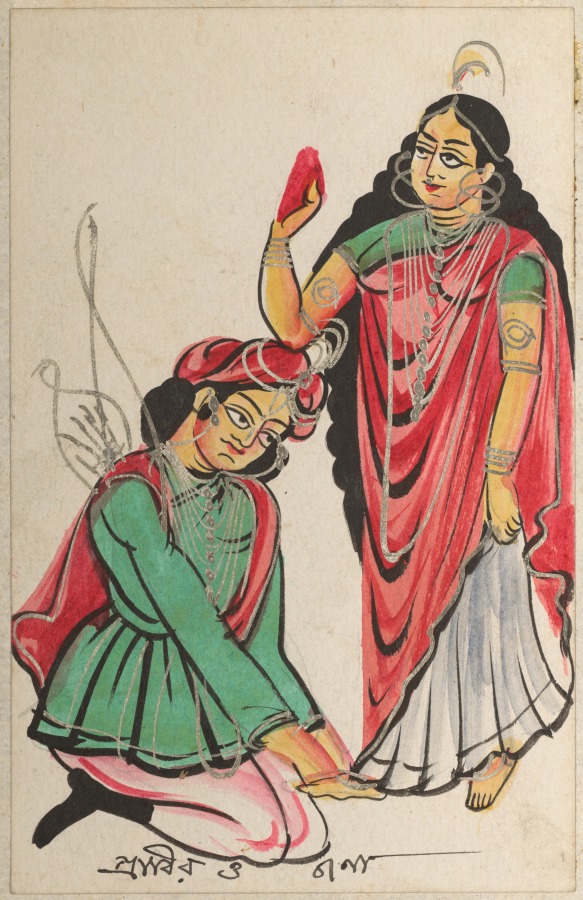 Pravira Kneeling at the Feet of Jana
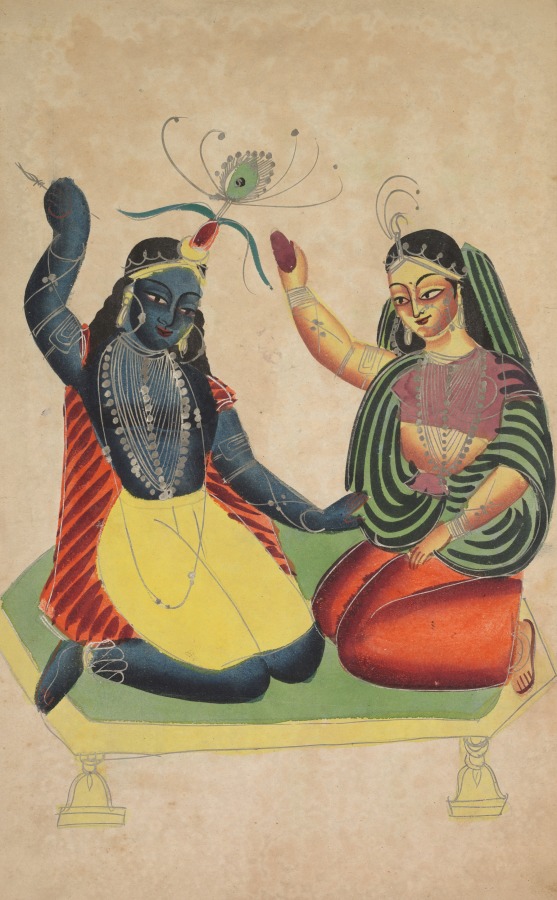 Radha and Krishna (verso), from a Kalighat album