FROM THE CLEVELAND MUSEUM OF ART’S CATALOG
Kalighat paintings reflect the time and context in which they were created. Kalighat painters used their medium to offer penetrating and insightful critiques of British-influenced Indians as well as the British themselves through satires and caricatures. Newly rich Bengali native Indian clerks (babus) aspired to dress and behave like their British masters, and Kalighat painters taunted them for this. The maid, dressed in green, holds a hookah in her right hand. The lady in red is likely a fashionable high society concubine or prostitute known and depicted at this time as hookah-smoking, makeup-wearing, paan- (betel leaf with areca nut and lime paste) chewing hussies. The wealth created by the East India Company made it possible for Bengali babu dandies to have concubines and pay for prostitutes.
Source ↗︎
Be the first to share your thoughts.
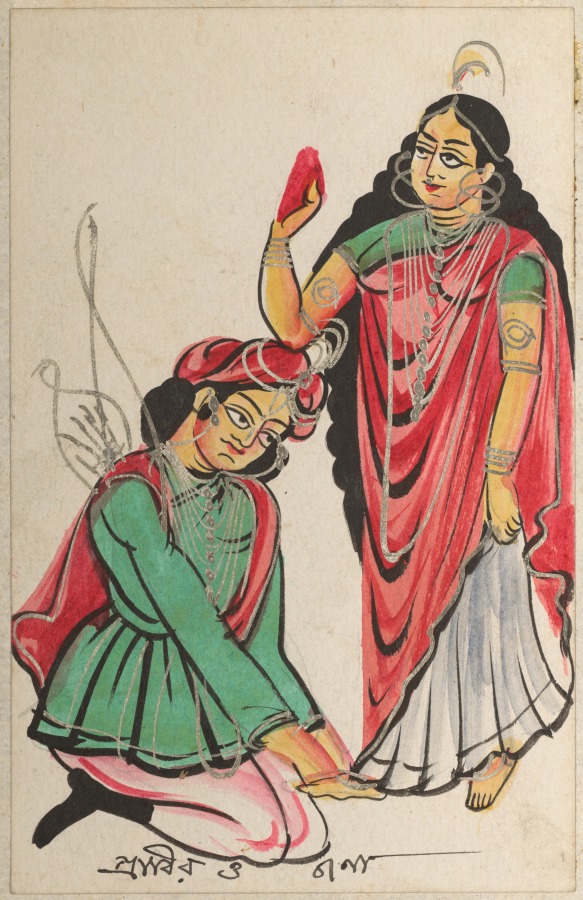 Pravira Kneeling at the Feet of Jana
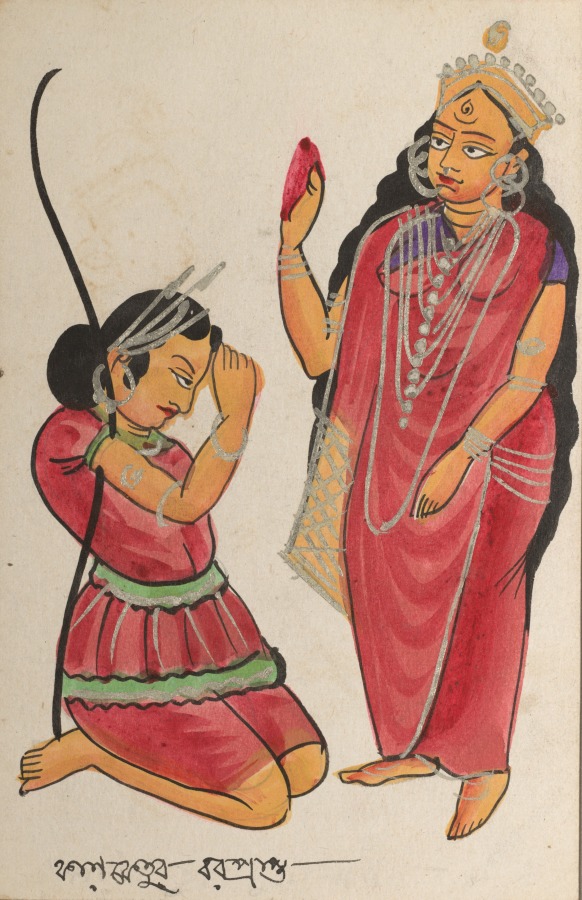 Kalaketu Receiving a Boon from the Goddess Chandi
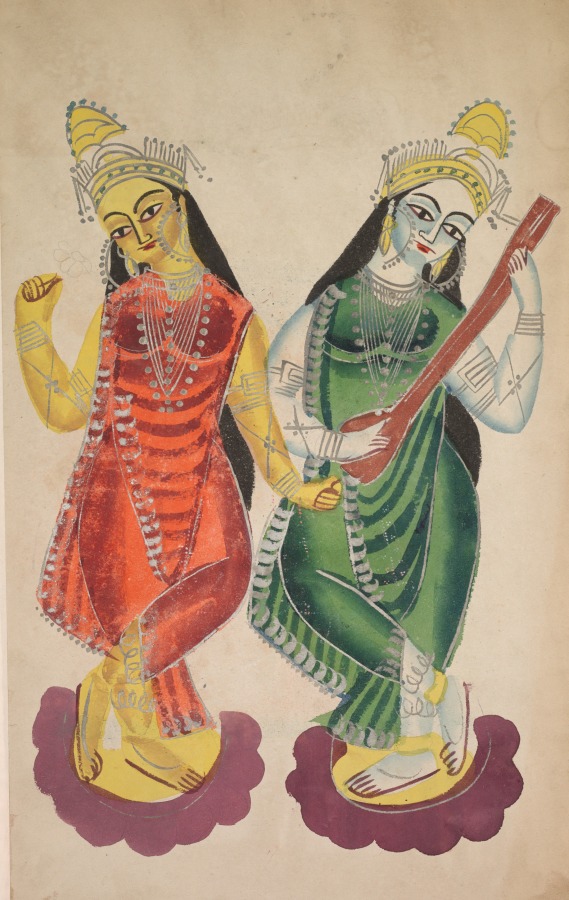 Goddesses Lakshmi and Sarasvati (verso), from a Kalighat alb
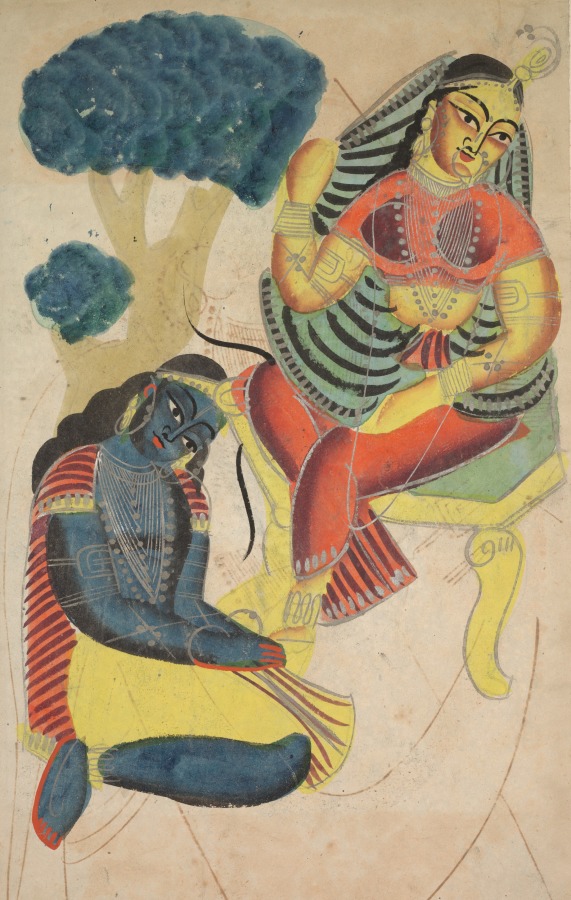 Krishna Stroking Radha's Feet (verso), from a Kalighat album
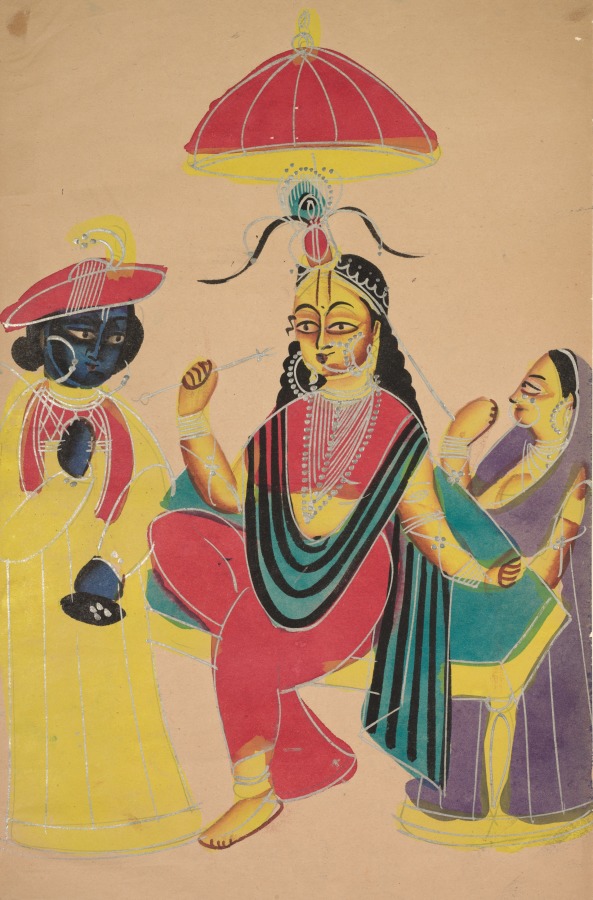 Krishna Standing by Radha who is Seated on a Chair
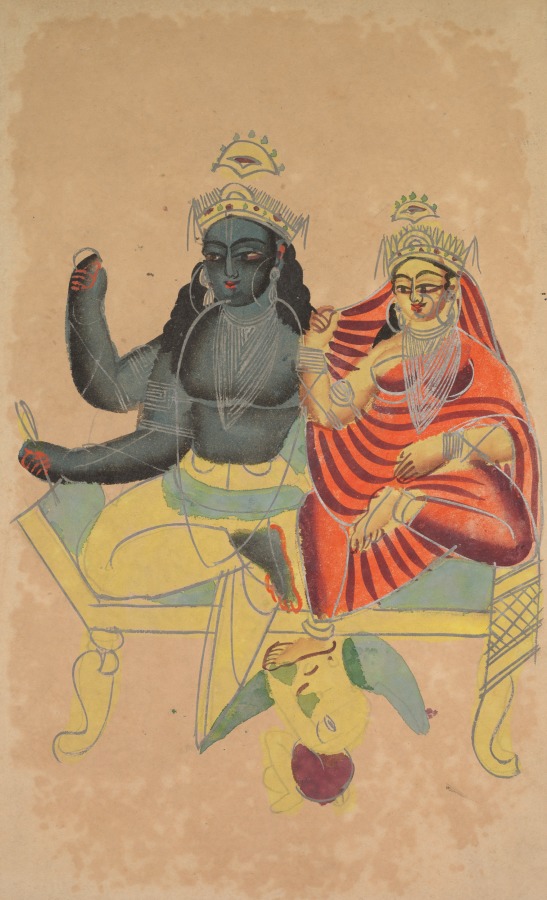 Vishnu and Lakshmi
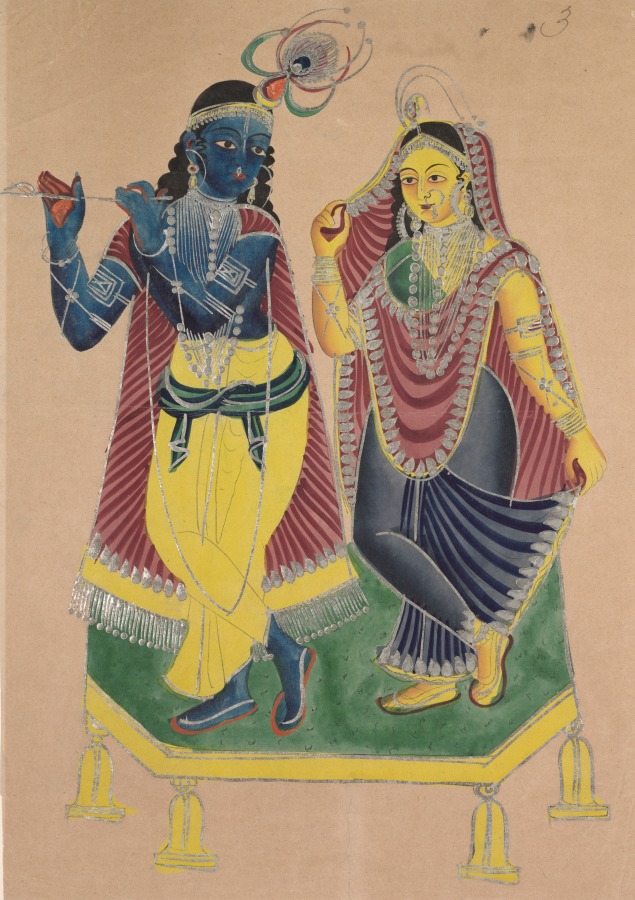 Radha and Krishna
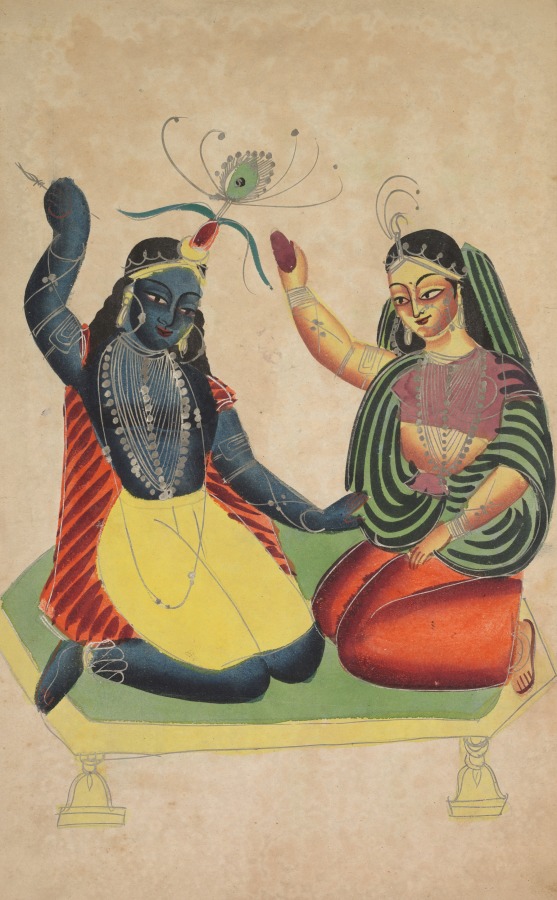 Radha and Krishna (verso), from a Kalighat album
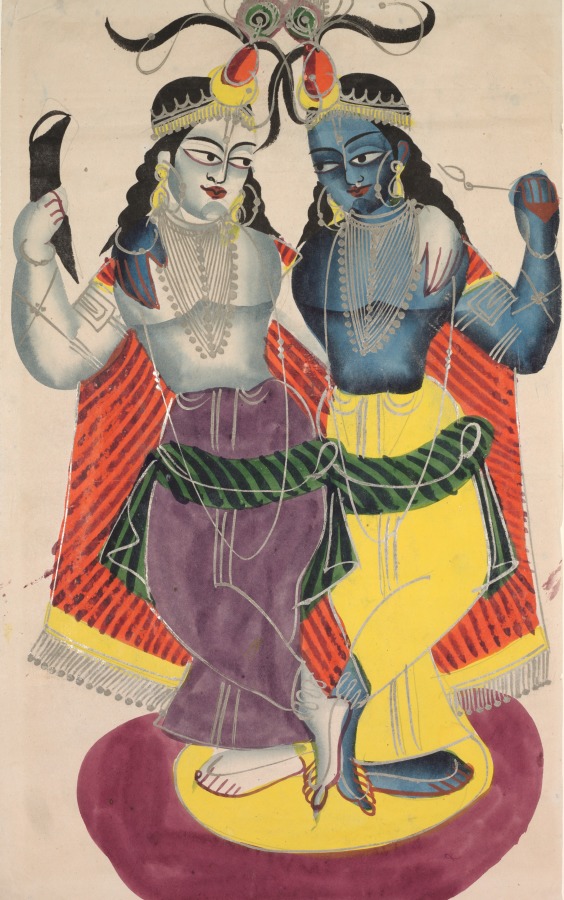 Balarama and Krishna
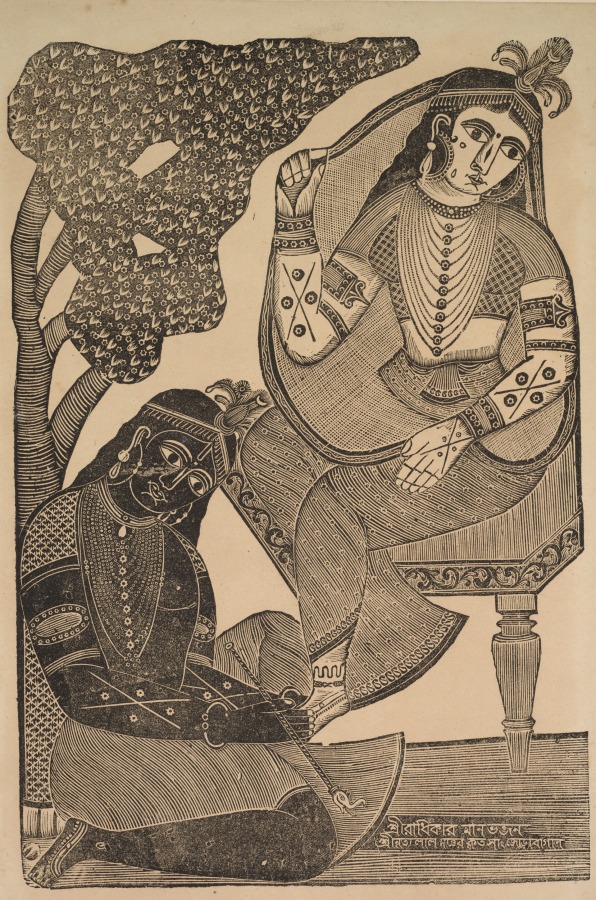 Shri Gobinda Chandra Roy (Indian, active late 1800s) — Krish
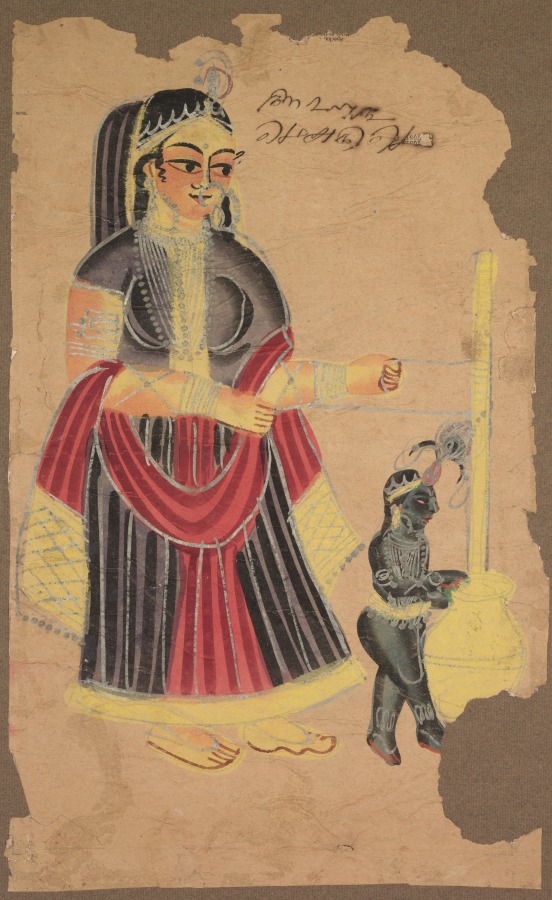 Yasoda and Krishna
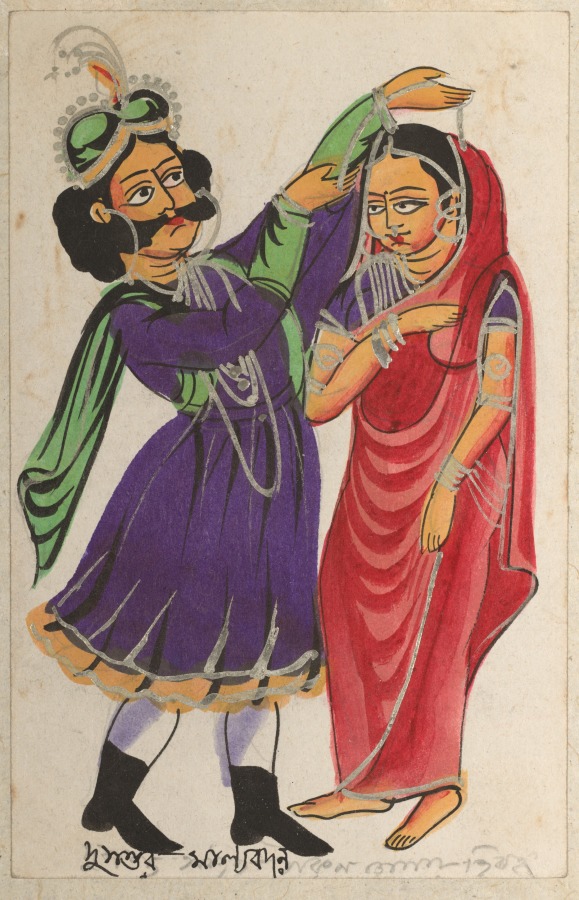 Dusmanta Garlanding Shakumtala