In the collection of Cleveland Museum of Art, Cleveland — check current display status with the museum.
FROM THE CLEVELAND MUSEUM OF ART’S CATALOG
The dramatic forest interior, ornamental foliage, and diminutive figures in this engraving are all hallmarks of the imaginary landscape tradition brought by Flemish immigrants to the northern Netherlands at the turn of the 17th-century. Pieter Stevens (about 1567-after 1624), the designer of the print, worked in Antwerp until 1594, when he was named court painter to Emperor Rudolf II in Prague. While in Rudolf's employ, Aegidius Sadeler engraved a number of his drawings, such as this work. Enormous trees rise above a scene of peasants and mules who cross a manmade bridge to reach a distant mill. In the foreground corner, a group of figures stand along the rocky river bank while a man fires a flintlock across the river.
Be the first to share your thoughts.
Sign in to join the discussion.
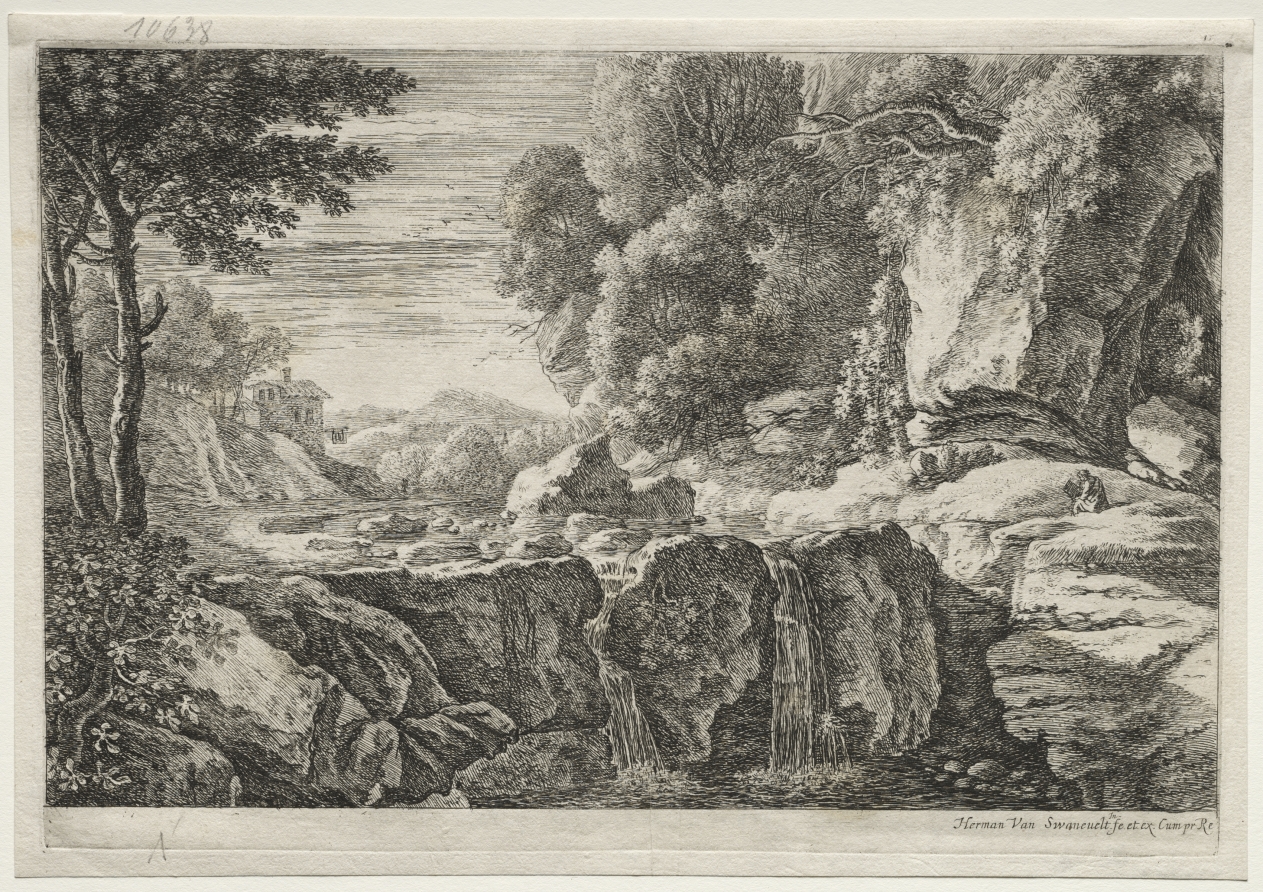 Herman van Swanevelt (Dutch, c. 1600–1655) — Four Landscapes
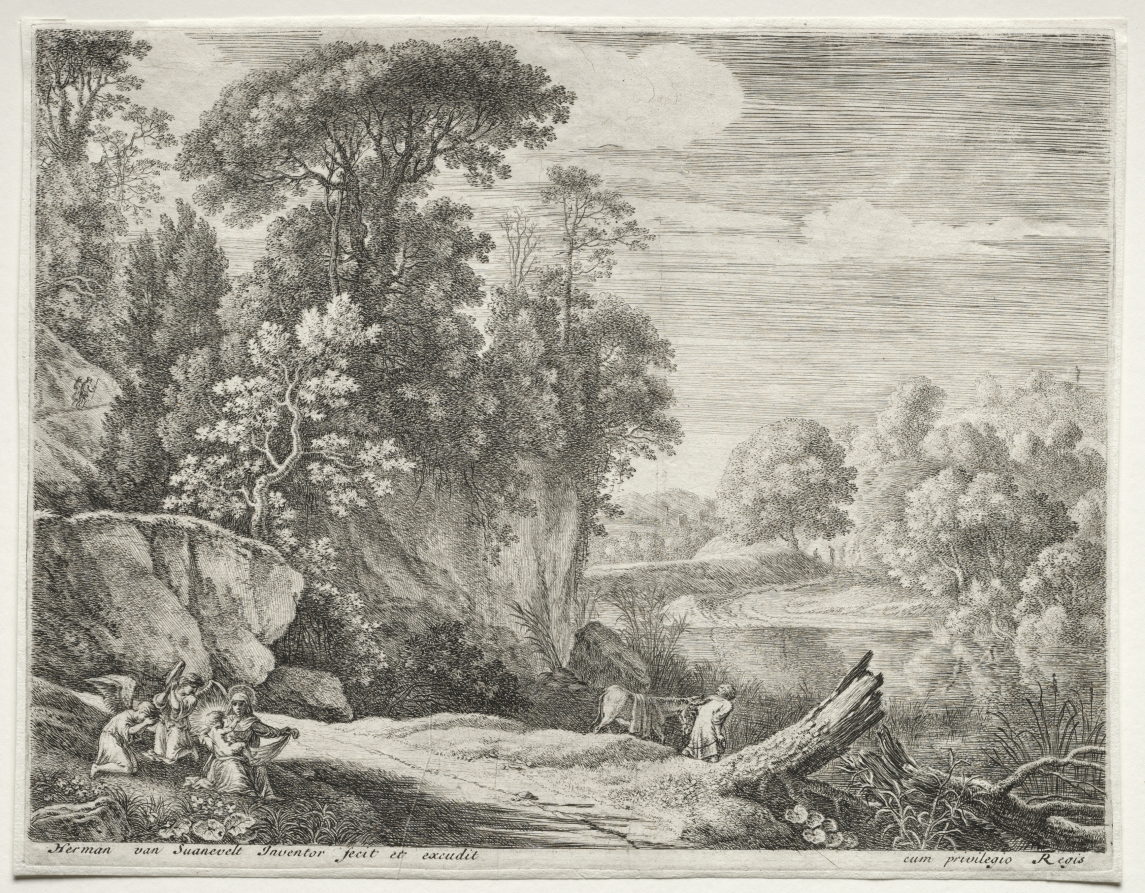 Herman van Swanevelt (Dutch, c. 1600–1655) — The Donkey Led
  Allart van Everdingen — The Rock in the Middle of the River
 Antonio Canaletto (Italian, 1697–1768) — Views: Mountain La
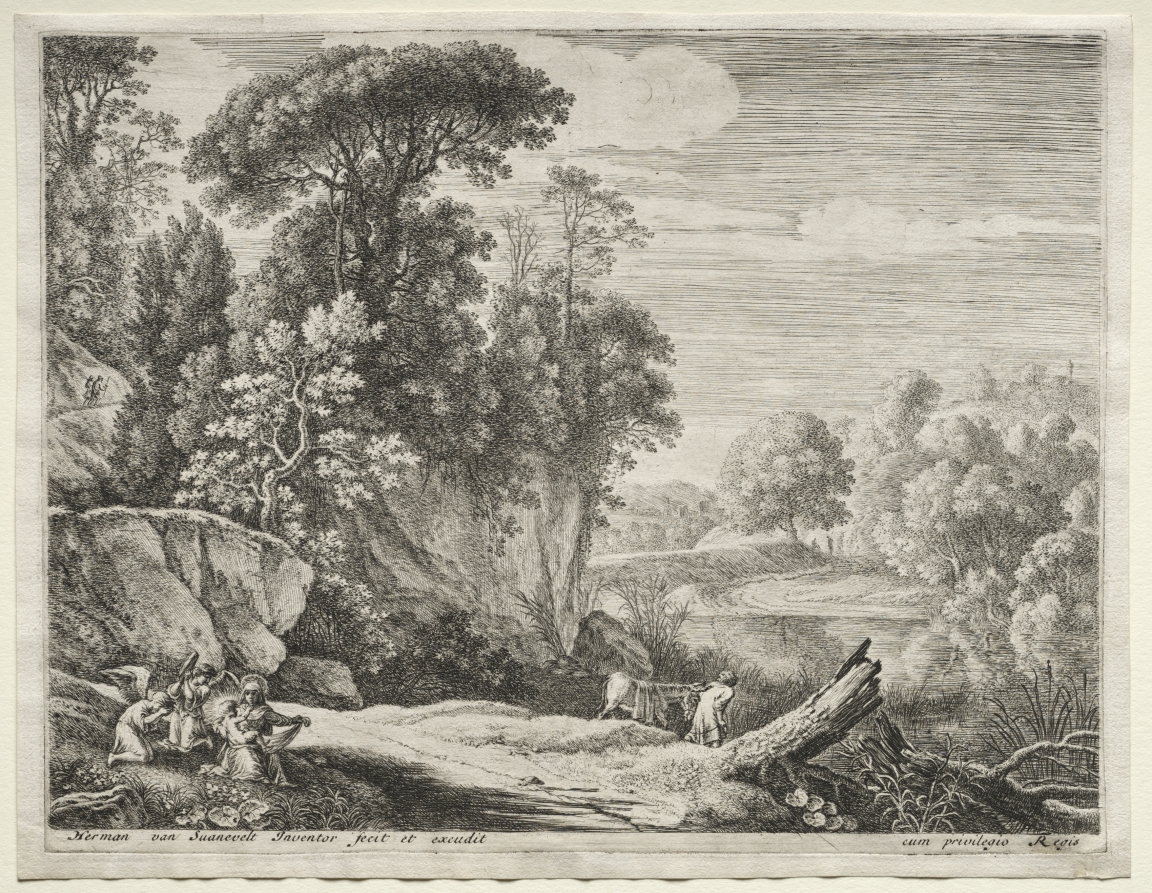 Herman van Swanevelt (Dutch, c. 1600–1655) — The Flight into
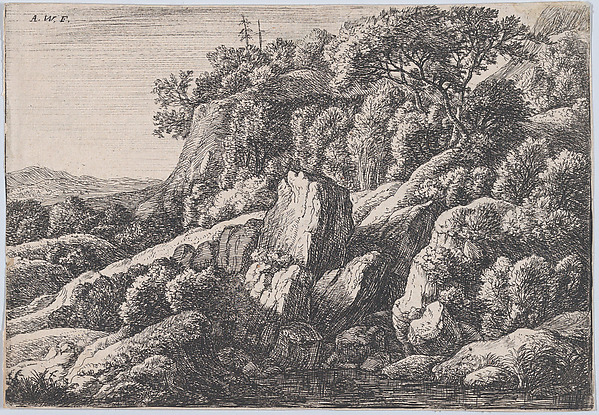 Anthonie Waterloo — The Wilderness Covered with Rocks
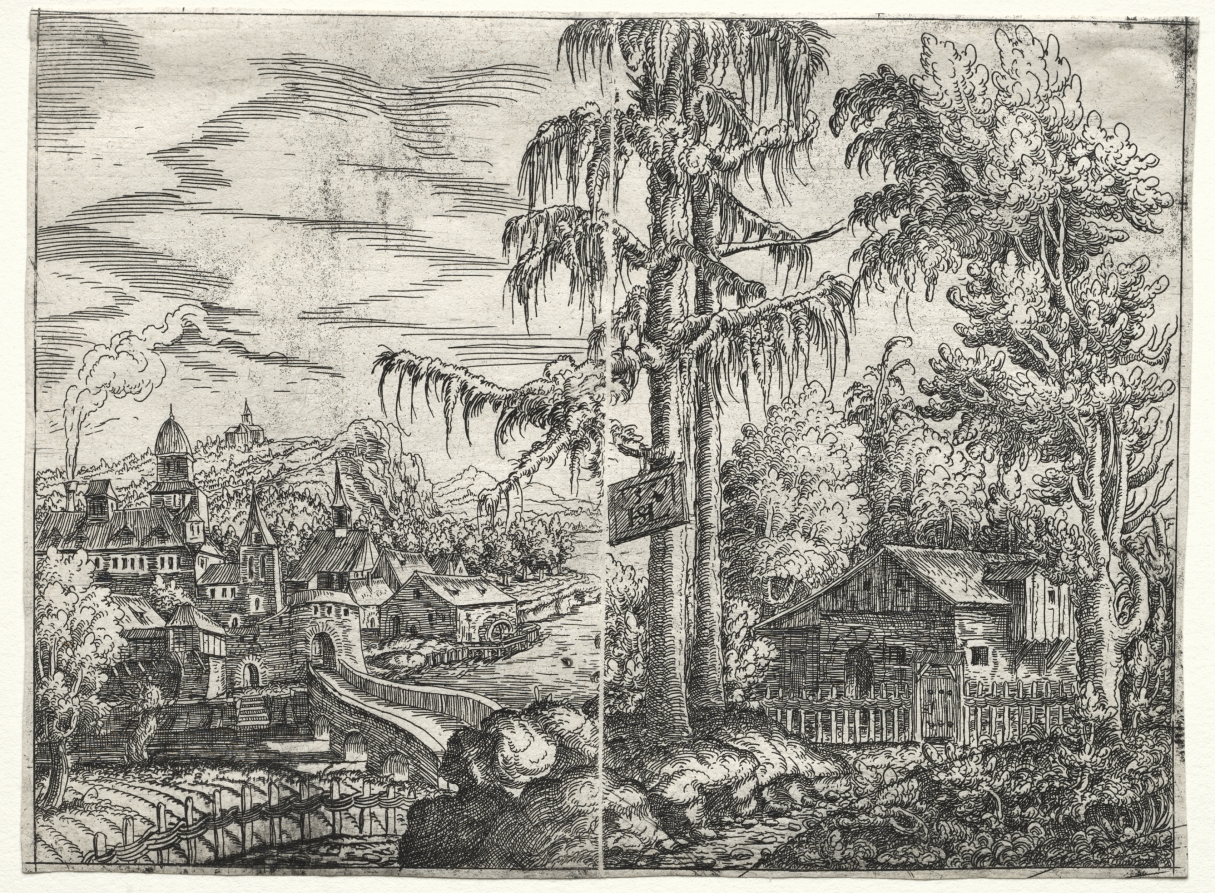 Hanns Lautensack (German, 1524–1566) — Landscape with the To
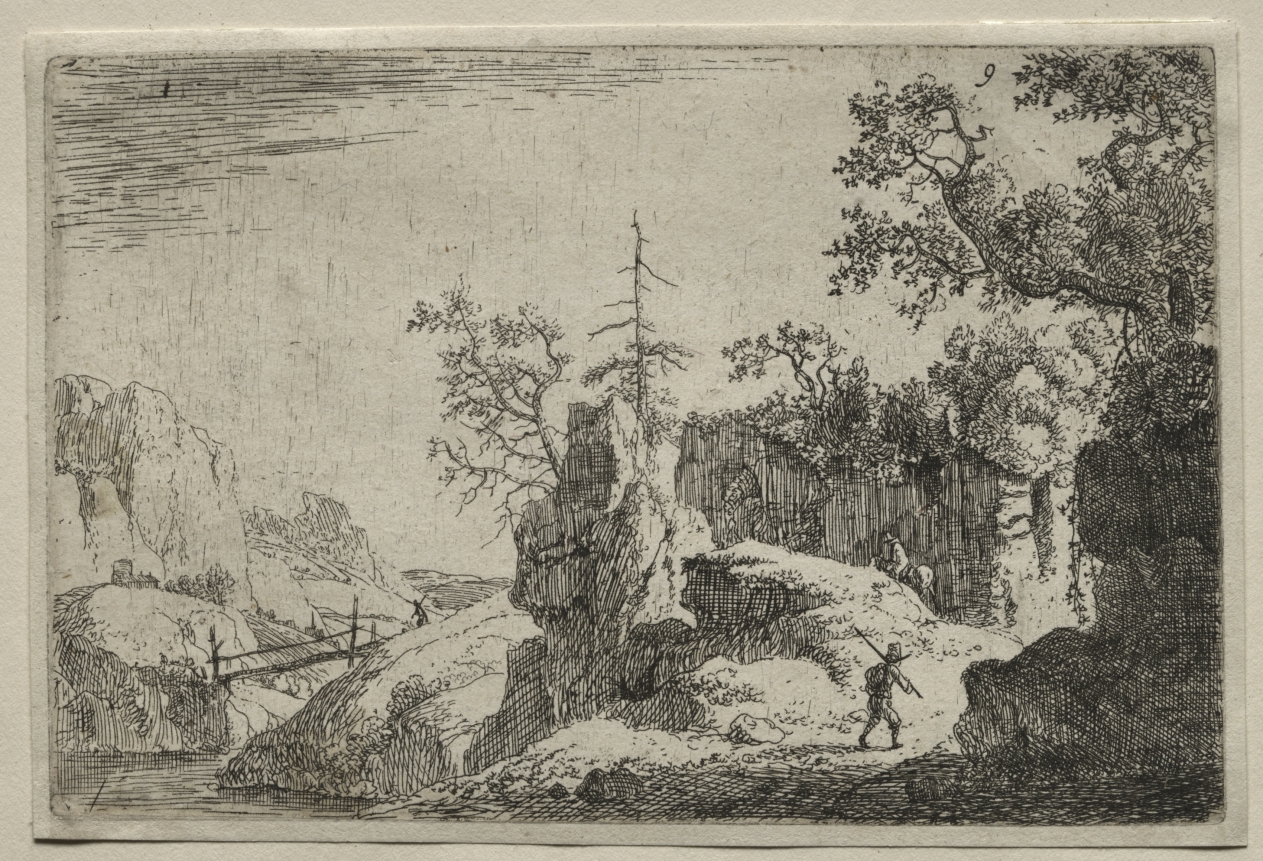 Jan van Aken (Dutch) — A Mountain Landscape
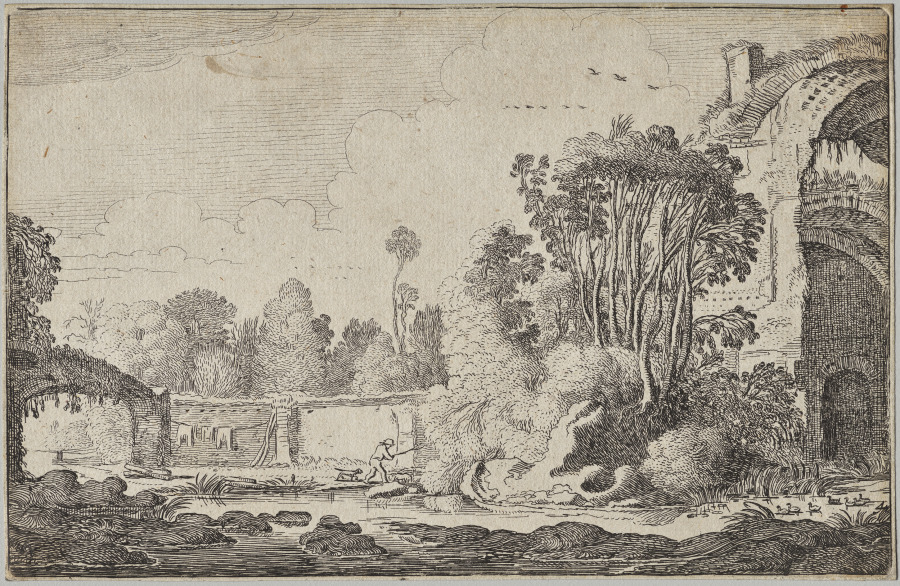 Jan van de Velde (Dutch, 1620–1662) — Landscapes, part III:
 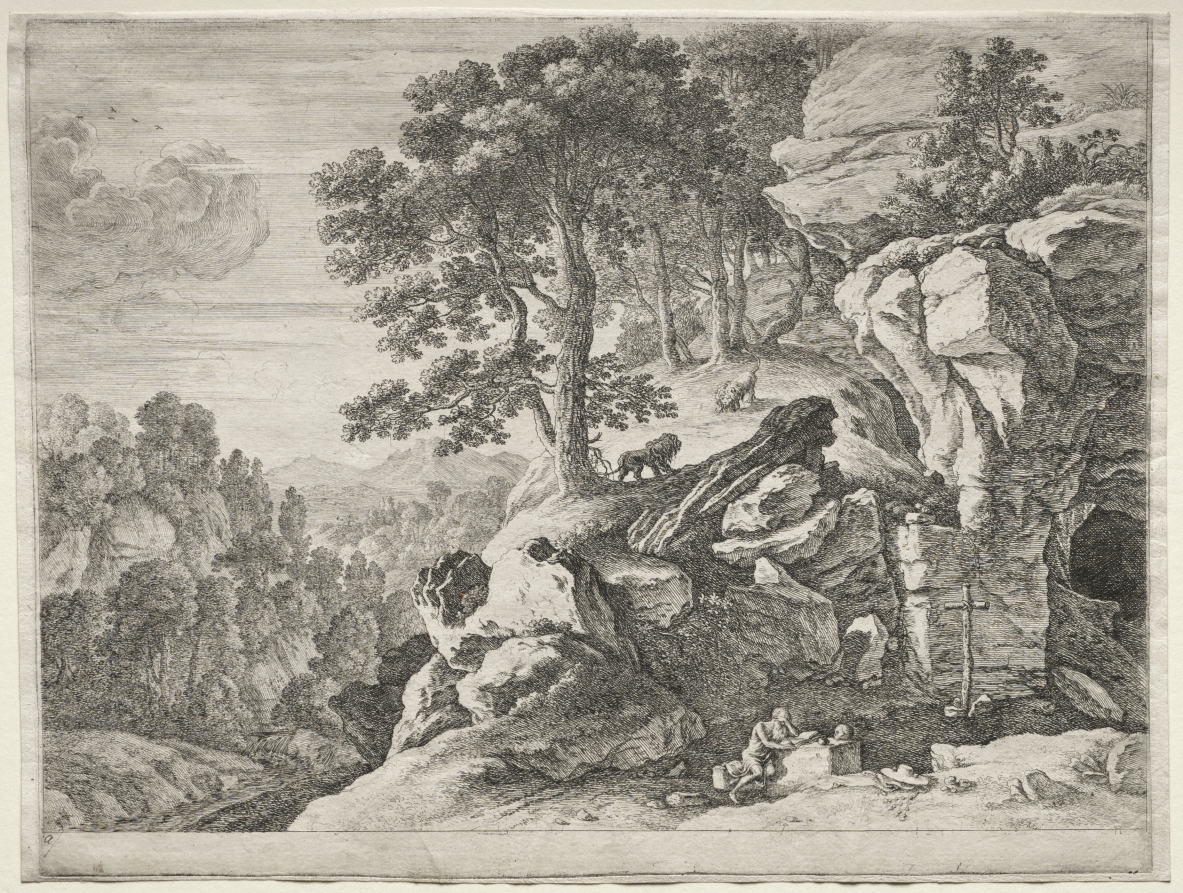 Herman van Swanevelt (Dutch, c. 1600–1655) — The Penitents:
 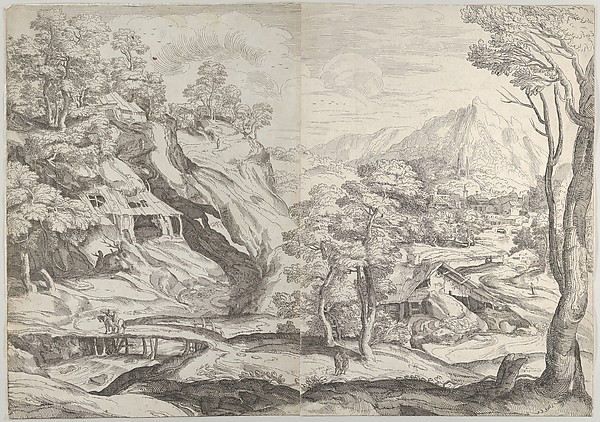 Anonymous, Italian, 16th century — Landscape with a town in
 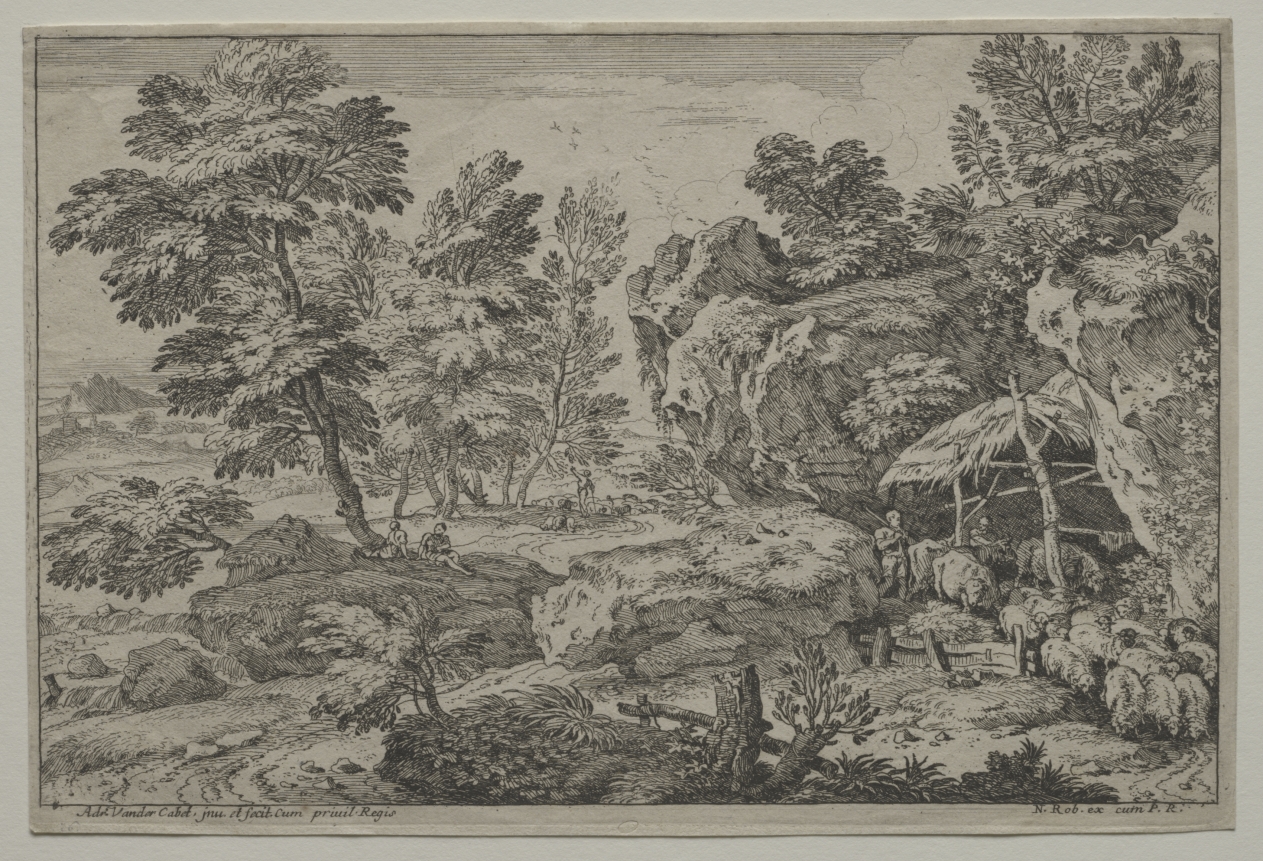 Adrian van der Cabel (Dutch, 1631–1705) — Landscape with She