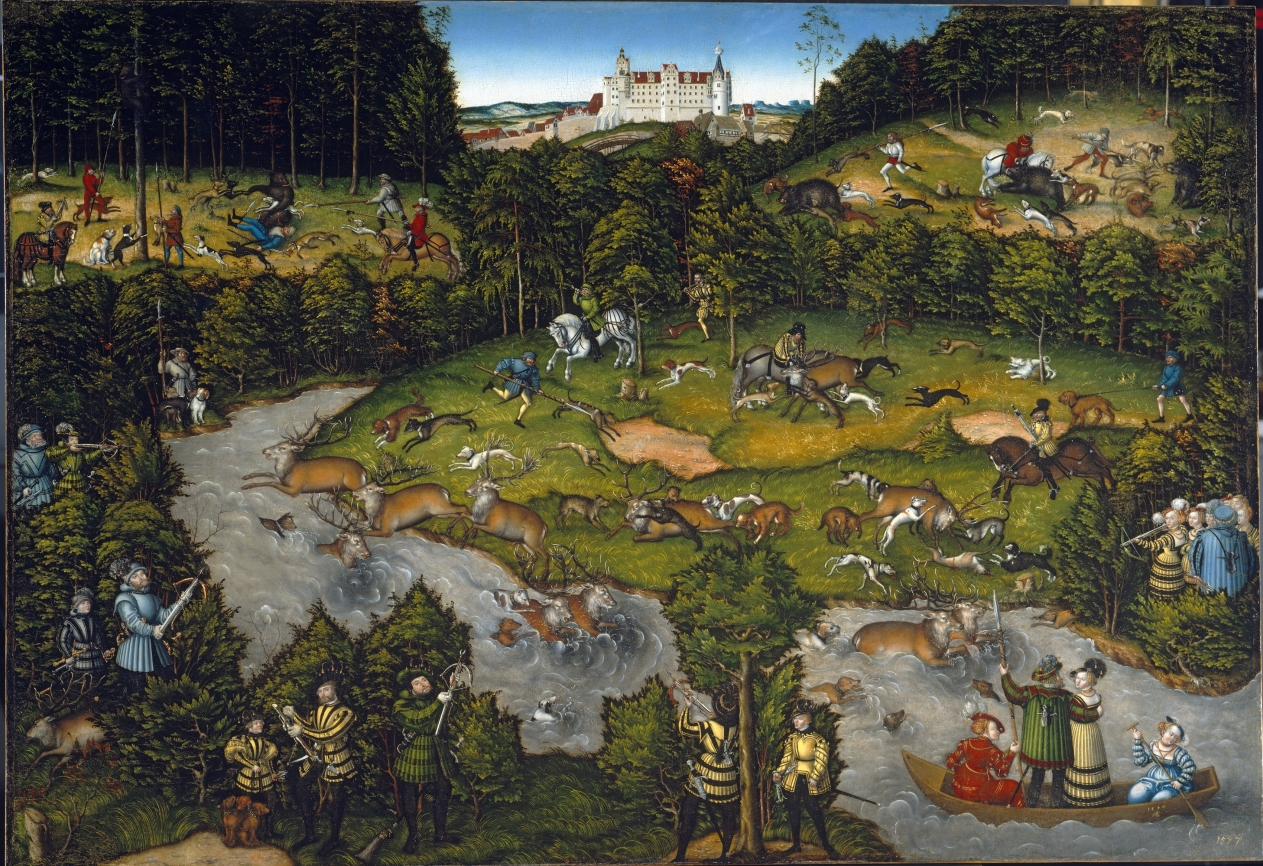
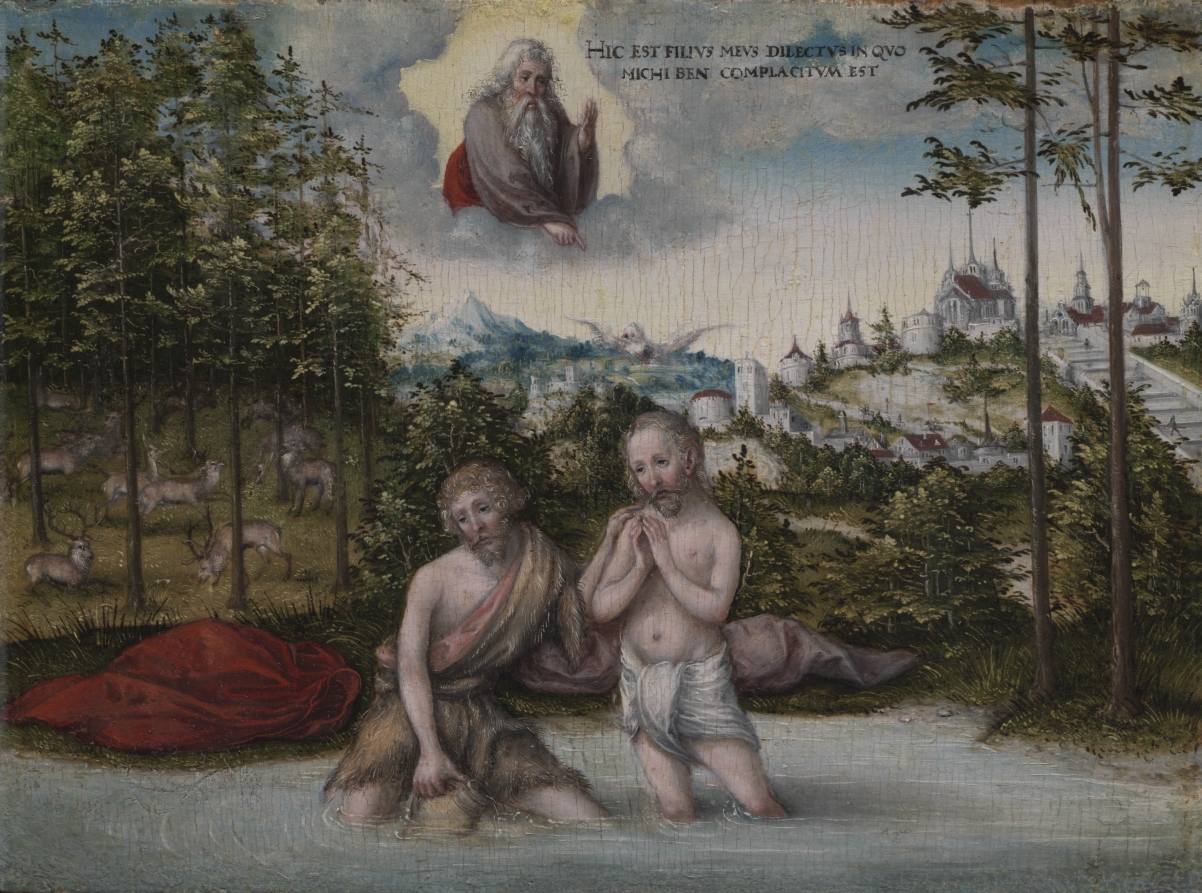
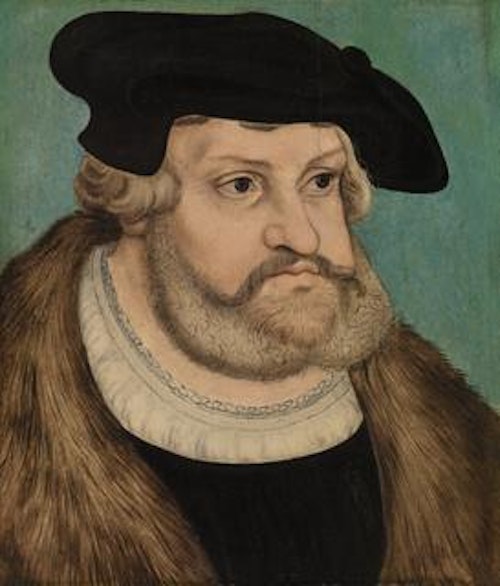
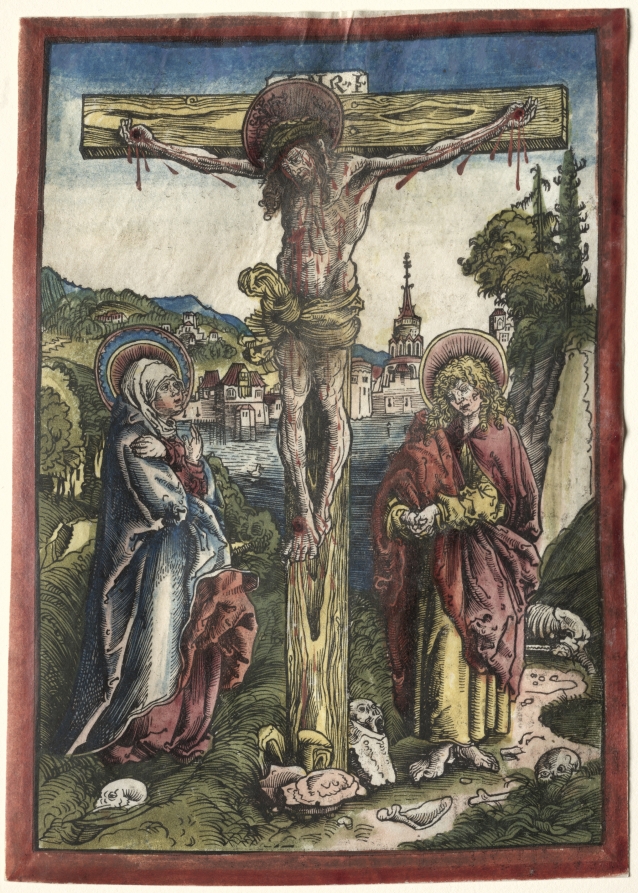
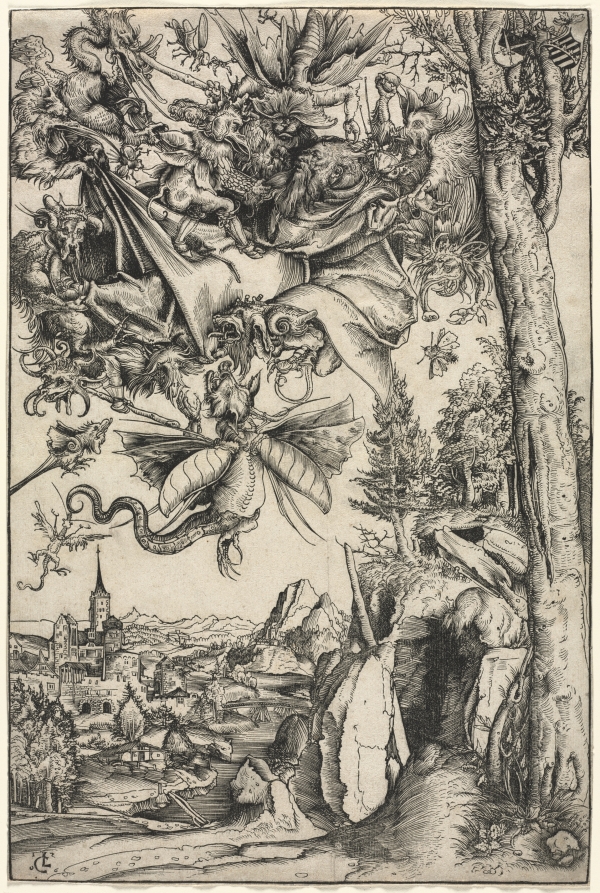
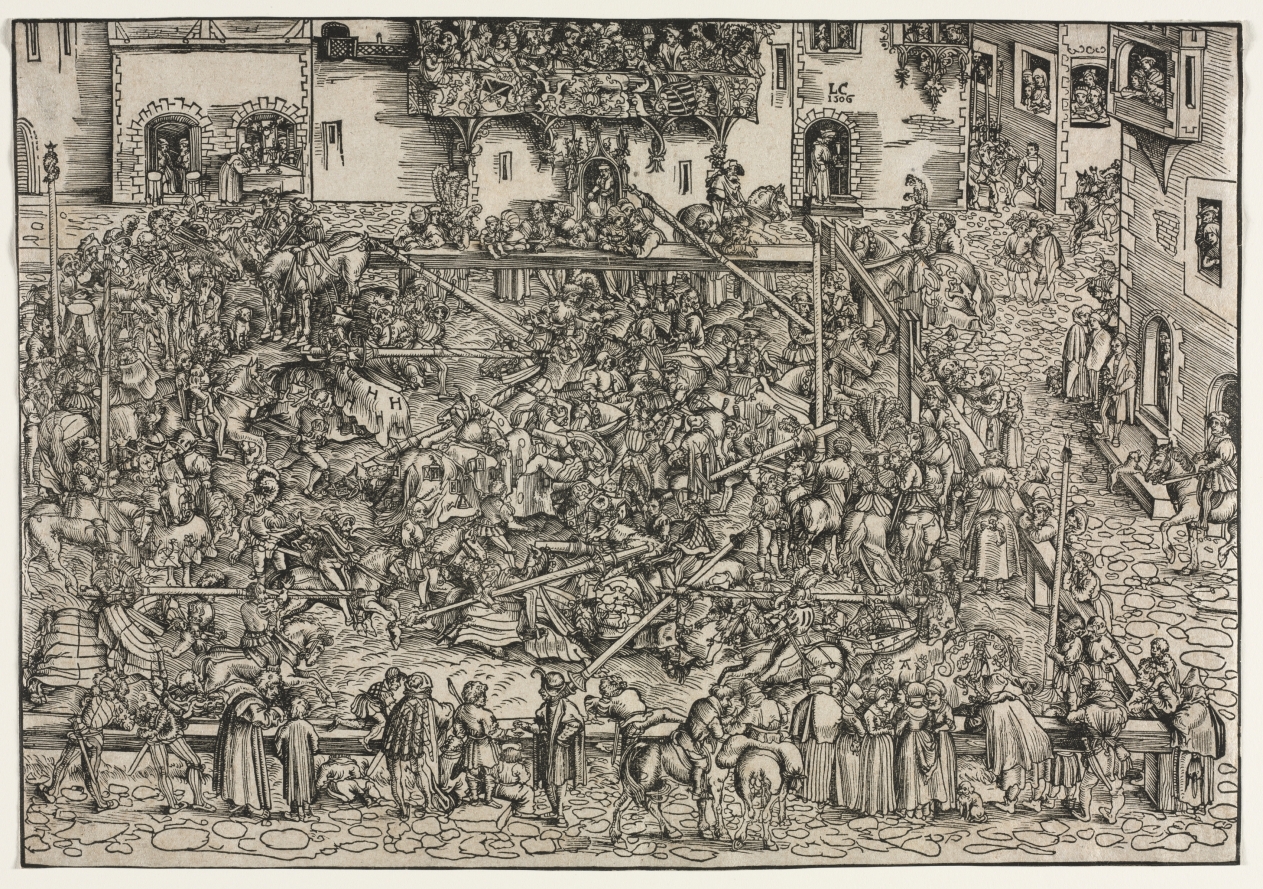
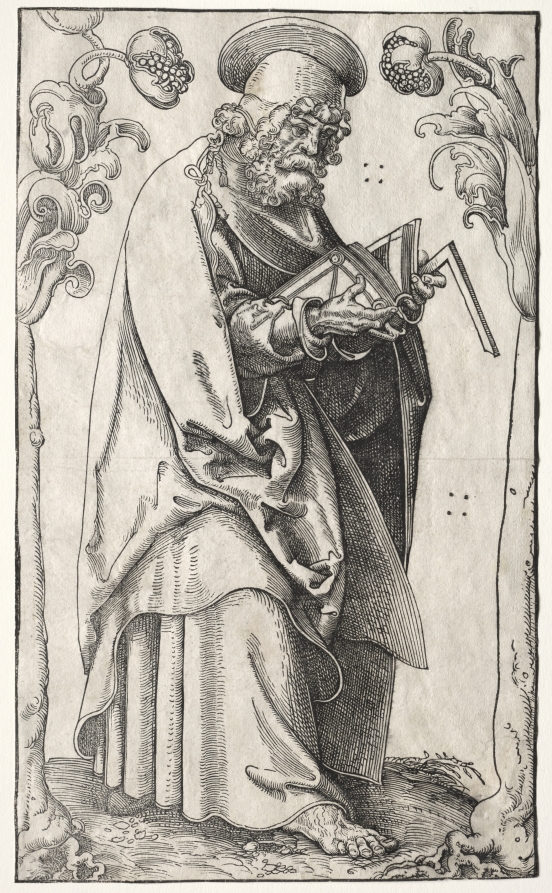
In the collection of Cleveland Museum of Art, Cleveland — check current display status with the museum.
FROM THE CLEVELAND MUSEUM OF ART’S CATALOG
In 1505, Cranach became court painter to Friedrich the Wise, Elector of Saxony, who encouraged the production of prints because they promoted the artistic and intellectual vitality of his court and the magnificence of its patronage. The Holy Roman emperor Maximilian did the same, making aristocratic sponsorship of printmaking a critical factor in the rising status of the woodcut. Cranach-together with Albrecht Dürer in Nuremberg and Hans Burgkmair in Augsburg (both on view nearby)-elevated the Northern woodcut to the highest level of artistic expression in the first decade of the 16th century. Friedrich's coat of arms (crossed swords) and the arms of Saxony appear prominently on most of Cranach's prints, suggesting that the artist worked under a kind of retainer-though the arms may also have operated somewhat like a privilege, an exclusive authorization to publish prints under Friedrich's legal protection.
Be the first to share your thoughts.
Sign in to join the discussion.
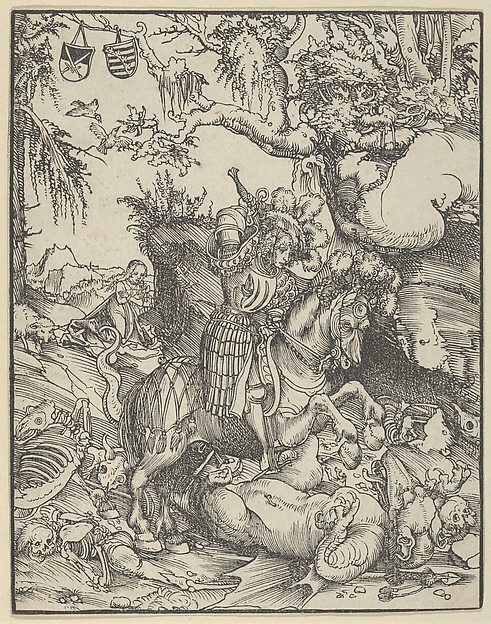 Lucas Cranach the Elder — St. George on Horseback Slaying th
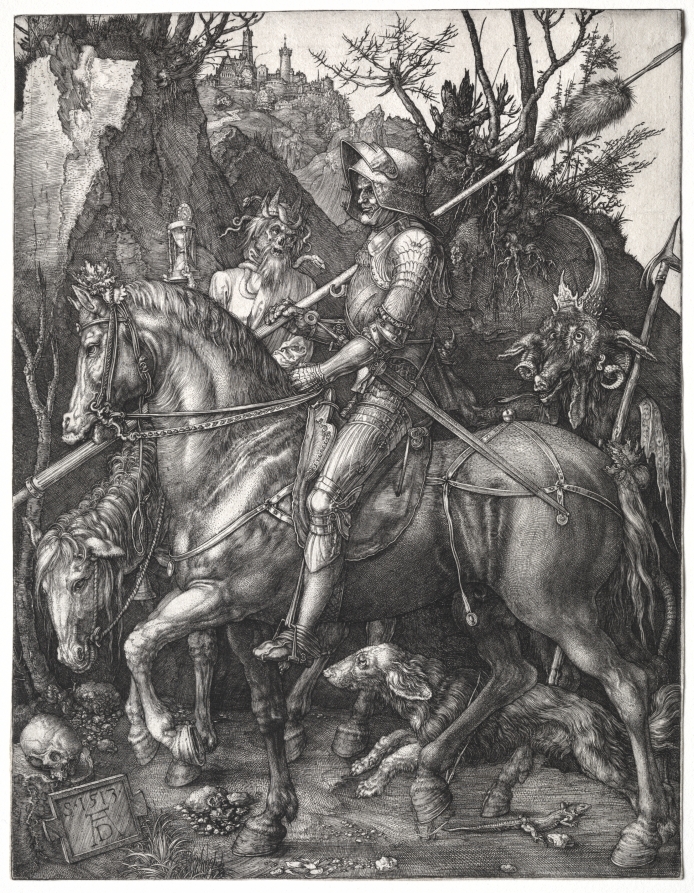 Albrecht Dürer (German, 1471–1528) — Knight, Death, and the
 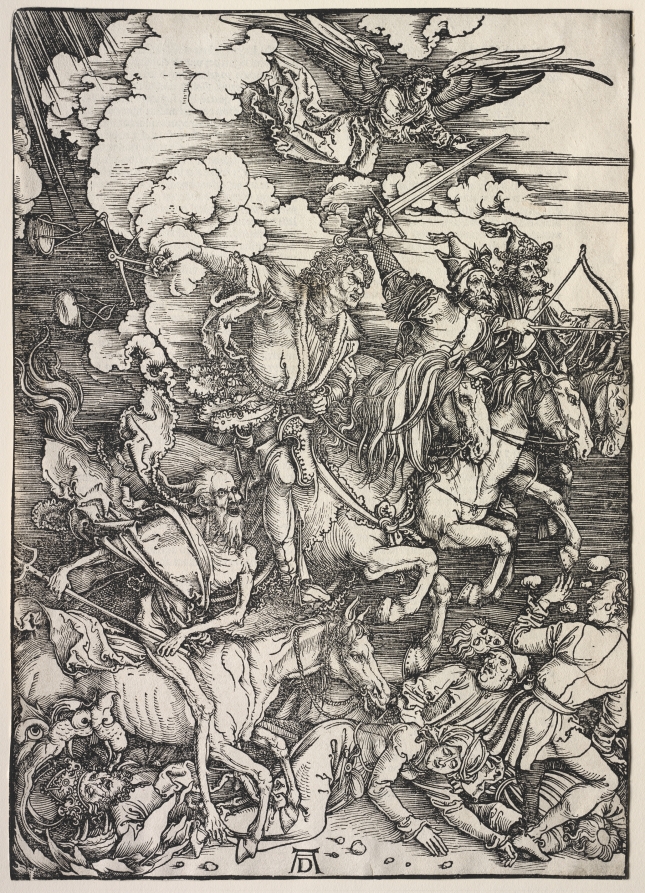 Albrecht Dürer (German, 1471–1528) — Revelation of St. John:
 Albrecht Dürer — Knight, Death, and the Devil
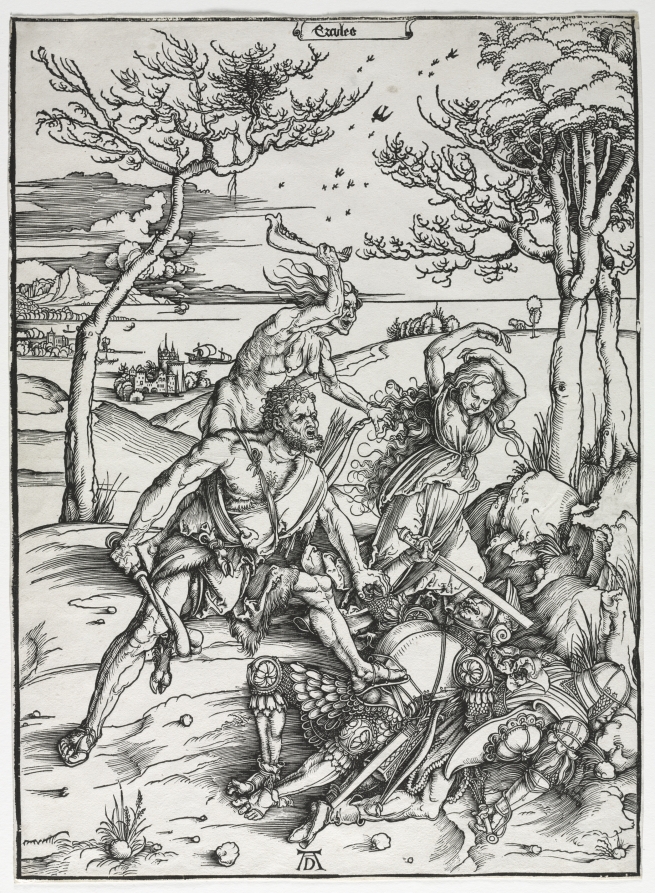 Albrecht Dürer (German, 1471–1528) — Hercules
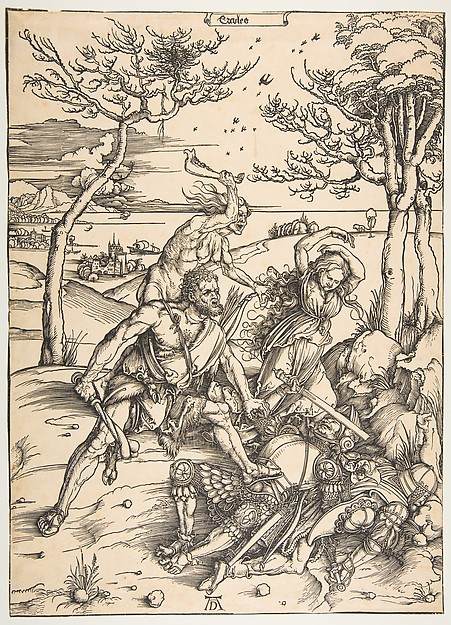 Albrecht Dürer — Hercules Conquering the Molionide Twins
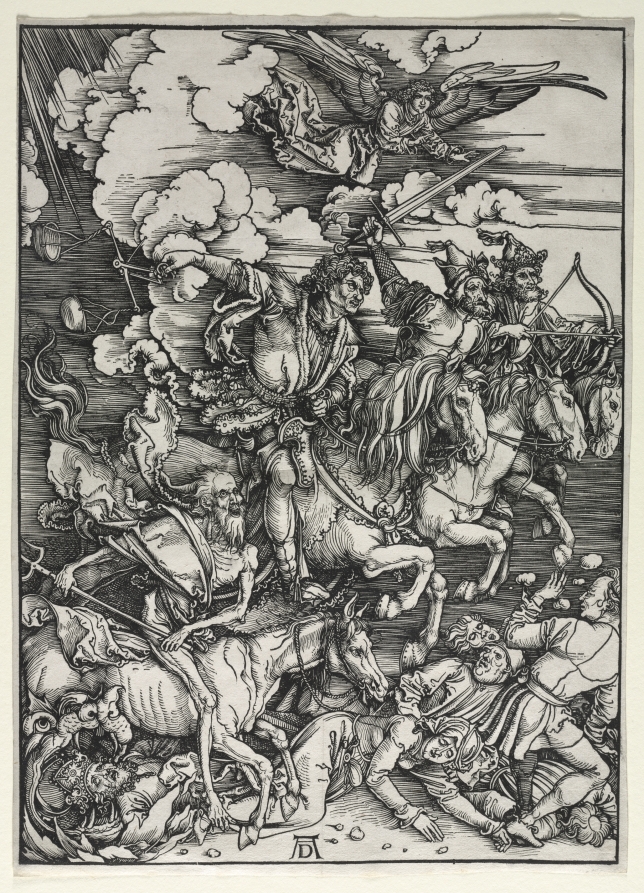 Albrecht Dürer (German, 1471–1528) — The Four Horsemen, from
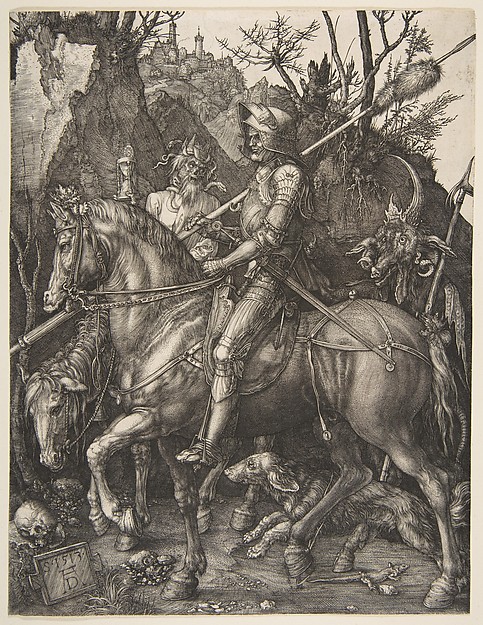 Albrecht Dürer — Knight, Death, and the Devil
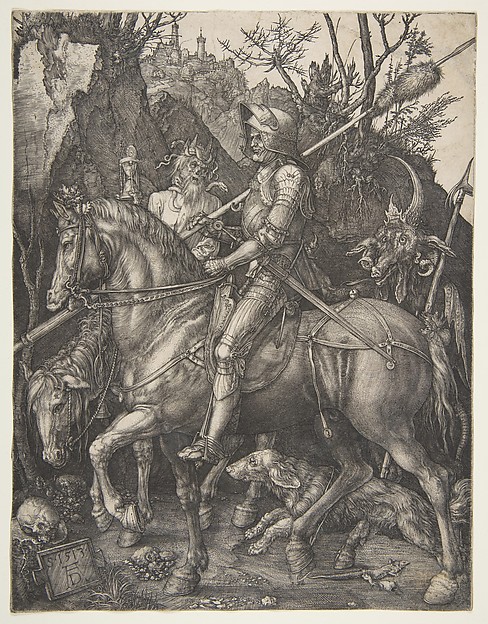 Albrecht Dürer — Knight, Death and the Devil
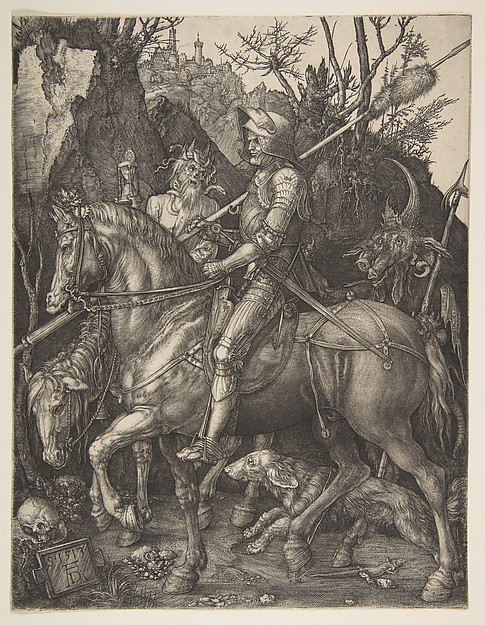 Albrecht Dürer — Knight, Death and the Devil
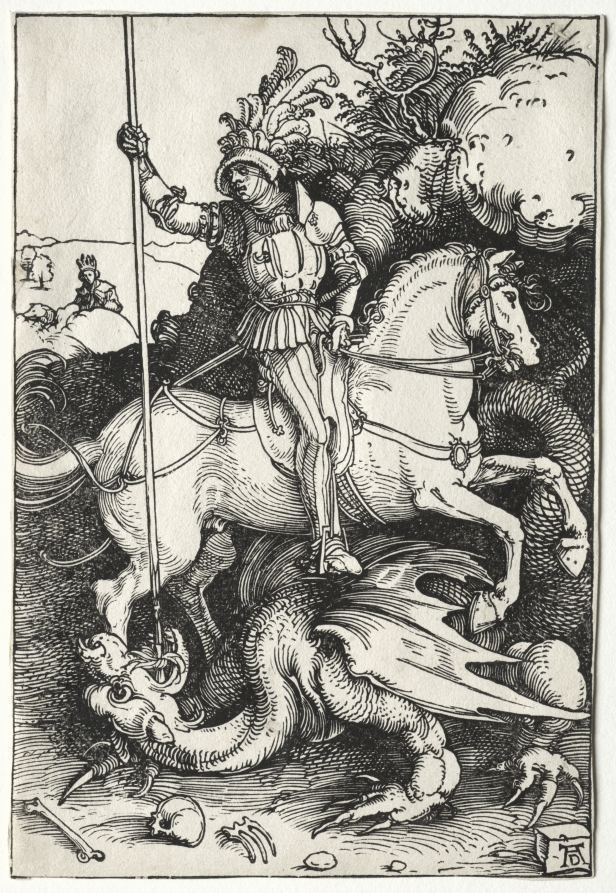 Albrecht Dürer (German, 1471–1528) — St. George Killing the
 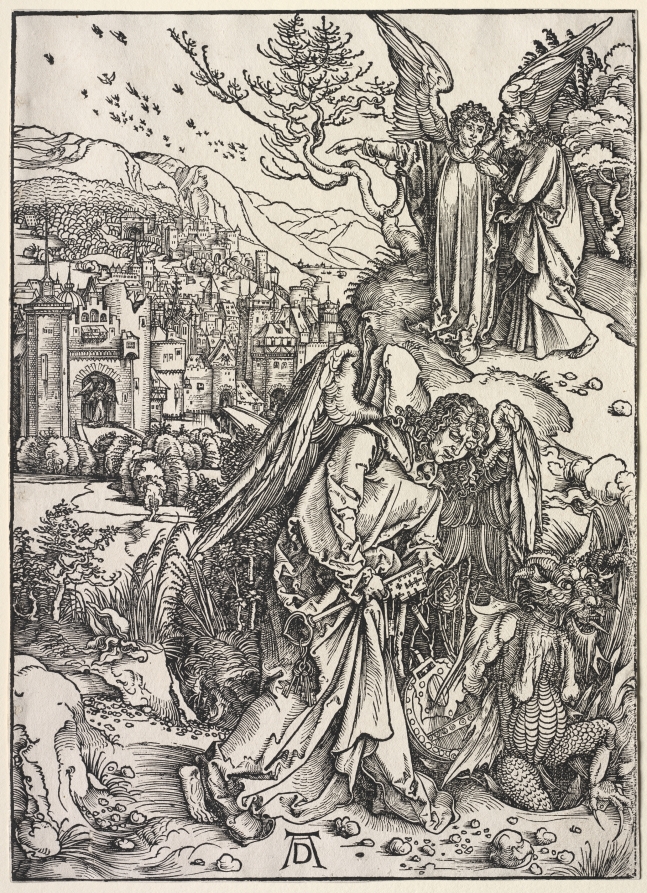 Albrecht Dürer (German, 1471–1528) — Revelation of St. John: