In the collection of Cleveland Museum of Art, Cleveland — check current display status with the museum.
FROM THE CLEVELAND MUSEUM OF ART’S CATALOG
Even though Dürer entitled this work Ercules, the narrative of the representation remains highly debated. The most recent interpretation suggests that Dürer adapted the scene from an obscure Roman tragedy, one he may have learned through his humanist friends. The story describes how prior to Hercules’ first heroic labor, the goddess Juno incited within him a monstrous rage. This resulted in the killing of a tyrant, seen under Hercules’ left foot, and the murder of his own family, represented here by his frightened wife Megara. A maniacal old woman-a Fury, goddess of vengeance and the embodiment of Hercules’ rage-prepares to assail Megara with an animal jawbone. According to this reading then, women are the source and manifestation of Hercules’ murderous wrath, an obvious contrast to his later heroism.
Be the first to share your thoughts.
Sign in to join the discussion.
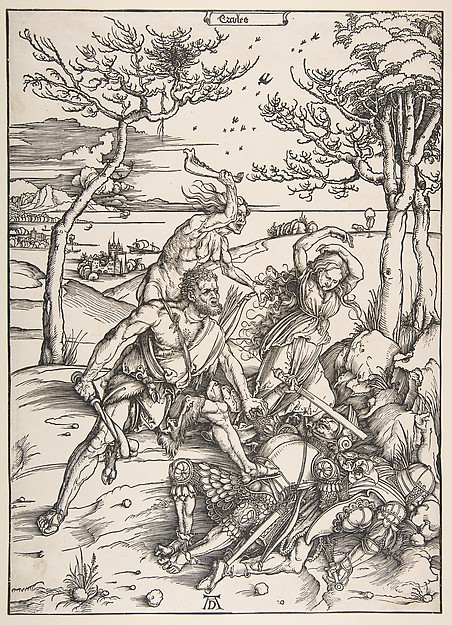 Albrecht Dürer — Hercules and Cacus
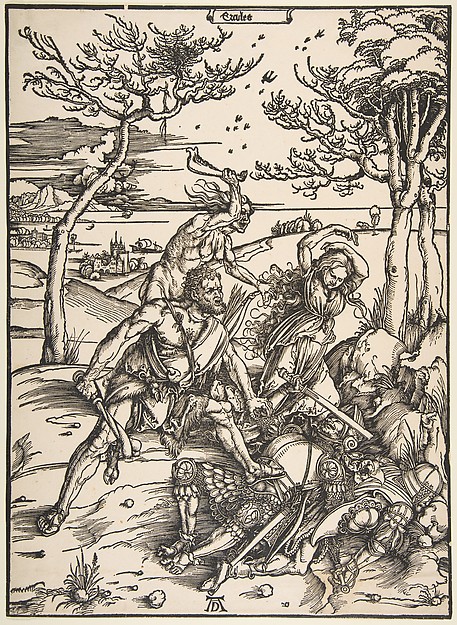 Albrecht Dürer — Hercules and Cacus
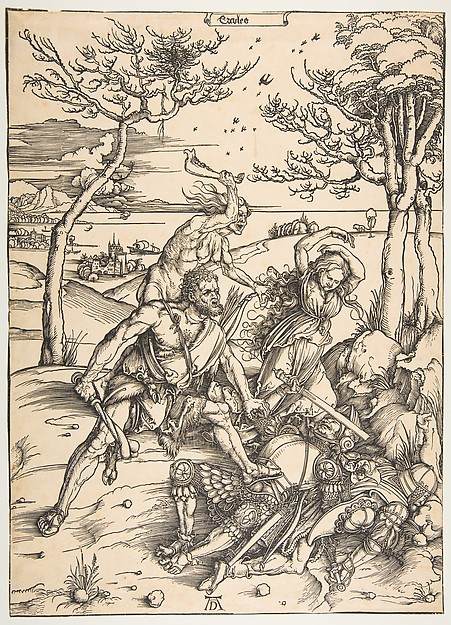 Albrecht Dürer — Hercules Conquering the Molionide Twins
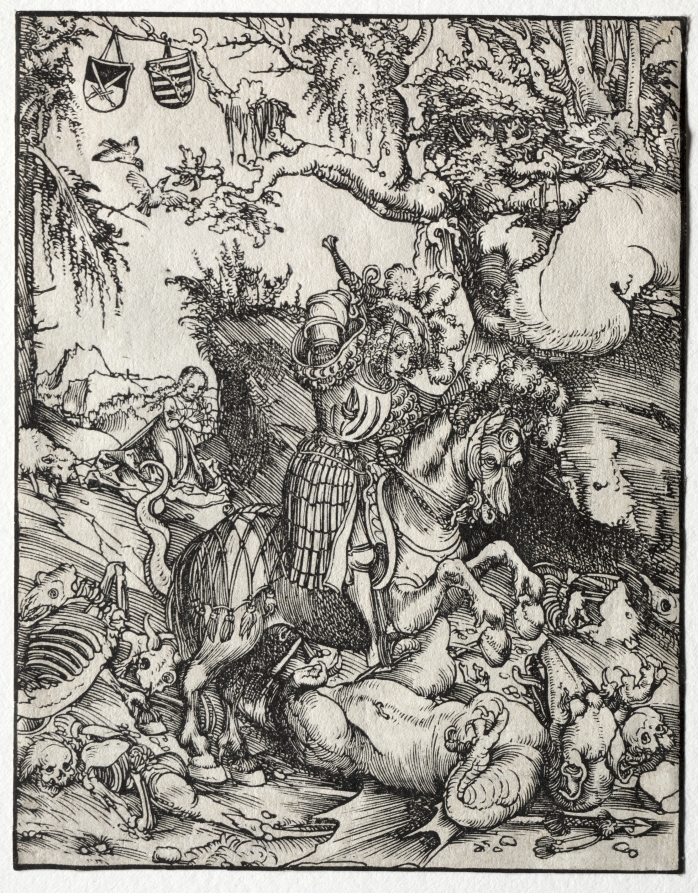 Lucas Cranach (German, 1472–1553) — St. George Slaying the D
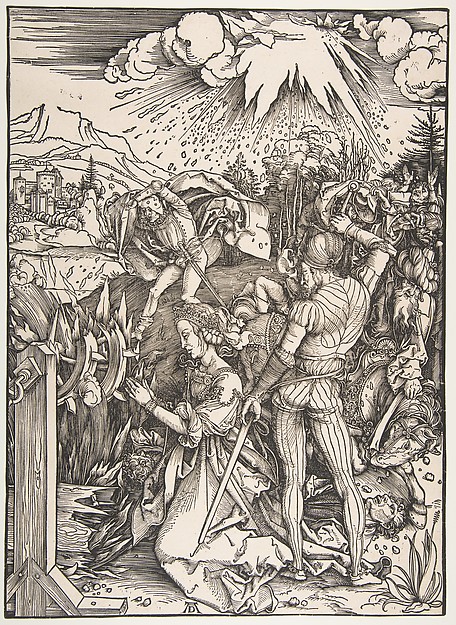 Albrecht Dürer — The Martyrdom of Saint Catherine
 Ulrich Pinder|Hans Baldung (called Hans Baldung Grien) — Chr
 Lucas Cranach (German, 1472–1553) — Saint George Slaying the
 Hans Holbein the Younger (German, active England and Switzer
 Hans Holbein the Younger (German, active England and Switzer
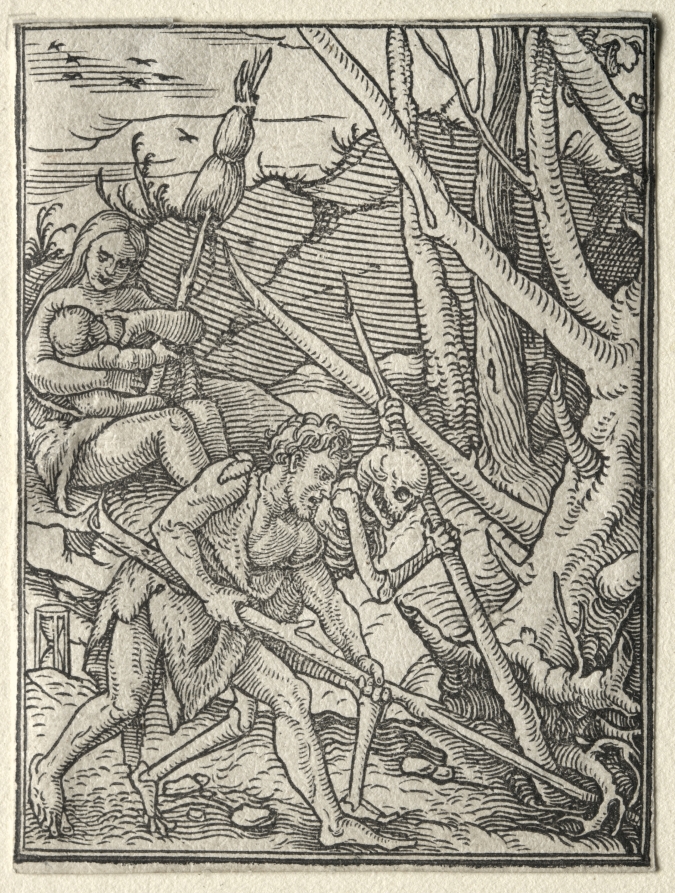 Hans Holbein the Younger (German, active England and Switzer
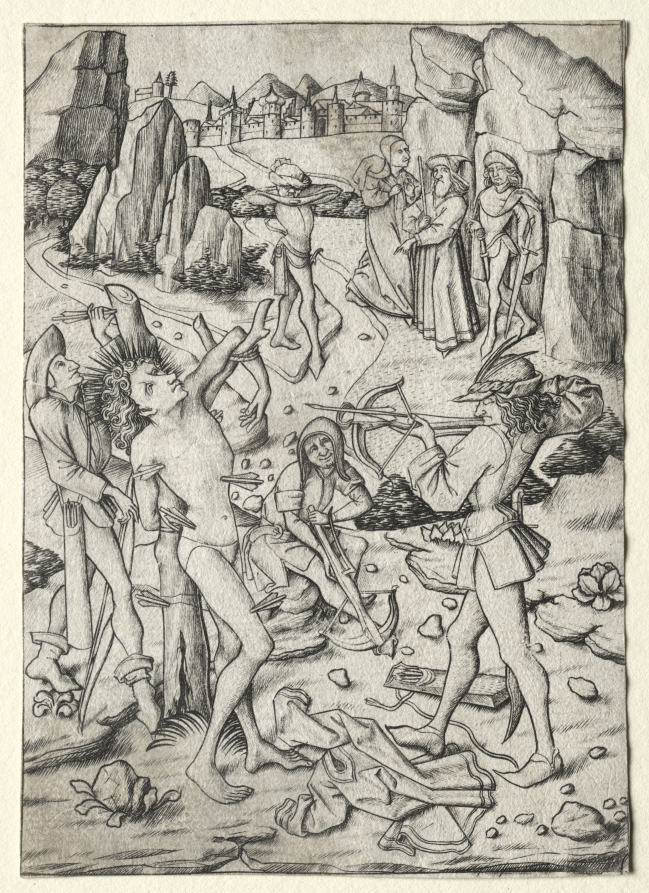 Master ES (German, active 1450–67) — The Martyrdom of St. Se
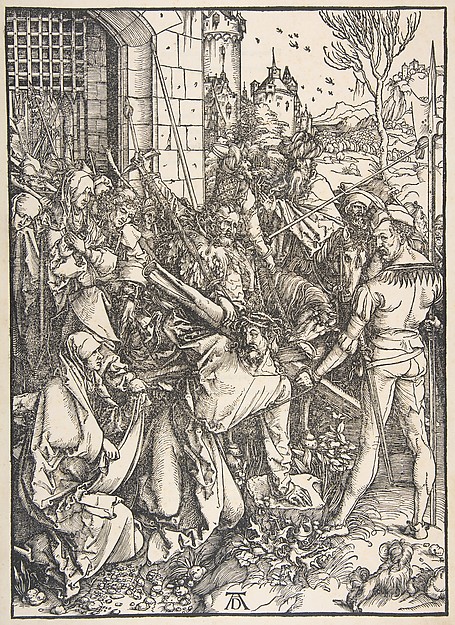 Albrecht Dürer — The Bearing of the Cross, from "The Large P
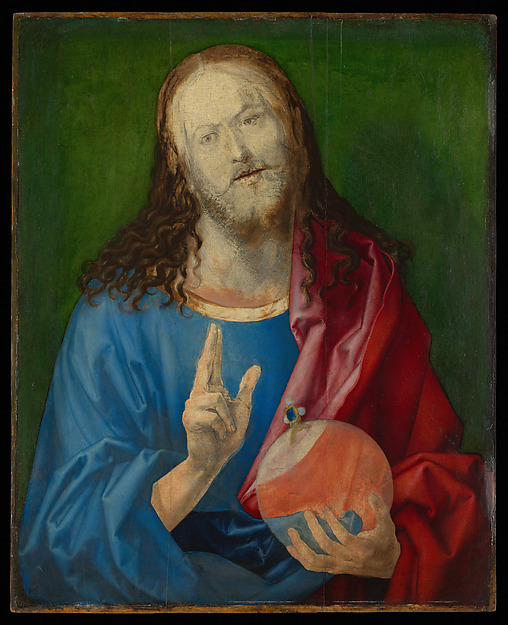
![Madonna and Child [obverse]](https://api.nga.gov/iiif/878db7e6-10ae-4cae-ba5d-6d6f5c413ae8/full/!500,500/0/default.jpg)
![Lot and His Daughters [reverse]](https://api.nga.gov/iiif/7565a449-f82a-414b-9bda-c93f55a51b4d/full/!500,500/0/default.jpg)