Fish (Still Life)
SEE IT IN PERSON
Not currently on view
In the collection of Art Institute of Chicago, Chicago · as of July 2026
Discussion
FROM THE ART INSTITUTE OF CHICAGO’S CATALOG
Although still-life ensembles were an important element in many of the major paintings of the avant-garde artist Édouard Manet, his most sustained interest in the genre itself was from 1864 to 1865, when Fish was painted. Manet’s focus on still lifes coincided with the gradual reacceptance of the genre during the nineteenth century, due in part to the growth of the middle class, whose tastes ran to intimate, moderately priced works. This painting, like many of Manet’s still-life compositions, recalls seventeenth-century Dutch models. The directness of execution, bold brushwork, and immediacy of vision displayed in the canvas, however, suggest why the public found Manet’s work so unorthodox and confrontational. While Fish is indeed an image of “dead nature” ( nature morte is the French term for still life), there is nothing still about the work: the produce seems fresh and the handling of paint vigorous. Further enlivening the composition is the placement of the carp, which offsets the strong diagonal of the other elements. Manet never submitted his still lifes to the official French Salon but rather sold them through the burgeoning network of art galleries in Paris and gave them to
Be the first to share your thoughts.
Sign in to join the discussion.
More by Édouard Manet




More like this
 Willem Roelofs (II) — Stilleven met kabeljauw
 Abraham van Beijeren — Still Life with Fish
 Claude Monet — Red Mullets
 Clara Peeters — Still Life with Fish, Sea Food and Flowers
 Vincent van Gogh — Still Life with mackerel, lemon and tomat
 Théodule Augustin Ribot — Stilleven met vissen en een k
 Pieter van Noort — Still life with fish
 Pieter van Noort — Still life with fish
 Jean-Siméon Chardin (French, 1699–1779) — Still Life with He
 Jean-Siméon Chardin (French, 1699–1779) — Kitchen Utensils w
 Isaac van Duynen — Still Life with Fish
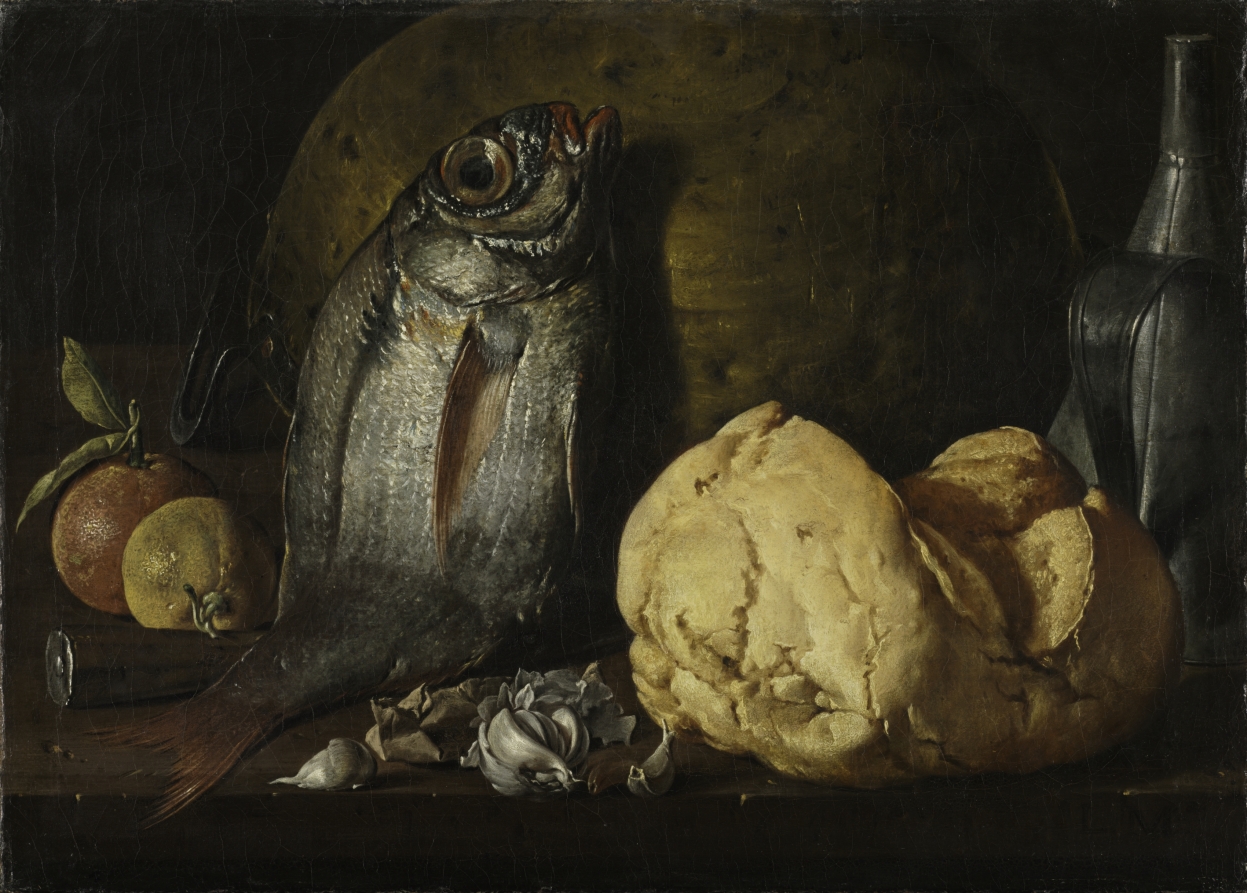 Luis Meléndez (Spanish, 1716–1780) — Still Life with Fish, B