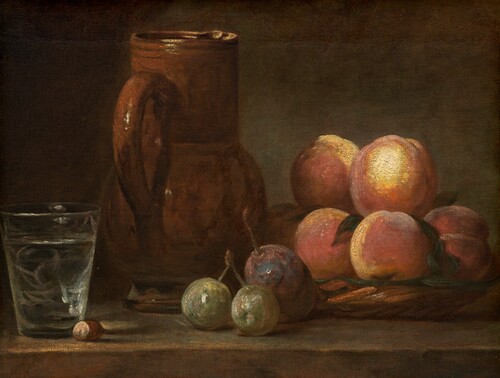
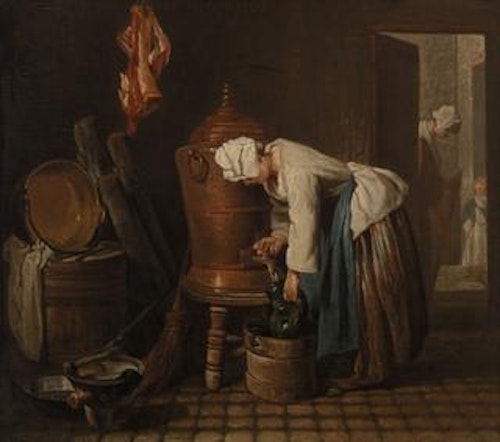
In the collection of Cleveland Museum of Art, Cleveland — check current display status with the museum.
FROM THE CLEVELAND MUSEUM OF ART’S CATALOG
Chardin was already famous by 1730, when he began to paint small, sparse still lifes of kitchen utensils. He often used the same elements in his compositions, varying slightly the position of the objects and adding or subtracting a utensil—always carefully placing each in relation to the rest to achieve a balanced design. Chardin was the contemporary of François Boucher (1703–1770) and he taught Jean-Honoré Fragonard (1732–1806), but his work is a contrast to theirs, representing the naturalistic tendency that persisted alongside the more fashionable lightness, grace, and playfulness of the Rococo. Chardin discovered a hidden poetry in even the most humble objects, bringing the viewer into an earthly world experienced with directness and simplicity.
Be the first to share your thoughts.
Sign in to join the discussion.
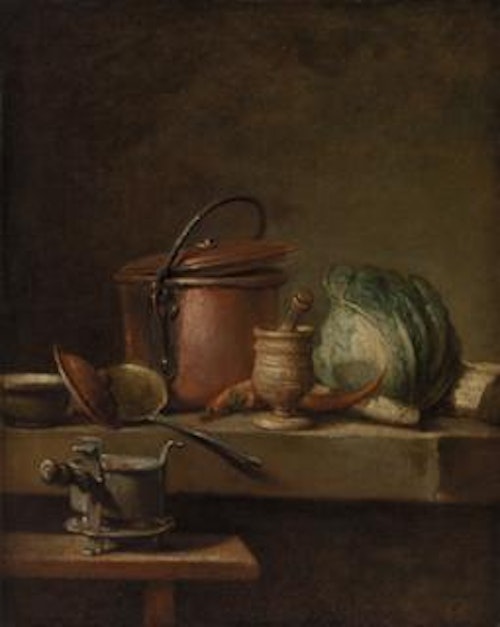 Jean-Siméon Chardin — Still Life with Copper Pot, Cabbage, P
 Jean-Baptiste-Siméon Chardin — Tranche de saumon
 Jean-Baptiste-Siméon Chardin — Still Life with Fowl
 Jean-Baptiste-Siméon Chardin — Still Life with Cooking Utens
 François Bonvin — Stilleven met vier vruchten, glas en aarde
 Abraham van Beijeren — Still Life with Fish
 Michiel Simons (II) — Still Life with Fruit
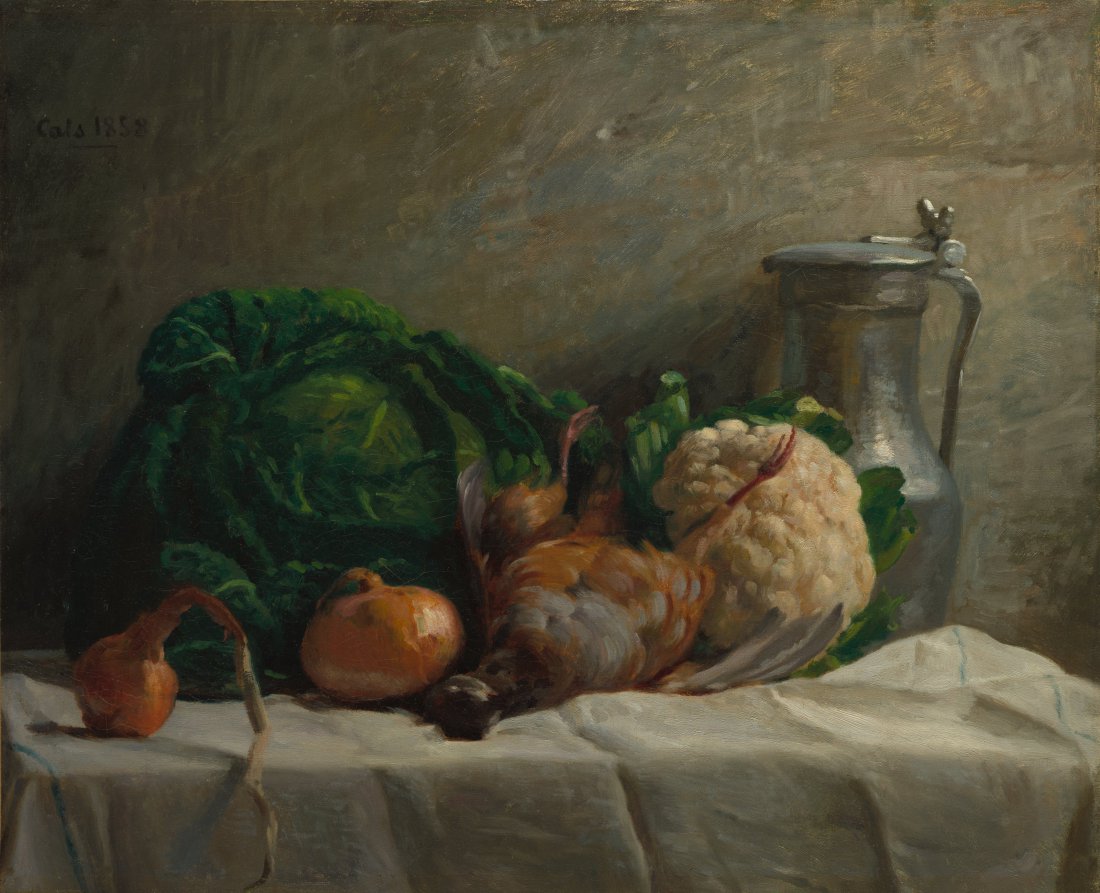 Adolphe-Félix Cals (French, 1810–1880) — Still Life with Veg
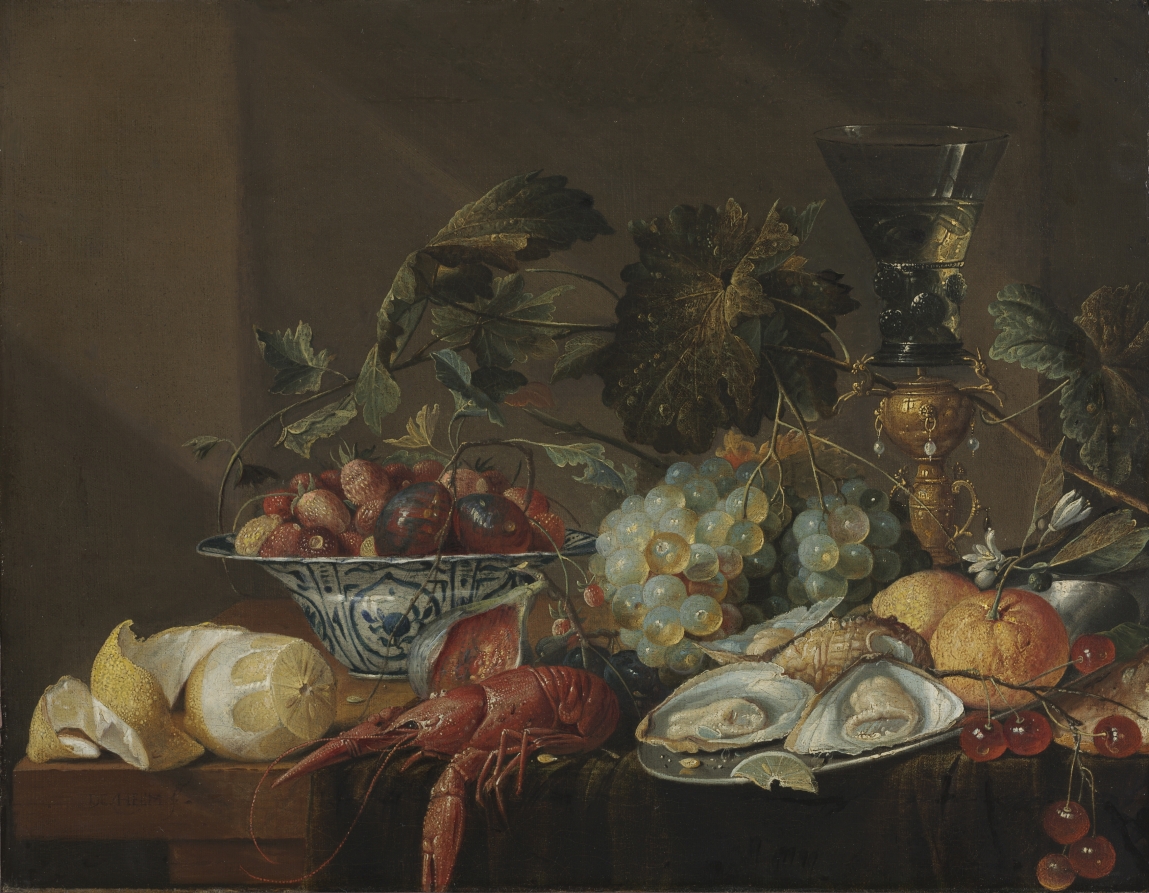 Cornelis de Heem (Flemish, 1631–1695) — Still-Life with Cray
 Pieter Claesz — Still Life with a Fish
 Henri Matisse — Still life after David de Heem. The Sideboar
 Georg Hainz — Still Life