In the collection of Cleveland Museum of Art, Cleveland — check current display status with the museum.
FROM THE CLEVELAND MUSEUM OF ART’S CATALOG
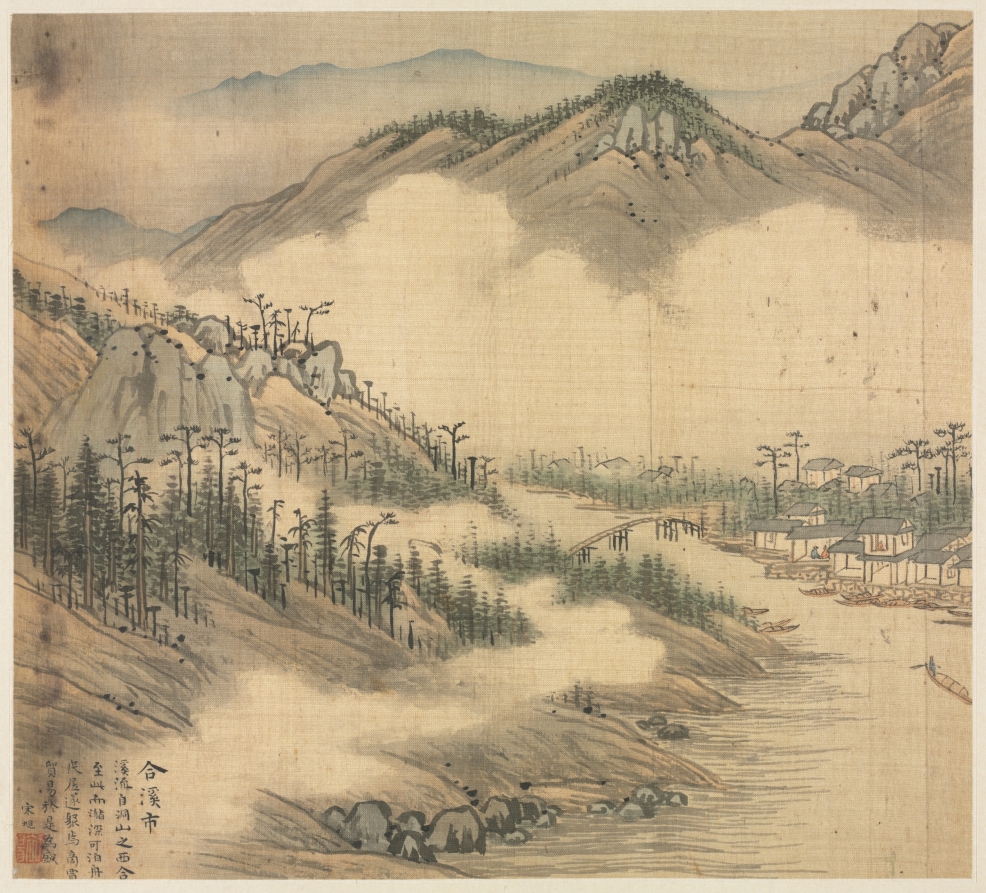
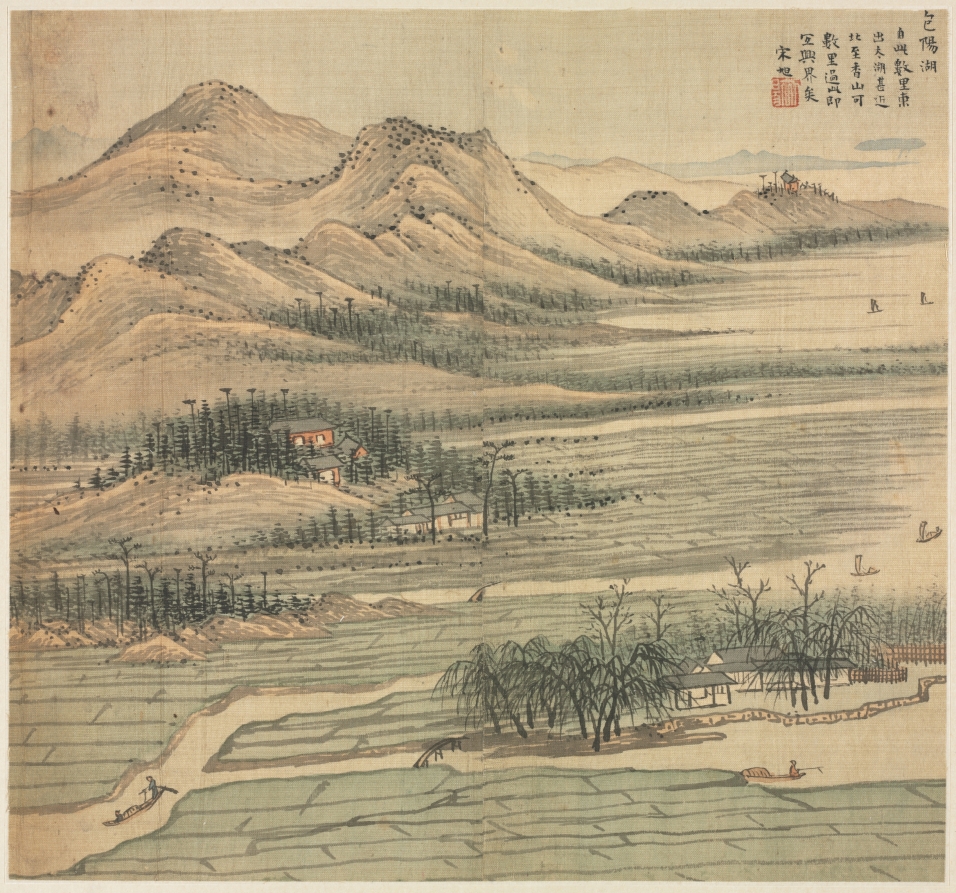
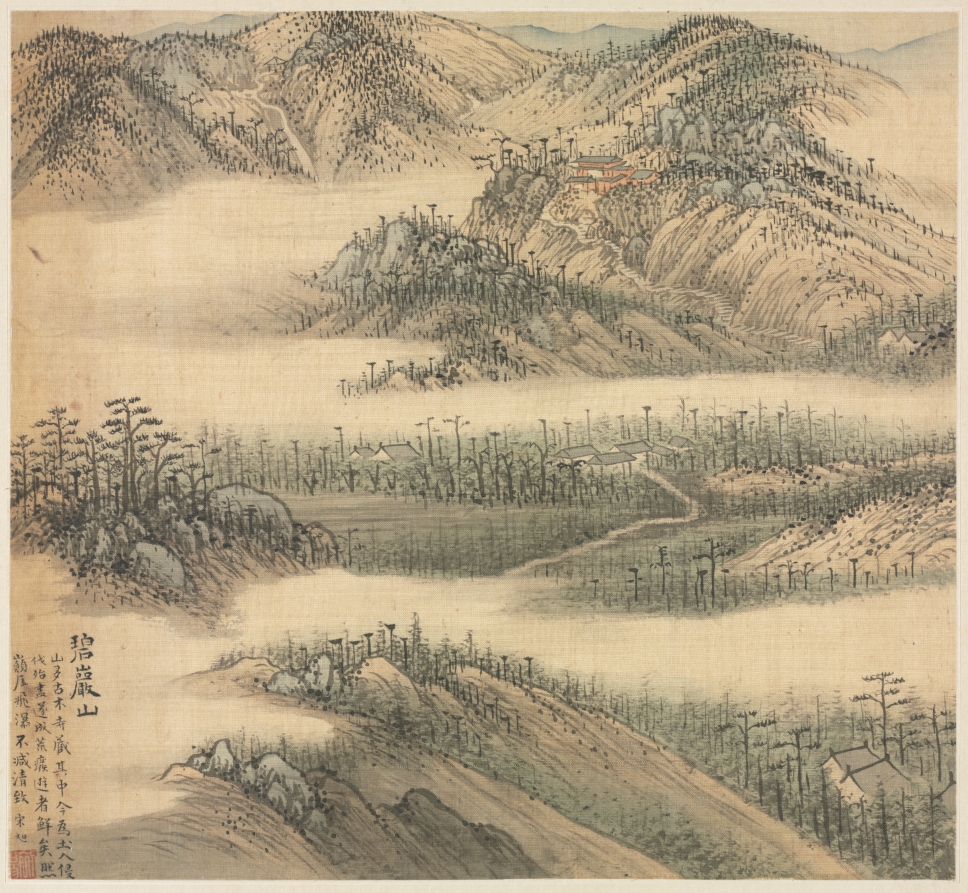
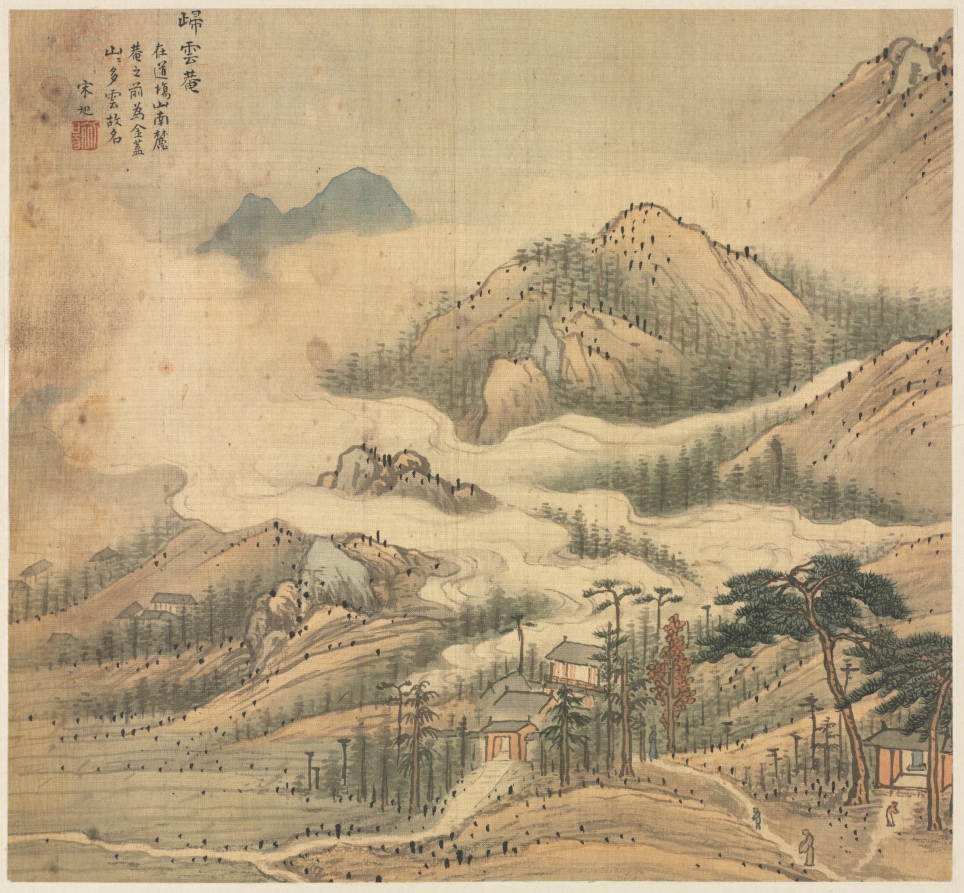
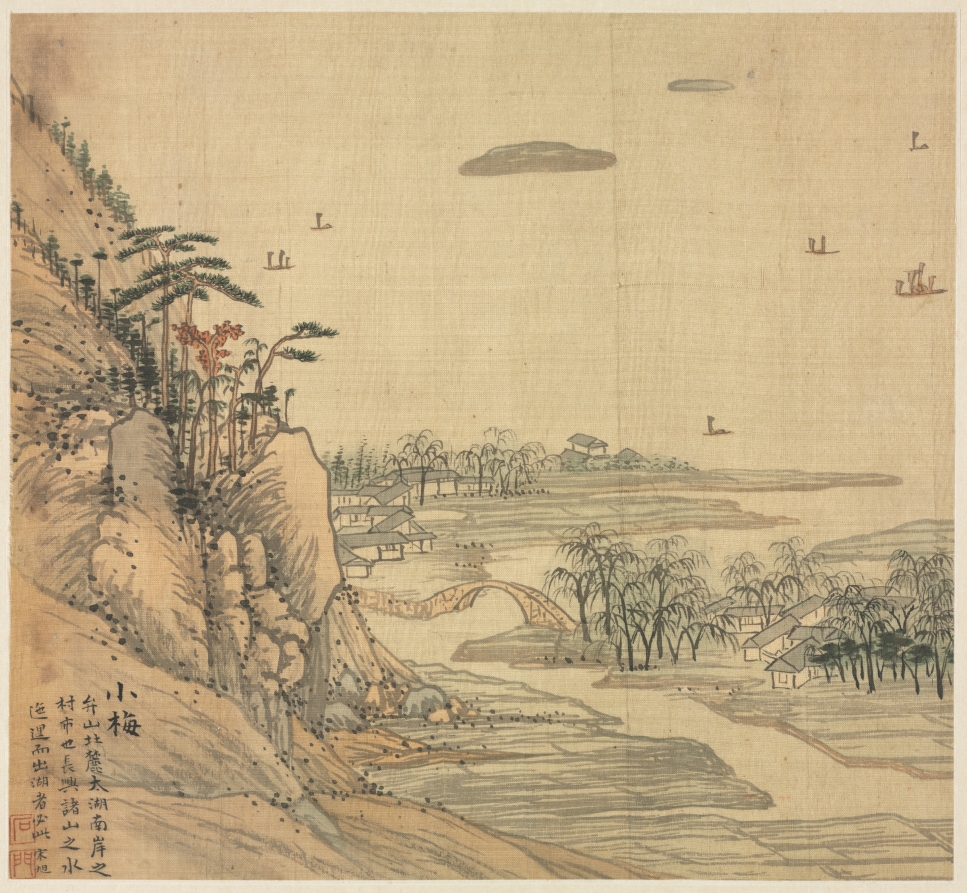
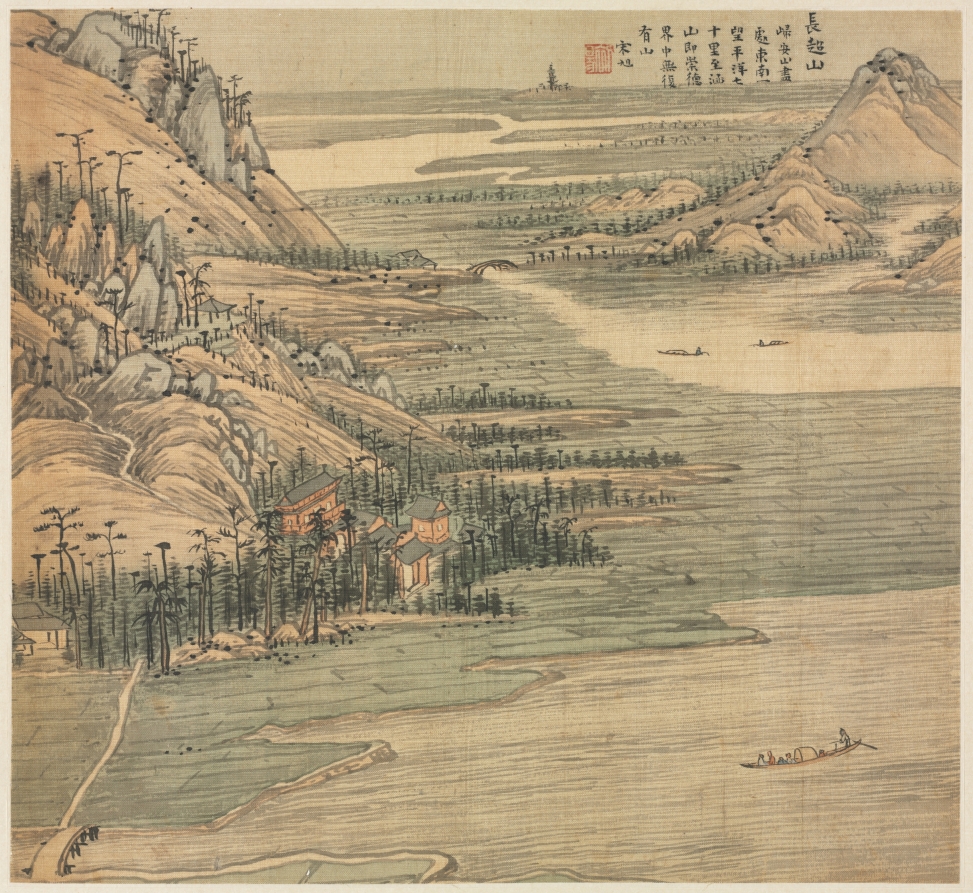
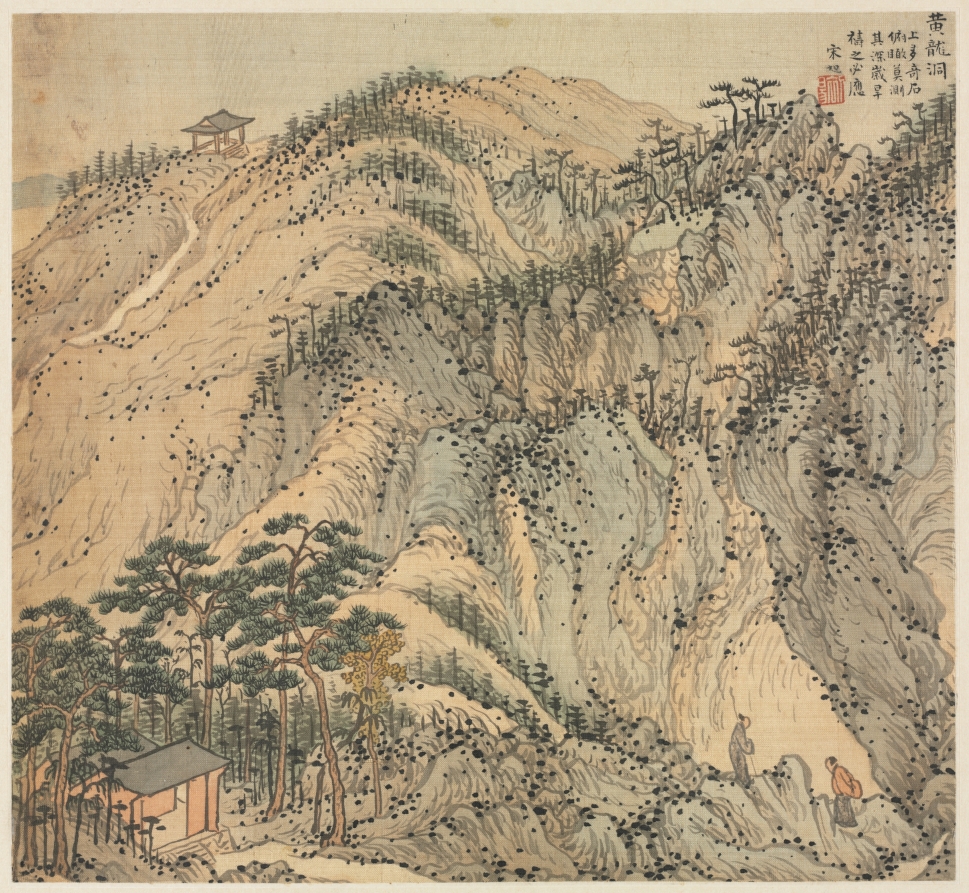
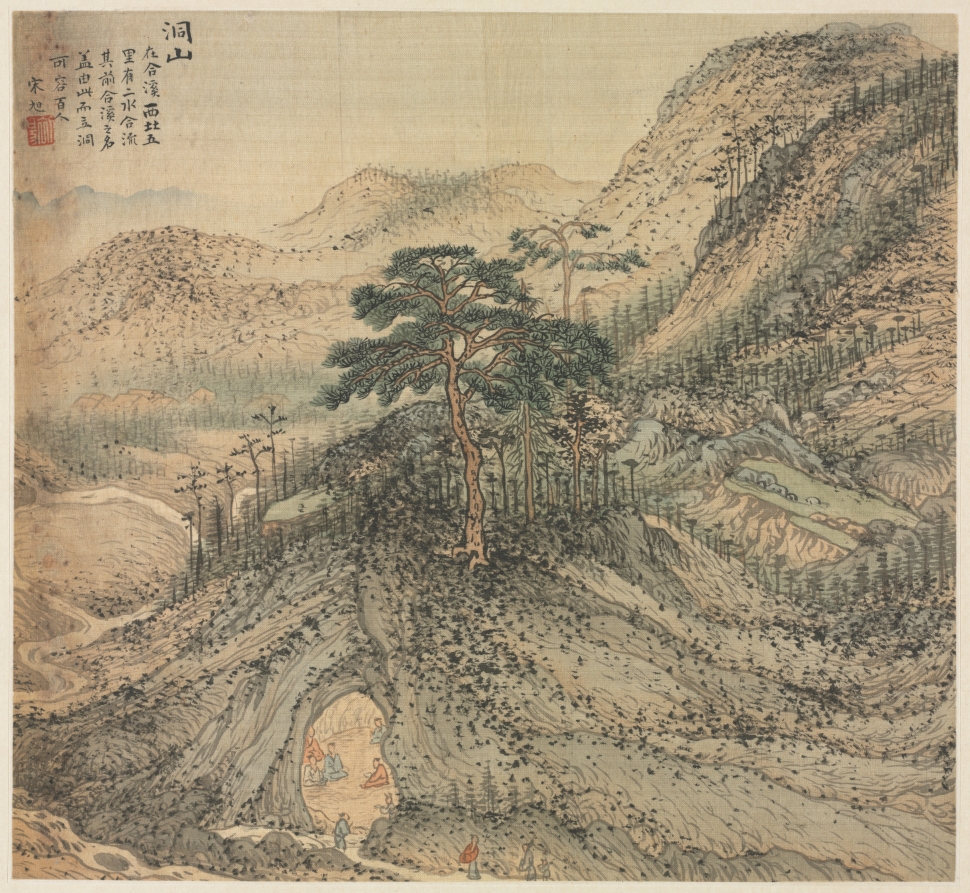
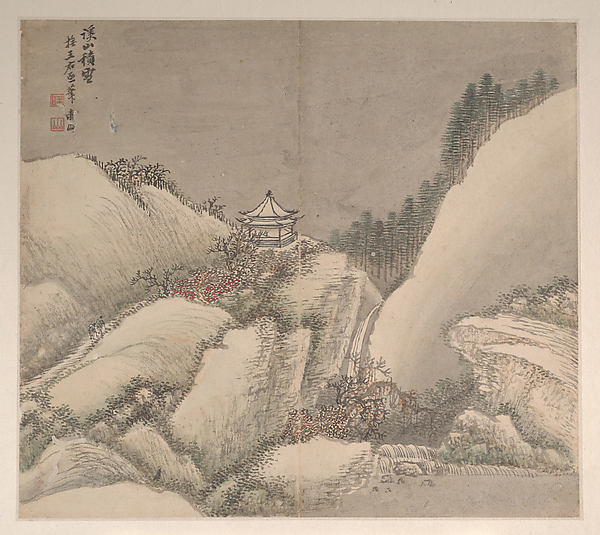
This album of landscape paintings depicts the famous scenic areas located in and around the city of Wuxing in southeastern China. These places were all known for their natural beauty, but in addition, a number were distinguished by their links to eminent historical figures and events. The artist, Song Xu, was not a native of Wuxing, but must have visited it when he accepted the commission, for he carefully depicted all eighteen views and wrote comments on each of them. Song's gazetteerlike notation on this leaf reads: Mount Daochang: From the prefectural city toward the south, about 5 to 6 li, there is the spiritual abode of Chan Master Fuhu [master who tamed tigers, or Zhifeng 志逢, 909–985]. On top [of the hill] are the Fuhu and Wanghu Pavilions. Looking farther south, one can see the mountains of Hangzhou. Looking toward the north, one can see all the way to Lake Tai and its hilly islands. Looking down, the city walls below with its towers and terraces are as splendid as in a painting.
Be the first to share your thoughts.
Sign in to join the discussion.
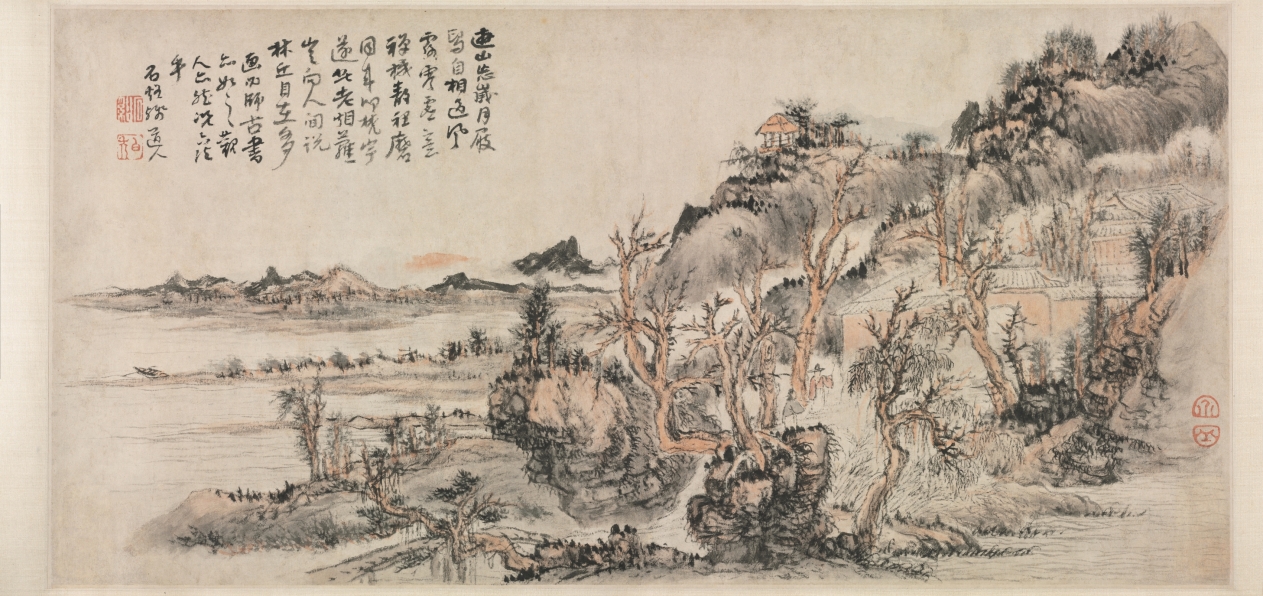 Kuncan (Chinese, 1612–c. 1673) — Spring Landscape
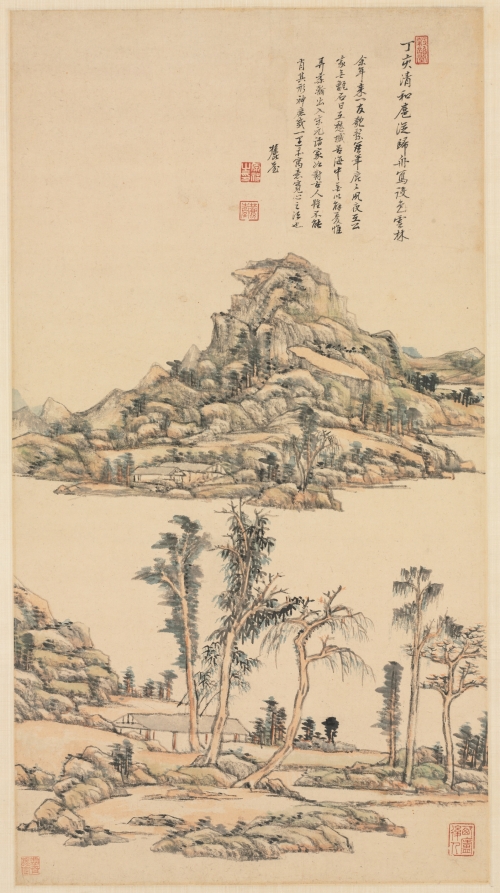 Wang Yuanqi (Chinese, 1642–1715) — Landscape after Ni Zan
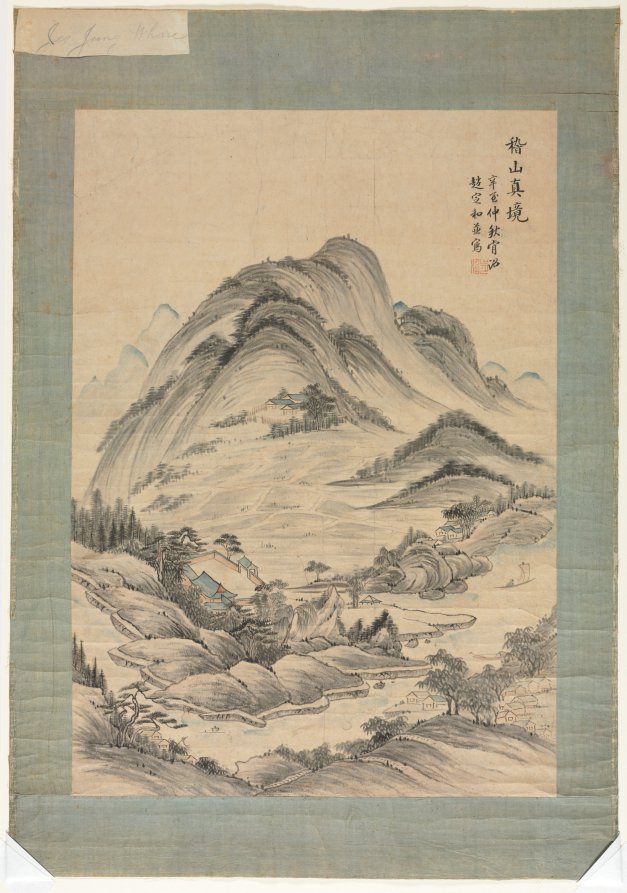 Landscape with Streams and Mountains
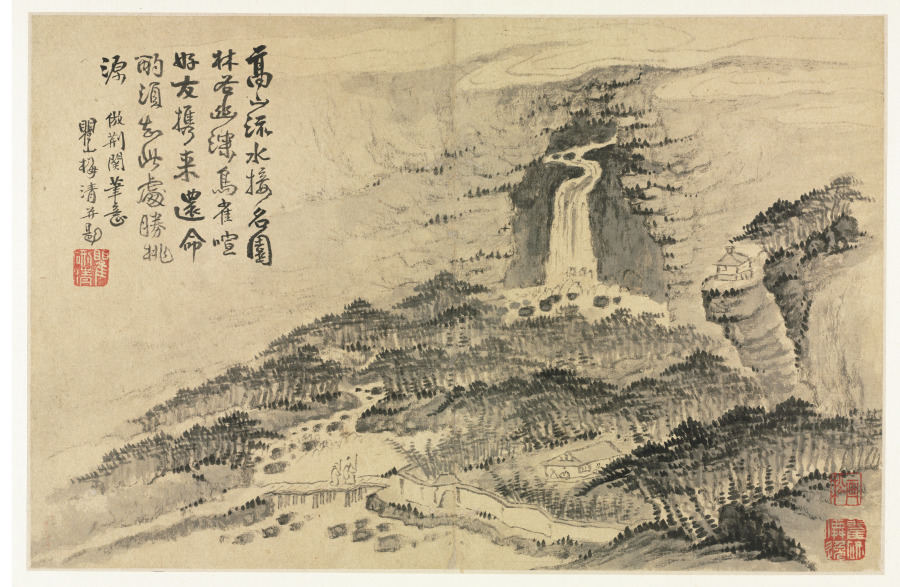 Mei Qing (Chinese, 1623–1697) — Landscapes after Various Sty
 Cao Jian — 清 曹澗 倣名家山水 冊|Landscapes in the Styles of Va
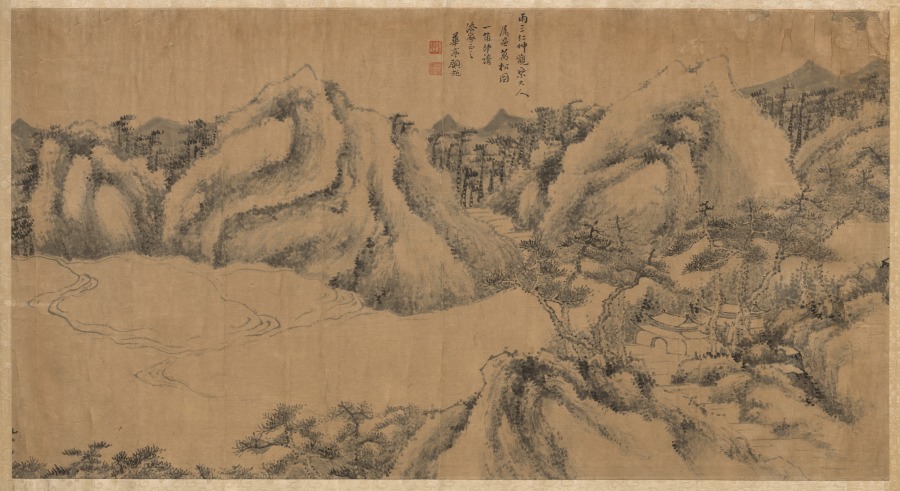 Gu Chao (Chinese, active late 1700s) — Pine-shaded Monastery
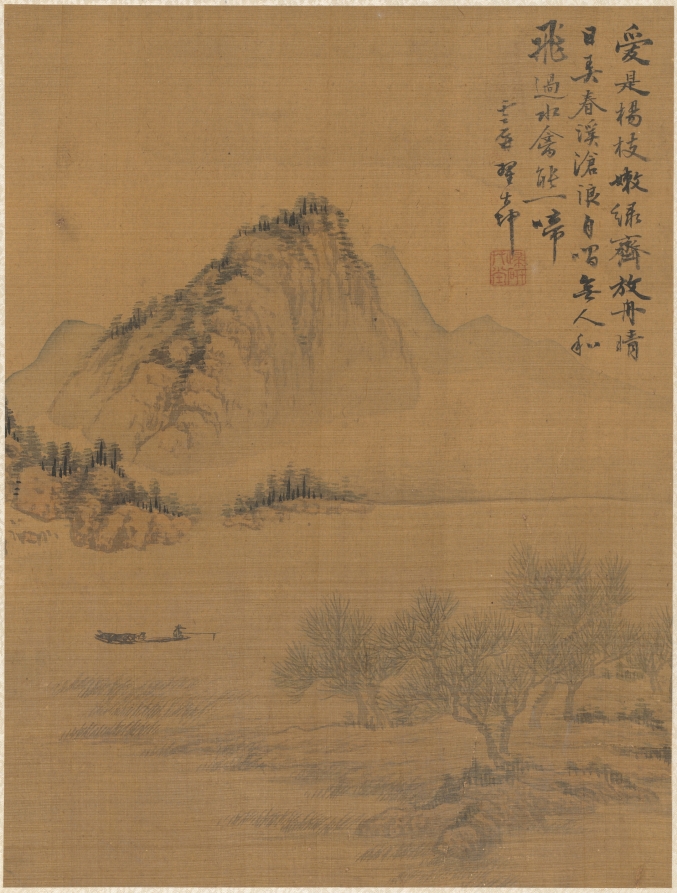 Zhai Dakun (Chinese, d. 1804) — Landscape
 Fang Shishu — Album of Landscapes, Plants, Figures and Anima
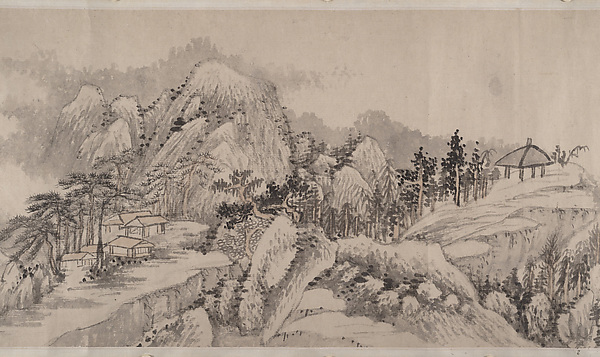 Liu Yu — 清 柳堉 幽谷深林圖 卷|Remote Valleys and Deep Forests
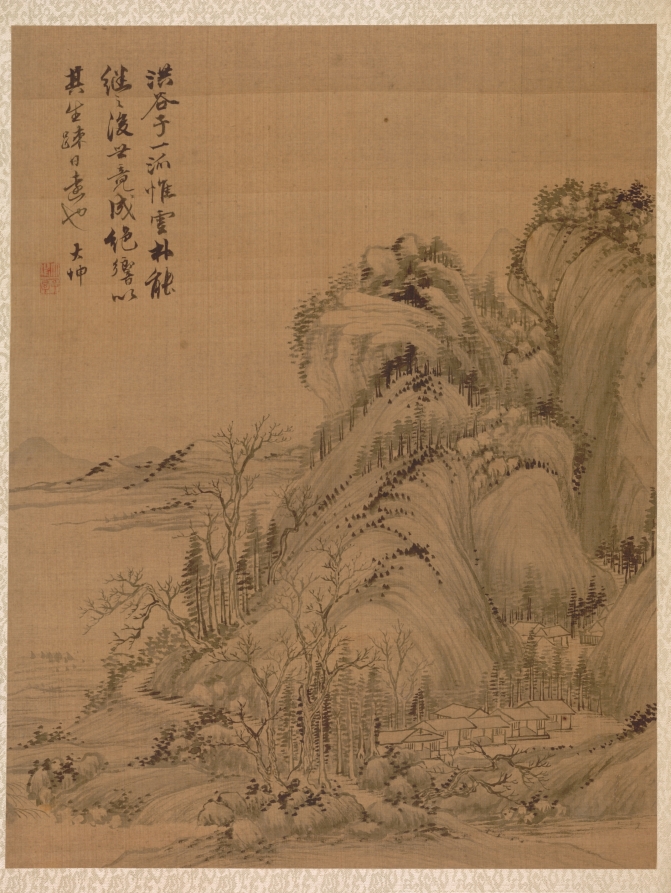 Zhai Dakun (Chinese, d. 1804) — Landscape in the Style of Ch
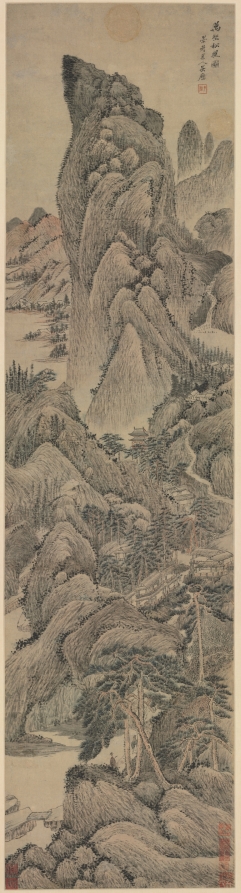 Wu Li (Chinese, 1632–1718) — Pine Wind from Myriad Villages
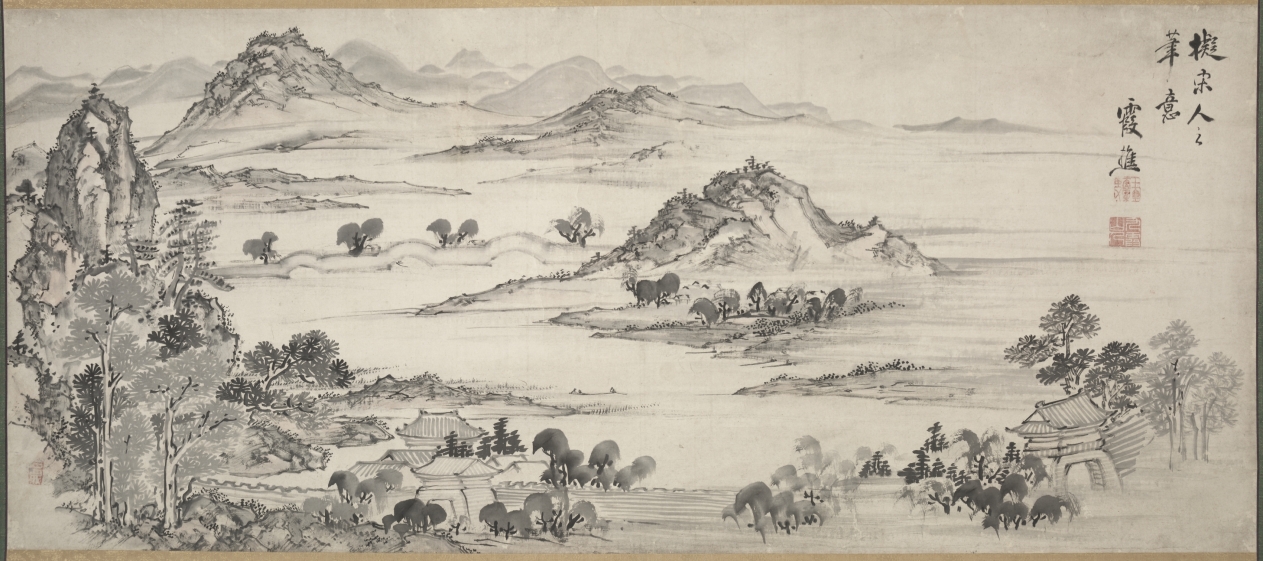 Ike Taiga (Japanese, 1723–1776) — West Lake