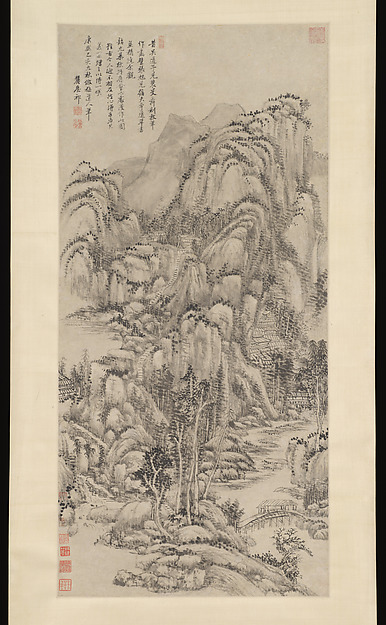
In the collection of Cleveland Museum of Art, Cleveland — check current display status with the museum.
FROM THE CLEVELAND MUSEUM OF ART’S CATALOG
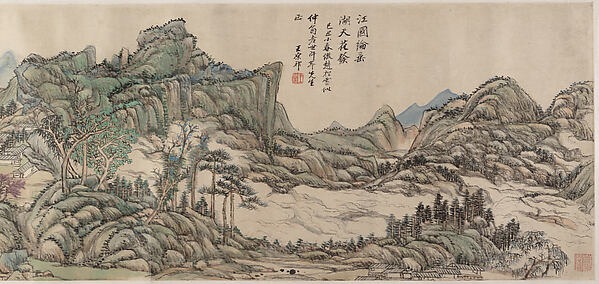
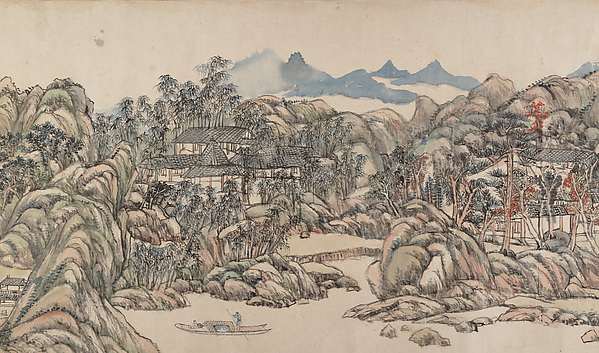
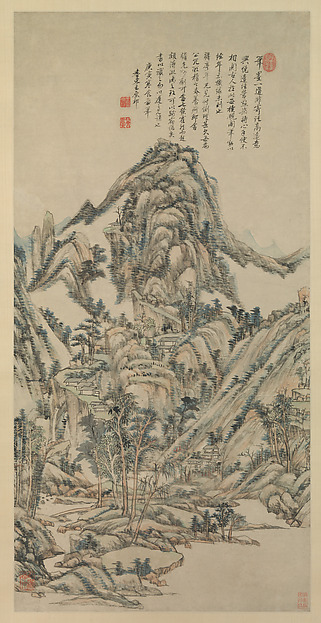
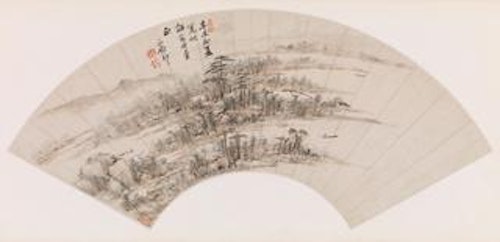
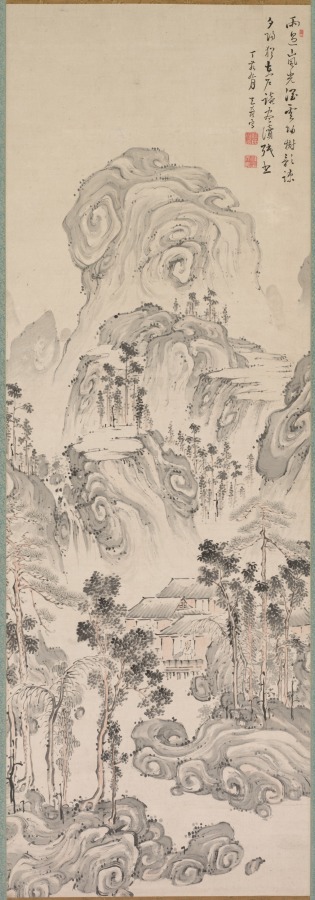
Wang Yuanqi, an official in Emperor Kangxi’s (reigned 1662–1722) court, grew up in an artistic family. Like other mainstream painters of the Orthodox School, he followed a canon of earlier styles and artists endorsed by Ming calligrapher Dong Qichang (1555–1636). Here, Wang drew inspiration from Ni Zan (1301–1374), a Yuan dynasty painter known for his simple compositions and spare use of ink. Master Ni seldom used color, but Wang added green and ochre washes to the trees, cottages, and hills in this landscape. Painting was a way for Wang to relieve the pressures of his official duties.
Be the first to share your thoughts.
Sign in to join the discussion.
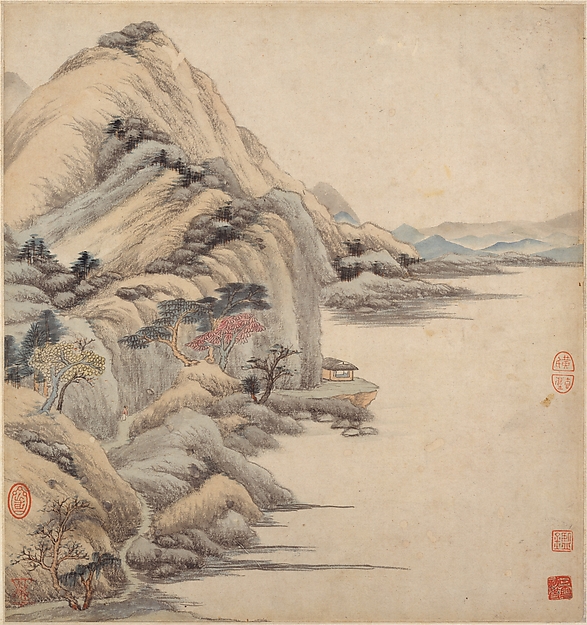 Wang Jian
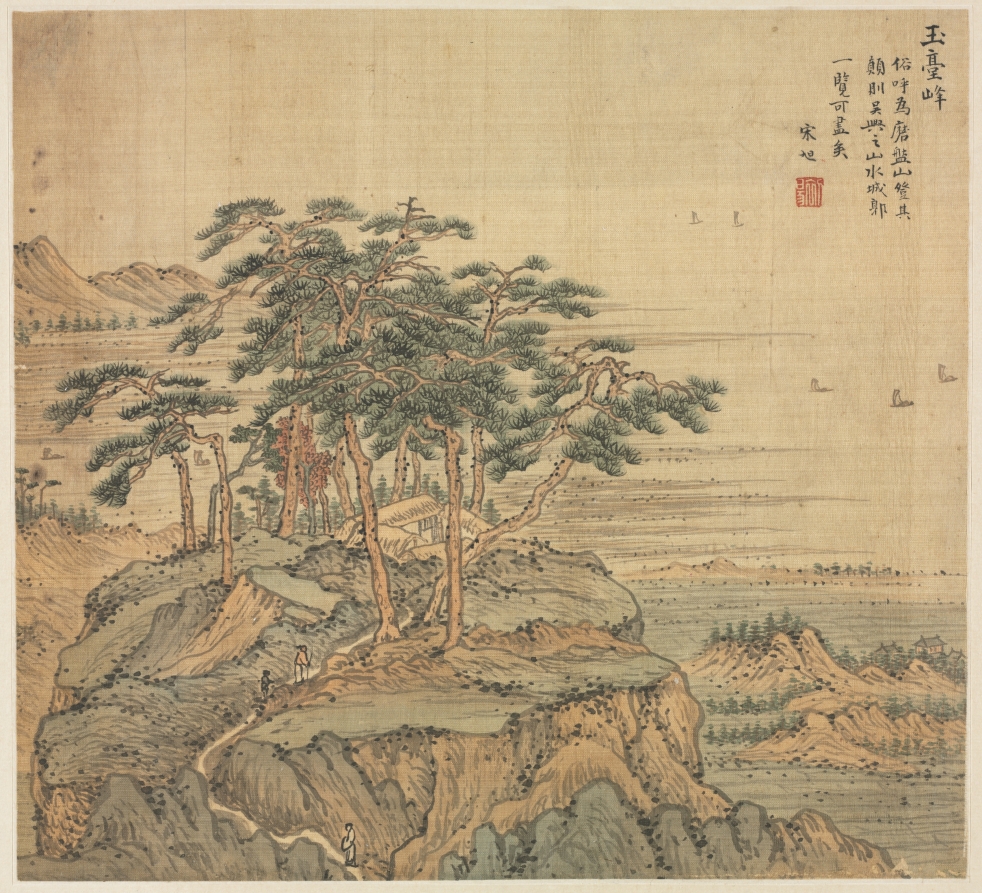 Song Xu (Chinese, 1525-c. 1606) — Yutai Peak (Jade Terrace P
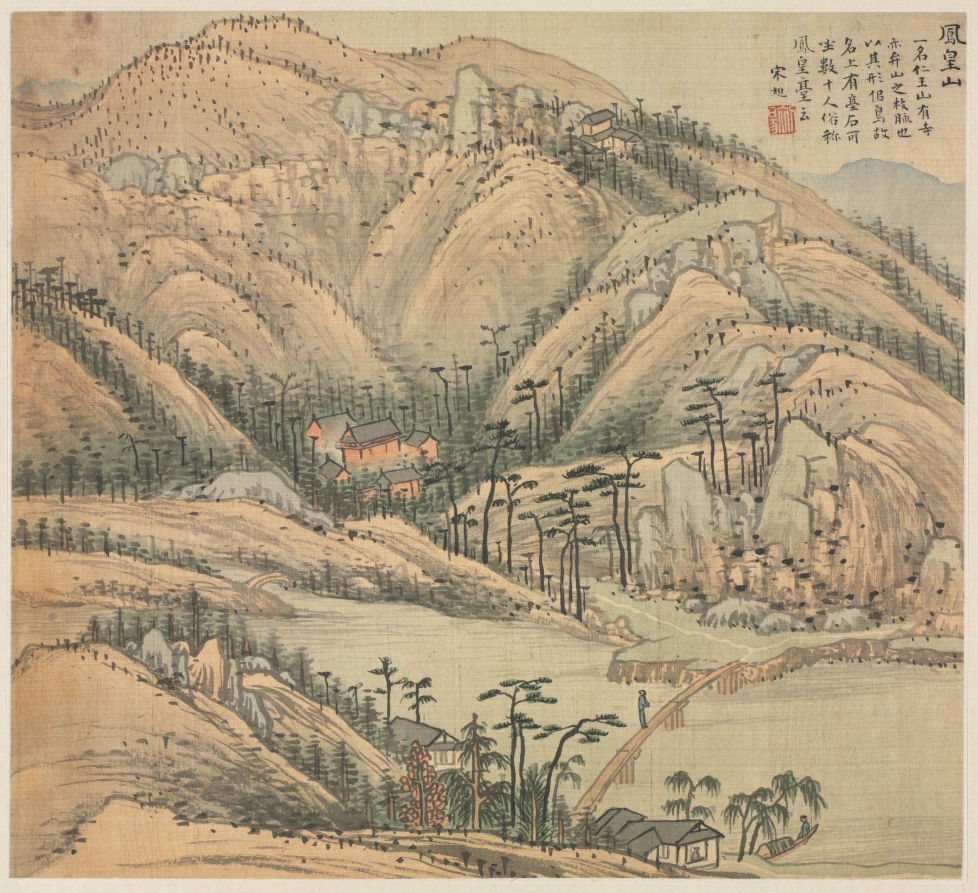 Song Xu (Chinese, 1525-c. 1606) — Mt. Fenghuang (Mt. Phoenix
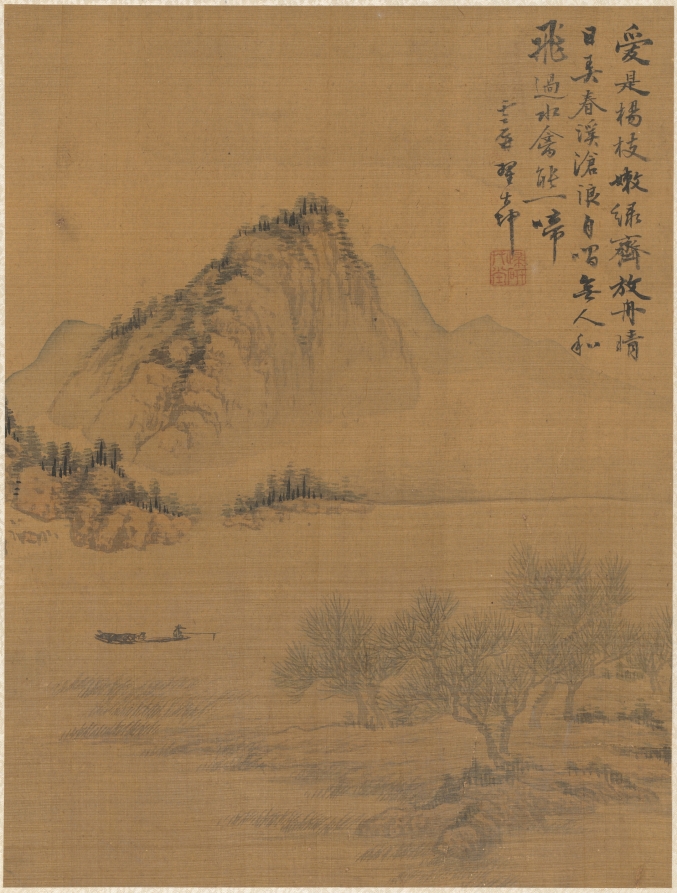 Zhai Dakun (Chinese, d. 1804) — Landscape
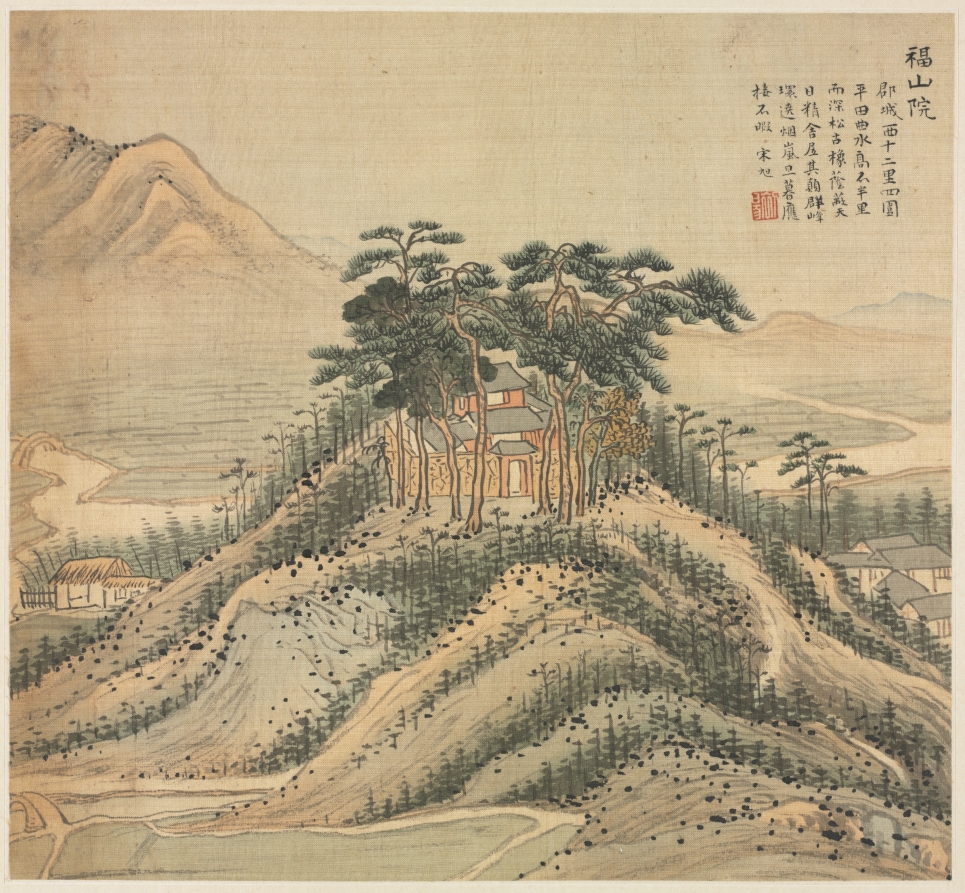 Song Xu (Chinese, 1525-c. 1606) — Fushan Monastery
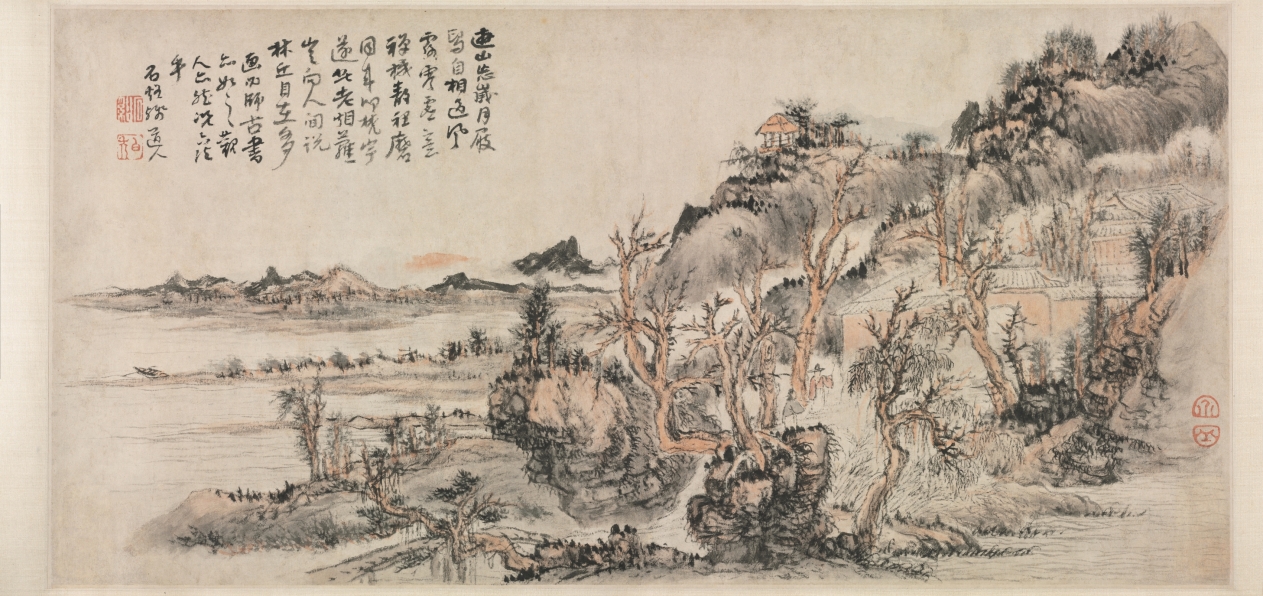 Kuncan (Chinese, 1612–c. 1673) — Spring Landscape
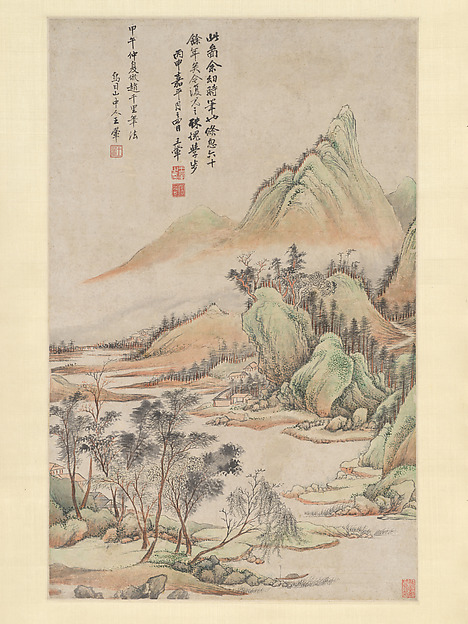 Wang Hui — 倣趙伯駒山水圖 軸|Landscape in the Style of Zhao Boju (Fa
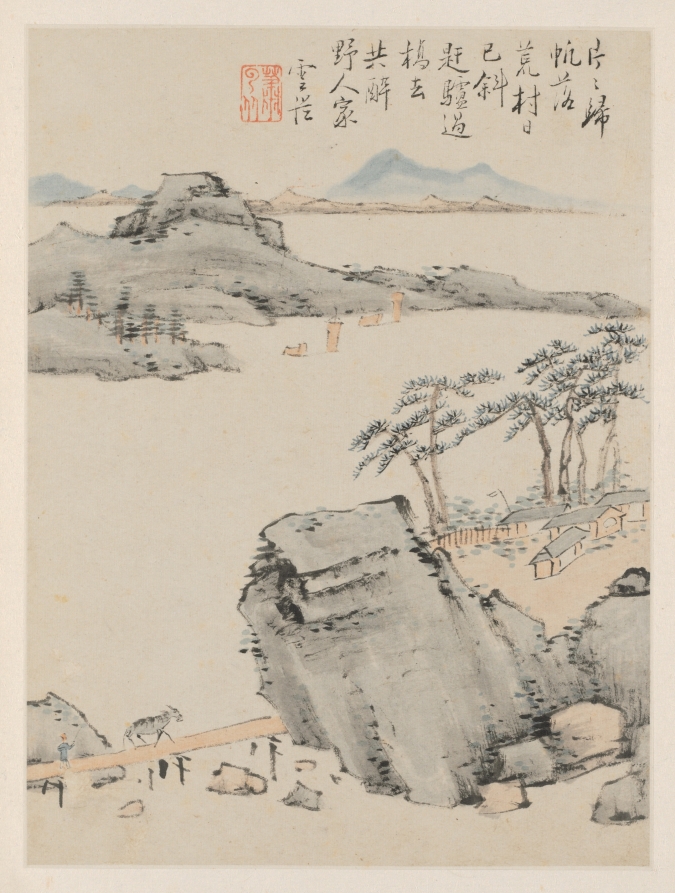 Xiao Yuncong (Chinese, 1596–1673) — Album of Seasonal Landsc
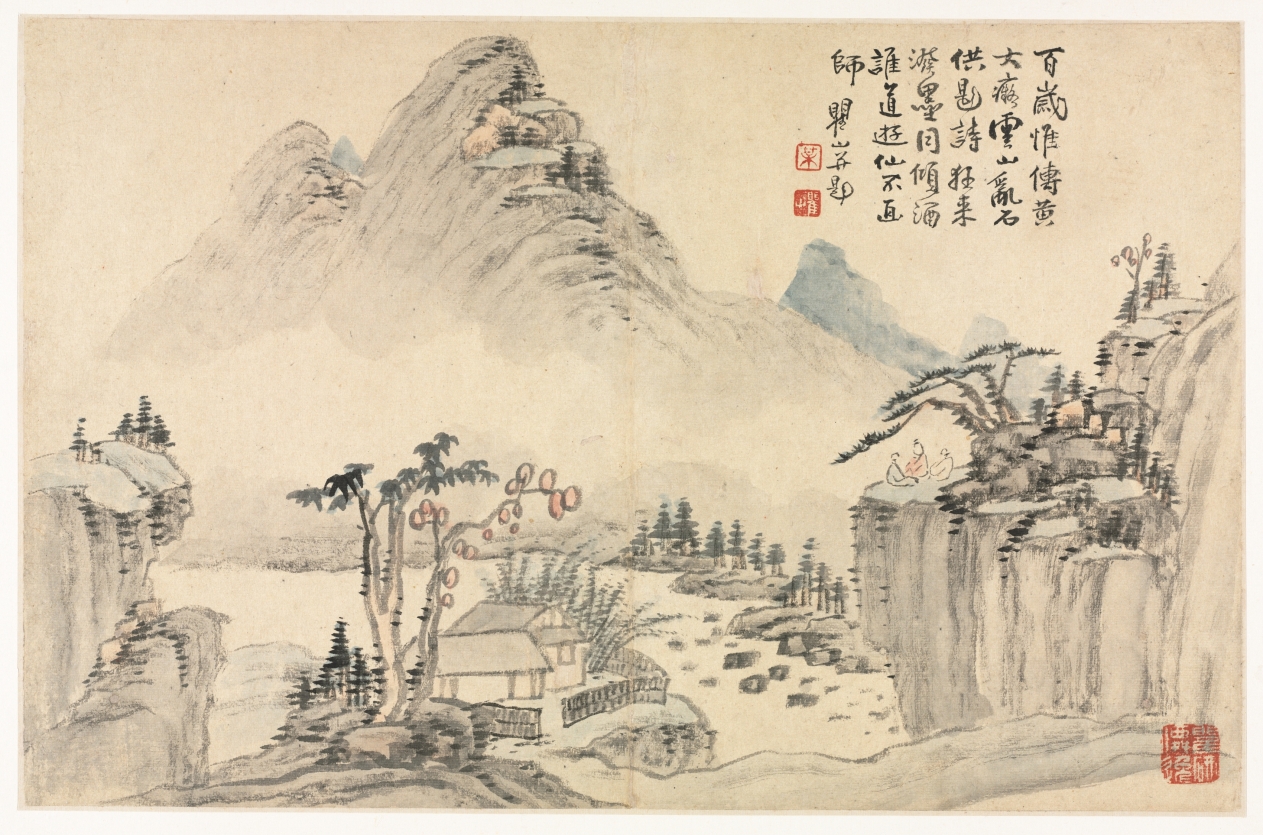 Mei Qing (Chinese, 1623–1697) — Landscapes in Various Styles
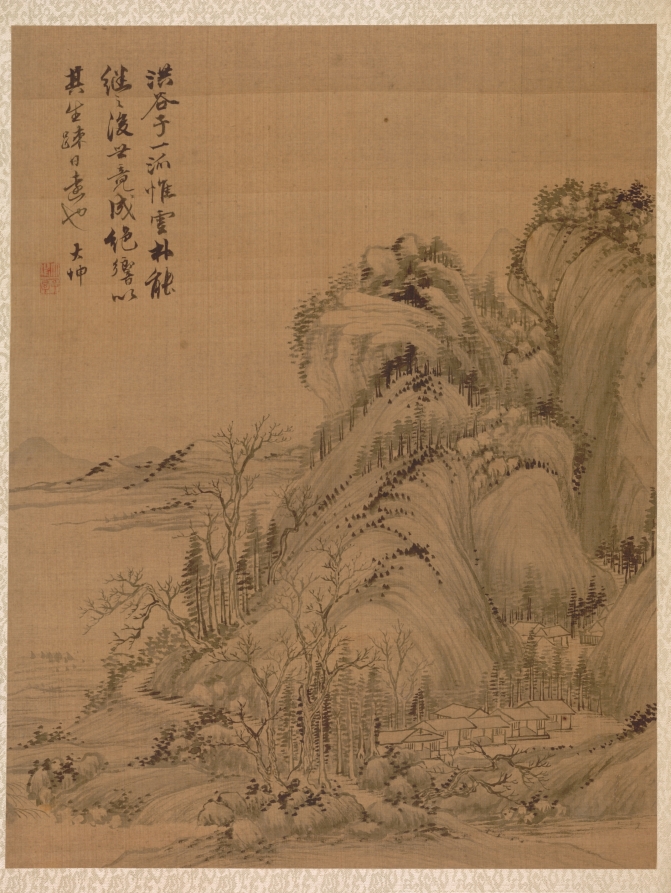 Zhai Dakun (Chinese, d. 1804) — Landscape in the Style of Ch
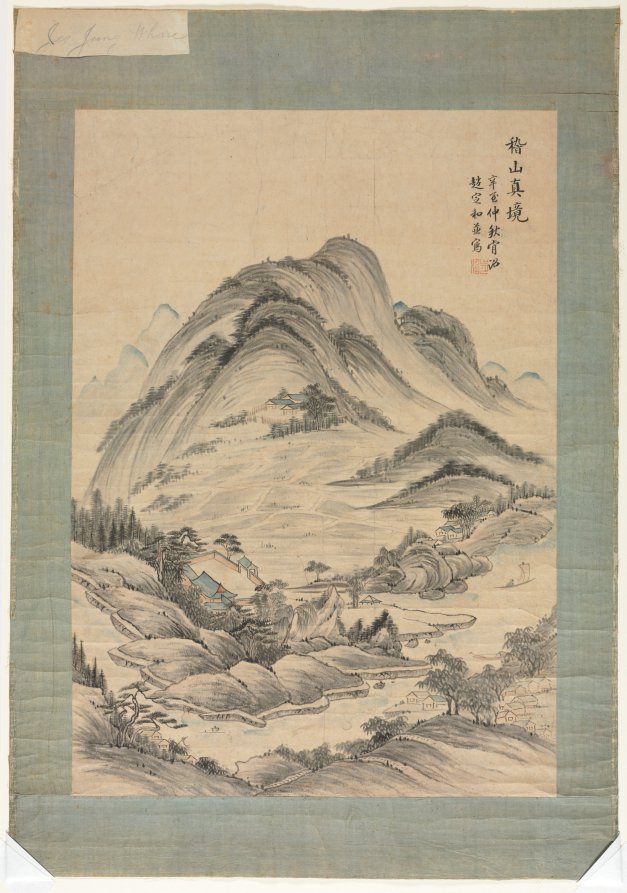 Landscape with Streams and Mountains
 Kan Tenju (Japanese, 1727–1795) — Landscape with Gentle Peak