Mathäus Küsel|Ludovico Ottaviano Burnacini

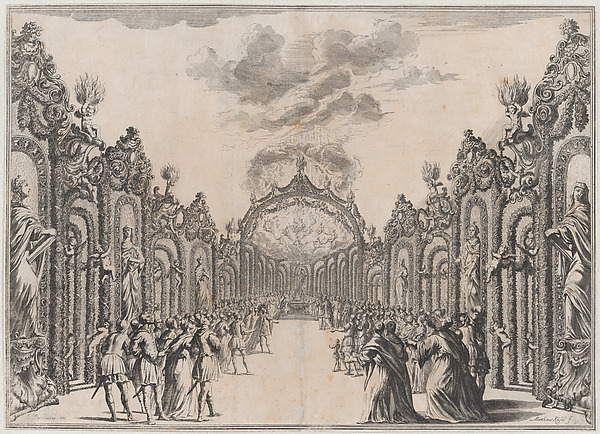
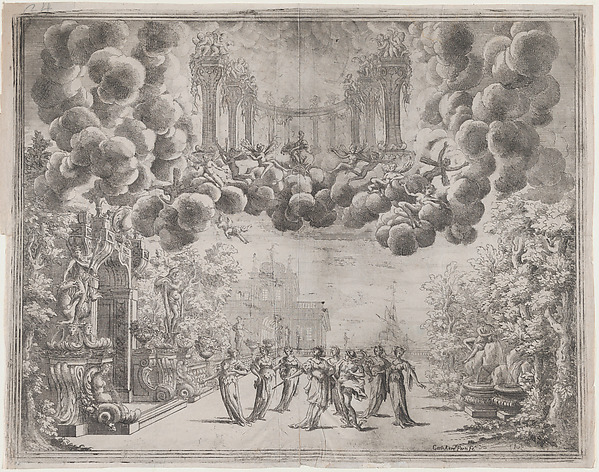
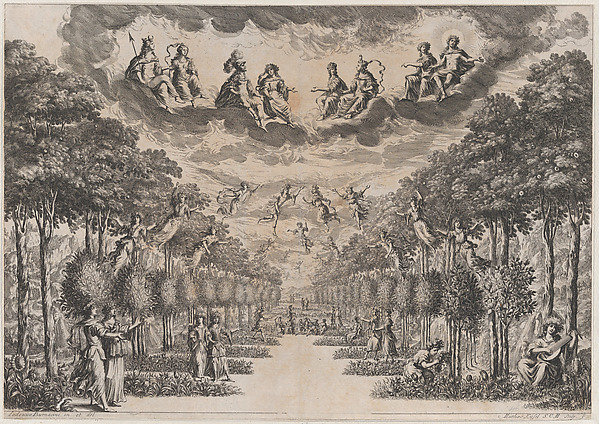
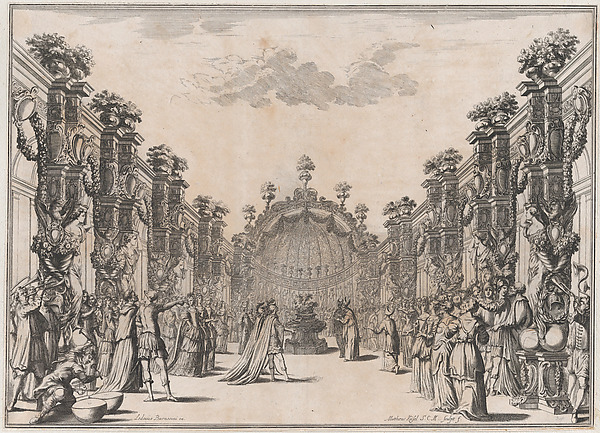
Pleasure garden, with three figures in front of a fountain at center, a row of putti to the left, and a group of women to the right; set design from 'Il Pomo D'Oro'

1668
Etching
26.4 × 43.8 cm (10.4 × 17.2 in)

SEE IT IN PERSON

Not currently on view

In the collection of The Metropolitan Museum of Art, New York · as of July 2026

View at metmuseum.orgPlan a visit ↗

Discussion

Be the first to share your thoughts.

Sign in to join the discussion.

Community guidelines

More by Mathäus Küsel|Ludovico Ottaviano Burnacini
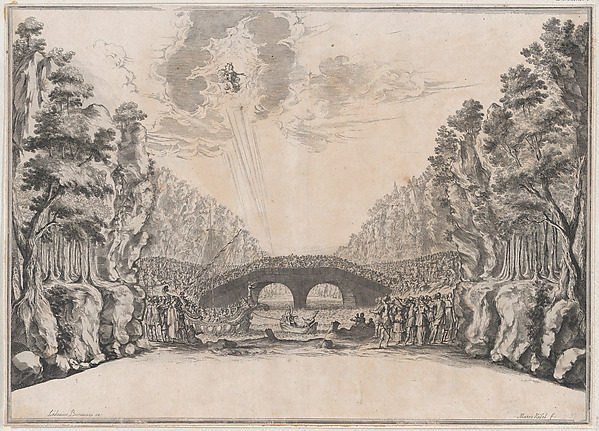
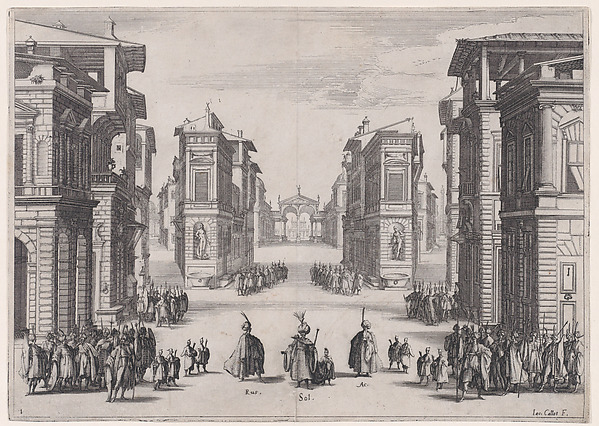
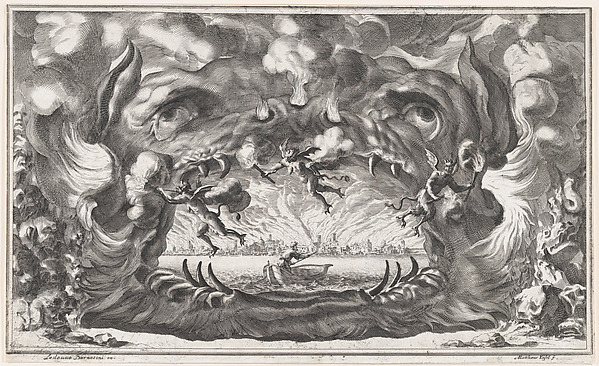
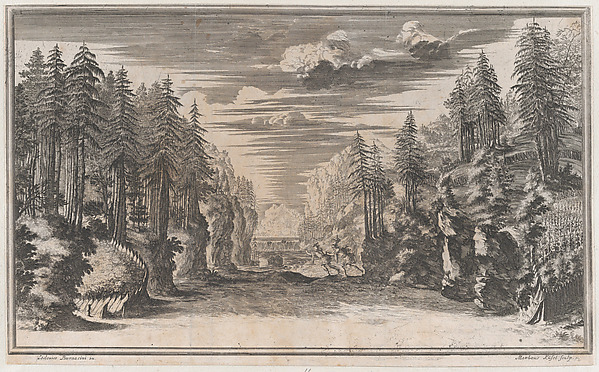
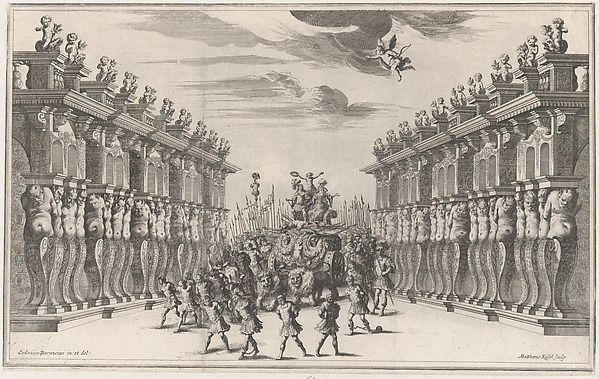
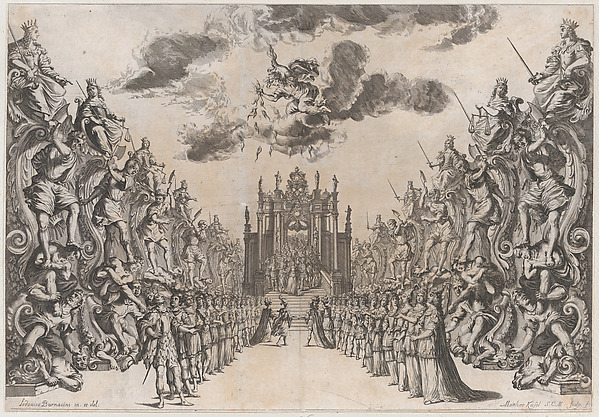
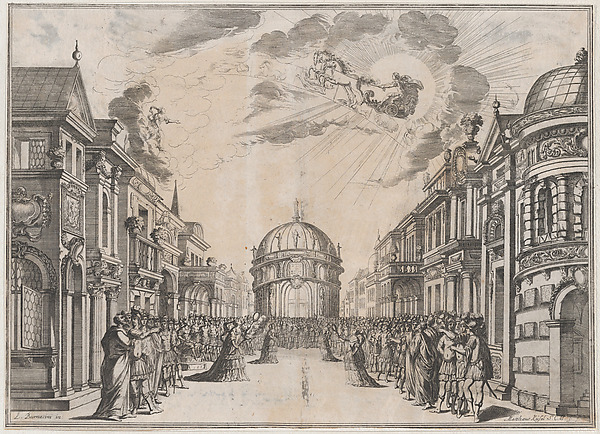
A row boat leading a ship to shore while a large group of figures looks on from the coast and along the bridge at center; a deity appears in the sky at upper left; set design from 'Il Fuoco Eterno'A row boat leading a ship to shore while a large group of fiThe hellmouth, set design from 'Il Pomo D'Oro'The hellmouth, set design from 'Il Pomo D'Oro'Landscape with two figures running along the bank of the river Xanto; set design from 'Il Pomo D'Oro'Landscape with two figures running along the bank of the rivAtrium of the Palace of Venus; set design from 'Il Pomo D'Oro'Atrium of the Palace of Venus; set design from 'Il Pomo D'OrMagnificent Hall of Astrea; men and women gathered in the street to view a procession through a triumphal arch and down the stairs into the city; the procession is led by a female wearing a crown, she is followed by various figures in varying costume; set design from 'La Monarchia Latina Trionfante'Magnificent Hall of Astrea; men and women gathered in the stA large gathering of people in the street as a goddess races across the sky in a chariot led by four horses; set design from 'Il Fuoco Eterno'A large gathering of people in the street as a goddess racesThe Elysian Fields; set design from 'La Monarchia Latina Trionfante'The Elysian Fields; set design from 'La Monarchia Latina TriPrologue; the stage curtain is lifted to reveal a soldier on an elephant surrounded by his army; above Jupiter and his eagle look down on men carrying boulders; set design from 'La Monarchia Latina Trionfante'Prologue; the stage curtain is lifted to reveal a soldier on
More like this

The Triumph of Austria; Leopold I at center, mounted on a reared horse, atop a military trophy; surrounded by equestrian portraits of the Holy Roman Emperors; set design from 'Il Pomo D'Oro'Ludovico Ottaviano Burnacini|Mathäus Küsel — The Triumph of A large group gathered in a courtyard before a domed structure; musicians play at left; set design from 'Il Fuoco Eterno'Ludovico Ottaviano Burnacini|Mathäus Küsel — A large group gA man and two women conversing at center; young men standing to their right and young women to their left; ships in the distance; set design from 'Il Pomo D'Oro'Ludovico Ottaviano Burnacini|Mathäus Küsel — A man and two wA sacrifice to the Olympian gods taking place at the end of a path lined with statues and foliage; set design from 'Il Fuoco Eterno'Ludovico Ottaviano Burnacini|Mathäus Küsel — A sacrifice to Courtyard of a palace with a man standing at center surrounded by attendants; above, a vision of a woman in a similar scene; set design from 'Il Pomo D'Oro'Ludovico Ottaviano Burnacini|Mathäus Küsel — Courtyard of a Two females in the foreground, one standing the other reclining, surrounded by tree-lined paths; set design from 'Il Pomo D'Oro'Ludovico Ottaviano Burnacini|Mathäus Küsel — Two females in Soliman. 3e Acte (Soliman. 3rd Act), from SolimanJacques Callot|Prospero Bonarelli — Soliman. 3e Acte (SolimaStage design with allegorical figures; from 'L'Idea di tutti le perfezioni ... Piacenza'Carlo Antonio Forti — Stage design with allegorical figures;A man and a woman conversing at center, surrounded by a row of young men to the right and young women to the left, Mercury appears at top left corner; set design from 'Il Pomo D'Oro'Ludovico Ottaviano Burnacini|Mathäus Küsel — A man and a womFigures worshipping the statue of an armed figure; set design from 'Il Pomo D'Oro'Ludovico Ottaviano Burnacini|Mathäus Küsel — Figures worshipTriumphal Entry of KingAnonymous, German, 17th century — Triumphal Entry of KingSoliman. 1er Act (Soliman. 1st Act), from SolimanJacques Callot|Prospero Bonarelli — Soliman. 1er Act (Solima