Ludovico Ottaviano Burnacini|Mathäus Küsel

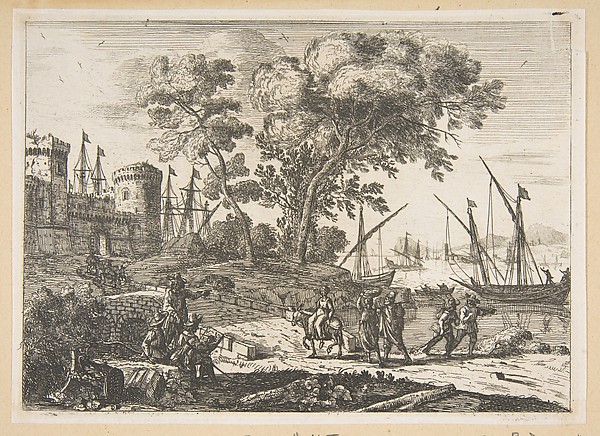
A man and two women conversing at center; young men standing to their right and young women to their left; ships in the distance; set design from 'Il Pomo D'Oro'

1668
Etching
26.3 × 43.6 cm (10.4 × 17.2 in)

SEE IT IN PERSON

Not currently on view

In the collection of The Metropolitan Museum of Art, New York · as of July 2026

View at metmuseum.orgPlan a visit ↗

Discussion

Be the first to share your thoughts.

Sign in to join the discussion.

Community guidelines

More by Ludovico Ottaviano Burnacini|Mathäus Küsel
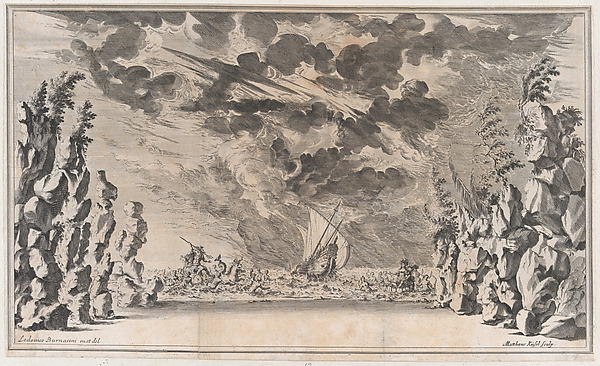
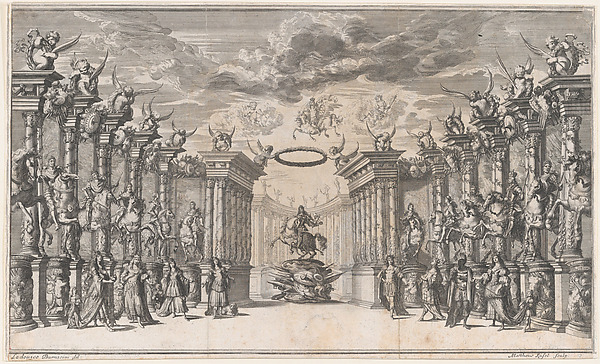
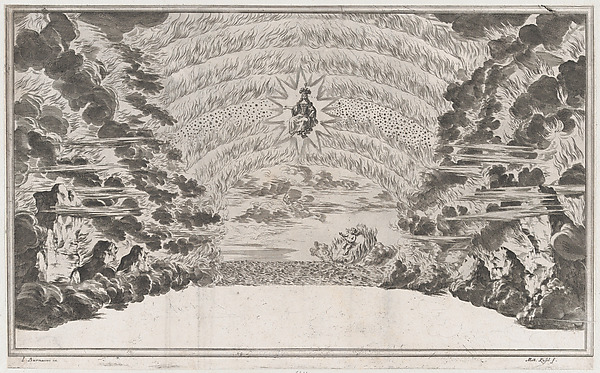
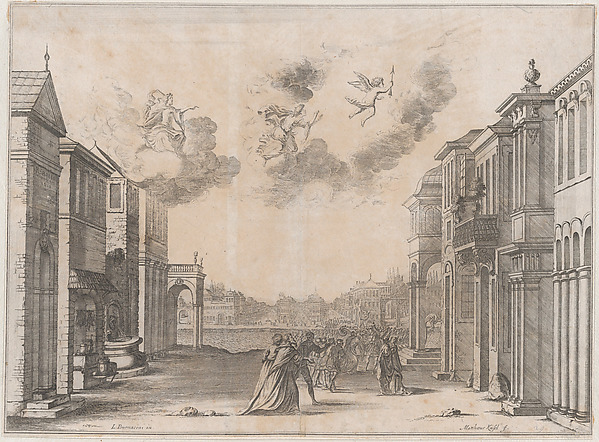
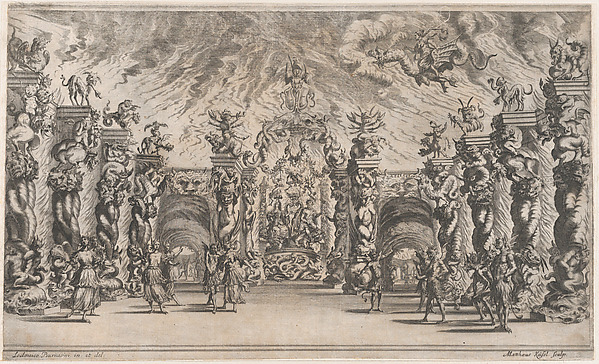
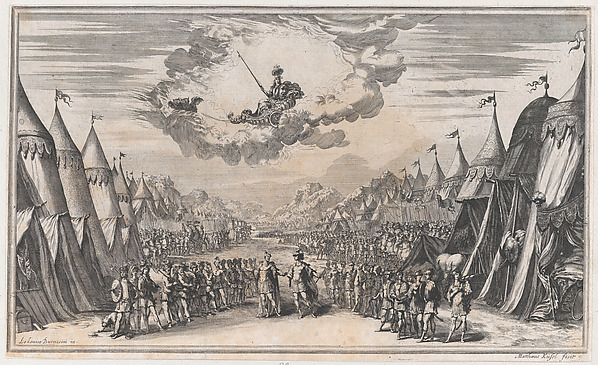
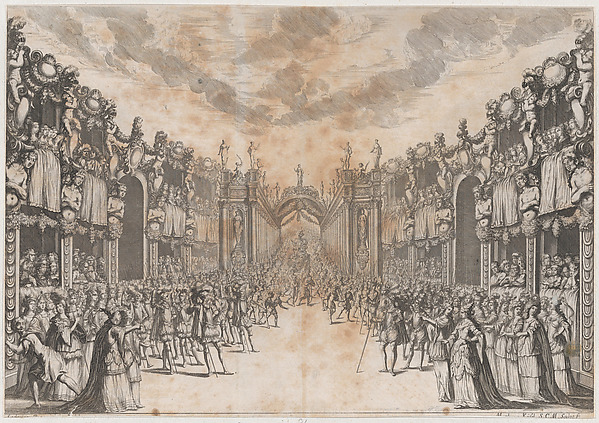
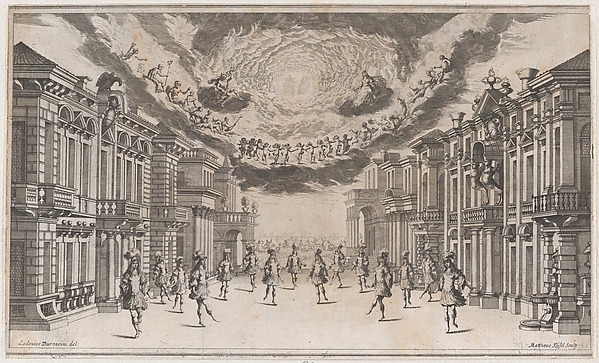
A shore framed by rocks, with Neptune in his chariot on the left and Salacia in hers on the right; at center, a ship caught in a storm; set design from 'Il Pomo D'Oro'A shore framed by rocks, with Neptune in his chariot on the The Triumph of Austria; Leopold I at center, mounted on a reared horse, atop a military trophy; surrounded by equestrian portraits of the Holy Roman Emperors; set design from 'Il Pomo D'Oro'The Triumph of Austria; Leopold I at center, mounted on a reA female figure in glory at center, surrounded by burning rocks; below Cupid sailing on a burning chariot; set design from 'Il Pomo D'Oro'A female figure in glory at center, surrounded by burning roFigures gathered at a seaport as a ship arrives; set design from 'Il Fuoco Eterno'Figures gathered at a seaport as a ship arrives; set design Kingdom of Pluto; a view of the underworld with Pluto and Proserpina enthroned at center, surrounded by demons; set design from 'Il Pomo D'Oro'Kingdom of Pluto; a view of the underworld with Pluto and PrThe leaders of two armies conversing, their respective troops and camps on either side; above, Minerva observes from her chariot; set design from 'Il Pomo D'Oro'The leaders of two armies conversing, their respective troopMen and women gathererd in the street to view the entrance of a royal figure, who is carried into the city on a throne; set design from 'La Monarchia Latina Trionfante'Men and women gathererd in the street to view the entrance oA group of young men dancing as the gods look on from above; set design from 'Il Pomo D'Oro'A group of young men dancing as the gods look on from above;
More like this

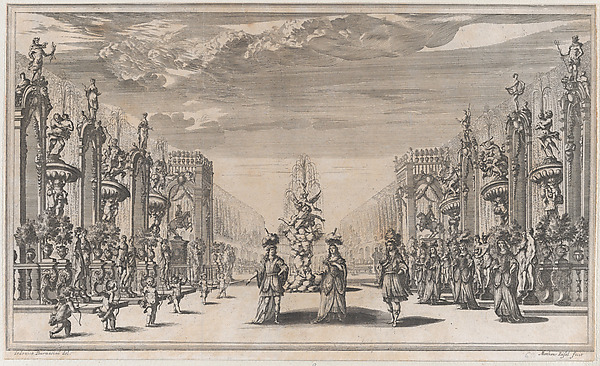
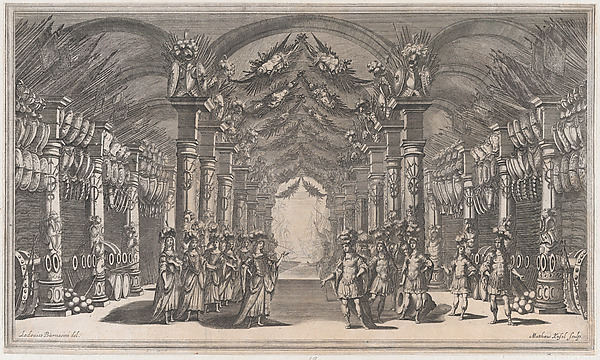
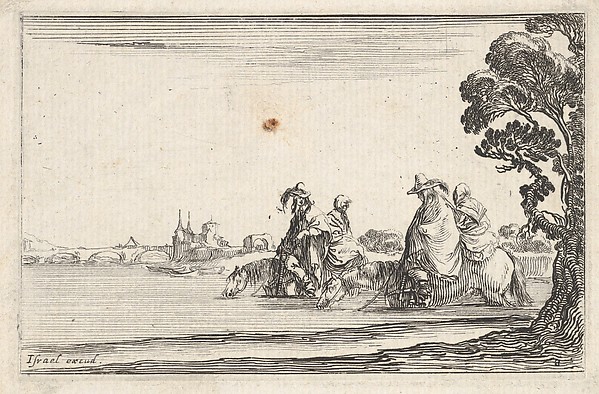
Pleasure garden, with three figures in front of a fountain at center, a row of putti to the left, and a group of women to the right; set design from 'Il Pomo D'Oro'Mathäus Küsel|Ludovico Ottaviano Burnacini — Pleasure gardenArsenal of Mars; a group of soldiers standing across from a group of women in an arsenal; ships off in the distance; set design from 'Il Pomo D'Oro'Mathäus Küsel|Ludovico Ottaviano Burnacini — Arsenal of MarsPlate 8: two horsemen in hats at right, each with a woman seated behind them, riding towards the left in profile across a river, a tree at far right, from 'Caprice faict par de la Bella'Stefano della Bella|Israël Henriet — Plate 8: two horsemen iTriumphal Entry of KingAnonymous, German, 17th century — Triumphal Entry of KingStage design with allegorical figures; from 'L'Idea di tutti le perfezioni ... Piacenza'Carlo Antonio Forti — Stage design with allegorical figures;May/June, from The Twelve MonthsAegidius Sadeler, II — May/June, from The Twelve MonthsThe DraughtsmanClaude Lorrain (French, 1604–1682) — The DraughtsmanCoast Scene with an ArtistClaude Lorrain (Claude Gellée) — Coast Scene with an ArtistLe Marché d'Esclaves, estampe appelée aussi Les Galériens, Le Petit Paris, La Petite Vue de Paris (The Slave Market, also called The Galley Slaves, The Small Paris, The Small View of Paris)Jacques Callot — Le Marché d'Esclaves, estampe appelée aussiSoliman. 3e Acte (Soliman. 3rd Act), from SolimanJacques Callot|Prospero Bonarelli — Soliman. 3e Acte (SolimaView of the scene in which is represented the Judgment of Paris (Prospettiva della scena in cui si rappresentò il Giuditio do Paride), from the series 'Seven Interludes' for the wedding celebration of Cosimo de' Medici in Florence, 1608Remigio Cantagallina|Giulio Parigi — View of the scene in whFrancesco I d'Este Dissolved the Seige of Reggio, from L'Idea di un Principe ed Eroe Cristiano in Francesco I d'Este, di Modena e Reggio Duca VIII [...]Bartolomeo Fenice (Fénis)|Domenico Gamberti — Francesco I d'