Women's Bathhouse and Laundry
Mid-18th to early 19th century
Ink and colors on paper
104.6 × 188.7 cm (41.2 × 74.3 in)
SEE IT IN PERSON
Not currently on view
In the collection of Art Institute of Chicago, Chicago · as of July 2026
Discussion
FROM THE ART INSTITUTE OF CHICAGO’S CATALOG
In Japan during the Edo period (1615–1868), bathing was considered a communal activity, and bathhouses were popular places to socialize. The women in this painting—most likely courtesans—are performing a variety of tasks in addition to bathing, such as doing laundry and combing one another’s hair. Two women near the back of the scene are reading a book; one of them holds her hand to her face as if to express her shock at the content, or perhaps to whisper in the other’s ear.
Be the first to share your thoughts.
Sign in to join the discussion.
More by Kitao Shigemasa
 Toeizan Temple at Ueno (Ueno Toeizan no zu), from the series
 Courtesans of Tsuruya, from the book "Mirror of Beautiful Wo
 Viewing Maple Leaves (Momijigari), from the series "Dance Cu
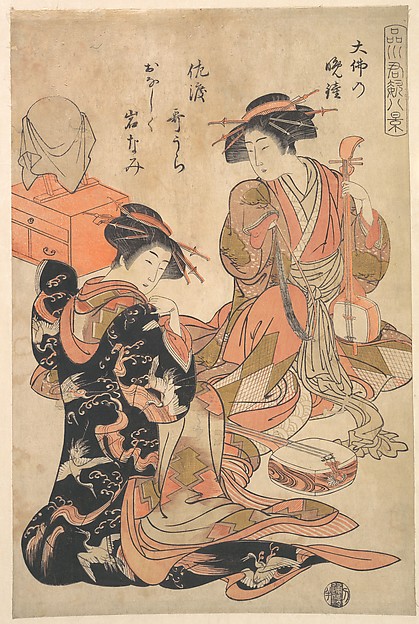 Daibutsu no bansho|Vesper Bell of the Temple of Great Buddha
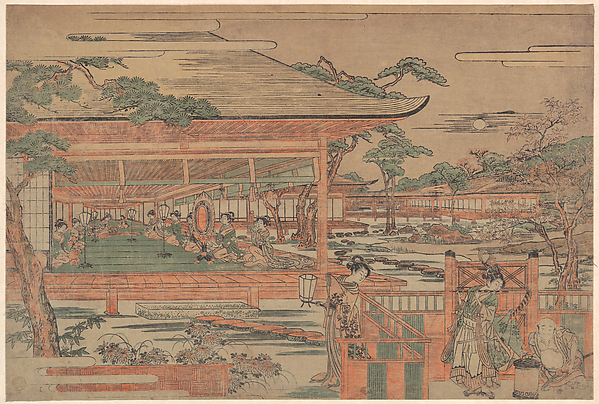 Untitled
 Courtesans of Yotsumaya, from the book "Mirror of Beautiful
  Courtesans of Kado Daikokuya, from the book "Mirror of Beaut
 Returning Sails at Ryogoku River (Ryogoku no kihan), from th
More like this
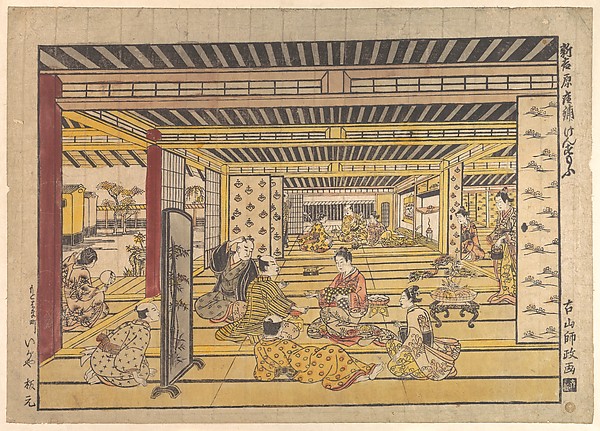 Furuyama Moromasa
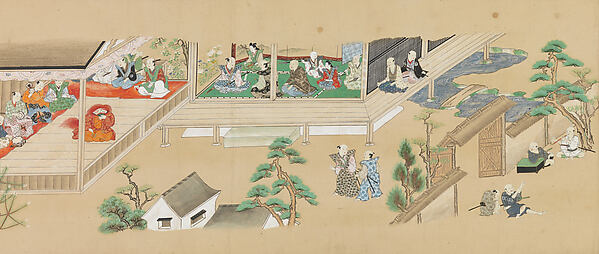 能楽風俗図絵巻|Six Noh Performances in Scenes from Daily Life
 Okumura Masanobu — Original Perspective Picture of the Fashi
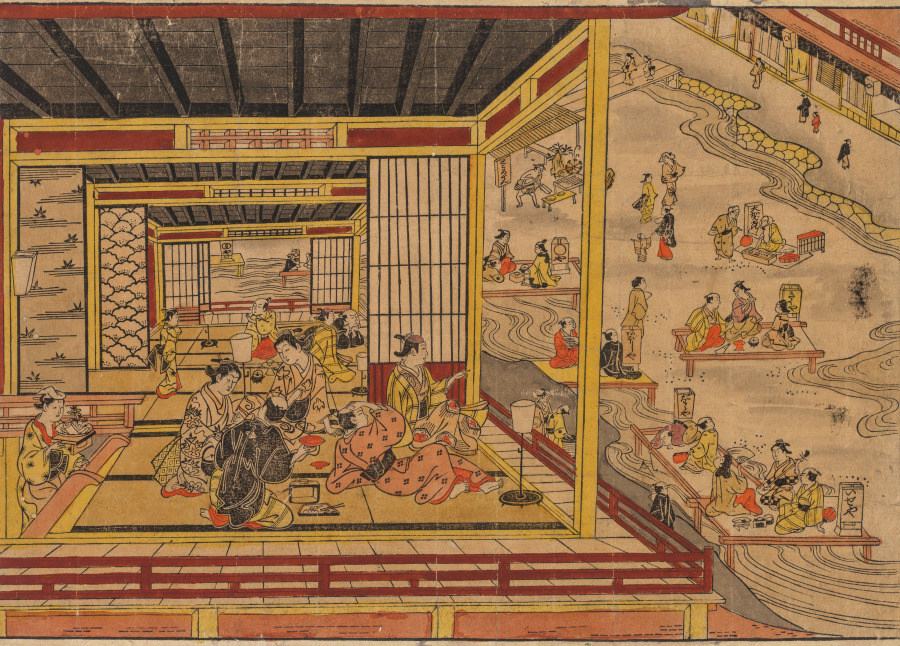 Nishimura Shigenaga (Japanese, 1697(?)-1756) — Tea House Bes
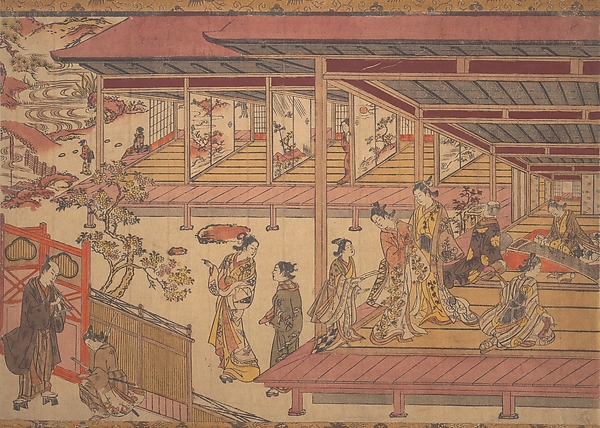 Okumura Masanobu
 Kitagawa Utamaro — Shell-Matching Game, from the illustrated
 Kitao Masayoshi (Kuwagata Keisai) — Act VII (Shichidanme), f
 Chôbunsai Eishi — A Woman's Poetry Party
 Torii Kiyonaga — Visitors to Enoshima
 Suzuki Harunobu — The Introduction (Miai), the first sheet f
 Torii Kiyonaga — The First Bath of the New Year (Yudono haji
 Utagawa Toyokuni I — Courtesans of the Chojiya and their att