Rocky Coast
SEE IT IN PERSON
Not currently on view
In the collection of Art Institute of Chicago, Chicago · as of July 2026
Discussion
FROM THE ART INSTITUTE OF CHICAGO’S CATALOG
Like the Impressionists, who emphasized light effects, painters of the Hudson River School focused on temporal conditions of the landscape to suggest specific atmospheres. In Rocky Coast , John Frederick Kensett depicted the shoreline on a hazy day, with calm water and gentle waves. The careful treatment of nature by the Hudson River School artists has been linked to the writings of Transcendentalists such as Ralph Waldo Emerson, who wrote in Nature (1836): “Standing on the bare ground,—my head bathed by the blithe air, and uplifted into infinite space,—all mean egotism vanishes. I become a transparent eye-ball. I am nothing. I see all.” The horizon line of Rocky Coast illustrates this idea, as the uninterrupted water appears infinite, suggesting that the ocean continues beyond the vision of the viewer.
Be the first to share your thoughts.
Sign in to join the discussion.
More by John Frederick Kensett

More like this
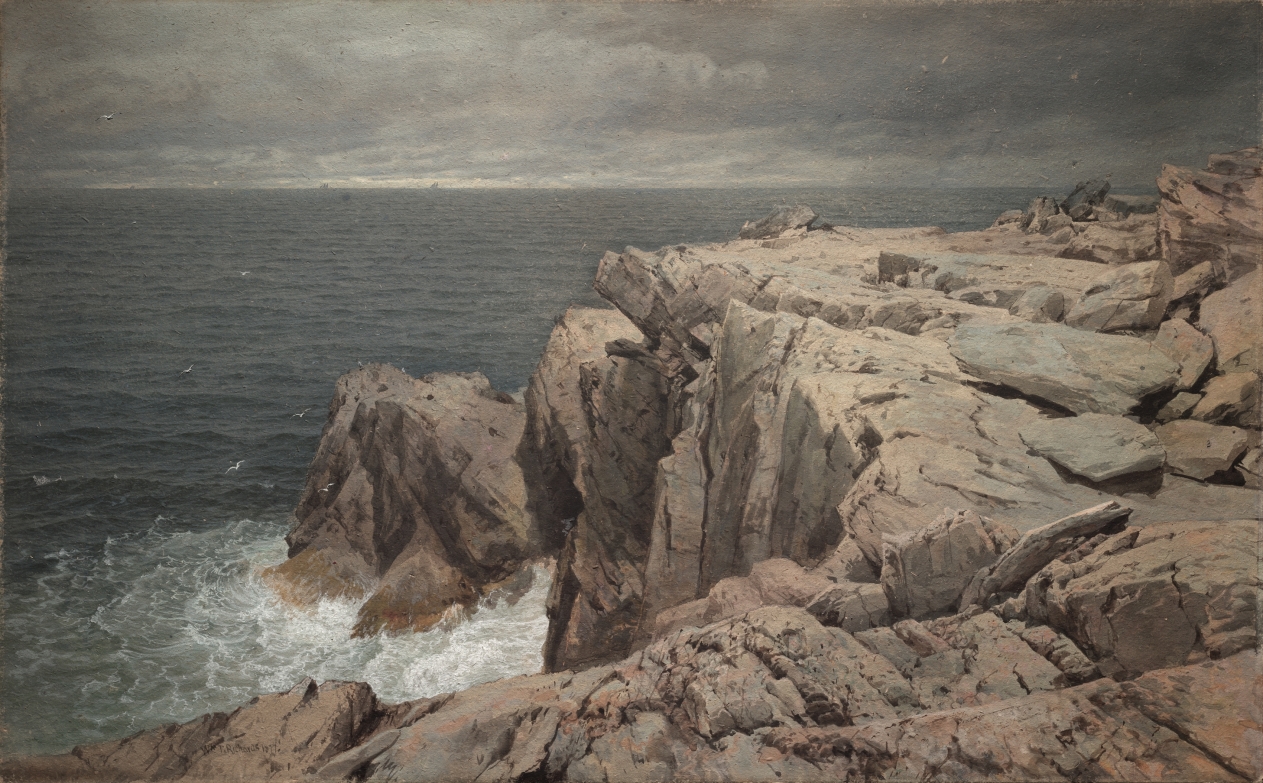 William Trost Richards (American, 1833–1905) — Cormorant Cli
 Thomas Doughty — Coming Squall (Nahant Beach with a Summer S
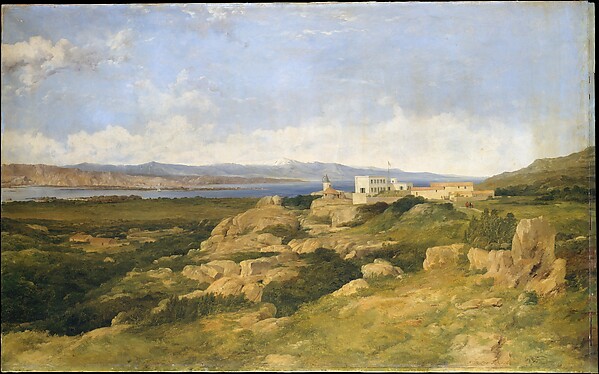 Frederick Richard Lee — General Garibaldi's Residence at Cap
 Claude Monet — La Pointe de la Hève, Sainte-Adresse
 Claude Monet — The Seashore at Sainte-Adresse
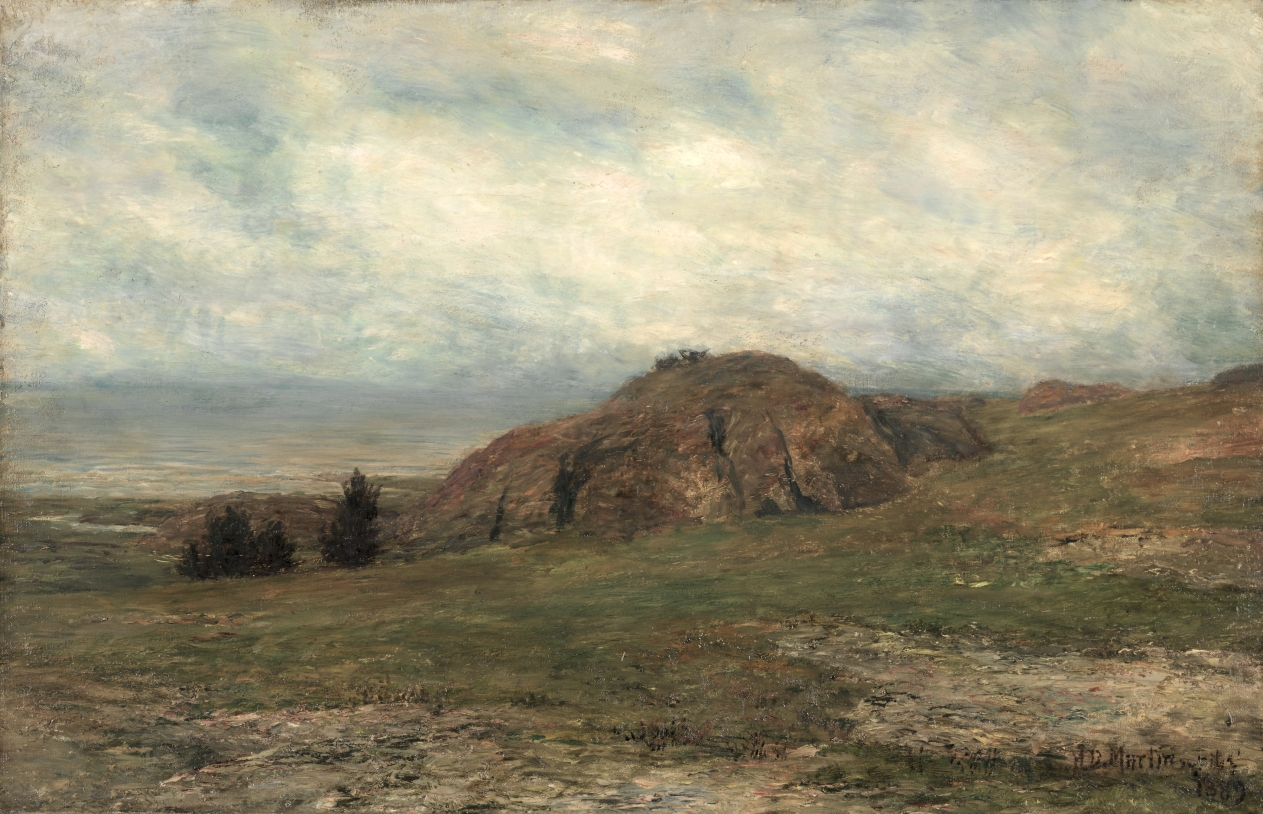 Homer Dodge Martin (American, 1836–1897) — Wild Coast, Newpo
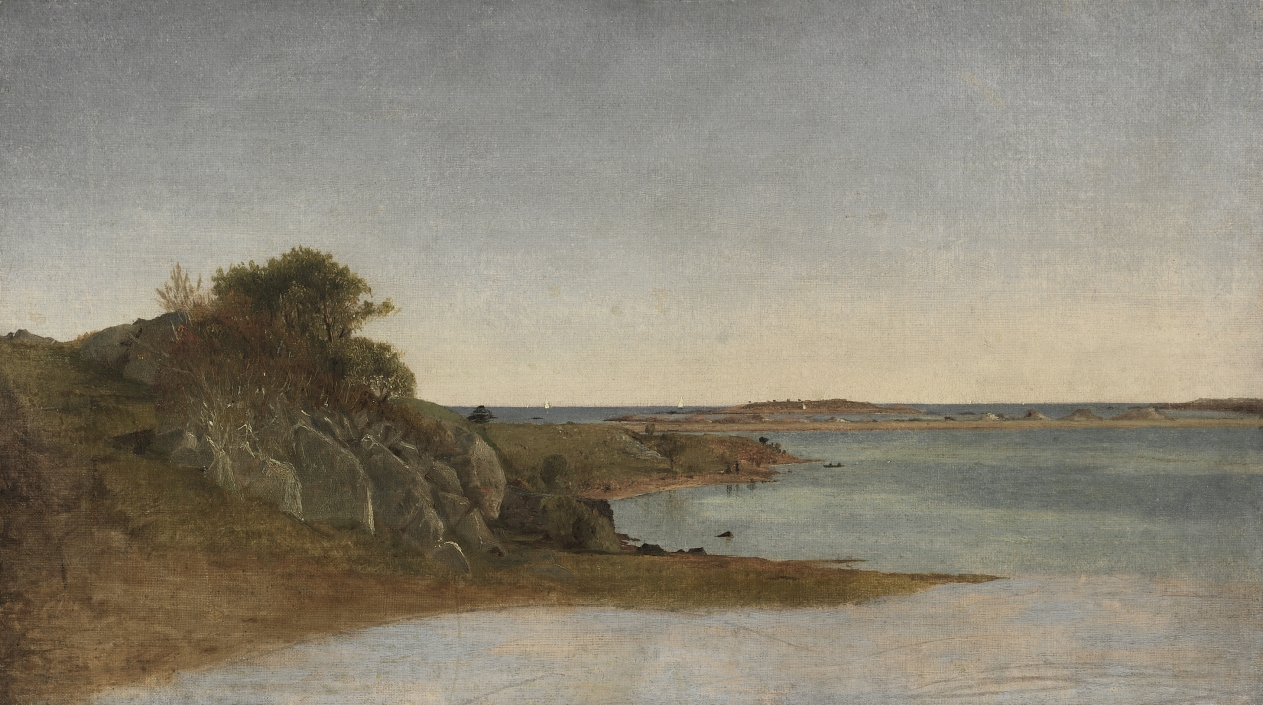 John Frederick Kensett (American, 1816–1872) — View near New
 Pierre Henri de Valenciennes — The Banks of the Rance, Britt
 Emil Carlsen — Nantasket Beach
 Gustave Courbet — Cliffs on the Sea Coast: Small Beach, Sunr
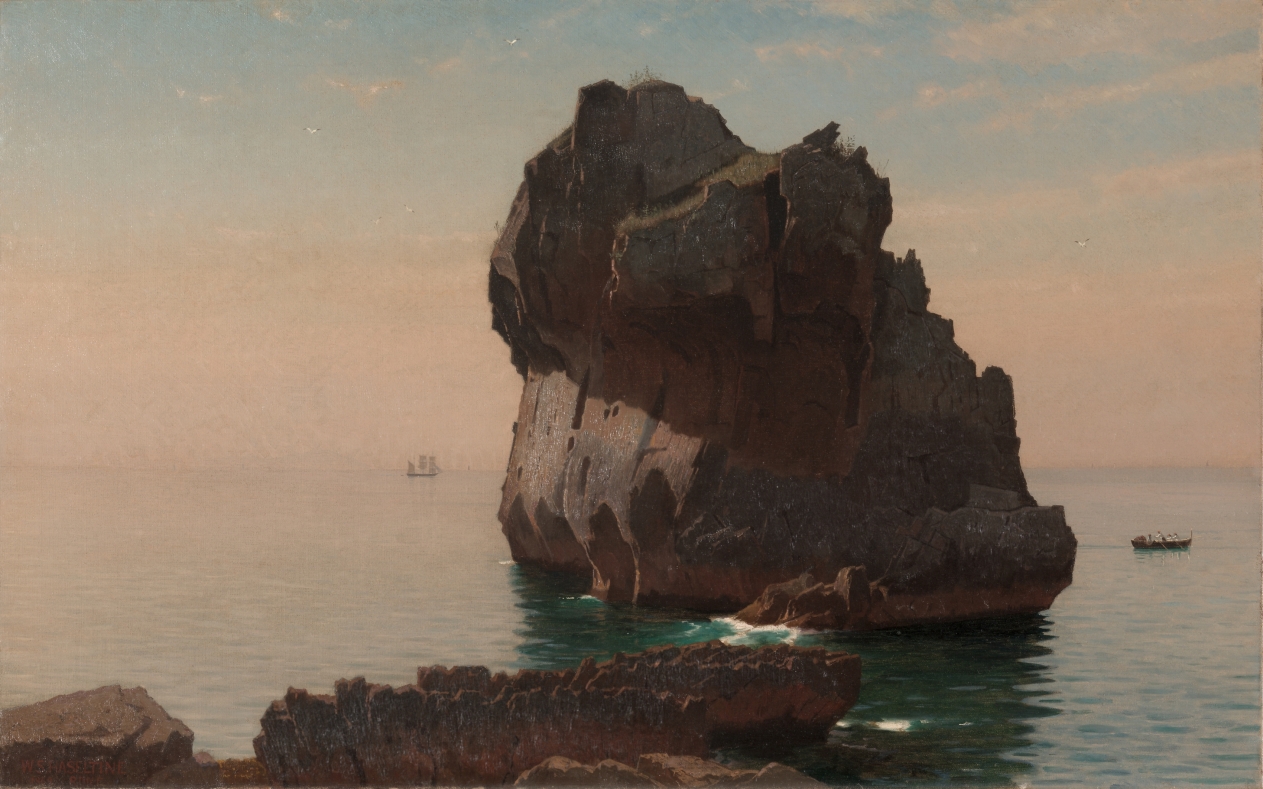 William Stanley Haseltine (American, 1835–1900) — Capri
 George Inness — A Marine