Katsushika Hokusai

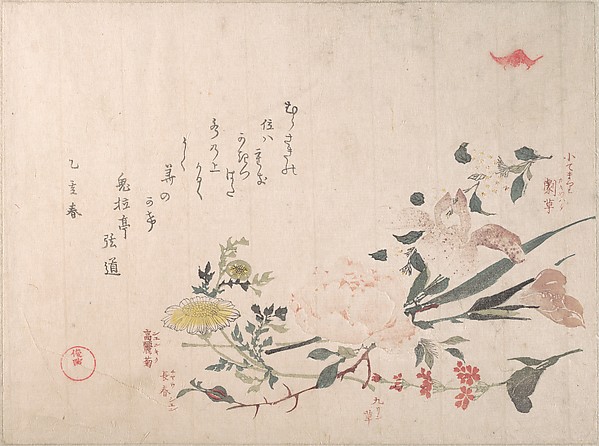
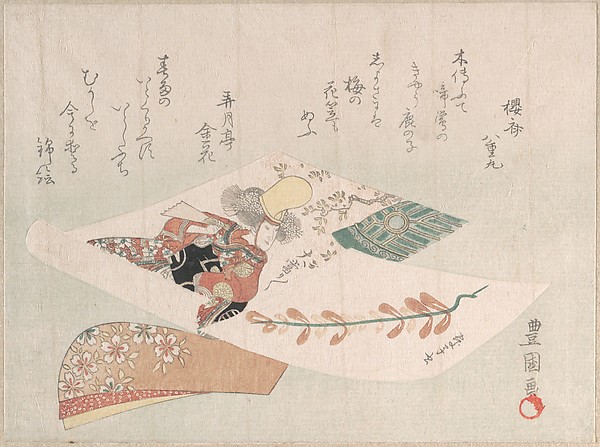
Basket of Peonies

1810 or 1814
color woodblock print; surimono

SEE IT IN PERSON

Not currently on view

In the collection of Cleveland Museum of Art, Cleveland · as of July 2026

View at clevelandart.orgPlan a visit ↗

Discussion

FROM THE CLEVELAND MUSEUM OF ART’S CATALOG

A surimono is a privately commissioned print used to announce or commemorate a special event. This picture celebrates an event in the life of the actor Ichikawa Danjuro VII, whose emblem was the peony. According to Japanese tradition, the peony–one of the flowers of the four seasons–is the flower of summer.

Source ↗

Be the first to share your thoughts.

Sign in to join the discussion.

Community guidelines

More by Katsushika Hokusai
冨嶽三十六景 身延川裏不二|View from the Other Side of Fuji from the Minobu River (Minobugawa ura Fuji), from the series Thirty-six Views of Mount Fuji (Fugaku sanjūrokkei)冨嶽三十六景 身延川裏不二|View from the Other Side of Fuji from the Mino諸國名橋奇覧 かうつけ佐野ふなはしの古づ|Old View of the Boat-bridge at Sano in Kōzuke Province (Kōzuke Sano funabashi no kozu), from the series Remarkable Views of Bridges in Various Provinces (Shokoku meikyō kiran)諸國名橋奇覧 かうつけ佐野ふなはしの古づ|Old View of the Boat-bridge at Sano in 百人一首 乳母かゑとき 猿丸太夫|Poem by Sarumaru Dayū, from the series One Hundred Poems Explained by the Nurse (Hyakunin isshu uba ga etoki)百人一首 乳母かゑとき 猿丸太夫|Poem by Sarumaru Dayū, from the series One 琉球八景 筍崖夕照|Evening Glow at Jungai (Jungai sekishō), from the series Eight Views of the Ryūkyū Islands (Ryūkyū hakkei)琉球八景 筍崖夕照|Evening Glow at Jungai (Jungai sekishō), from the 琉球八景 粂村竹籬|Bamboo Hedge at Kumemura (Kumemura chikuri), from the series Eight Views of the Ryūkyū Islands (Ryūkyū hakkei)琉球八景 粂村竹籬|Bamboo Hedge at Kumemura (Kumemura chikuri), from Togetsu Bridge at Arashiyama in Yamashiro Province (Yamashiro Arashiyama no Togetsukyo), from the series "Unusual Views of Famous Bridges in Various Provinces (Shokoku meikyo kiran)"Togetsu Bridge at Arashiyama in Yamashiro Province (Yamashir琉球八景 中島蕉園|Banana Garden at Nakashima (Nakashima shōen), from the series Eight Views of the Ryūkyū Islands (Ryūkyū hakkei)琉球八景 中島蕉園|Banana Garden at Nakashima (Nakashima shōen), fromThe Back of Mount Fuji Seen from Minobu River (Minobugawa Urafuji), from the series Thirty-Six Views of Mount Fuji (Fugaku sanjūrokkei)The Back of Mount Fuji Seen from Minobu River (Minobugawa Ur
More like this

『春雨集』 摺物帖窪俊満画 クサボタン、萩、シャ  ガ、ツバキ、モチツバキ|Spring Rain Collection (Harusame shū), vol. 2: Cut Flowers: Clematis, Bush Clover, Iris, Camellia, and AzaleaKubo Shunman — 『春雨集』 摺物帖窪俊満画 クサボタン、萩、シャ ガ、ツバキ、モチツバキ|Spring ArtworkKubo ShunmanArtworkUnidentified artistFlowers of a Hundred Worlds (Momoyogusa): Flower boat (Hanabune)Kamisaka Sekka (Japanese, 1866–1942) — Flowers of a Hundred ArtworkKubo Shunman明   胡正言 《十竹齋書畫譜》 四開   木版畫|Page from the Ten Bamboo Studio Manual of Painting and CalligraphyHu Zhengyan — 明 胡正言 《十竹齋書畫譜》 四開 木版畫|Page from the Ten BaA Pine Tree and CamelliasNiwa Tokei — A Pine Tree and CamelliasArtworkShibata ZeshinArtworkRyūryūkyo ShinsaiPeonies and Chinese LionsSuzuki Harunobu — Peonies and Chinese LionsArtworkRyūryūkyo ShinsaiArtworkUnidentified artist