FROM THE CLEVELAND MUSEUM OF ART’S CATALOG
In contrast to imperial Mughal painting and Western portraiture, native or Rajput Indian portraits are simpler and more monumental in design, standing essentially as symbols of general ideas. Here the Rajput ruler sits unaffected by the gallop of his mount, with the trappings of a warrior and the devotional marks of a follower of the Hindu god Vishnu on his forehead. He is depicted as an ideal warrior king, pious, in full control, gazing ahead abstractly as though seeing an immutable truth.
Source ↗︎
Be the first to share your thoughts.
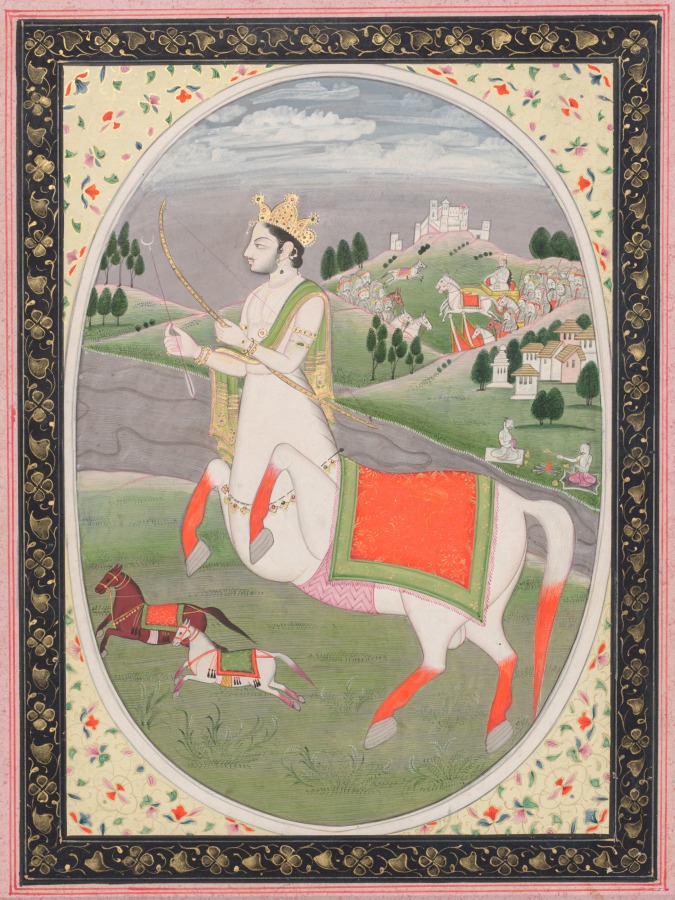 Sagittarius
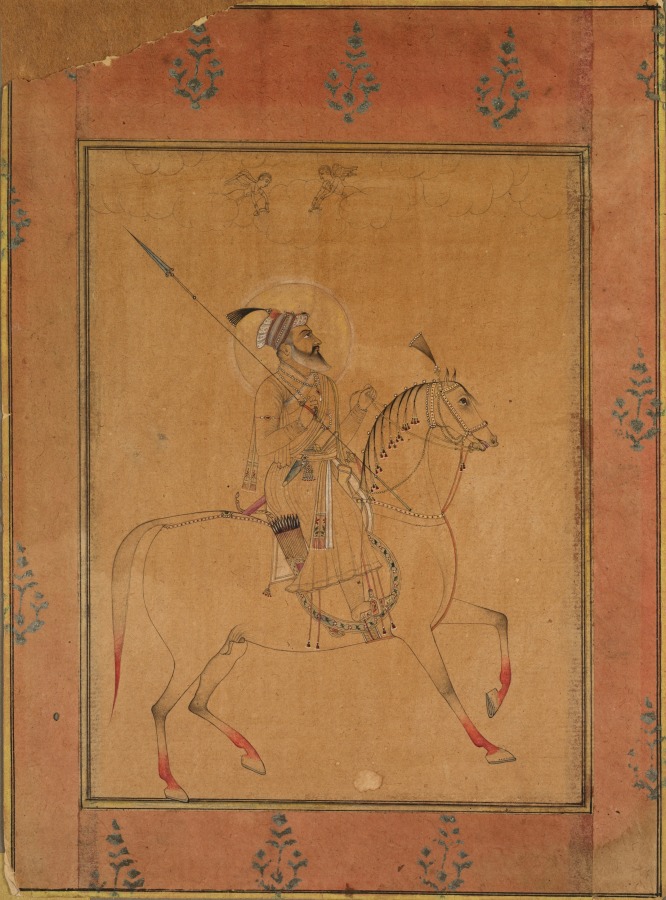 Emperor Shah Jahan
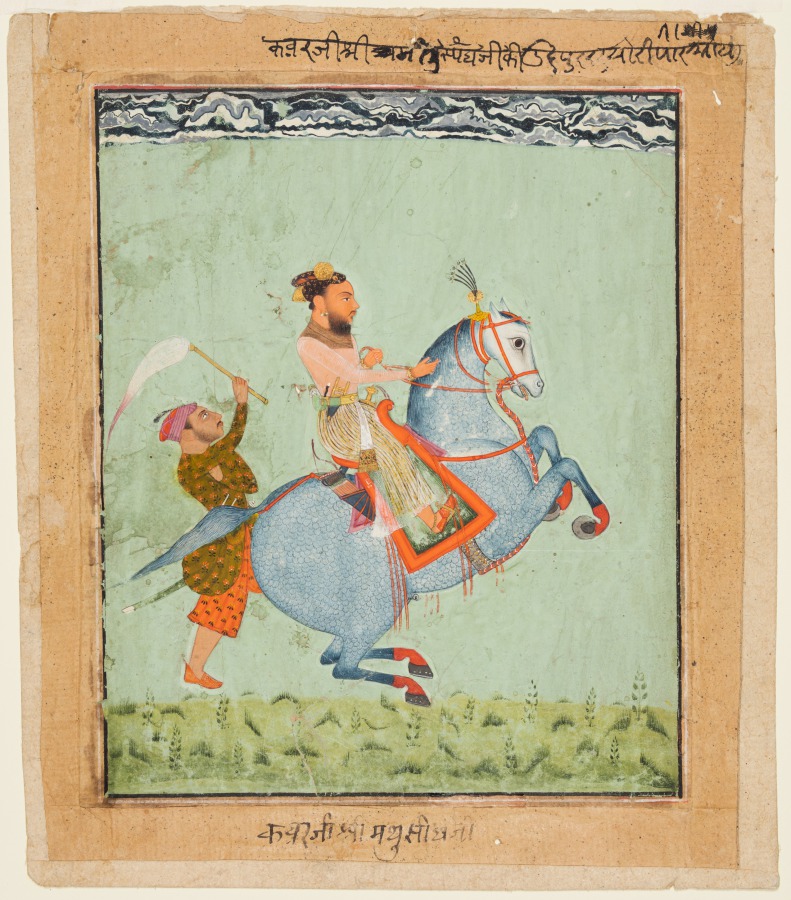 Prince Mathu Singh of Jatoli on a Blue Horse Riding to Udaip
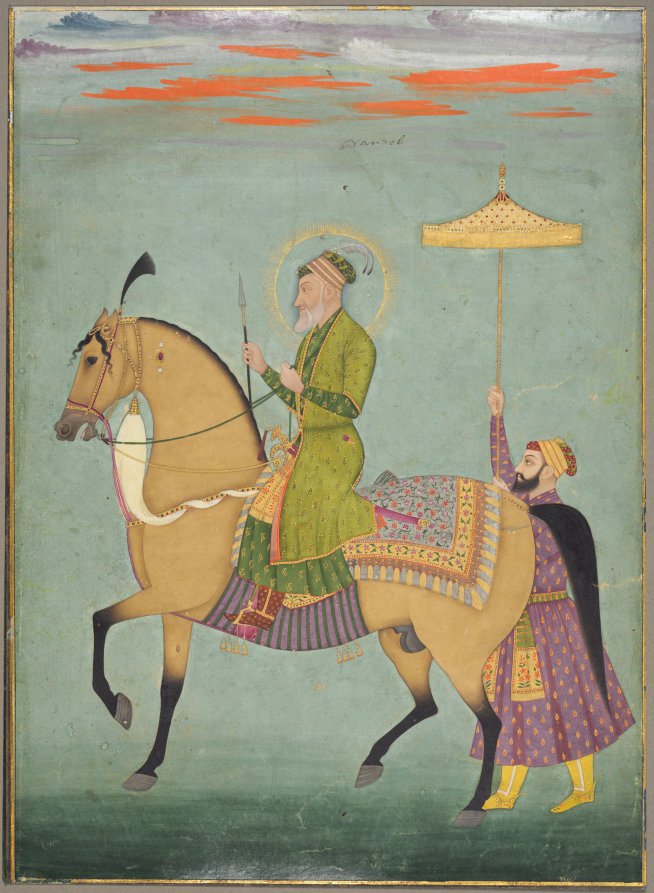 The Emperor Alamgir (reigned 1658–1707) on Horseback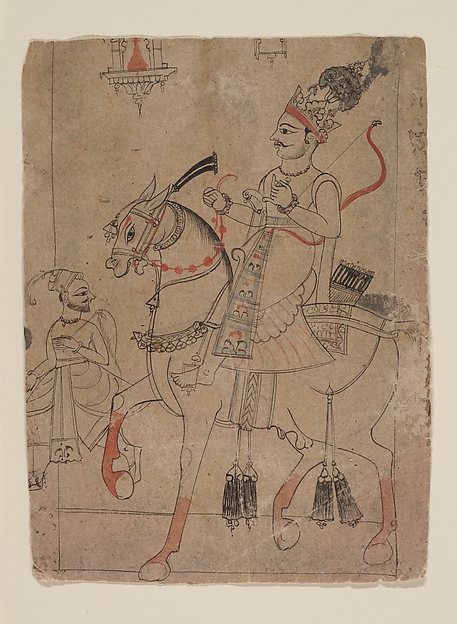
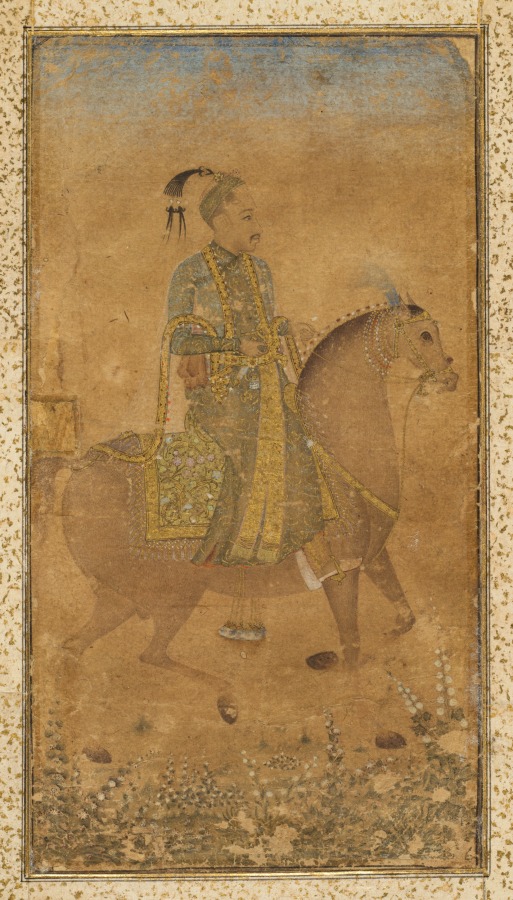 Sultan Abdullah Qutb Shah (1614-74) on Horseback
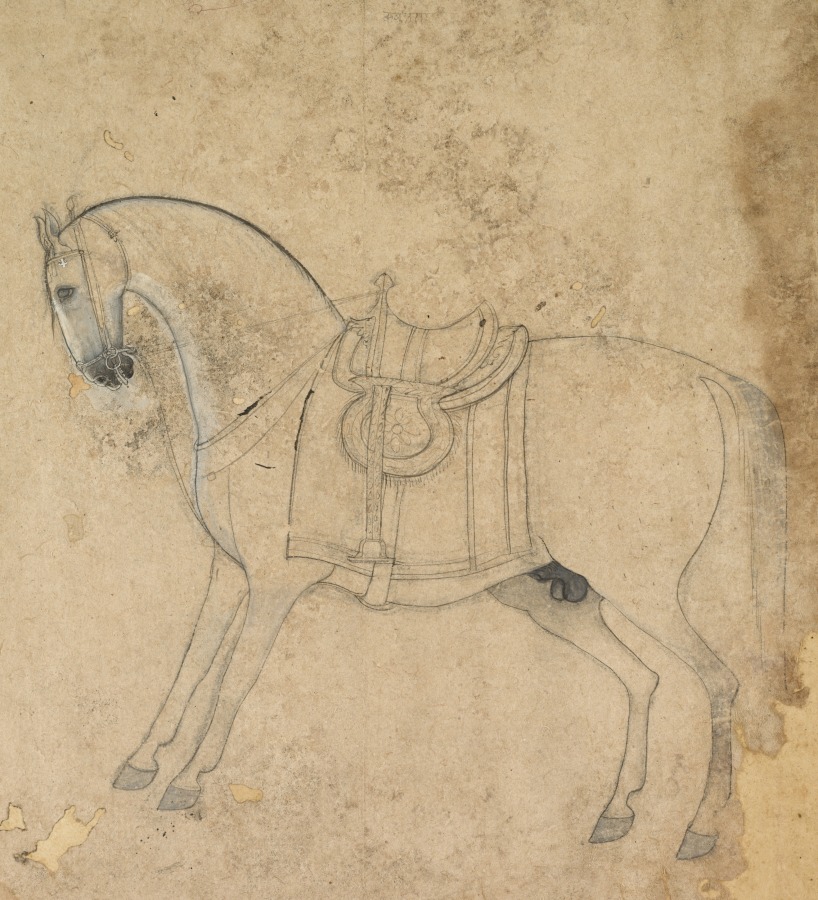 A saddled horse
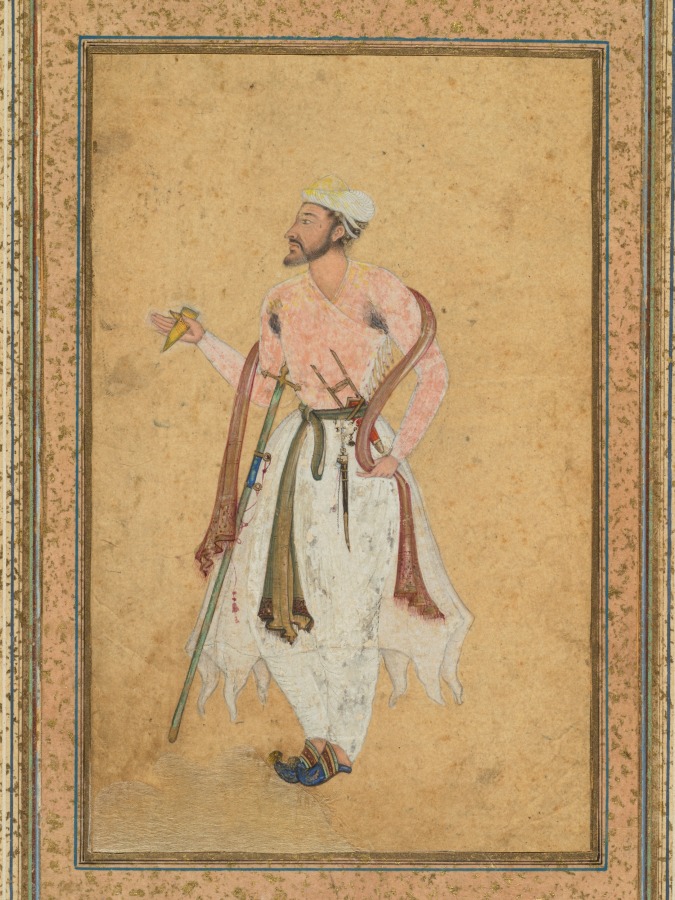 A Mughal courtier
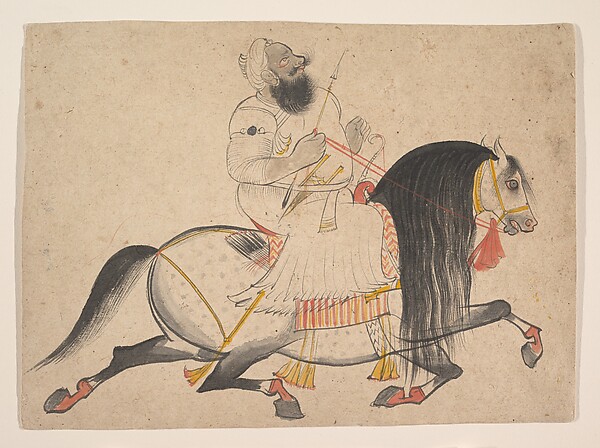 Bakhta
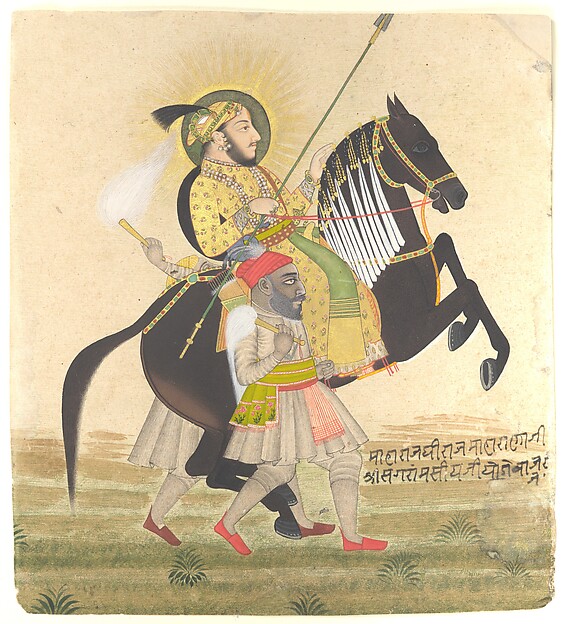 Stipple Master|Jai Ram
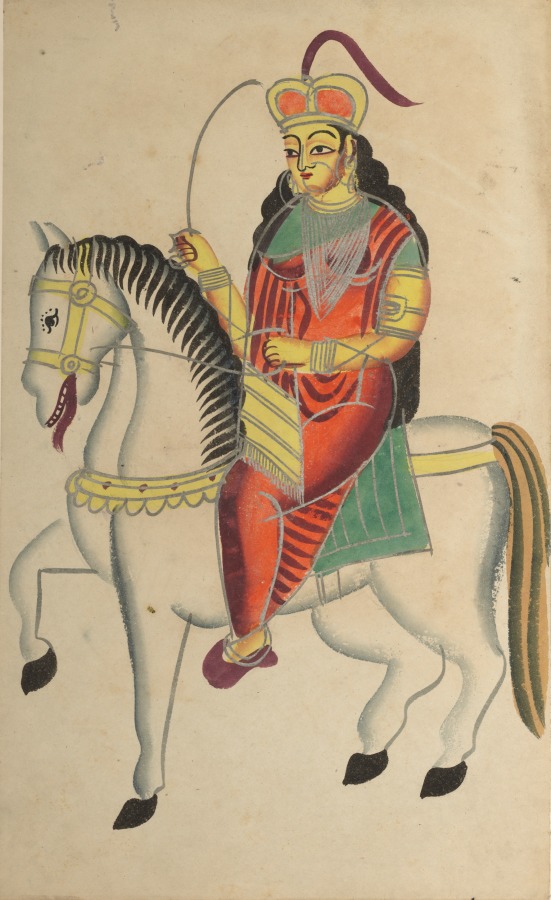 The Mutiny of the Heroine Rani Lakshmi Bai of Jhansi
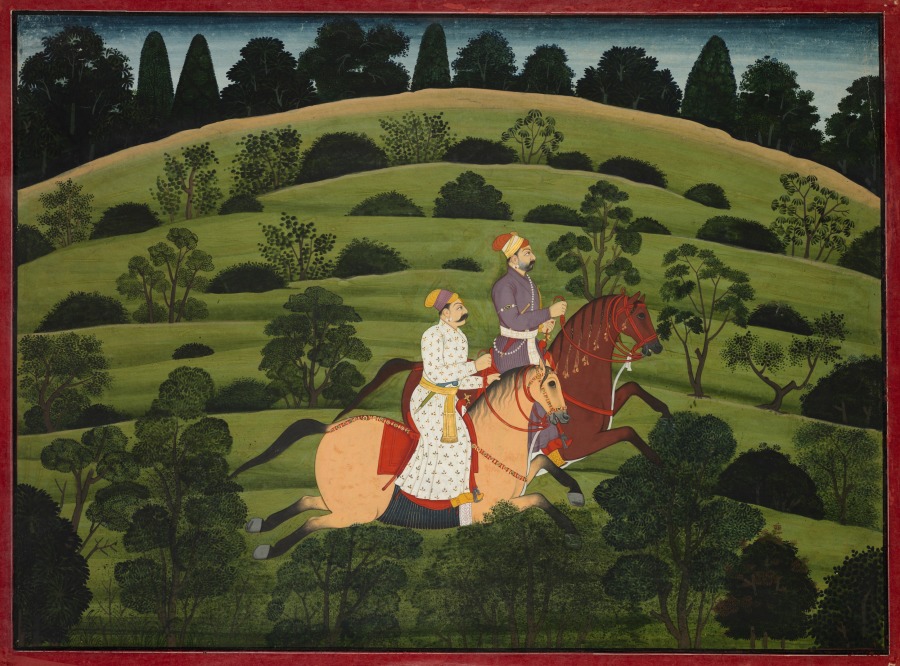 Akrura and Kritavarma flee Dvaraka, page from the "Large Bas