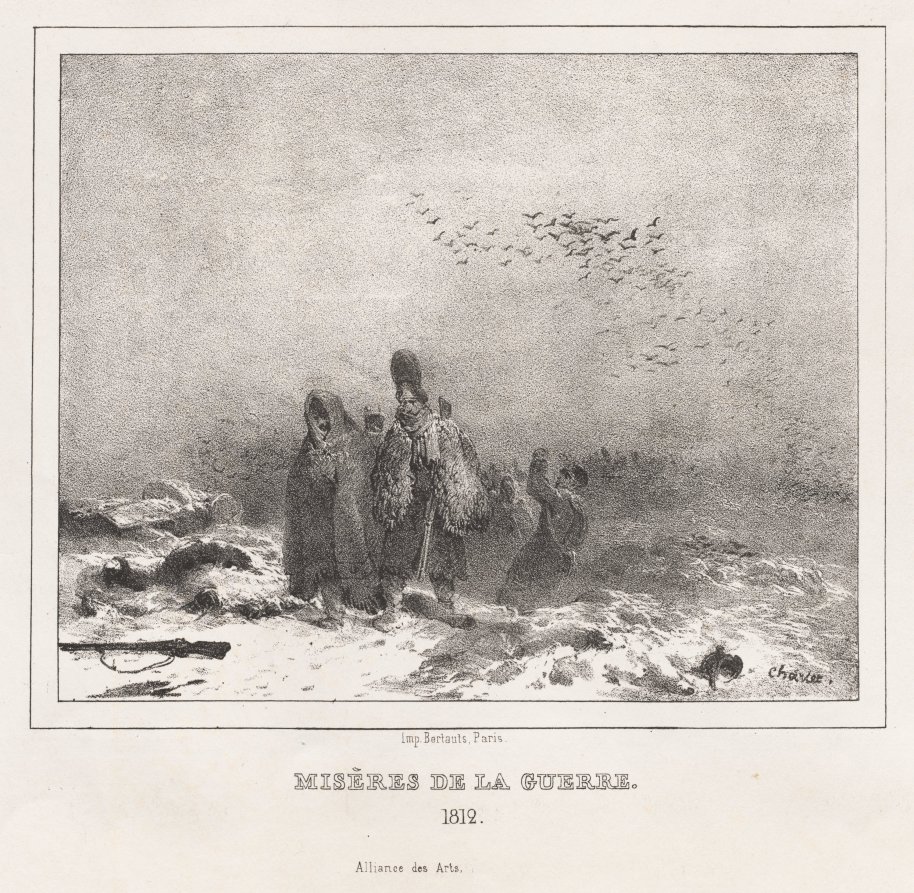
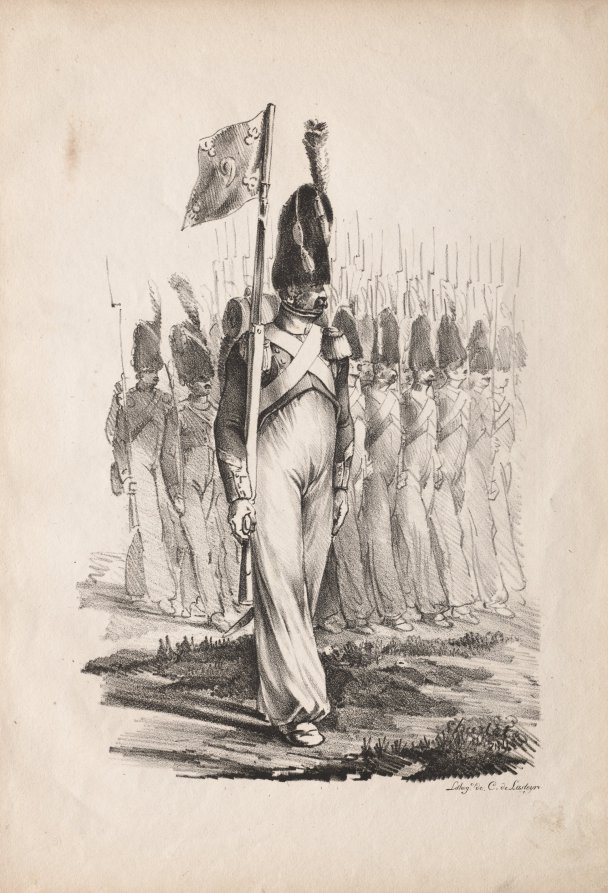
In the collection of Cleveland Museum of Art, Cleveland — check current display status with the museum.
FROM THE CLEVELAND MUSEUM OF ART’S CATALOG
Lithography was invented in 1798 by the German Aloys Senefelder. Although the technique was introduced in France in 1801, it was predominantly used for commercial ventures until 1815 when lithographic workshops—like that of François Delpech, who printed The French Soldier —were established in Paris. In 1814 Napoleon Bonaparte abdicated the throne and was banished to the island of Elba before being permanently exiled on Saint Helena. With the ensuing void in leadership, an idealized version of the Napoleonic era developed and Charlet was one of many artists who used art to glorify the French military. The French soldier depicted here, victorious against the prone Englishman, reloads his rifle and, although wounded, courageously continues to fight. The couplet from Horace beneath the scene comments that nothing can shatter the steadfastness of an honorable man.
Be the first to share your thoughts.
Sign in to join the discussion.
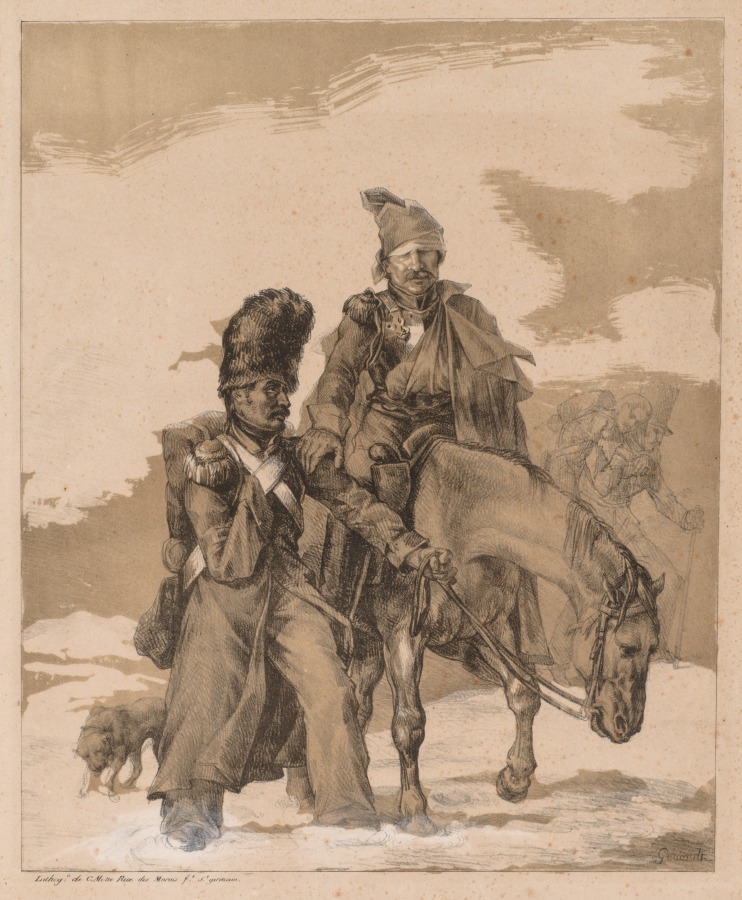 Théodore Géricault (French, 1791–1824) — Return from Russia
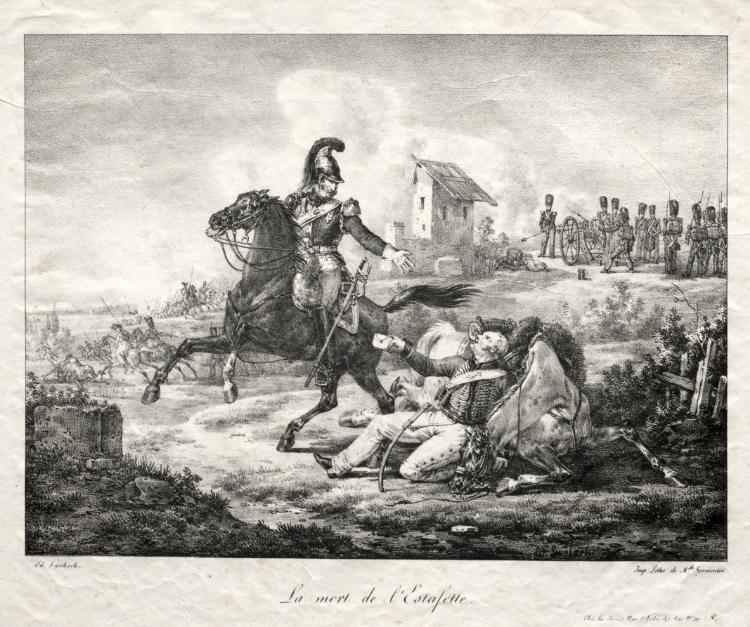 Edouard Swebach (French, 1800–1870) — The Death of the Couri
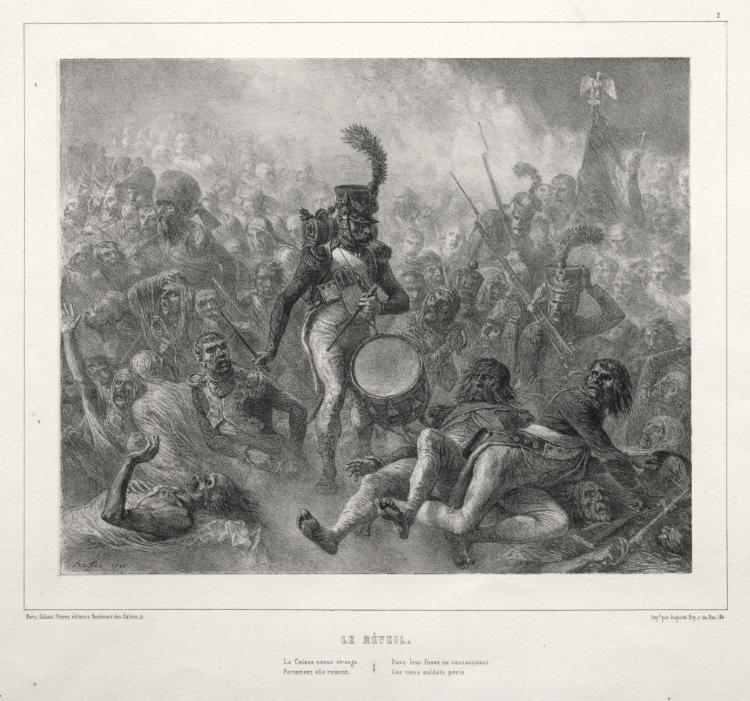 Auguste Raffet (French, 1804–1860) — L'Album de 1832: Revei
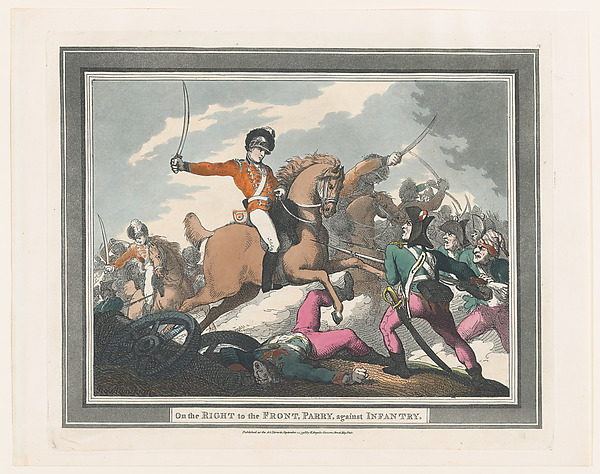 Henry Angelo|Thomas Rowlandson — On the Right to the Front,
 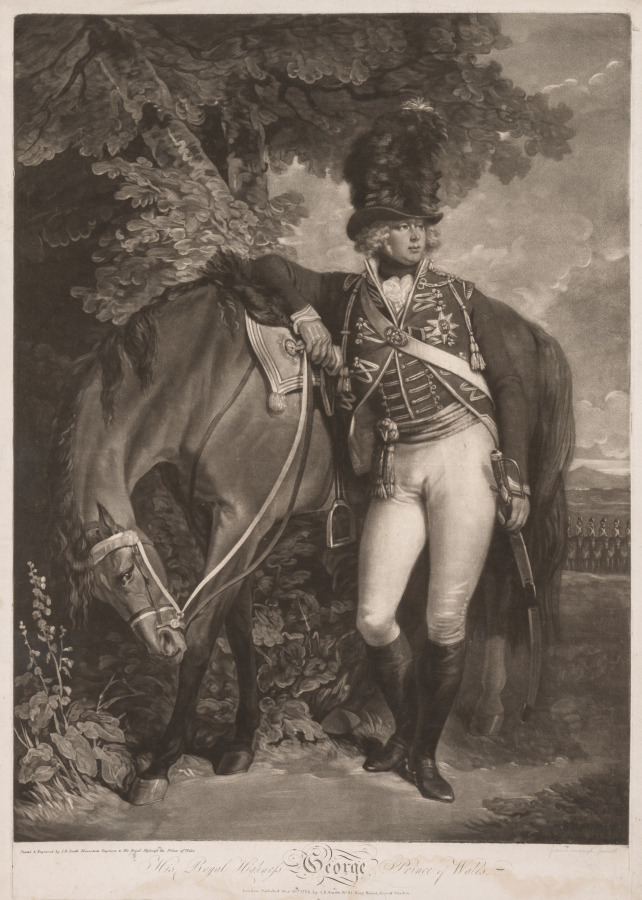 John Raphael Smith (British, 1752–1812) — George, Prince of
 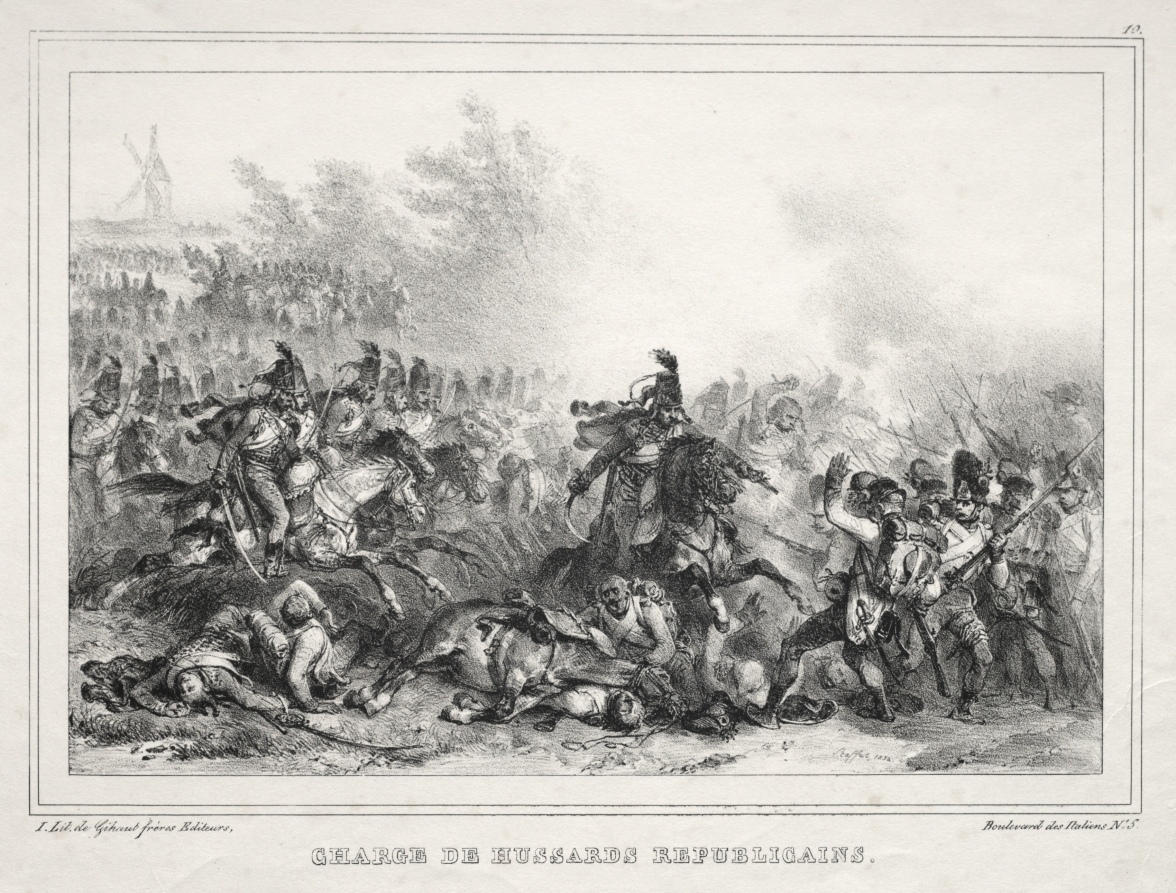 Auguste Raffet (French, 1804–1860) — Album pour 1833: Charg
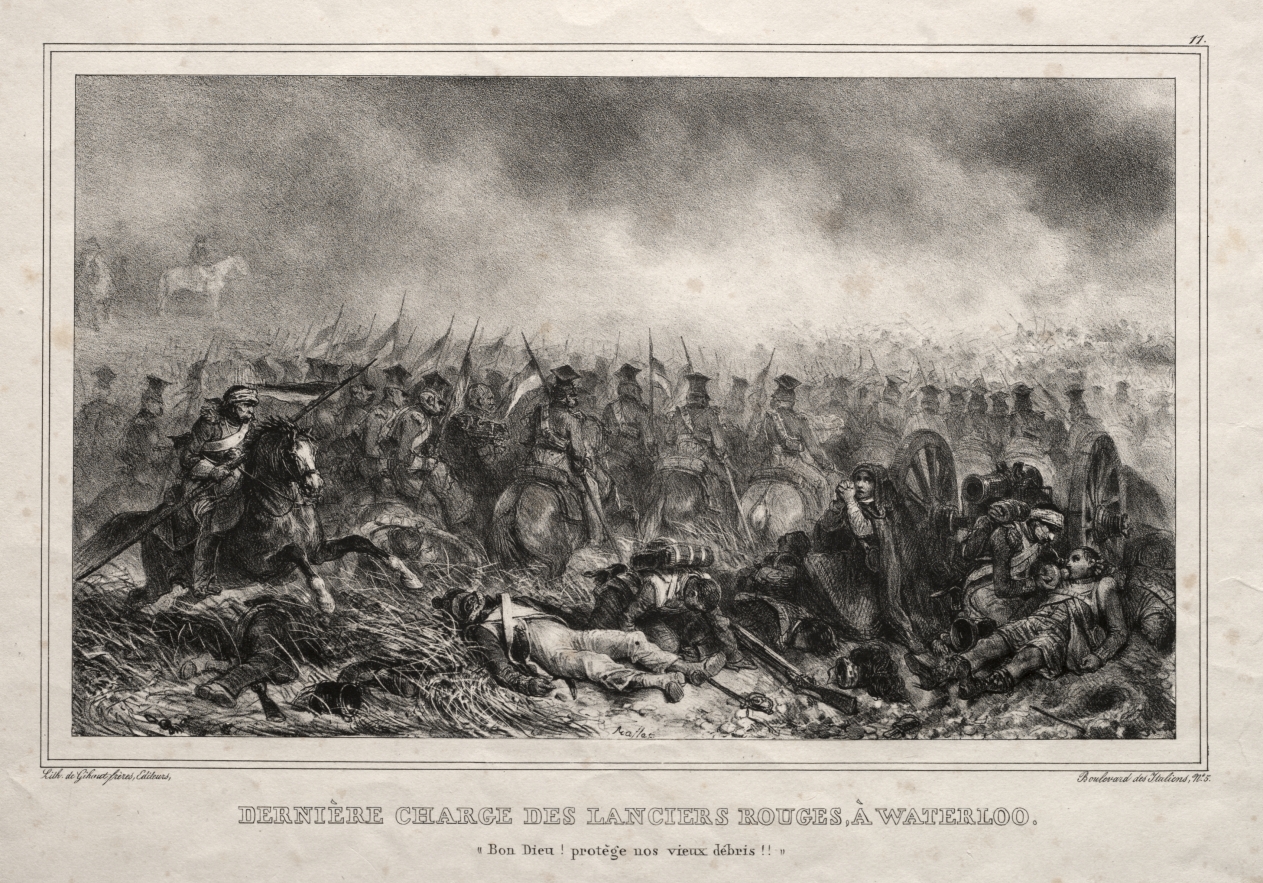 Auguste Raffet (French, 1804–1860) — Dernière Charge des Lan
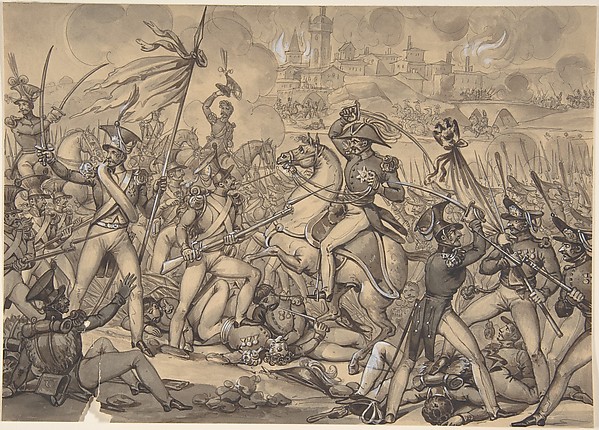 Anonymous, French, 19th century — The Battle of ?
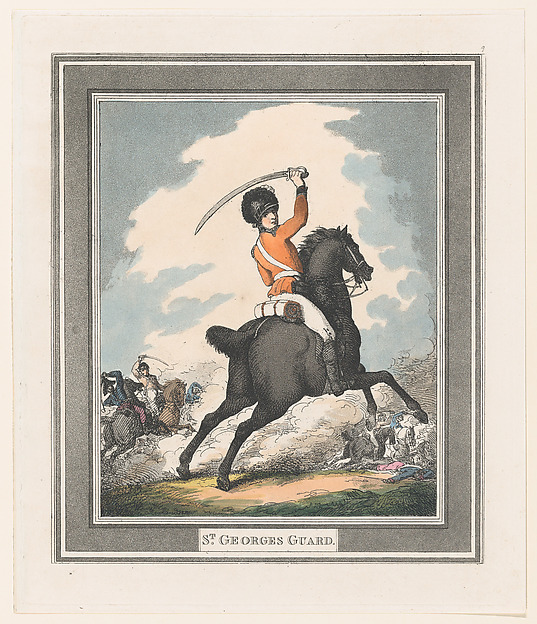 Henry Angelo|Thomas Rowlandson — St George's Guard
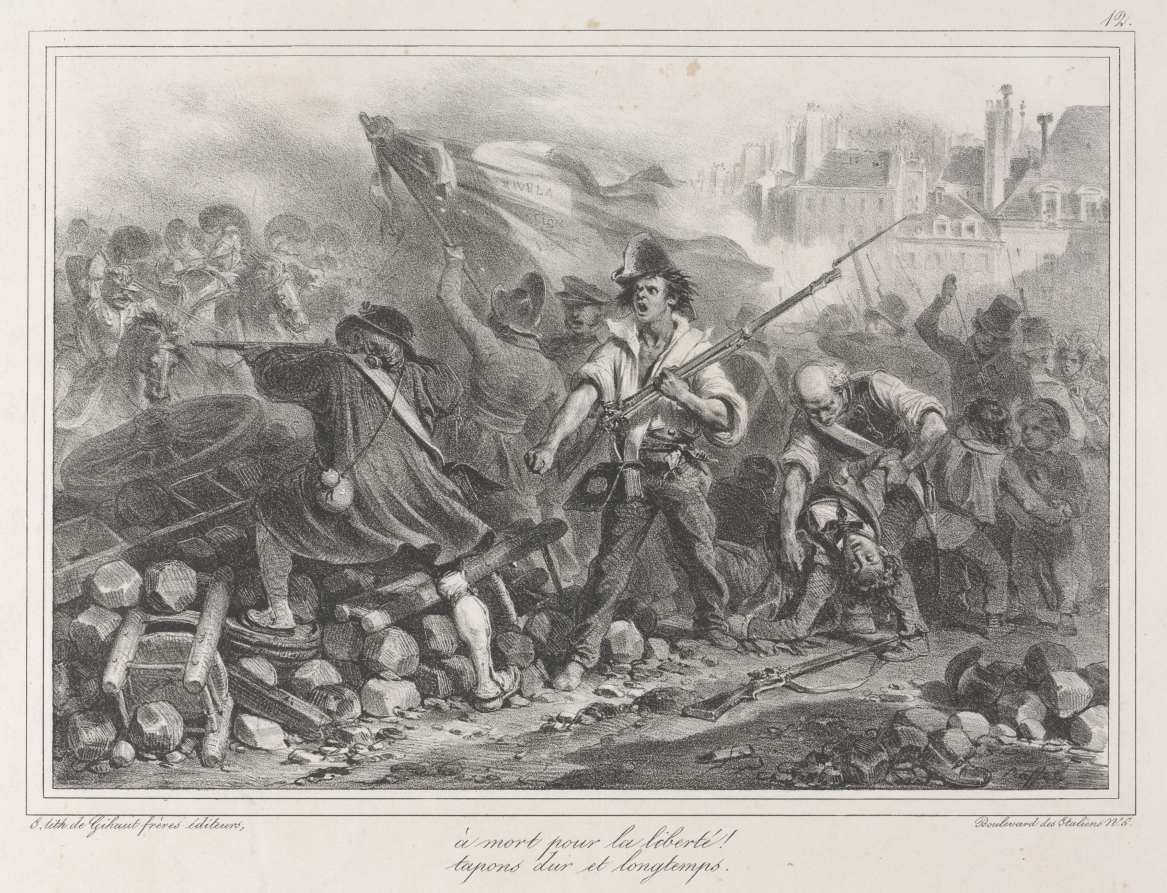 Auguste Raffet (French, 1804–1860) — Album of 1831: Freedom
  Rodwell & Martin|Théodore Gericault|Charles Joseph Hullmande
 Antoine Jean Weber (French, 1797–1875) — Premier Counsul