Ono no Komachi, from the series A Collection of Fashionable Beauties of Japan (Wakoku bijin ryaku shu)
SEE IT IN PERSON
Not currently on view
In the collection of Art Institute of Chicago, Chicago · as of July 2026
Discussion
FROM THE ART INSTITUTE OF CHICAGO’S CATALOG
A beautiful young woman fixes her hairstyle in the mirror, while an older woman’s thoughts are expressed in the poem above: If only I could grow old without changing my appearance, I would not mind the limit of my life. (Translation by Chie Hirano) Ono no Komachi often lamented the inevitability of aging in her poems, and her story is closely associated with the idea of fleeting beauty. The cherry blossoms in the vase on the veranda symbolize impermanence due to their short lifespans, reinforcing the notion that exquisiteness is not everlasting.
Be the first to share your thoughts.
Sign in to join the discussion.
More by Torii Kiyonaga
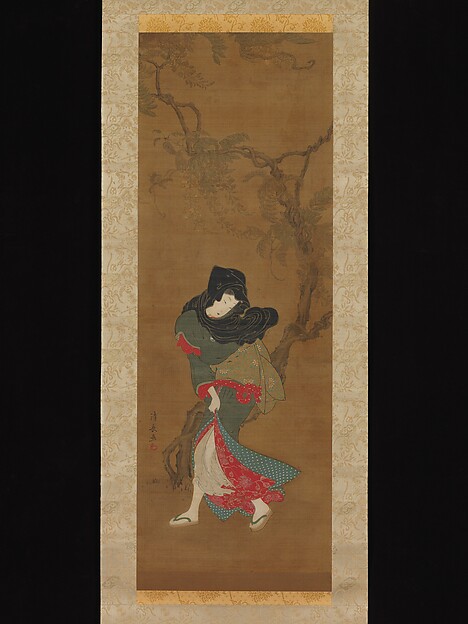 Untitled
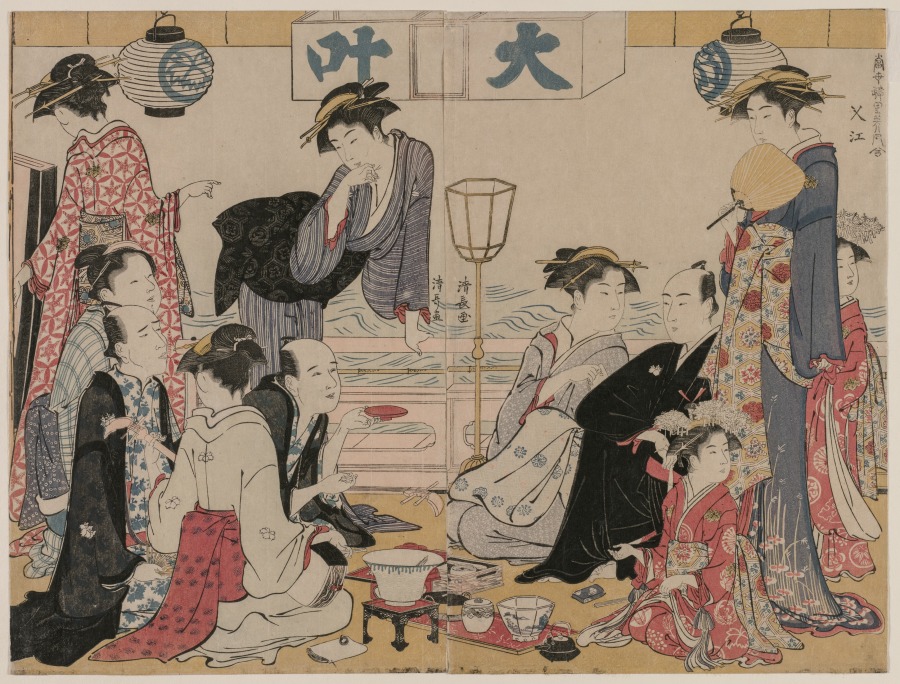 Entertainment on a Balcony by the Water at Nakasu, from the
  Summer Twilight on the Banks of the Sumida River
 Admiring the wisteria at the Kameido Shrine
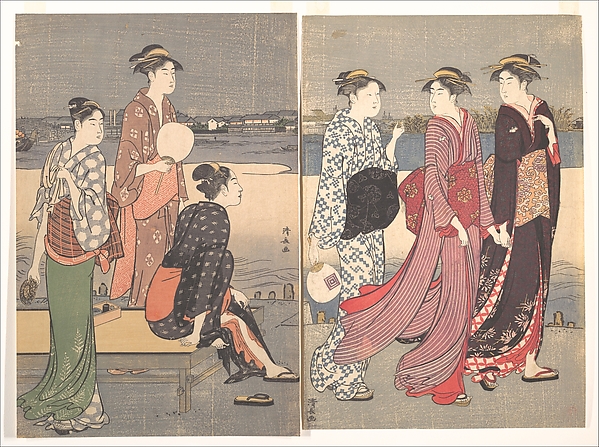 鳥居清長画 大川端の夕涼み|Enjoying the Evening Cool on the Banks of the
  The Third Month (Sangatsu), from the series "Twelve Months i
 Matsuchi Hill after Snowfall
 Entertainers of Nakazu, from the series "A Collection of Con
More like this
 Suzuki Harunobu — Courteousness (Rei), from the series "Five
 Kitagawa Utamaro — Two Young Women after a Bath
 Suzuki Harunobu — Couple with a Pet Mouse
 Kitao Shigemasa — Returning Sails at Ryogoku River (Ryogoku
  Isoda Koryusai — The Day of Starting (Kotohajime), from the
  Kitagawa Utamaro — Drying and stretching cloth
 Kitagawa Utamaro — Omando: Ochie, Onokichi of the Matsuya, f
 Katsukawa Shunsho — Courtesans of the Yoshiwara Pleasure Qua
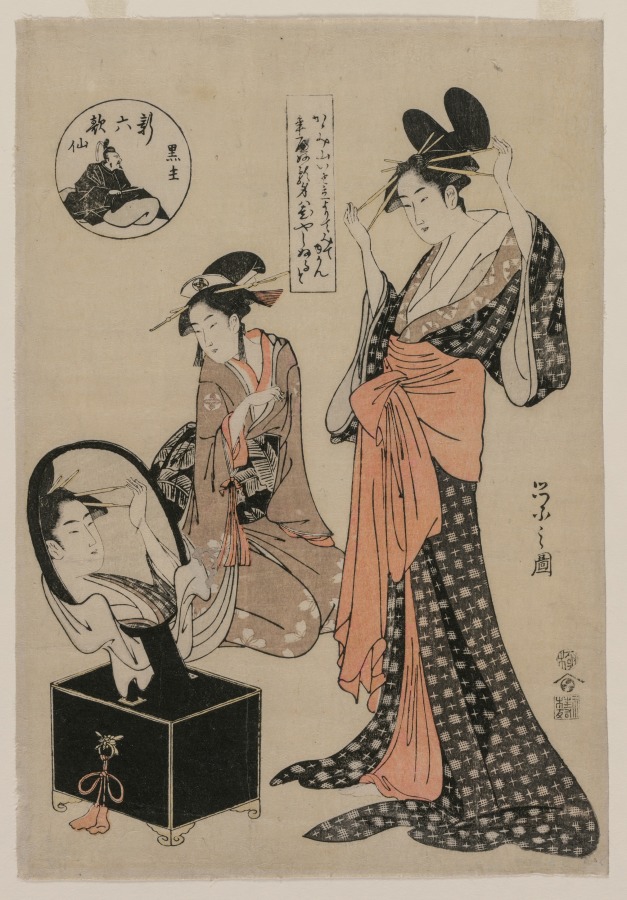 Chōbunsai Eishi (Japanese, 1756–1829) — Kuronushi from the s
 Isoda Koryusai — New Year's Day, from the series "Fashionabl
 Chôbunsai Eishi — Narihira, from the series "Six Immortal Po
 Katsukawa Shunsho — The Actors Ichikawa Monnosuke II and Seg