Royal Horse Inspection
SEE IT IN PERSON
Not currently on view
In the collection of Art Institute of Chicago, Chicago · as of July 2026
Discussion
FROM THE ART INSTITUTE OF CHICAGO’S CATALOG
This painting shows the royal stables in Isfahan. In the upper half of the work, the Persian king, or shah (sitting next to the column on the right), has gathered on a platform with five kneeling courtiers and various attendants serving fruit and wine. The king is identified in the artist’s signature at the upper left as Shah ‘Abbas II, who died in 1666, before this painting was executed. The ruler’s status is emphasized by his golden halo and by the opulent gold and jeweled vessels placed before him. The lower portion of the painting depicts a roundup of horses who bear the trident-like royal brand on their flanks; they move in a spiral that coils counterclockwise from the upper right. The scene bursts with energy and looks chaotic—a brawl is taking place at the lower left —but the courtiers and handlers seem to be regaining control of the animals. The figures on the platform, meanwhile, pay no attention to the commotion below. The painting represents a journalistic or even anecdotal approach to Persian painting that was introduced in the second half of the seventeenth century. The viewer gets the sense that the work may record a specific moment in daily life at court and that it
Be the first to share your thoughts.
Sign in to join the discussion.
More like this
 India
Kashmir — Prince Visiting an Ascetic during a Hunt
India
Kashmir — Prince Visiting an Ascetic during a Hunt Mughal — European Banquet Scene (or The Marriage Feast at Ca
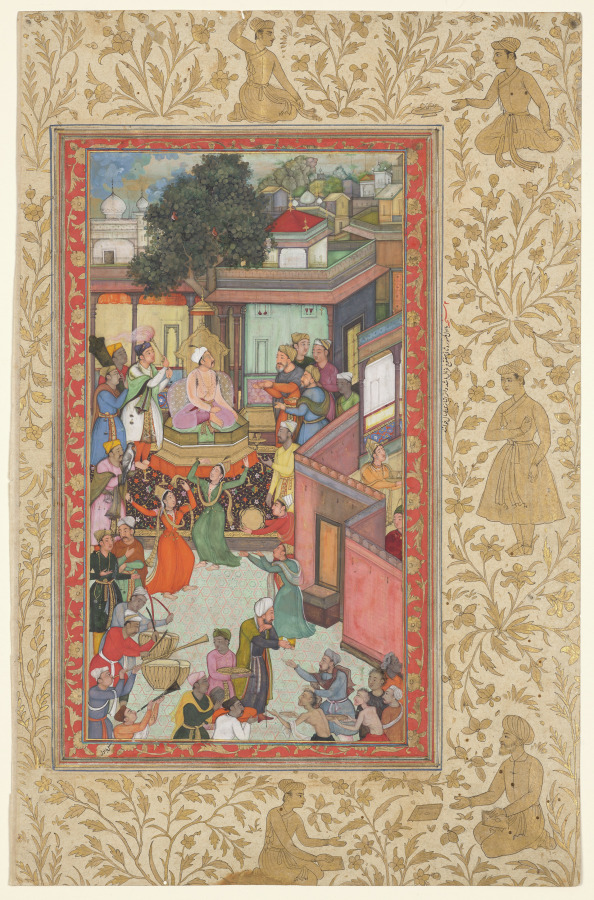 Dharam Das (Indian, active c. 1580–1605) — Circumcision cere
 Basawan — The Young Emperor Akbar Arrests the Insolent Shah
 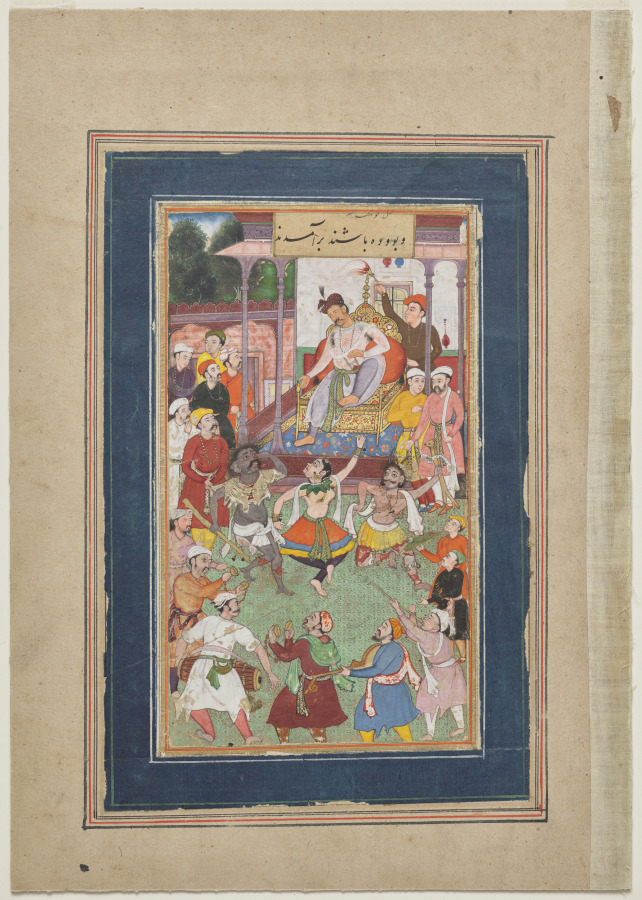 Grotesque Dancers Performing
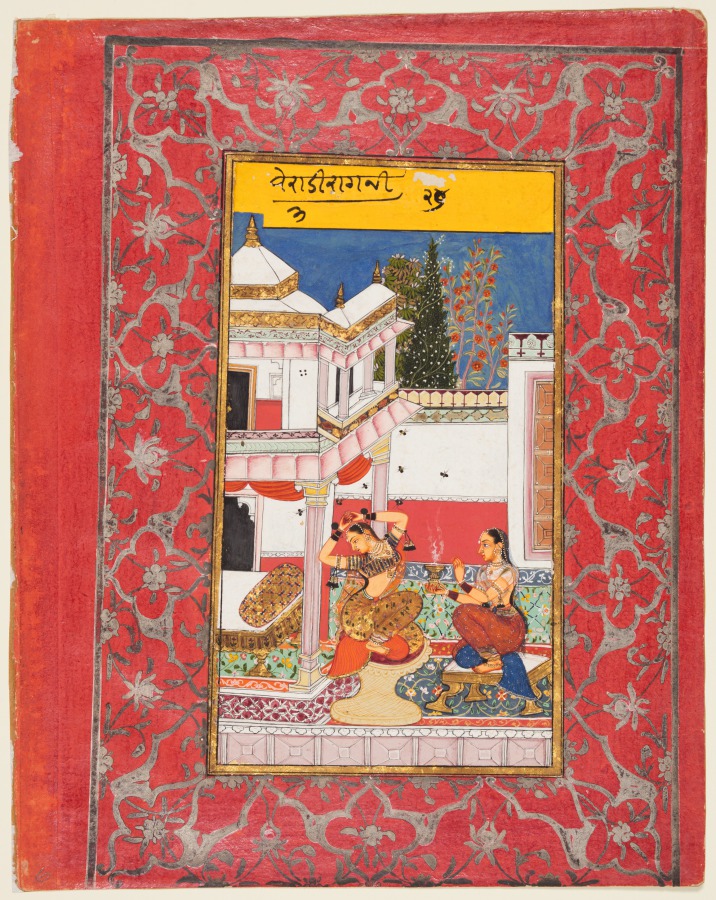 Woman Longing for Her Lover: Verati Ragini of Dipak, from a
 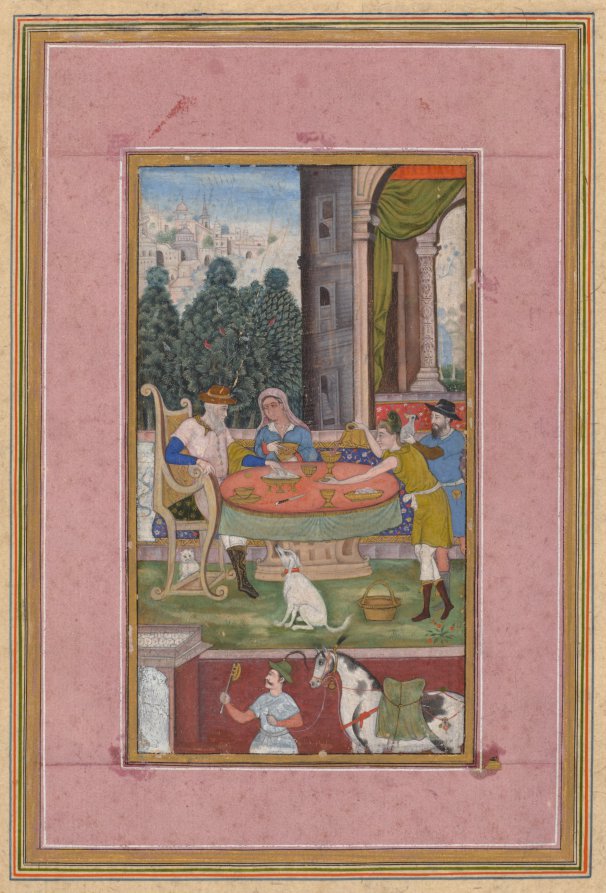 Dining Scene with European Elements
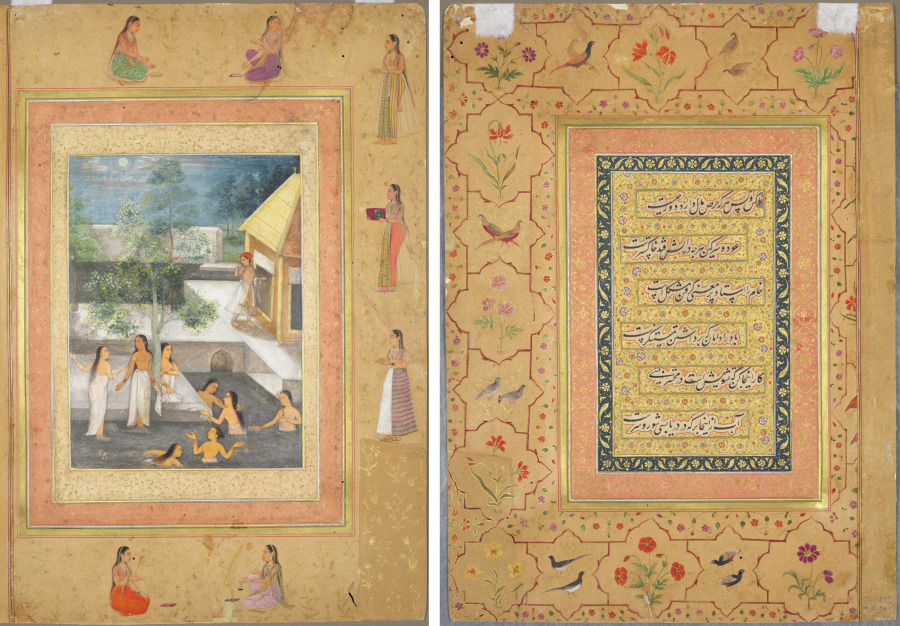 Leaf from the Late Shah Jahan Album: Harem Night-Bathing Sce
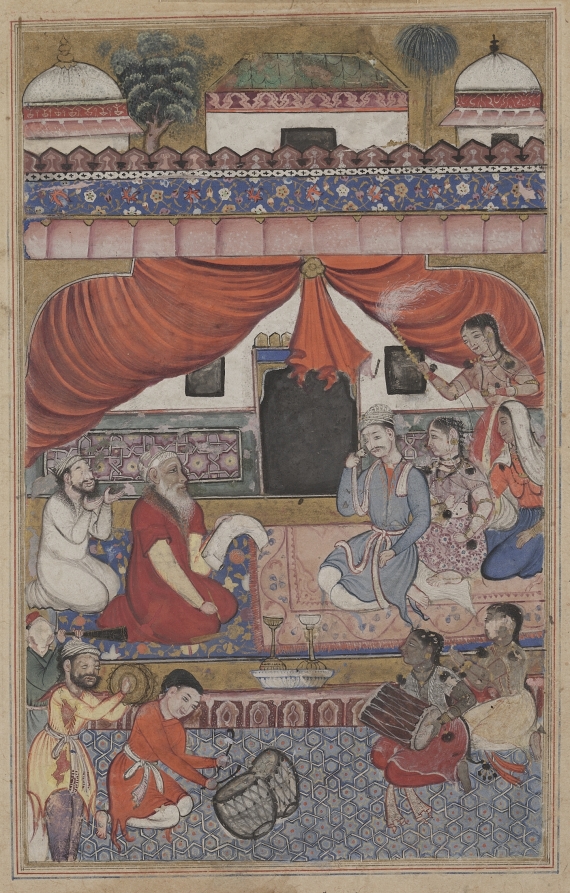 Preparation for the marriage of Mahmuda to the Young Vizier,
 India
Uttar Pradesh, Avadh — Ruler Entertained by Dancers in
India
Uttar Pradesh, Avadh — Ruler Entertained by Dancers in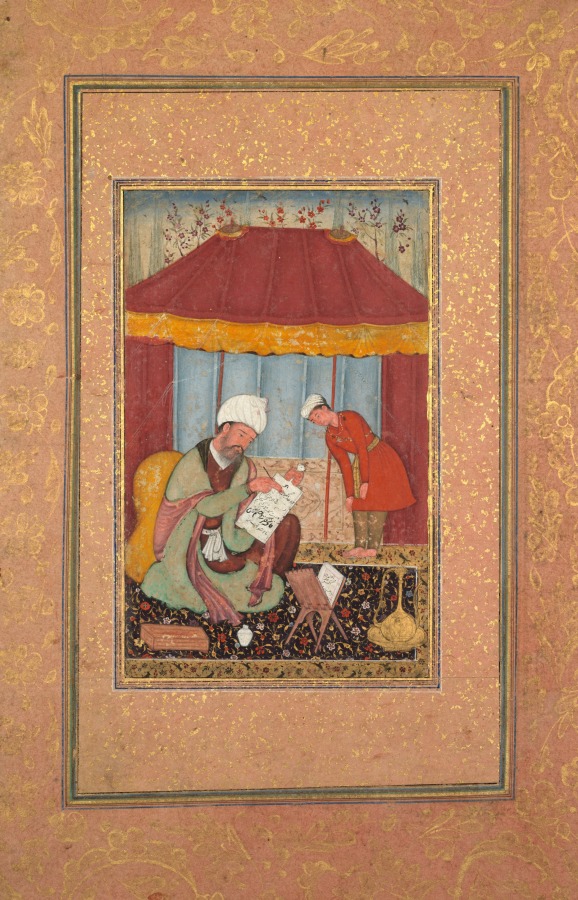 Teacher with his Pupil
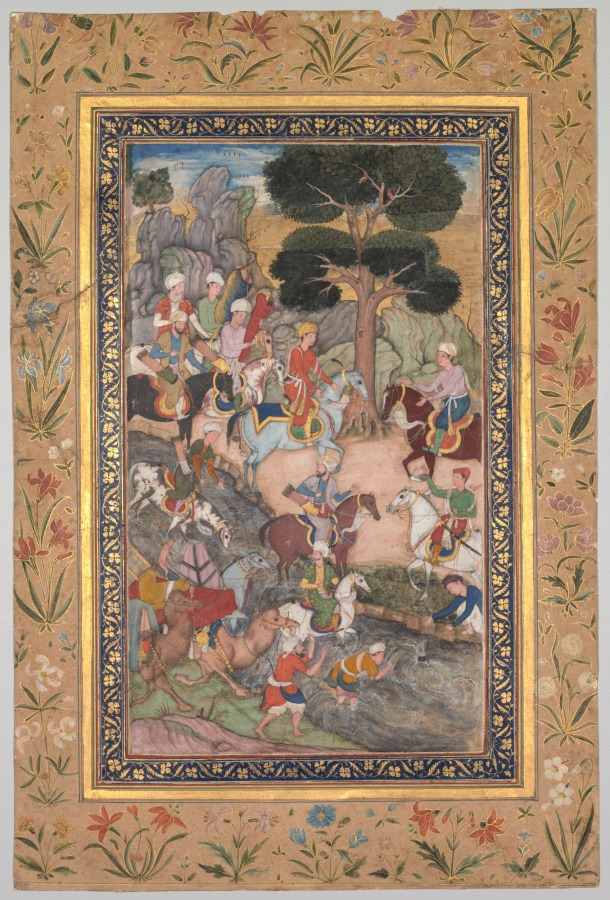 Babur meeting with Sultan Ali Mirza at the Kohik River, from