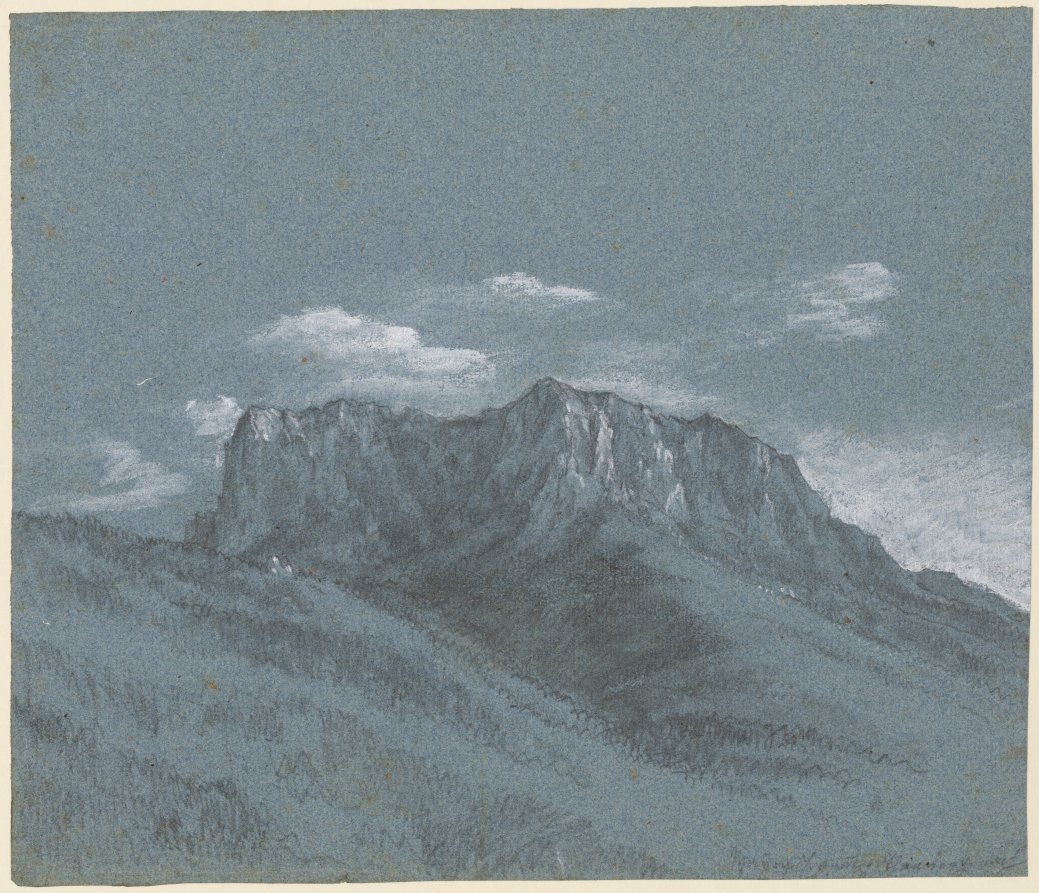
In the collection of Cleveland Museum of Art, Cleveland — check current display status with the museum.
FROM THE CLEVELAND MUSEUM OF ART’S CATALOG
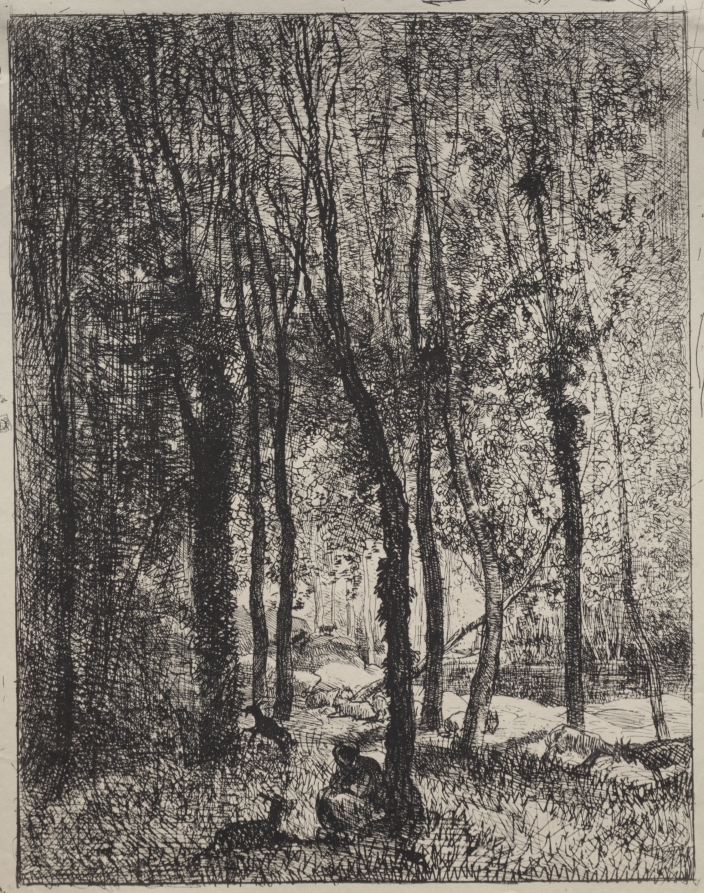
After an initial phase of classically influenced landscape painting, Dillis’s work achieved a newfound naturalism and freedom. He based this close-up view of a thicket on direct observation of nature. Dillis’s dense network of lines form a filigree-like pattern of trees and foliage. One of only two etchings that Dillis published during his lifetime, this informal composition and its loose style reveal the influence of Jacob van Ruisdael, a Dutch landscapist of the 17th century. In addition to being an artist, Dillis was an outstanding connoisseur and assembled a large print collection of his own. He became one of the first great German museum directors whose impact on the history of art was enormous.
Be the first to share your thoughts.
Sign in to join the discussion.
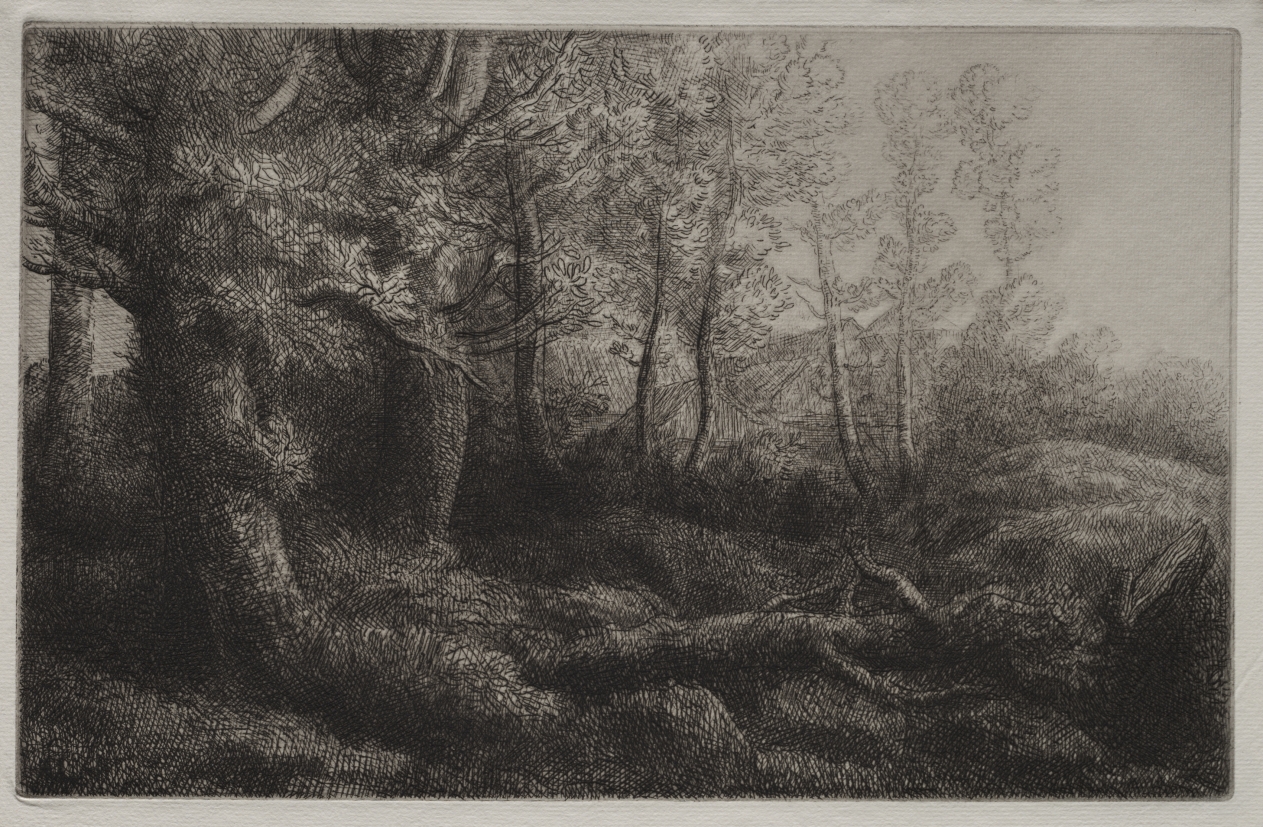 Alphonse Legros (French, 1837–1911) — A Woodland Study
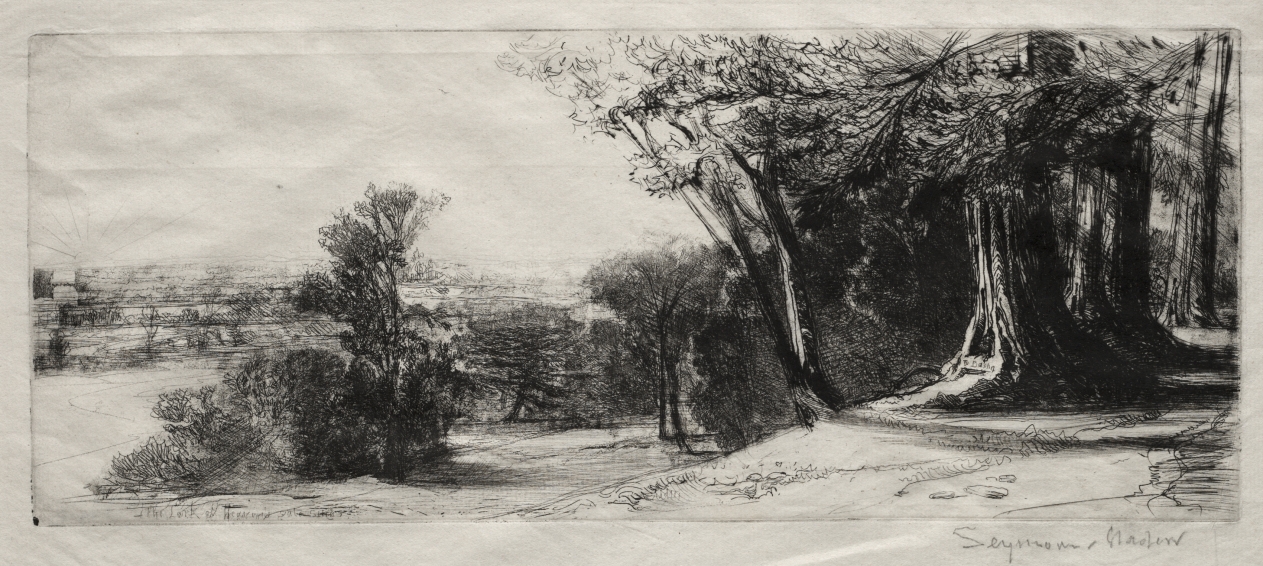 Francis Seymour Haden (British, 1818–1910) — Early Morning,
 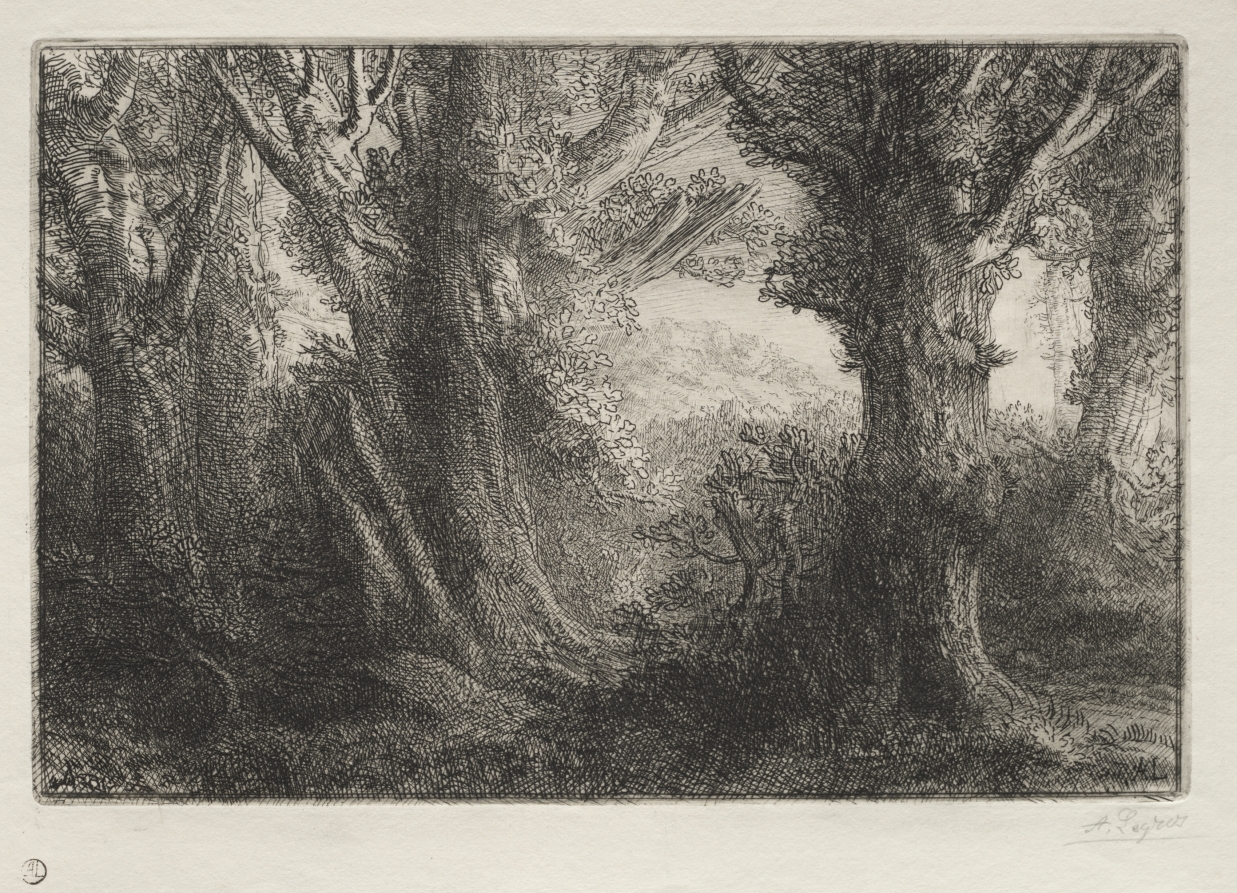 Alphonse Legros (French, 1837–1911) — In the Forest at Conte
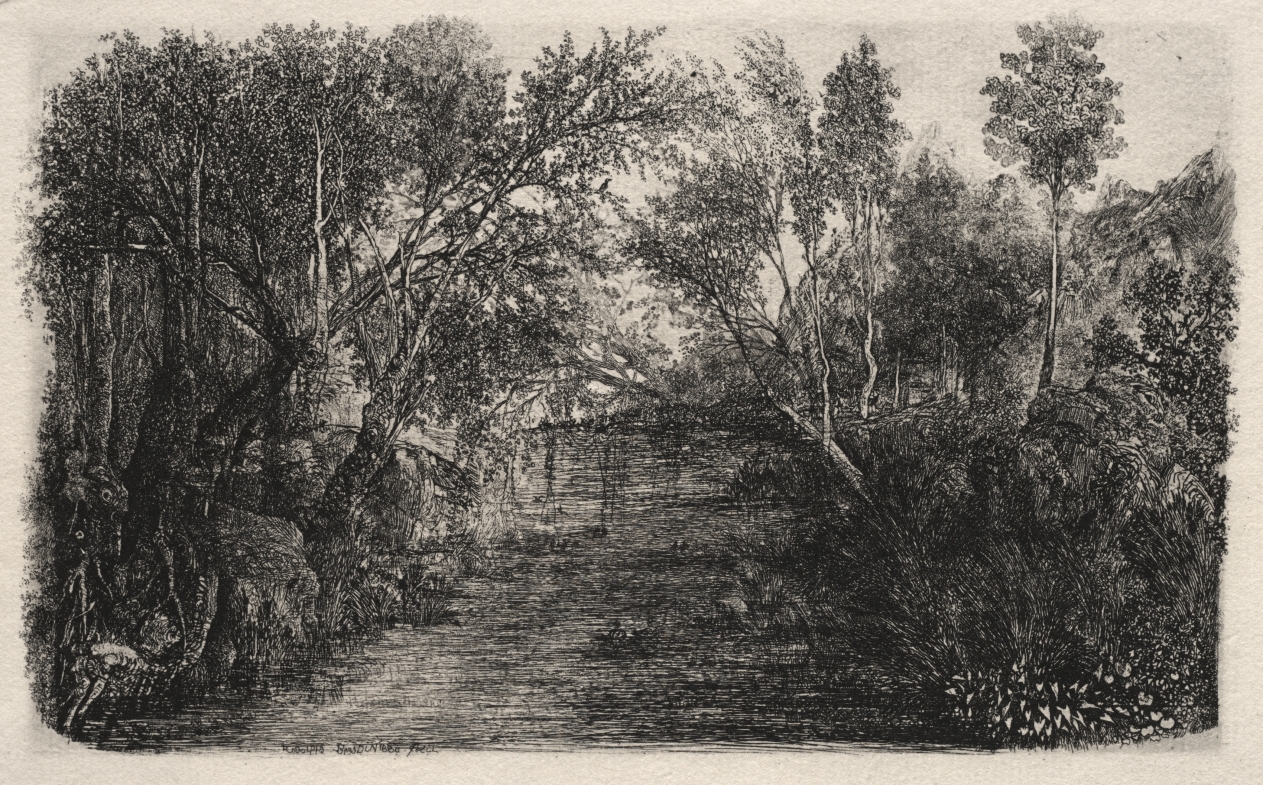 Rodolphe Bresdin (French, 1822–1885) — The Stream
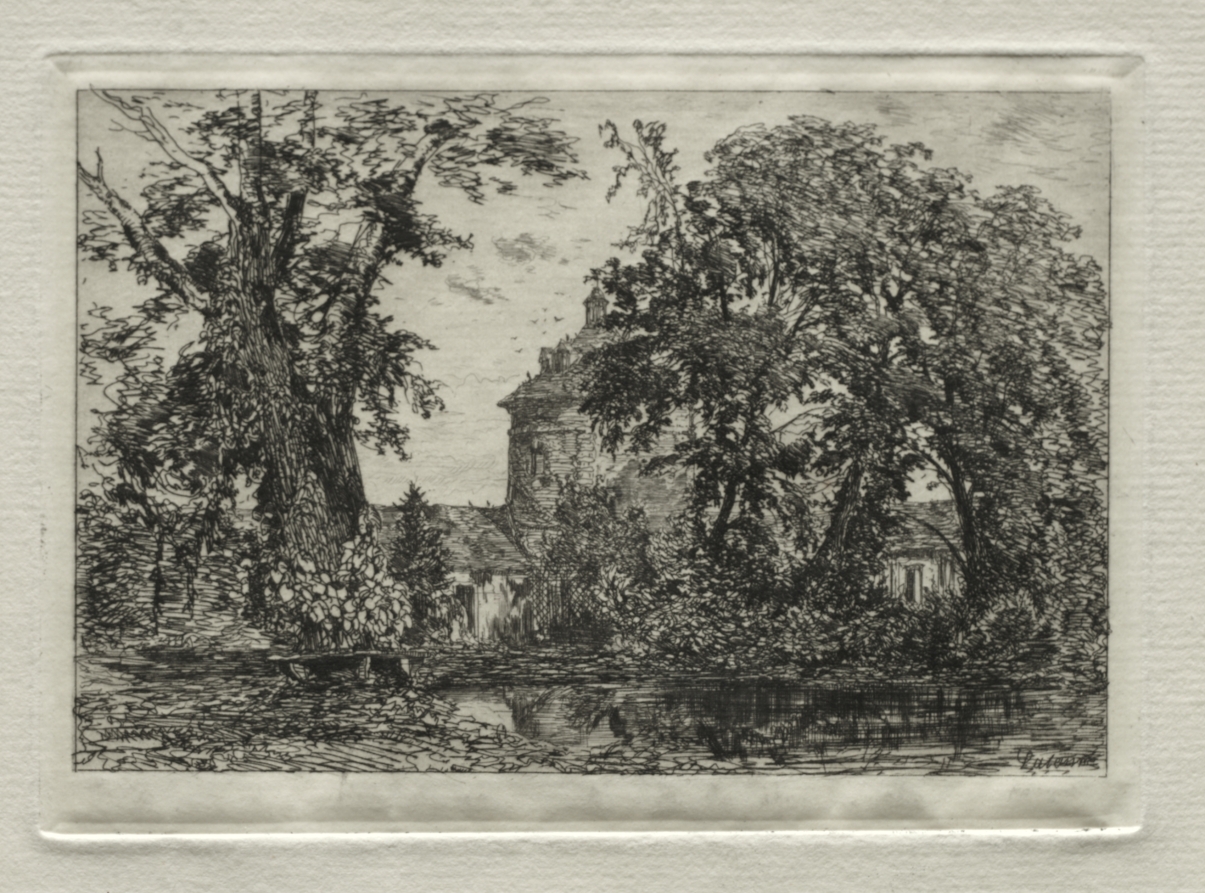 Maxime Lalanne (French, 1827–1886) — The Garret
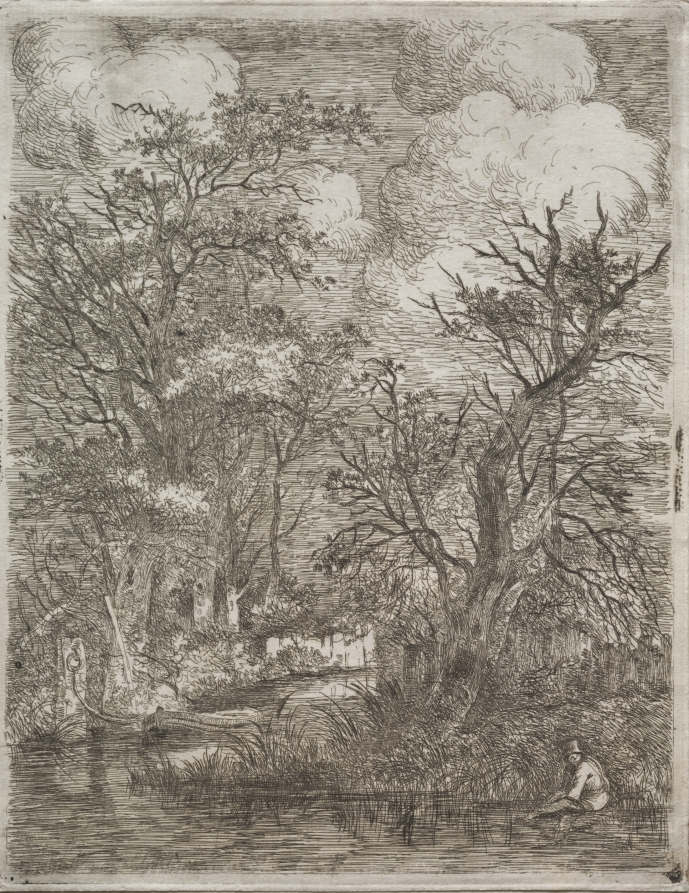 John Crome (British, 1768–1821) — Back of the Mills
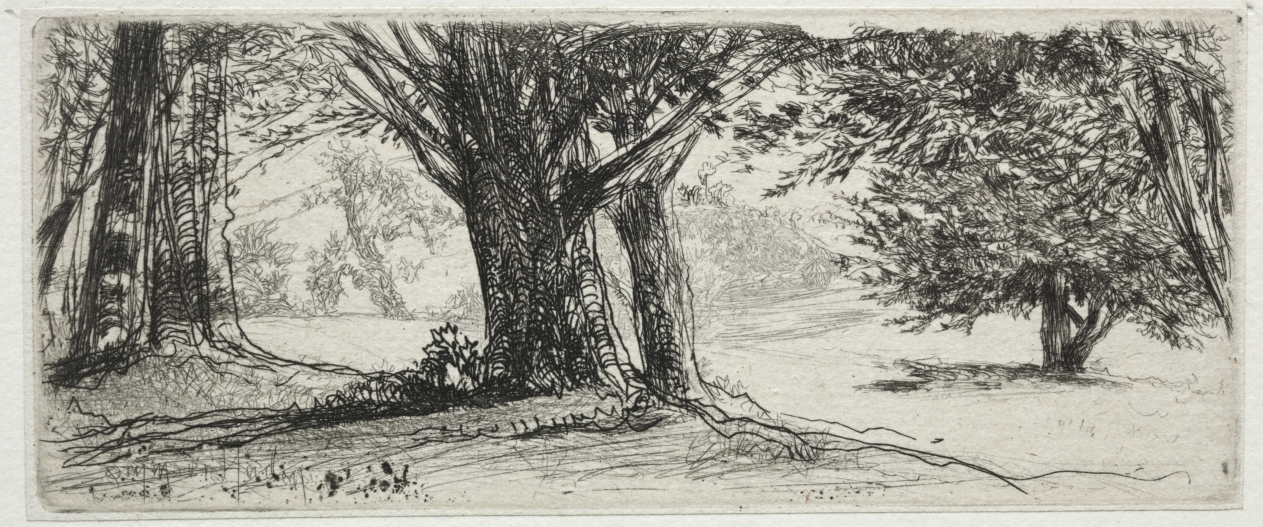 Francis Seymour Haden (British, 1818–1910) — The Holly Field
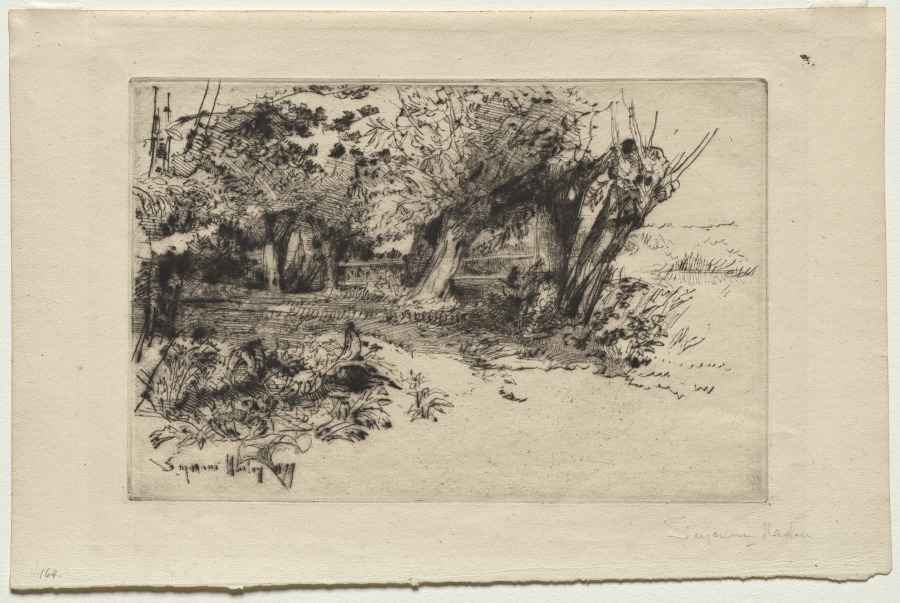 Francis Seymour Haden (British, 1818–1910) — The Willows
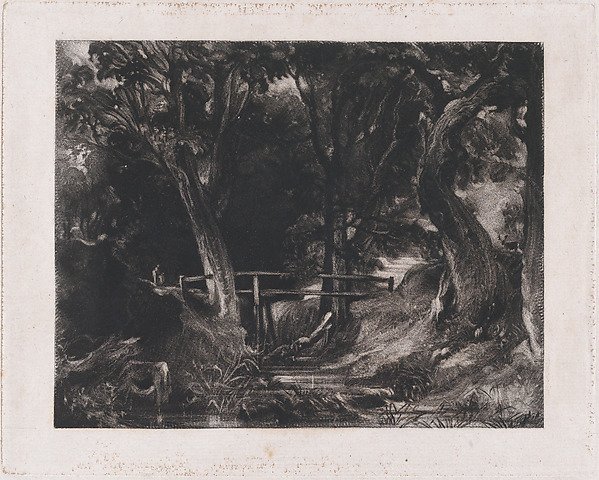 David Lucas|John Constable — A Dell, Helmingham Park, Suffol
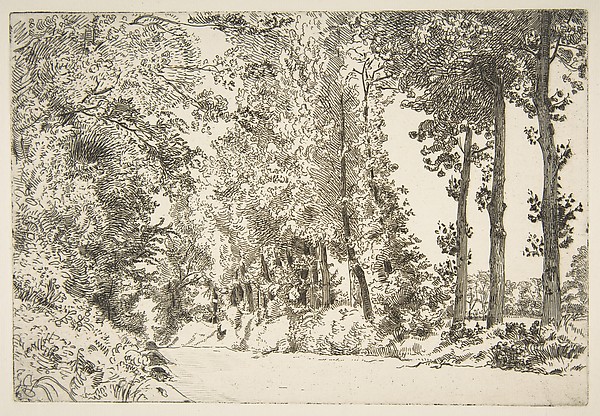 Félix Bracquemond — Rue des Bruyères, à Sèvres
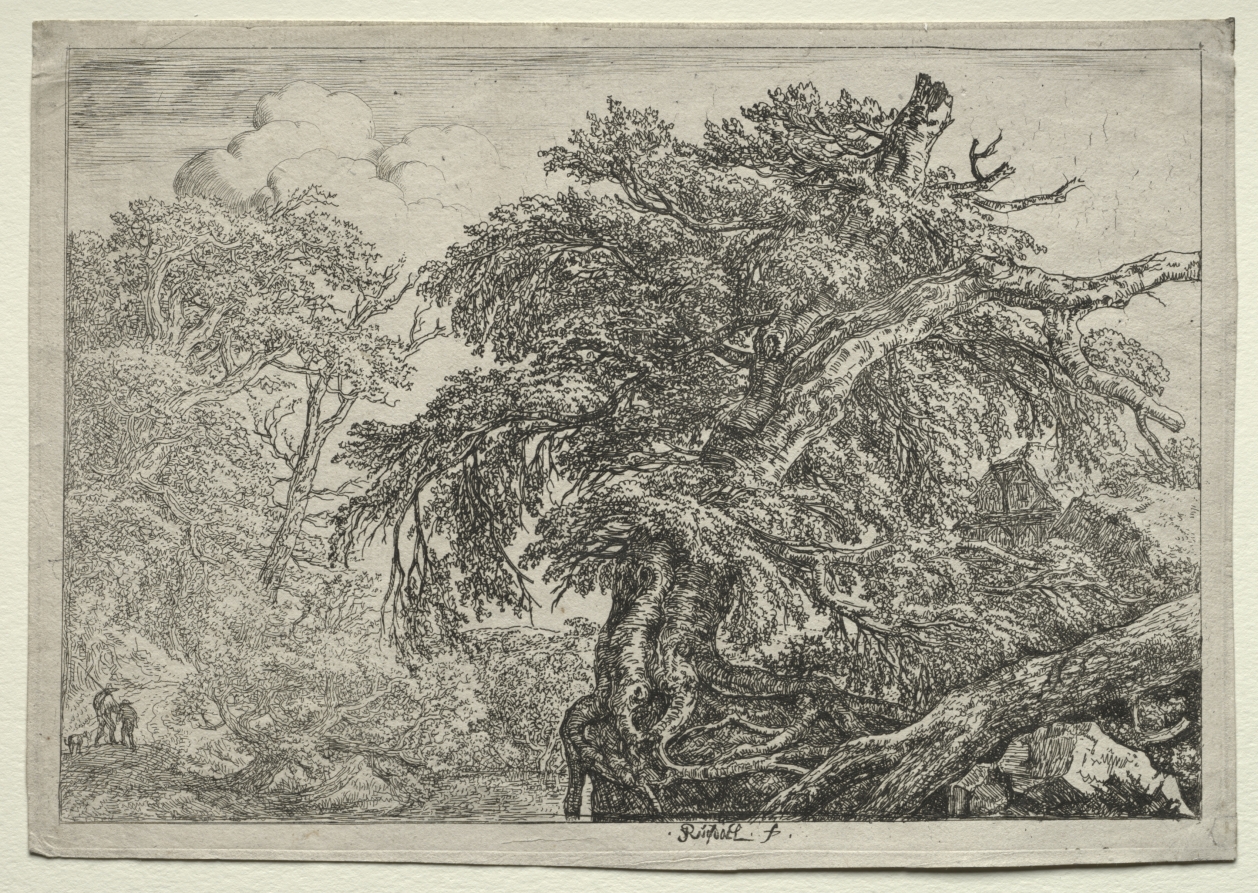 Jacob van Ruisdael (Dutch, 1628/29–1682) — Two Peasants and
  Charles François Daubigny (French, 1817–1878) — The Goatherd