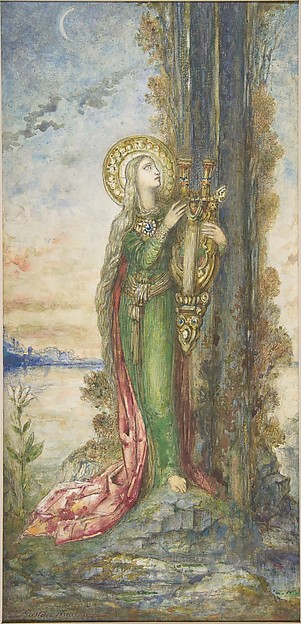
La Peri (Mythological Subject)
1865
Graphite, with brush and black ink, gray wash, and touches of gold metallic paint, heightened with traces of white gouache, on cream wove tracing paper, laid down on ivory wove paper
35.7 × 25.5 cm (14.1 × 10 in)
SEE IT IN PERSON
Not currently on view
In the collection of Art Institute of Chicago, Chicago · as of July 2026
Discussion
Be the first to share your thoughts.
Sign in to join the discussion.
More by Gustave Moreau


More like this
 Adriaen Collaert — Renaissance Jeweled Pendant Sea Monsters
 Unknown artist — Descent to Hell
 Albrecht Dürer — Nemesis
 Giulio Campagnola — Ganymede
 Shri Gobinda Chandra Roy (Indian, active late 1800s) — Jatay
 Hendrick Goltzius (Dutch, 1558–1617) — The Deities: Demogorg
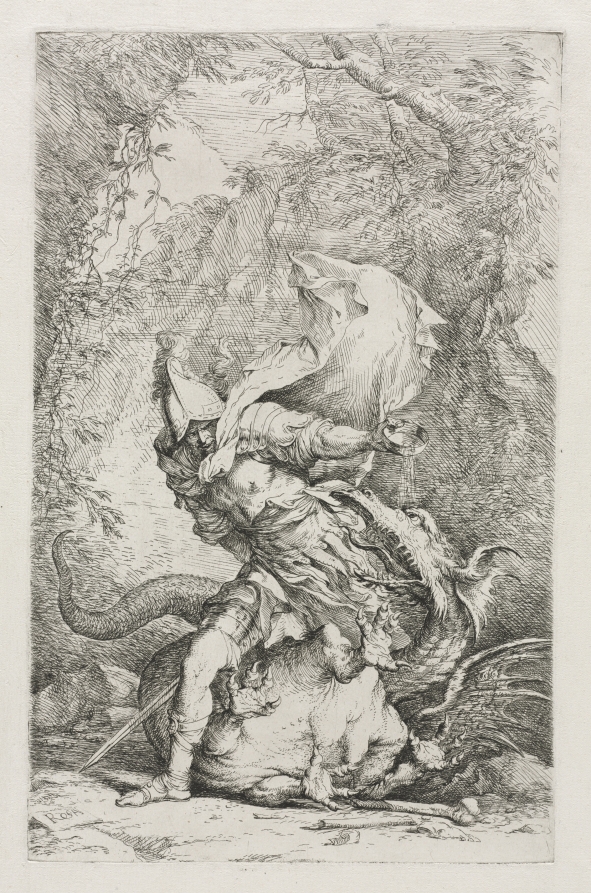 Salvator Rosa (Italian, 1615–1673) — Jason and the Dragon
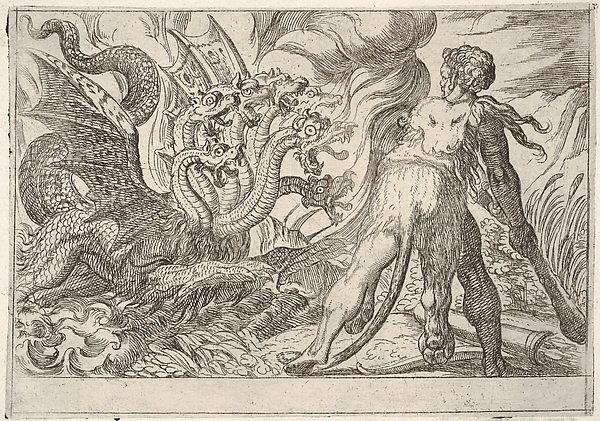 Antonio Tempesta — Hercules and the Hydra of Lerna: Hercules
 Hendrick Goltzius — Tethys, from The Deities
 Louis Jean Desprez — The Chimera
 Adriaen Collaert — Designs for Pendants with Sea Monsters
 Hans Friedrich Schorer — Rape of Proserpine