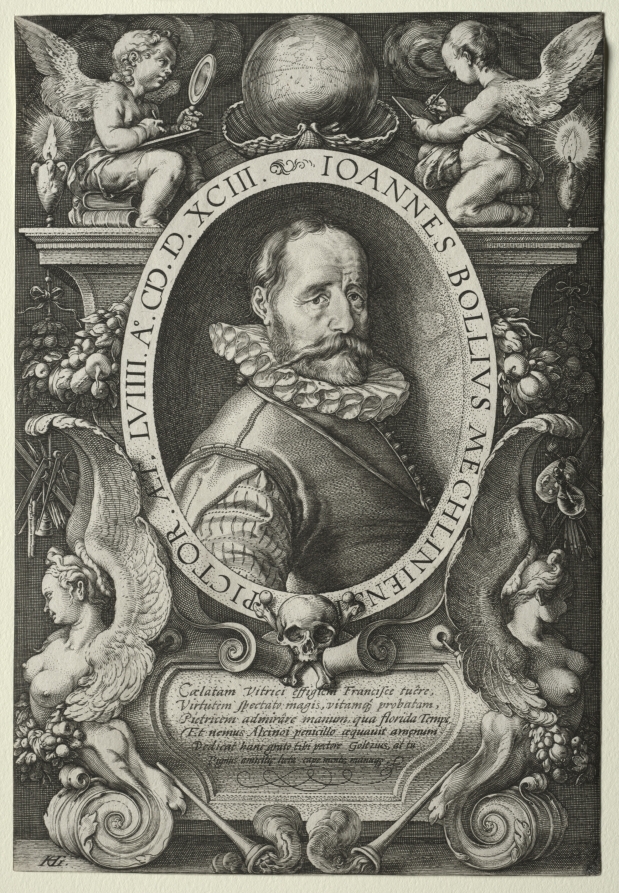
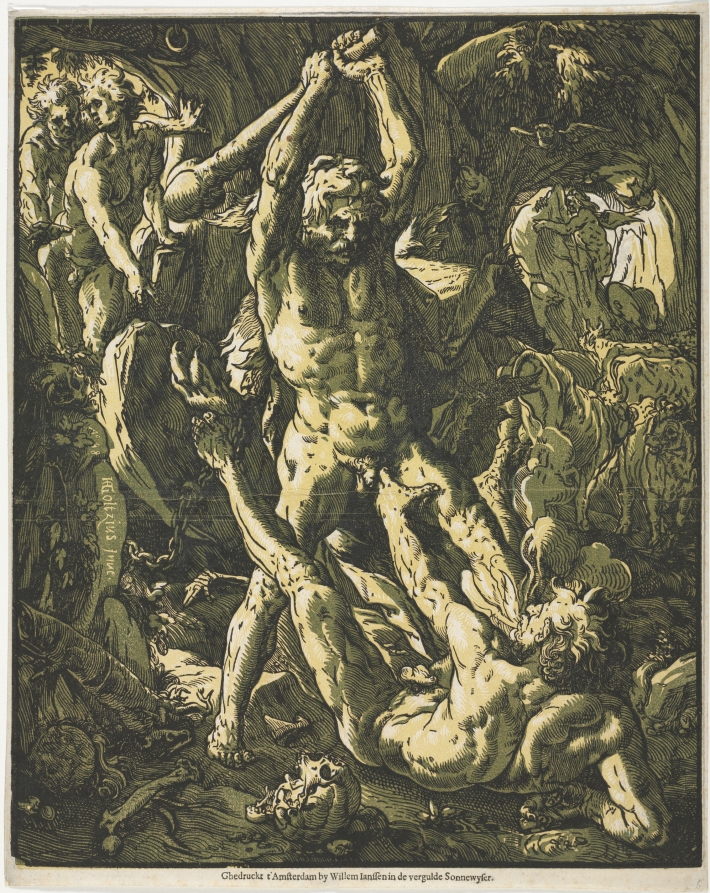
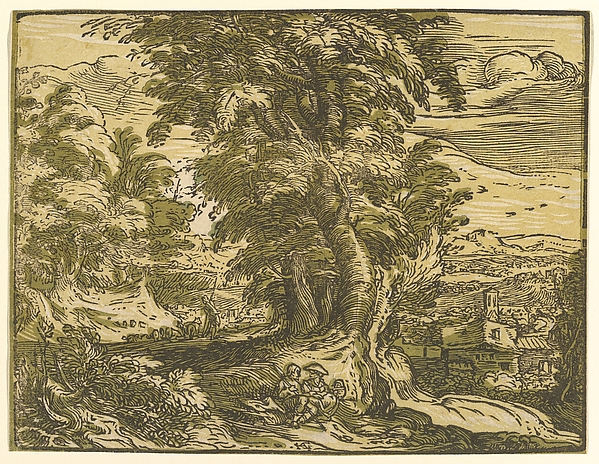
In the collection of Cleveland Museum of Art, Cleveland — check current display status with the museum.
FROM THE CLEVELAND MUSEUM OF ART’S CATALOG
Not all witches were women; men also performed magic. Unlike the destructive and sexualized stereotypes of female witches, male magicians were likened to the philosophers, alchemists, or heroic scientists of the Renaissance. In Goltzius's print, which was so popular it was reprinted as late as the 19th century, the central male figure is Demogorgon, the omnipotent father of all gods. Although Demogorgon was feared as the "Demon-gorgon," a terror who could unleash his primordial power, Goltzius portrays the god as a wizened and magical force who uses his power to give form to the world.
Be the first to share your thoughts.
Sign in to join the discussion.
 Salvator Rosa (Italian, 1615–1673) — Jason and the Dragon
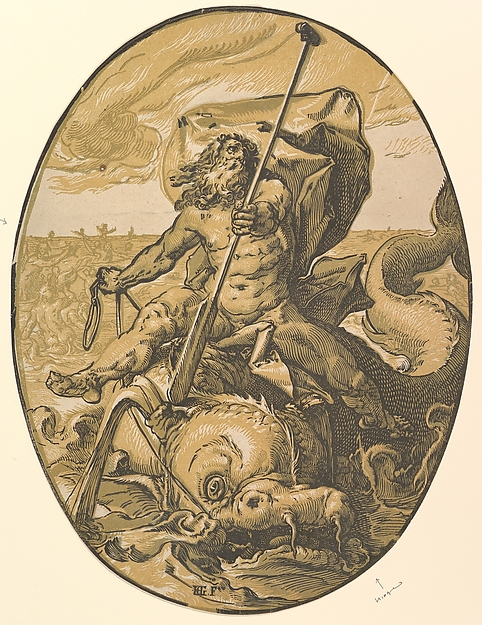 Hendrick Goltzius — Oceanus
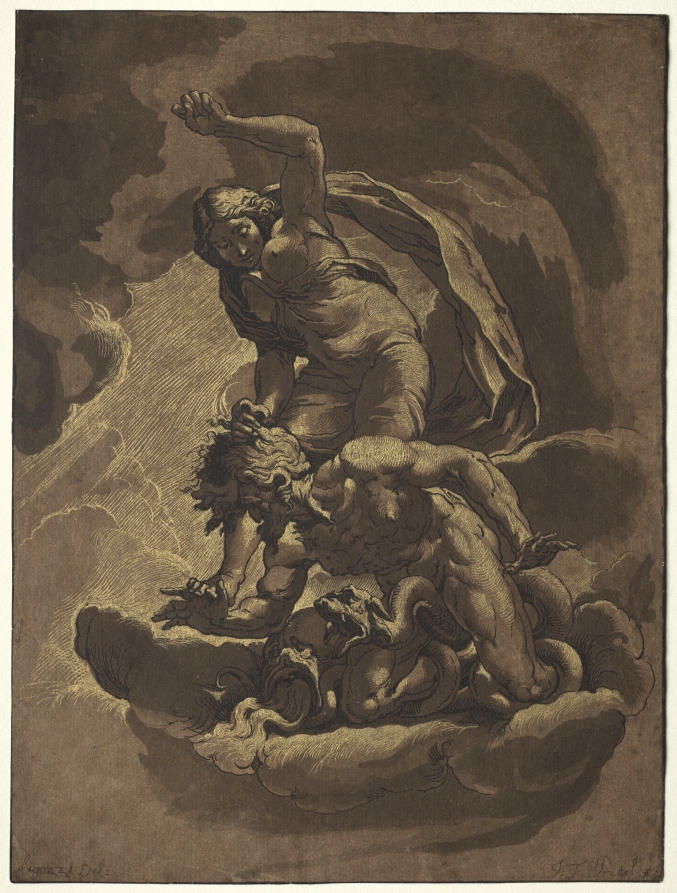 Maria Catharina Prestel (German, 1747–1794) — The Triumph of
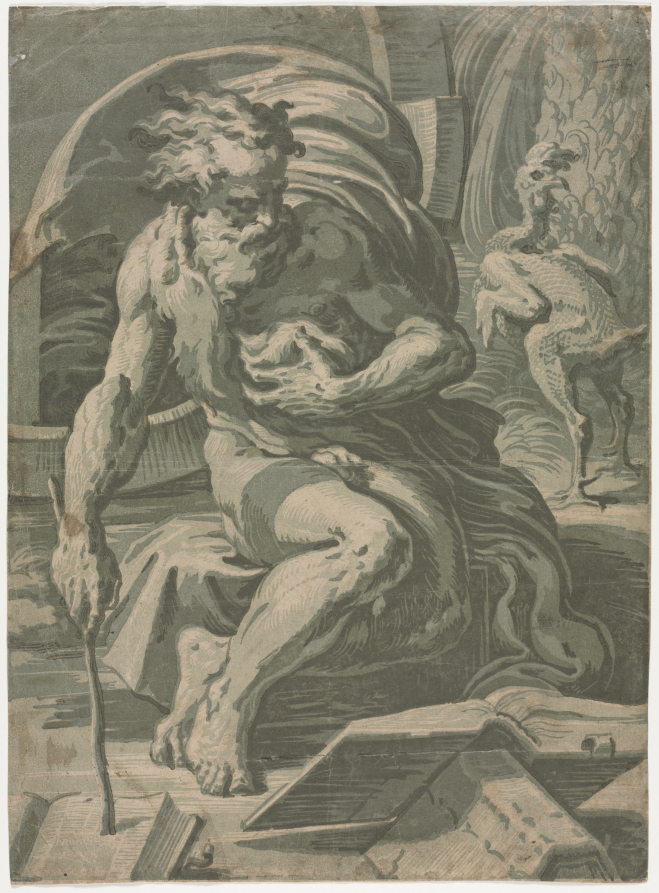 Ugo da Carpi (Italian, c. 1479–c. 1532) — Diogenes
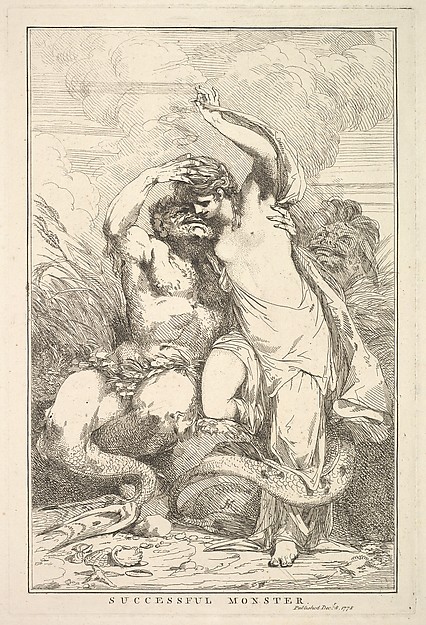 John Hamilton Mortimer|Sir Joshua Reynolds — Successful Mons
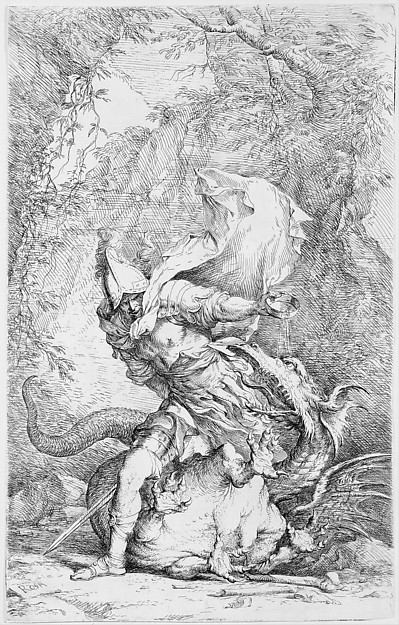 Salvator Rosa — Jason and the Dragon
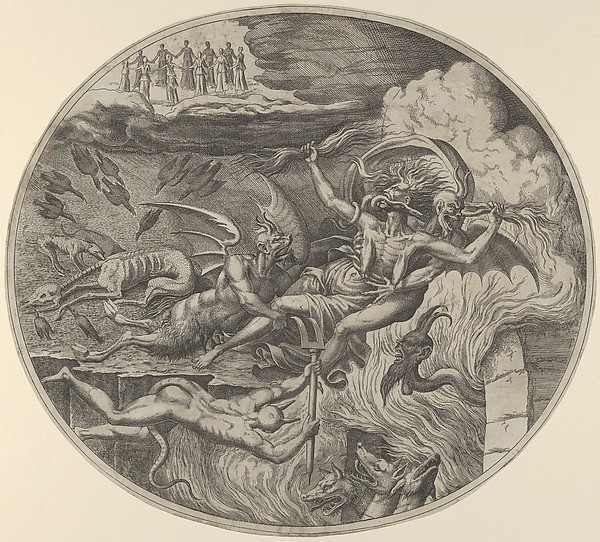 Léon Davent|Luca Penni — Envy, from the 'Seven Deadly Sins'
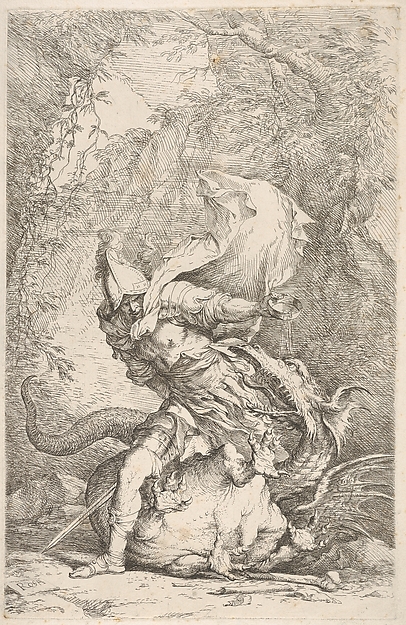 Salvator Rosa — Jason and the Dragon
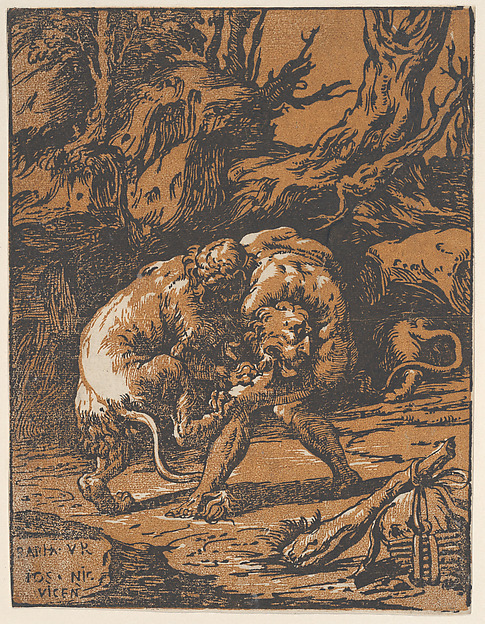 Niccolò Vicentino|Raphael (Raffaello Sanzio or Santi) — Herc
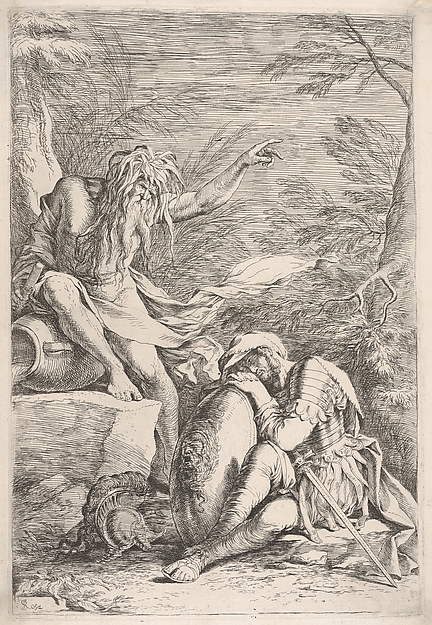 Salvator Rosa — Dream of Aeneas, Aeneas rests on his shield,
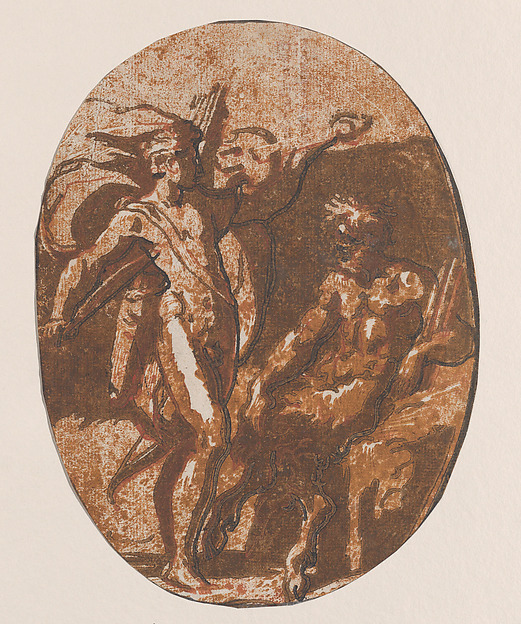 Niccolò Vicentino|Parmigianino (Girolamo Francesco Maria Maz
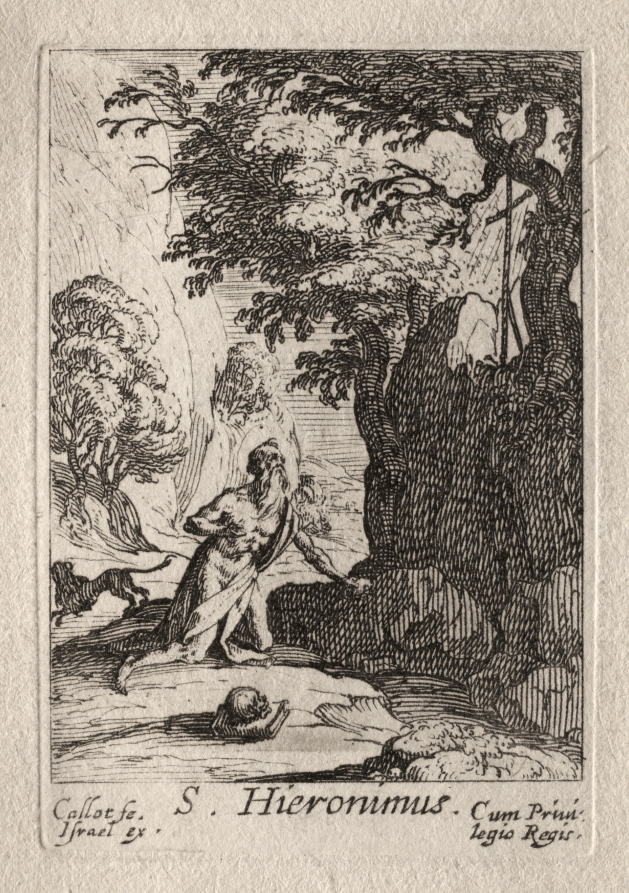 Jacques Callot (French, 1592–1635) — Les Penitents: St. Jér