FROM THE CLEVELAND MUSEUM OF ART’S CATALOG
This scroll makes clear the rich visual diversity of ink painting outside metropolitan Kyoto. These Kanto region paintings are generous in size, as well as in their visions of imagined foreign scenery. They are similarly composed: foreground expanses of water give way to clouds and bands of mist in middle distance, concealing the bases of the towering peaks, marking the transition in compositional space in both vertical and far distances. These mountain forms dominate the landscape vision as they echo and fill the narrow confines of this traditional hanging scroll format of the Muromachi era. A particular allure of this painting lies precisely in its classical setting highlighted with assertive tonal values in ink washes, dotting strokes, and dotting clusters with the more rustic-but in the Japanese view "natural"-elements of bamboo groves, brushwood fences, grass-roofed huts, and gentle, lowland streams nearby. These are traits linked to 15th-century Korean suibokuga (ink paintings) favored by the many clerics of 15th-century Kyoto and Kamakura. The artist rendered the subject through the filter of 15th-century Korean painting rather than classical Chinese painting. He may even ha
Source ↗︎
Be the first to share your thoughts.
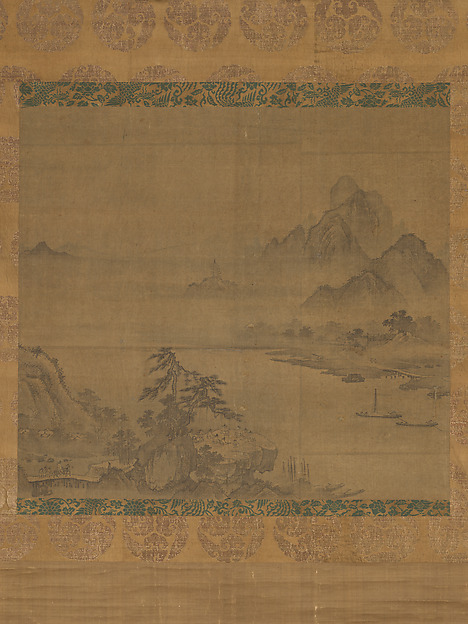 Unidentified artist
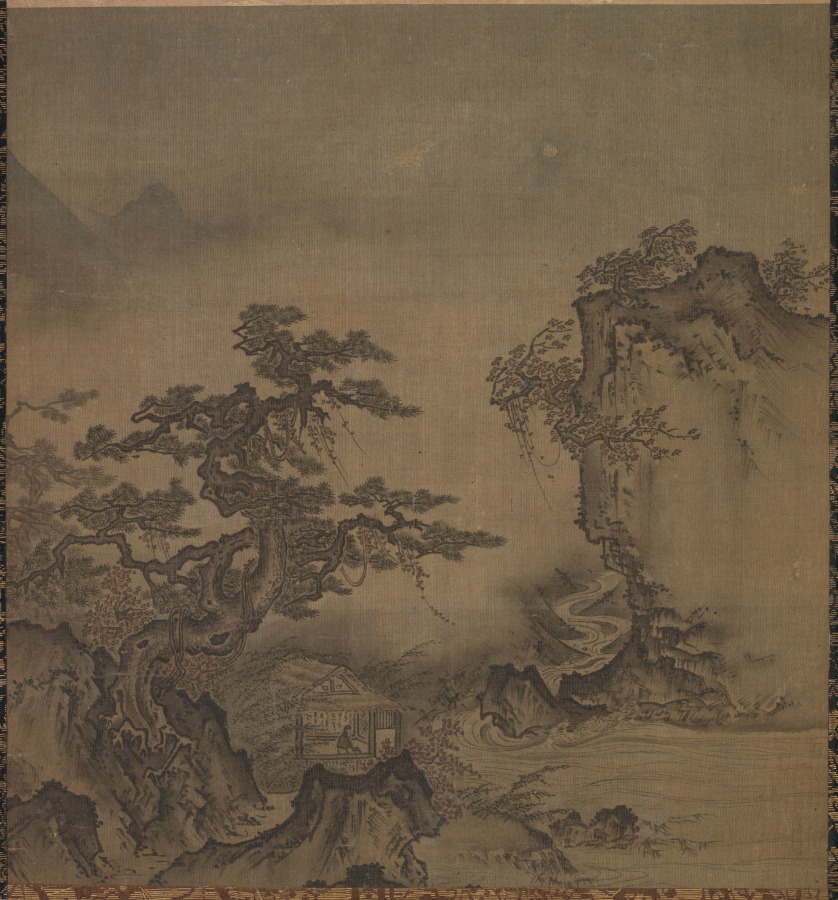 Ishō Tokugan (Japanese, c. 1359–1437) — Landscape
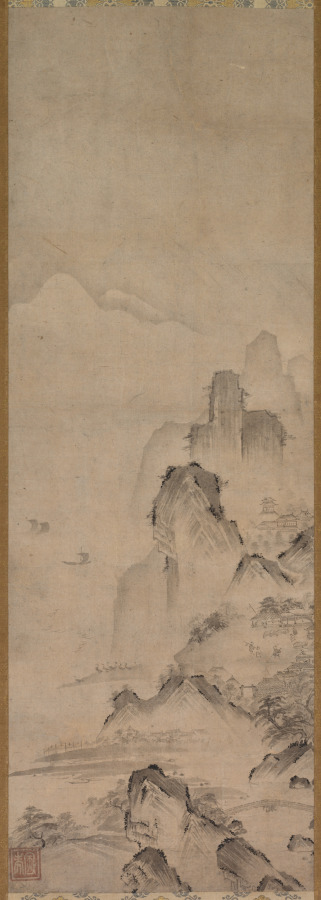 Narihide (Japanese, active 1500s) — Landscape
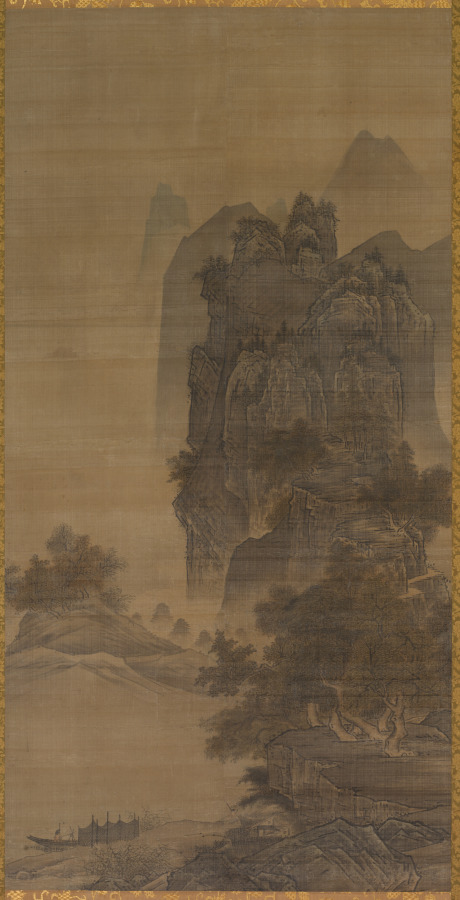 Sesshū Tōyō (Japanese, 1420–1506) — Sunset Glow over a Fishi
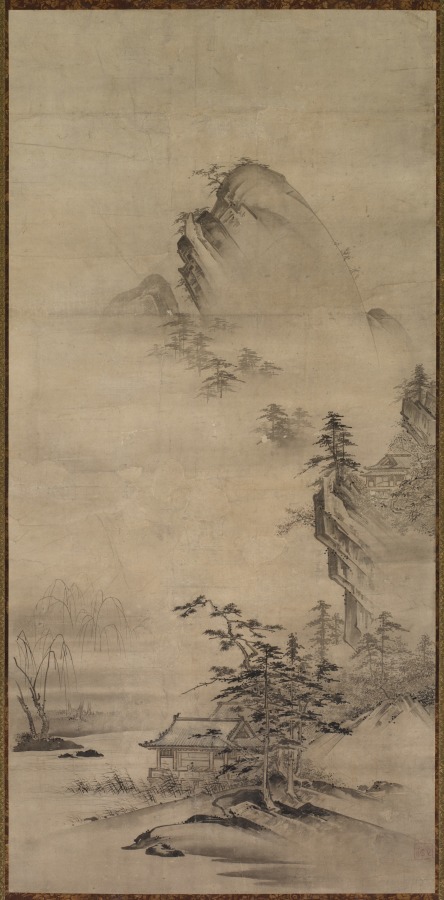 Landscape with a Pavilion
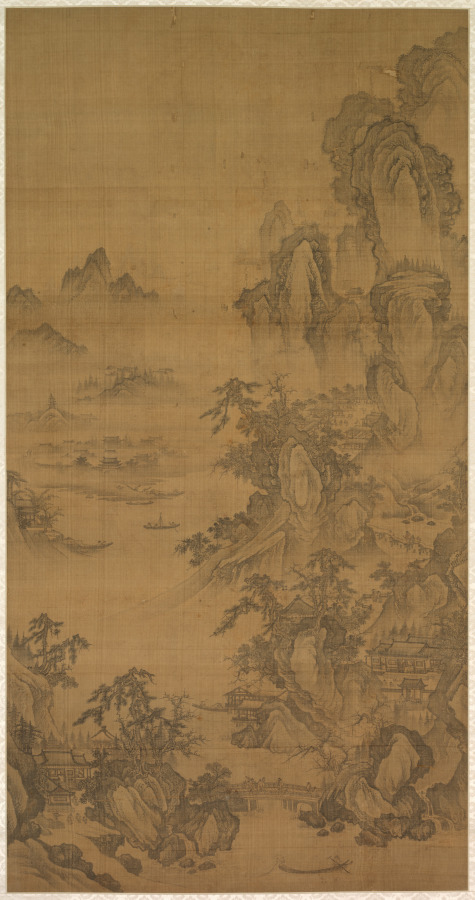 Mountain Market, Clear with Rising Mist
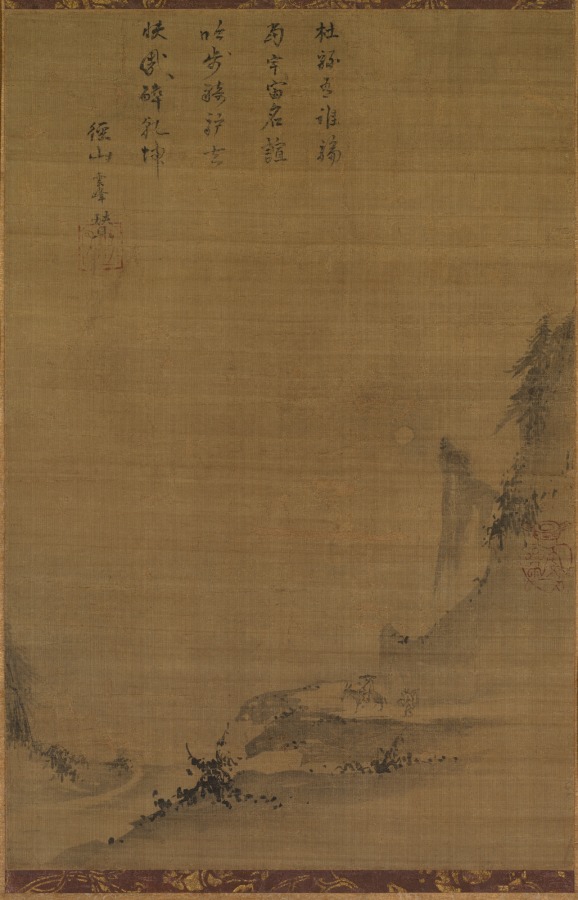 Mountain Landscape in Moonlight
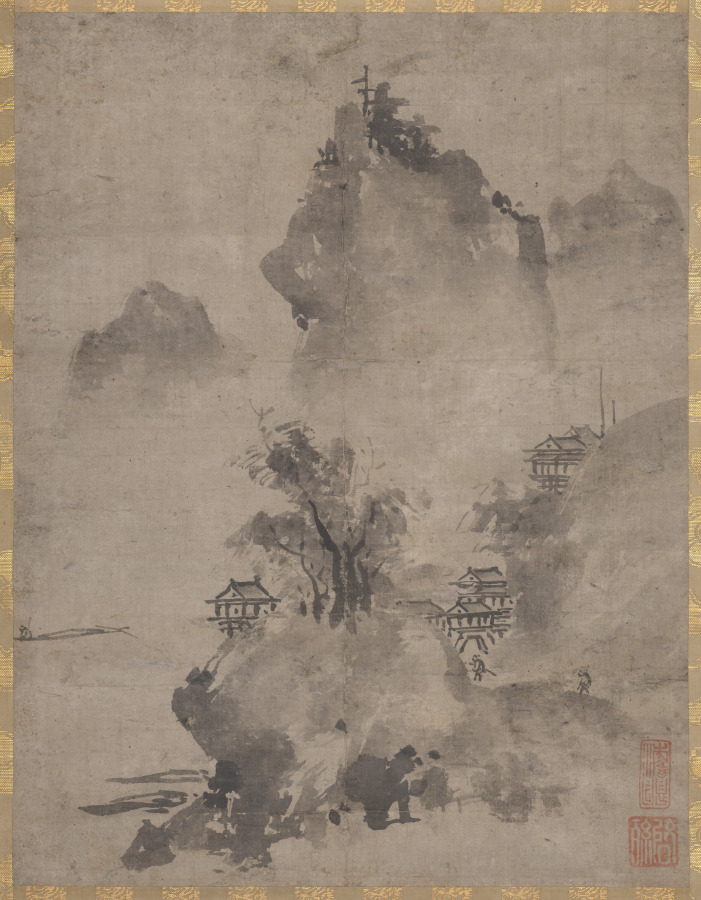 Keison (Japanese, active late 15th to early 16th century) —
 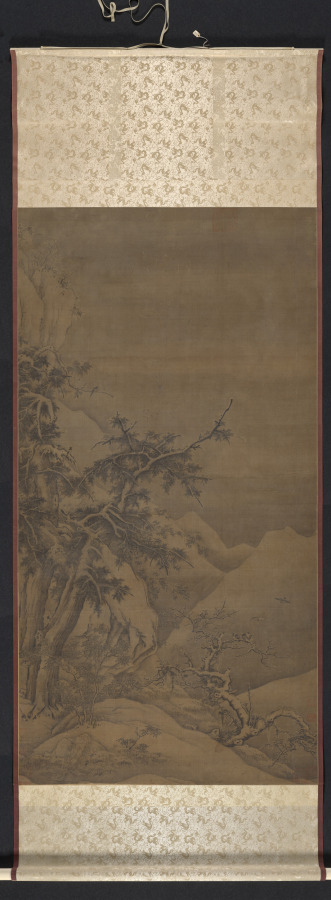 Gao Tao (Chinese, 1100s) — Birds in a Grove in a Mountainous
 Kano Chikanobu (Japanese, 1660–1728) — Chinese Landscape
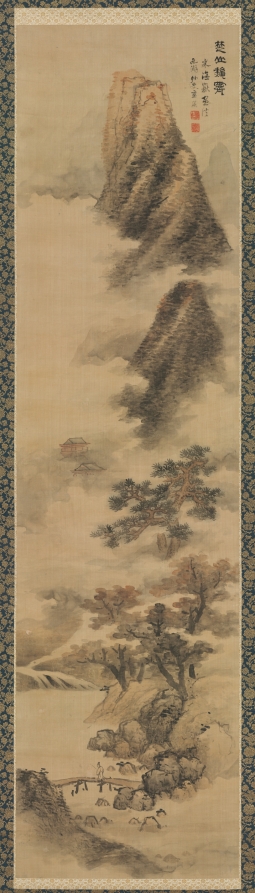 Lan Ying (Chinese, 1585–after 1664) — Clearing Autumn Mists
 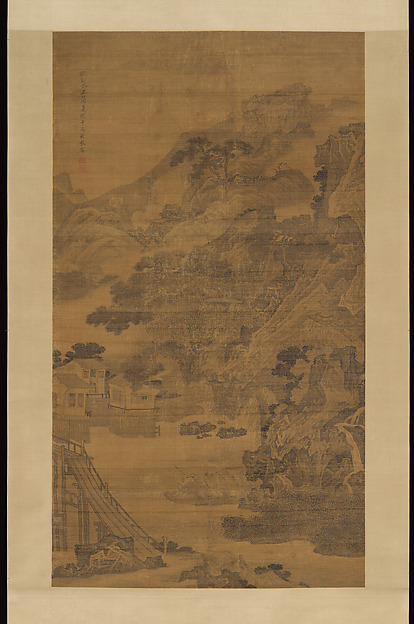 Feng Qiyong