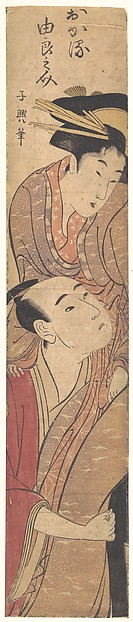
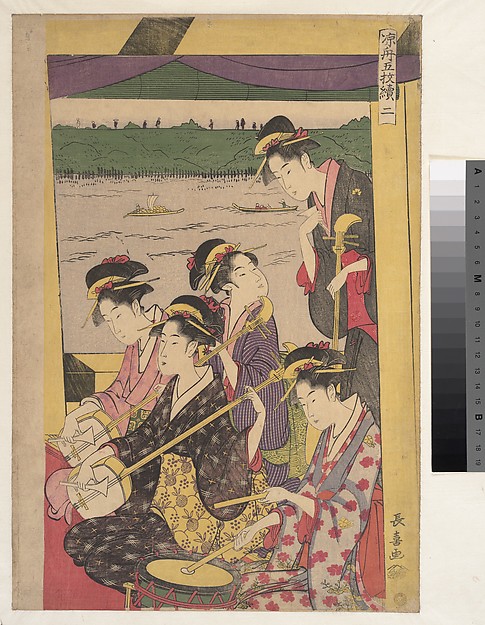
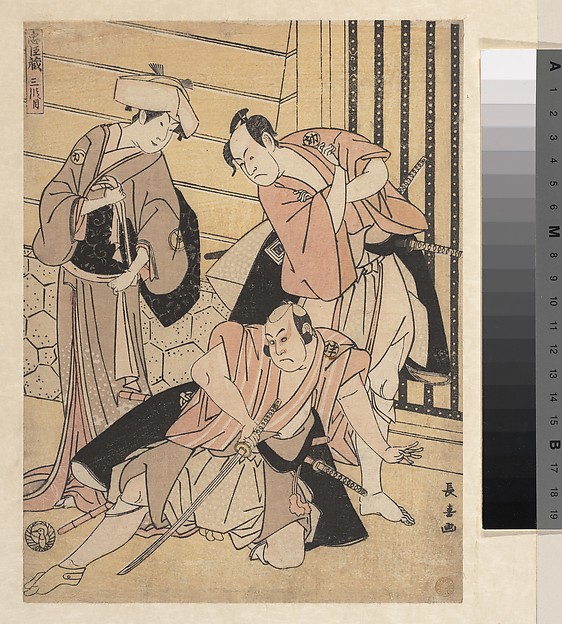
In the collection of Cleveland Museum of Art, Cleveland — check current display status with the museum.
FROM THE CLEVELAND MUSEUM OF ART’S CATALOG
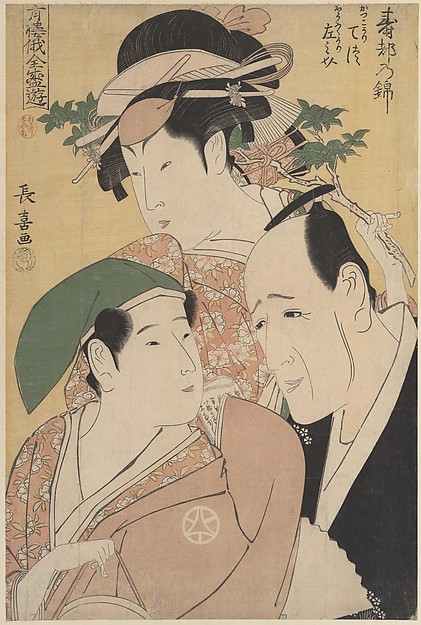
During the eighth lunar month of each year the geisha of the pleasure quarters would form themselves into groups and proceed around the quarter performing dances and skits. It seems likely that woodblock prints featuring the Niwaka Festival were purchased as souvenirs of the occasion. The Binzasara is a ritual dance related to agriculture and fertility performed during the month of May. Agricultural deities are addressed by the use of flowered hats and binzasara clappers.
Be the first to share your thoughts.
Sign in to join the discussion.
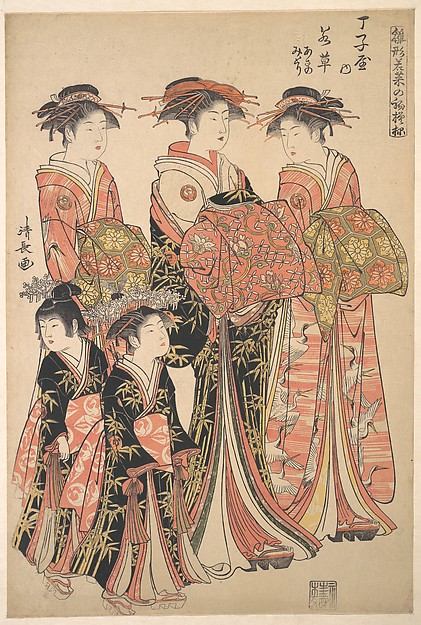 Torii Kiyonaga — 鳥居清長画 「雛形若菜の初模様 丁子屋の若草・ あさの・みどり」|The Courte
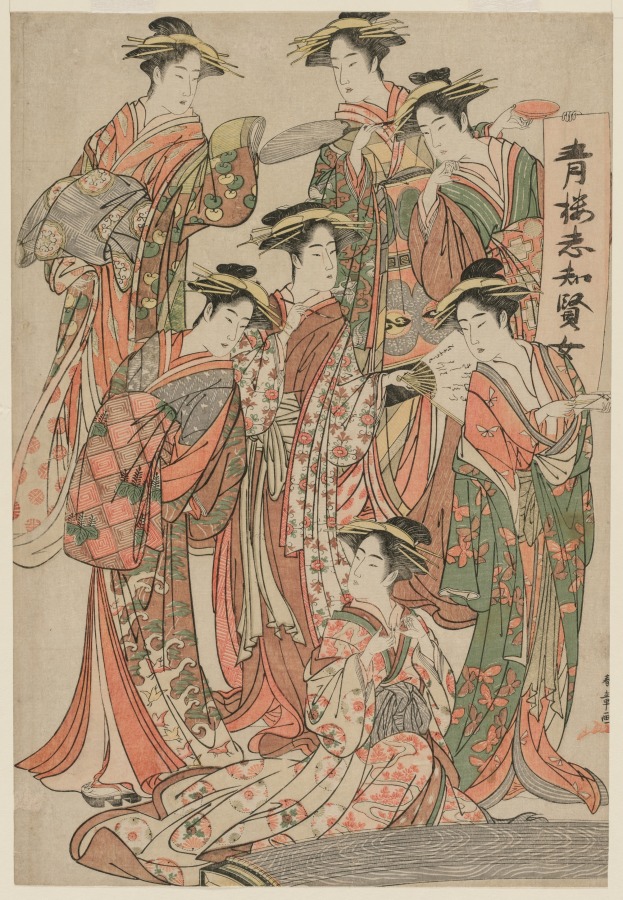 Katsukawa Shunshō (Japanese, 1726–1792) — Seven Wise Women o
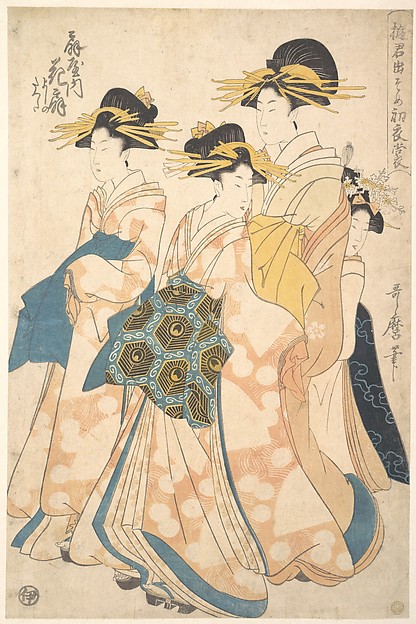 Utamaro II — 遊君出そめ初衣裳 扇屋内花扇|The Oiran Hanaogi of Ogiya atten
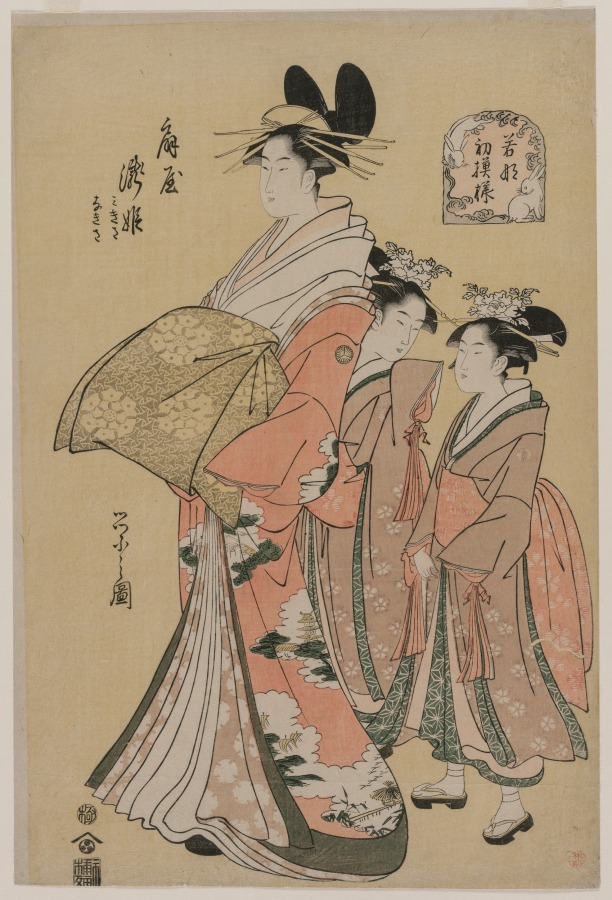 Chōbunsai Eishi (Japanese, 1756–1829) — The Courtesan Takihi
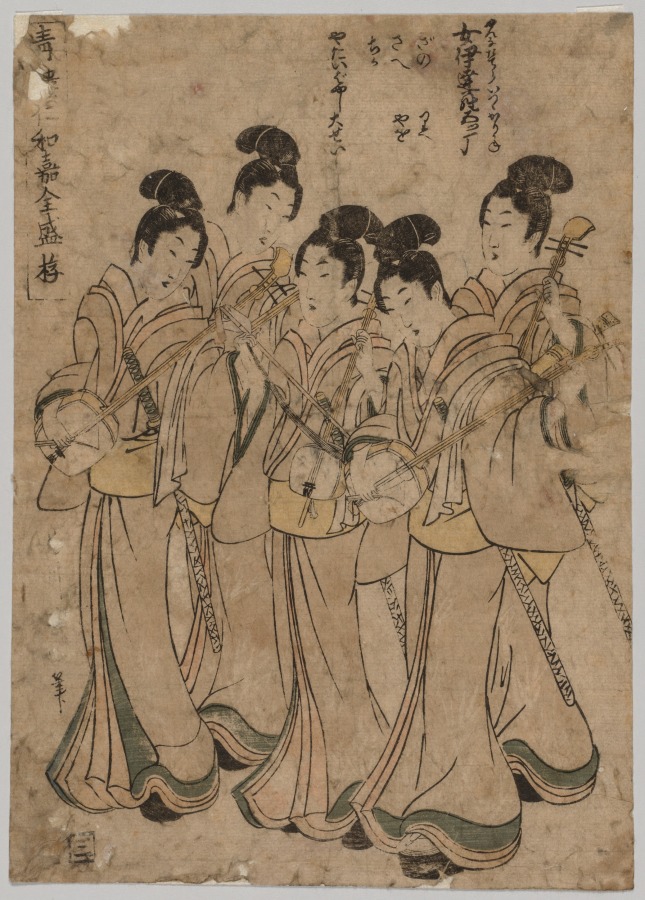 Kikukawa Eizan (Japanese, 1787–1867) — Young Women with Musi
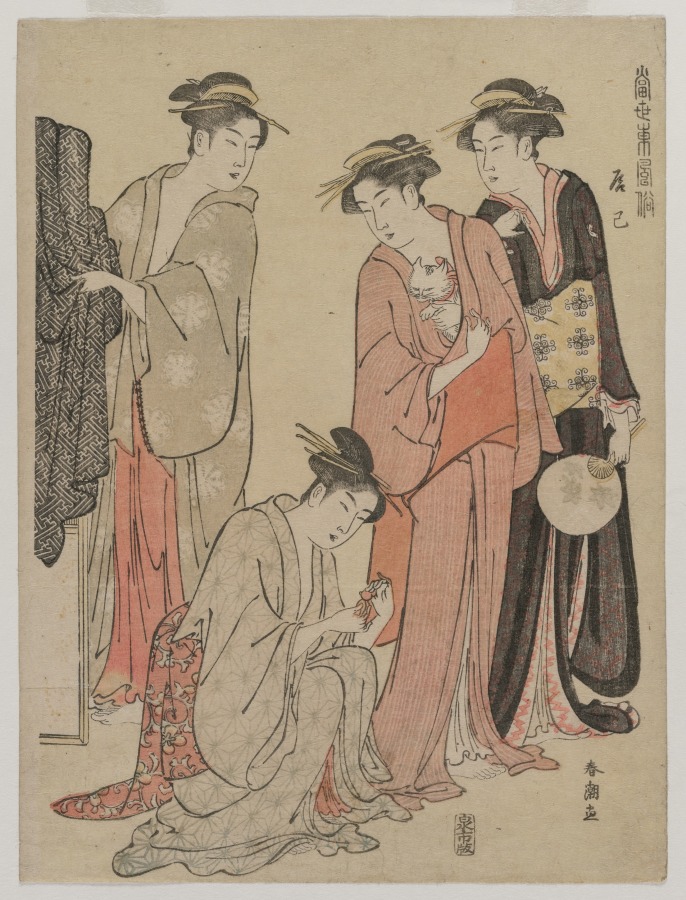 Katsukawa Shunchō (Japanese) — Women of the Tatsumi District
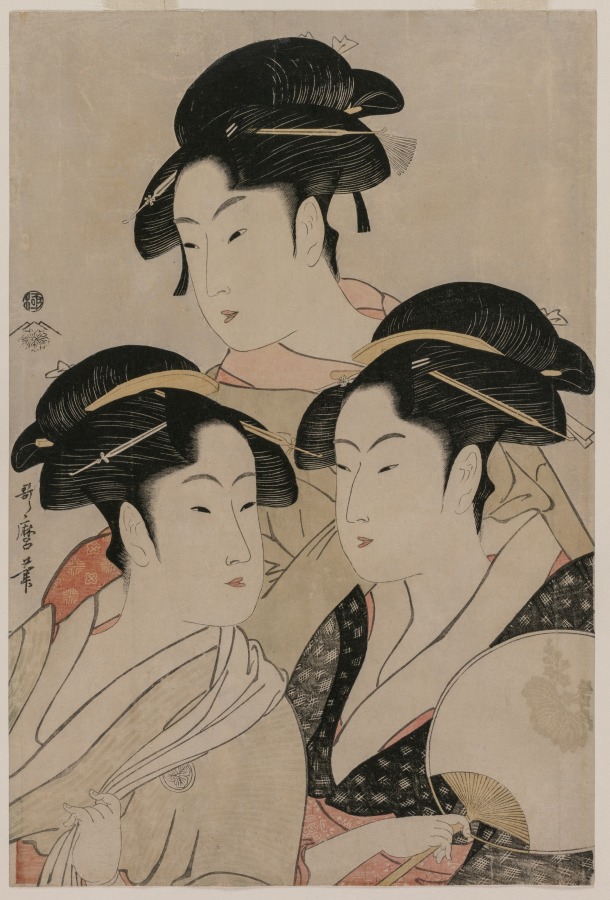 Kitagawa Utamaro (Japanese, c. 1754–1806) — Tomimoto Toyohin
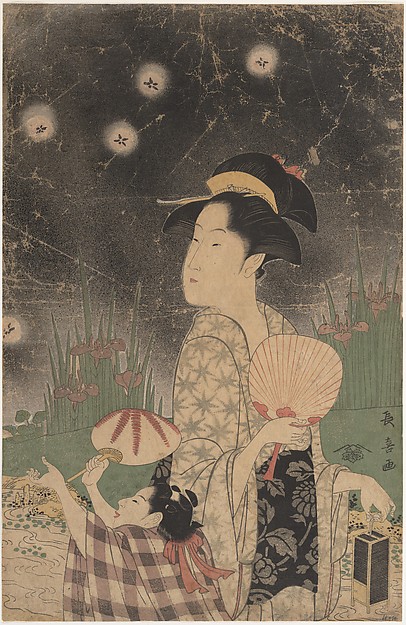
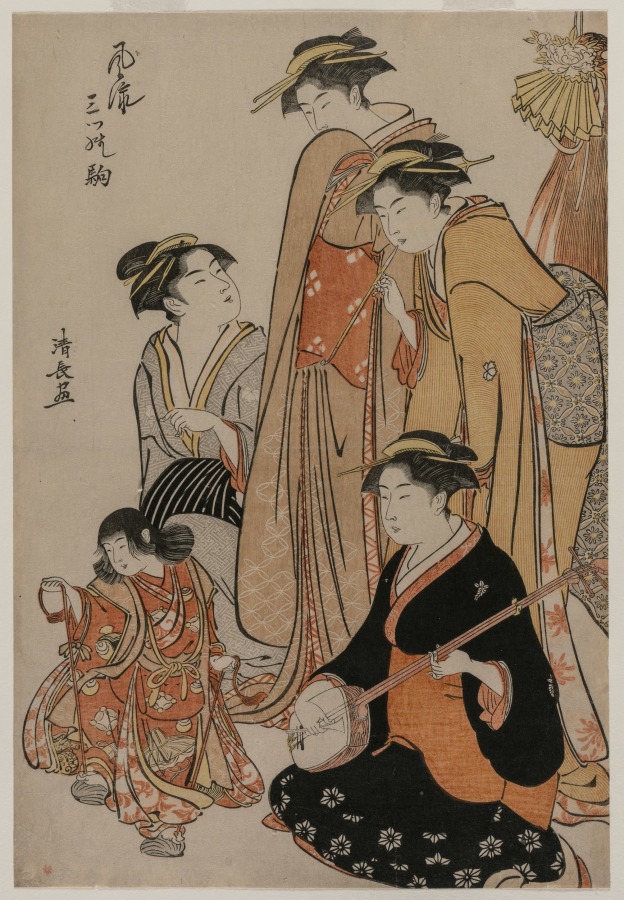 Torii Kiyonaga (Japanese, 1752–1815) — Women Watching a Girl
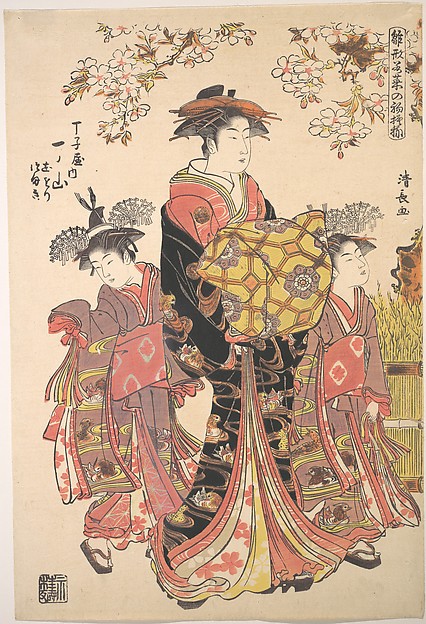 Torii Kiyonaga
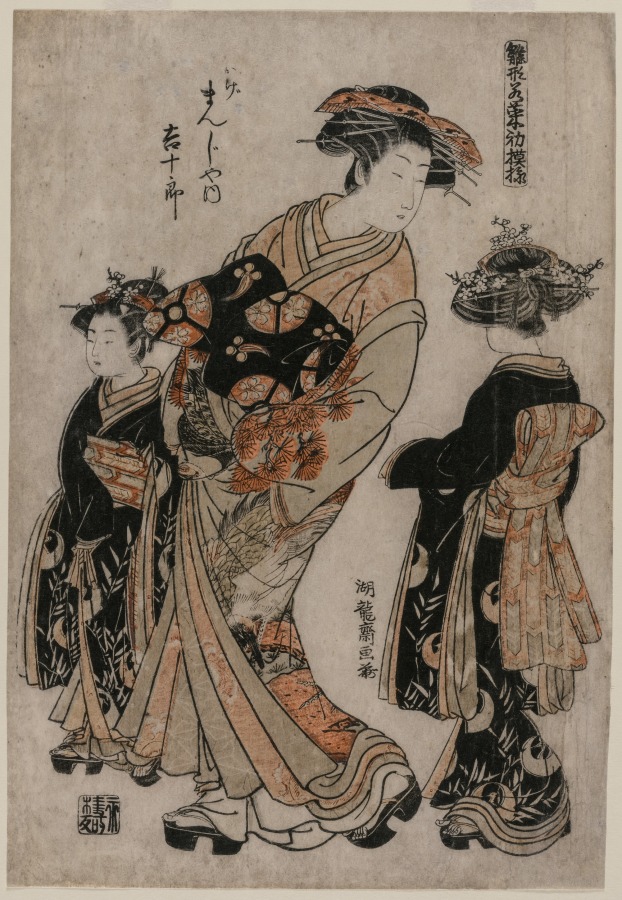 Isoda Koryūsai (Japanese, 1735–1790) — The Courtesan Kichiju
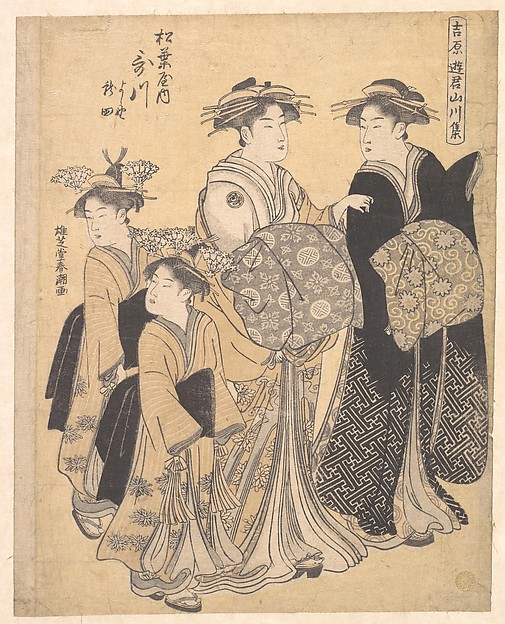 Katsukawa Shunchō
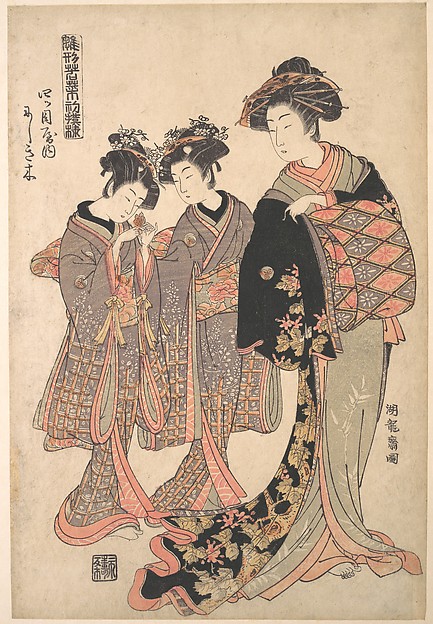 Isoda Koryūsai — 『雛形若菜初模様 四ツ目屋内 にしき木』|The Courtesan Nishikig