In the collection of Cleveland Museum of Art, Cleveland — check current display status with the museum.
FROM THE CLEVELAND MUSEUM OF ART’S CATALOG
The designs on Takihime’s outer robe describes fragments of scenery—bridge, castle, wind-filled sails amid clouds—while her attendants’ robes are more conventionally decorated with scattered flowers. The tassels on their sleeves were worn only by young girls. All three wear the triple-fan crest of the Ogiya ("House of Fans") tea house on the shoulders of their kimono. The cartouche in the upper-right corner of the print identifies the series title and time of year. It is New Year, the same season depicted in Engetsudo’s scroll Courtesan and Attendants (see 1985.255). Courtesans strolling through the streets with their attendants were common sights during evening hours in the Yoshiwara.
Be the first to share your thoughts.
Sign in to join the discussion.
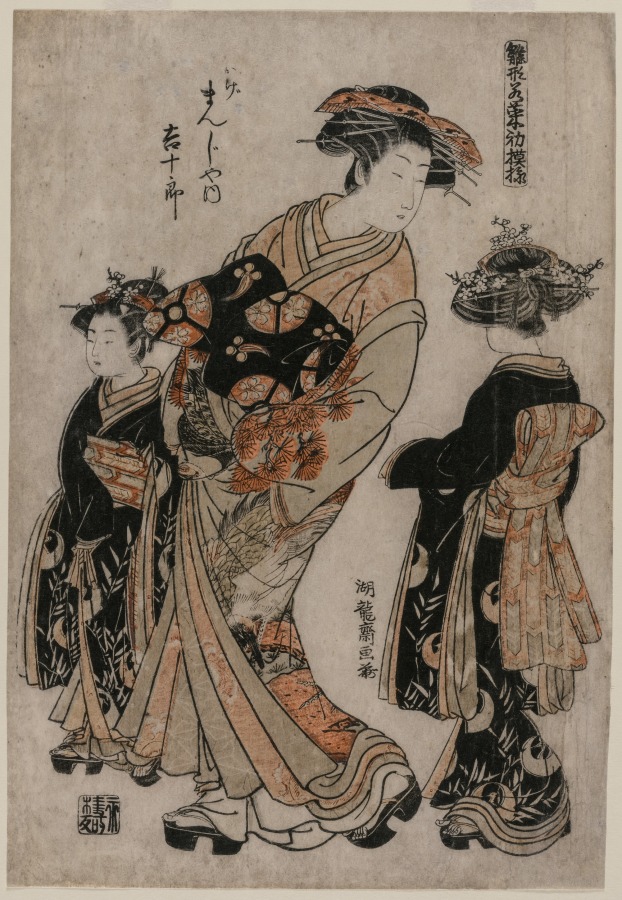 Isoda Koryūsai (Japanese, 1735–1790) — The Courtesan Kichiju
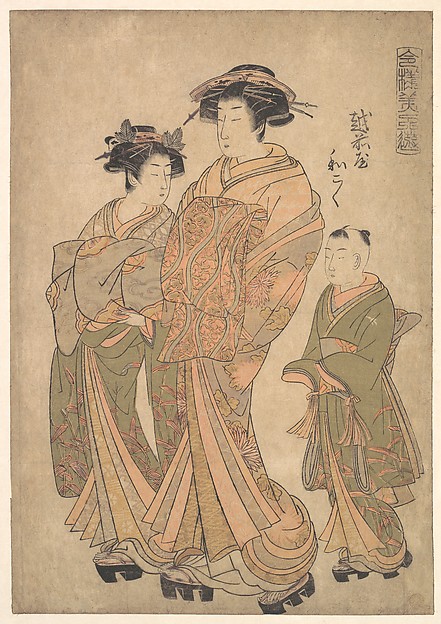 Katsukawa Shunchō
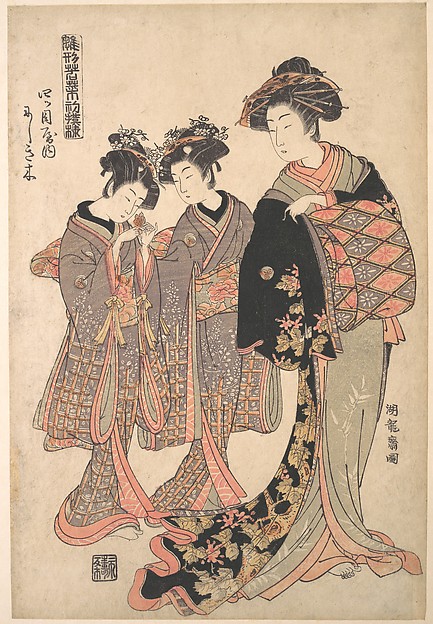 Isoda Koryūsai — 『雛形若菜初模様 四ツ目屋内 にしき木』|The Courtesan Nishikig
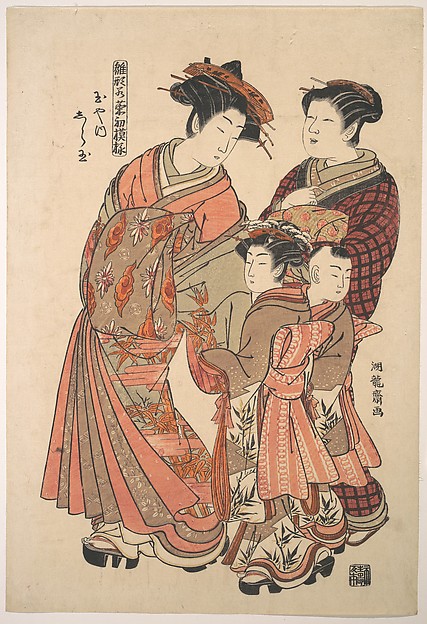 Isoda Koryūsai — 『雛形若菜初模様 玉や内 しら玉』|The Courtesan Shiratama o
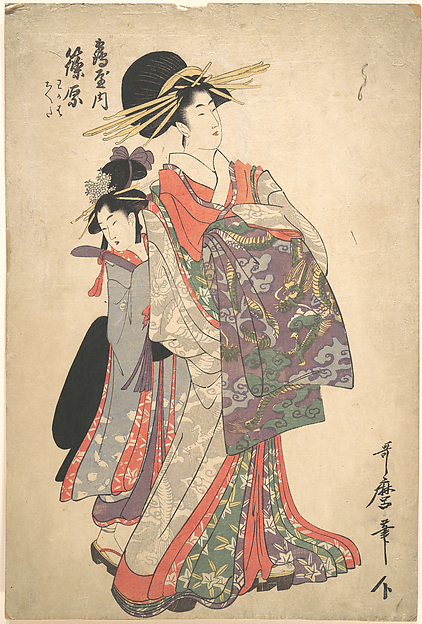 Kitagawa Utamaro
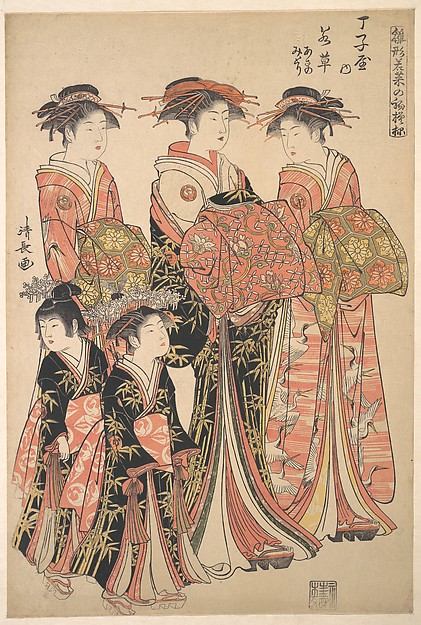 Torii Kiyonaga — 鳥居清長画 「雛形若菜の初模様 丁子屋の若草・ あさの・みどり」|The Courte
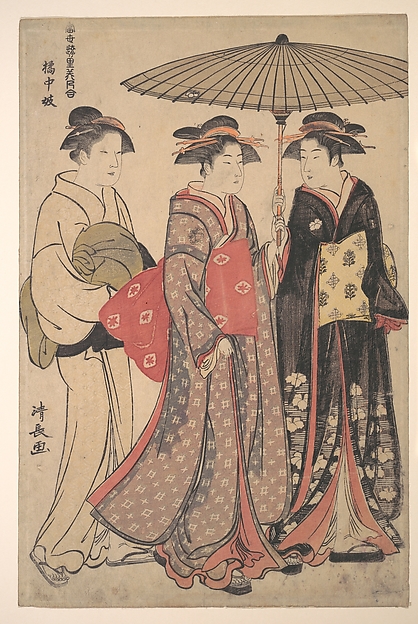 Torii Kiyonaga — Kitchugi|Dancers of Tachibana Street
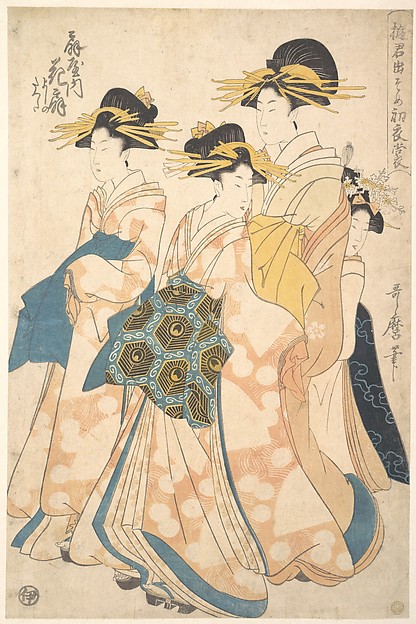 Utamaro II — 遊君出そめ初衣裳 扇屋内花扇|The Oiran Hanaogi of Ogiya atten
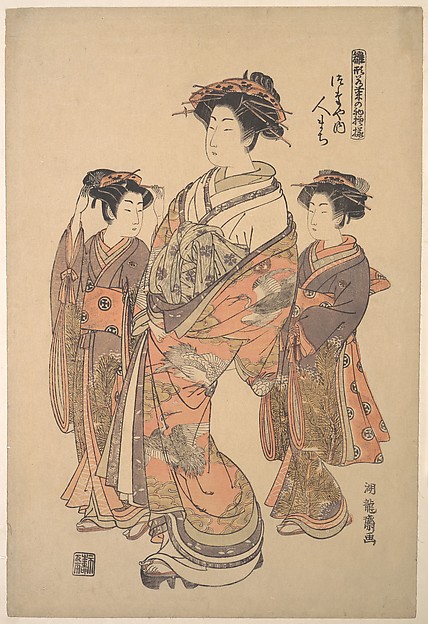 Isoda Koryūsai — 『雛形若菜の初模様 つたや内 人まち』|The Courtesan Hitomachi
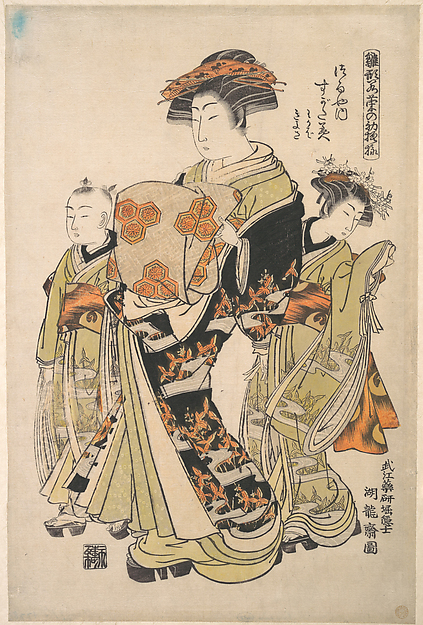 Isoda Koryūsai — 『雛形若菜の初模様 つるや内 すがたみ』|The Courtesan Sugatami
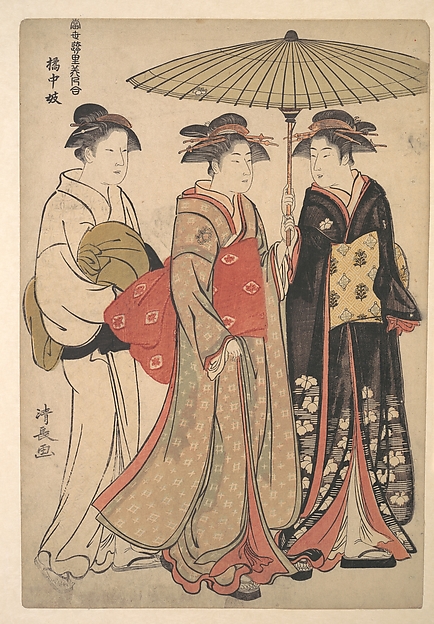 Torii Kiyonaga — Kitchugi|Geisha of the Tachibana Street
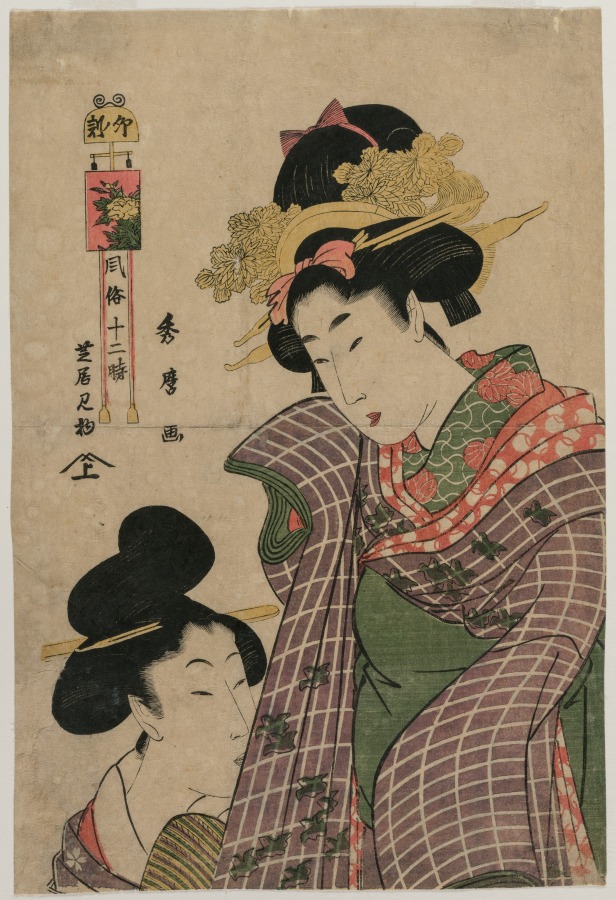 Kitagawa Hidemaro (Japanese) — Going to the Kabuki Theater i