In the collection of Cleveland Museum of Art, Cleveland — check current display status with the museum.
FROM THE CLEVELAND MUSEUM OF ART’S CATALOG
In his quest to reconcile the Gospels of the New Testament with the spirit of modern science, Gauguin created 14 woodcuts that mix Christian and Polynesian imagery to create the visual equivalents of parables or fables. Here, Eve’s gesture of modesty recalls earlier representations of her expulsion from the Garden of Eden, but the disembodied hooded head, the tupapau (a Tahitian evil spirit), and the rat (the shadow of a ghost) are Polynesian symbols. Combining Eve, an image of guilt and violation, with Tahitian symbols of death increases the potency of the scene. This special impression of Eve is the only known example of the first state in which the black shape in the lower right is blank, before the block was changed; additional white lines appear on Eve and the rat.
Be the first to share your thoughts.
Sign in to join the discussion.
 Paul Gauguin — Eve
 Paul Gauguin — Eve
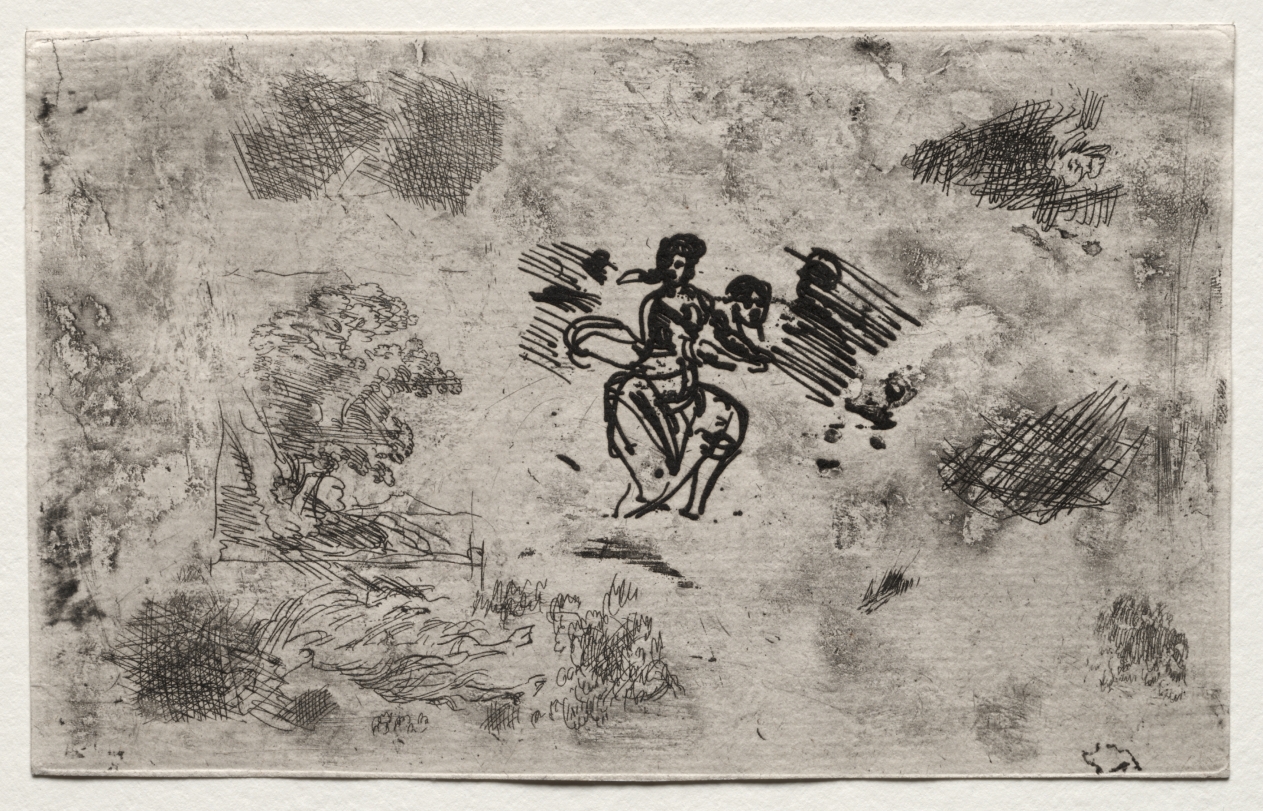 Claude Lorrain (French, 1604–1682) — Study of a Seated Woman
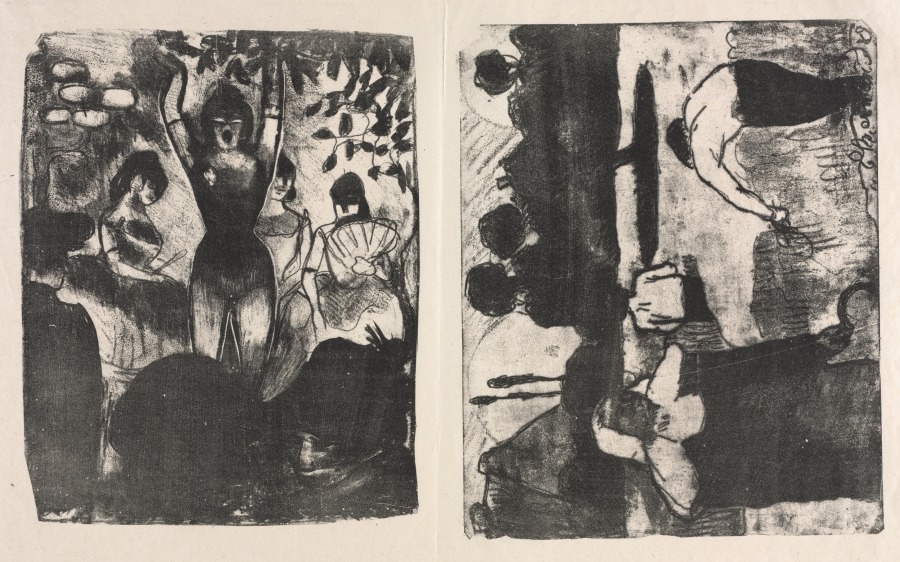 Émile Bernard (French, 1868–1941) — Singer at the Café-Conce
 Paul Gauguin — Human Misery
 Paul Gauguin — Here We Make Love (Te Faruru), from Fragrance
 Paul Gauguin — The Universe Is Created
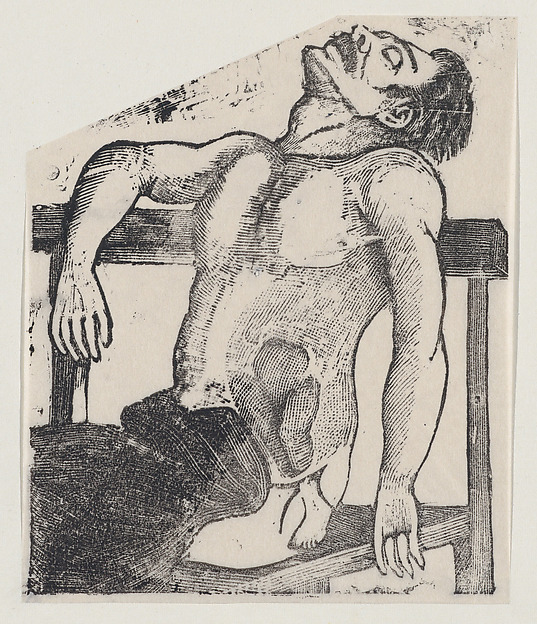 José Guadalupe Posada — A man with a small foot emerging fro
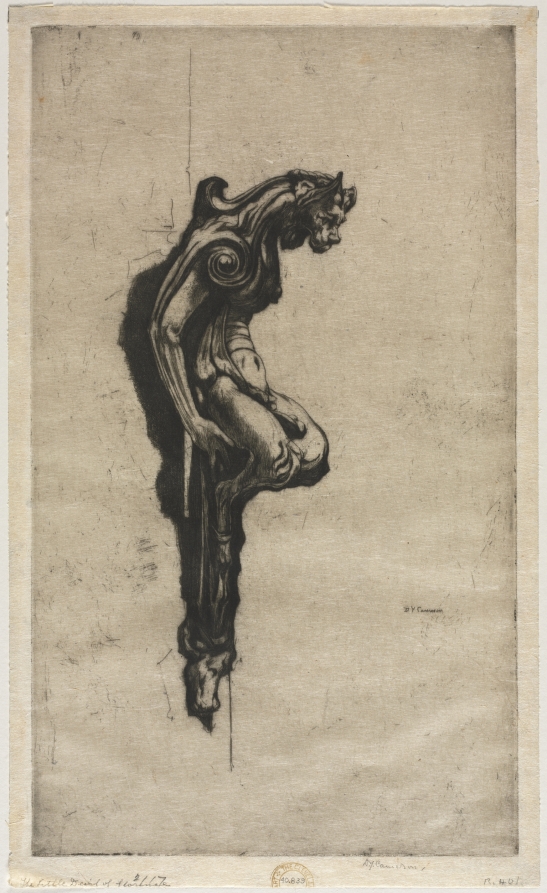 David Young Cameron (British, 1865–1945) — The Little Devil
  Mathais Beitler — Blackwork Design for Goldsmithwork with Sa
 Édouard Vuillard (French, 1868–1940) — Beyond Human Forces (
 Paul Gauguin — Christ on the Cross


