Master of the Bigallo Crucifix
Crucifix
SEE IT IN PERSON
● On view now — Gallery 236
Art Institute of Chicago, Chicago · verified July 2026
Discussion
FROM THE ART INSTITUTE OF CHICAGO’S CATALOG
In late-medieval Italian churches, a monumental crucifix was often attached to the top of a major altarpiece or placed above the rood screen that separated the public nave from the church sanctuary. In either location, it was a focal point of public worship. The painter of this outstanding example was a leading Florentine artist of the middle of the 13th century, named after another painted crucifix in the Museo del Bigallo, Florence. Although his style retains the traditional linear patterning associated with Byzantine models, he employed a new, more natural system of lighting. Also traditional are the smaller figures amplifying the Passion narrative—the Virgin and John the Evangelist flanking the cross, Christ as redeemer above it, and the crowing rooster at its foot referring to Saint Peter’s denial of Christ.
Be the first to share your thoughts.
Sign in to join the discussion.
More like this
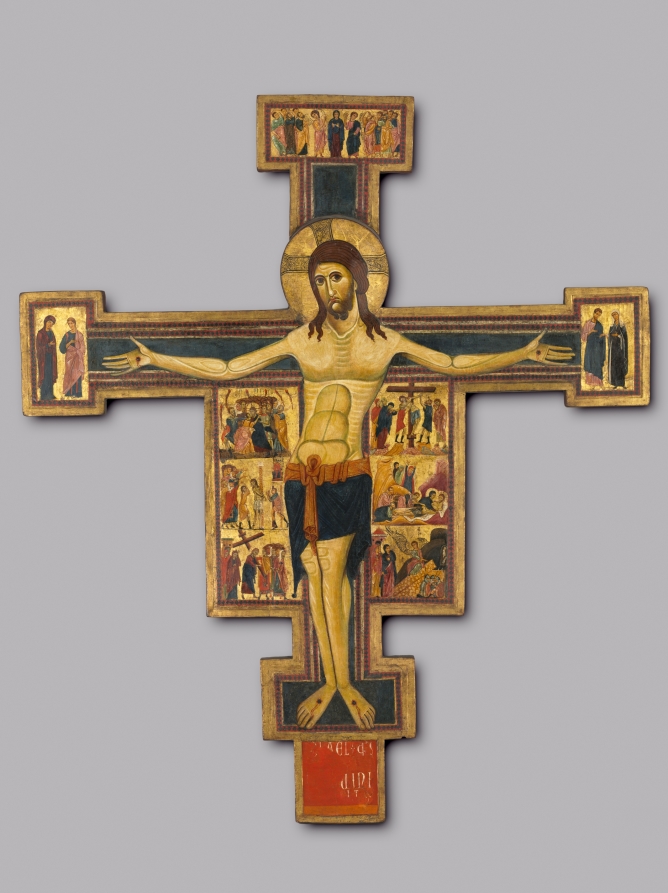 Crucifix with Scenes of the Passion
 Giovanni Antonio da Pesaro — Crucifix
 Master of the Orcagnesque Misericordia — Crucifix
 Master of Santa Chiara (Italian) — Processional Cross
 Southern Germany — Orphrey Cross (Needlework)
 Mosan; Meuse River Valley or German; Rhineland — Crucifix
 Christus aan het kruis, met Maria en Johannes
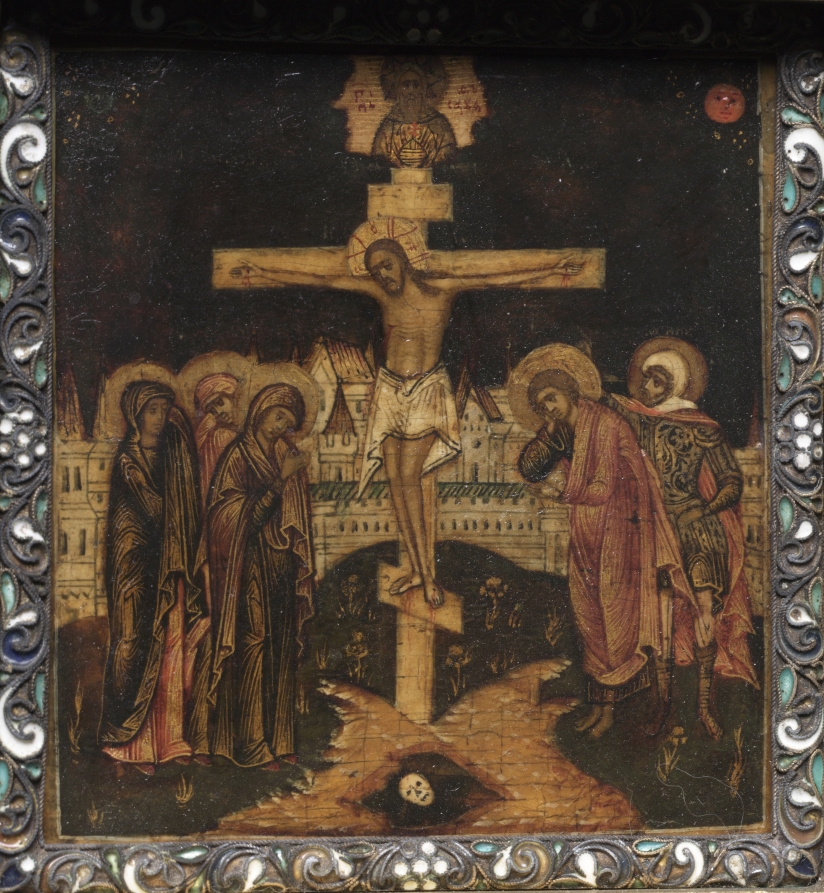 Portable Triptych Icon: The Crucifixion
 Limoges Pottery and Porcelain Factories — Plaque with the Cr
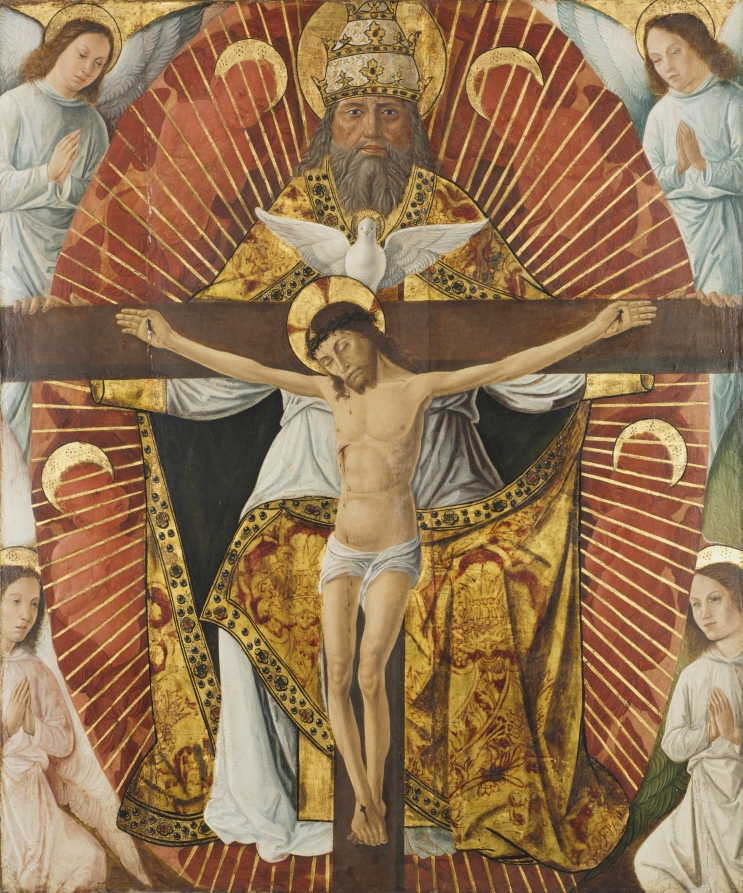 Laurent Girardin (French, 1478) — The Trinity
 Master of the Codex of Saint George — The Crucifixion
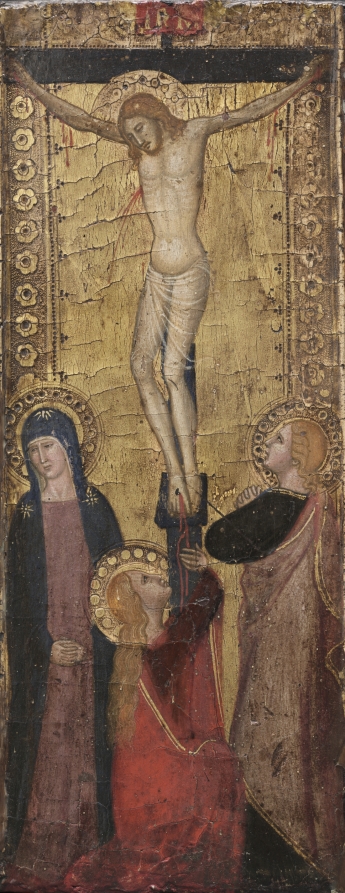 Andrea da Firenze (Italian, 1379) — The Crucifixion