Landscape with the Penitent Saint Jerome
SEE IT IN PERSON
● On view now — Gallery 207
Art Institute of Chicago, Chicago · verified July 2026
Discussion
FROM THE ART INSTITUTE OF CHICAGO’S CATALOG
In the midst of this expansive landscape, a tiny figure of the hermit Saint Jerome beats his breast with a rock in penance for his earlier worldly pursuits as he gazes at a sculpture of Jesus on the cross. In spite of this fervent activity in the foreground, the true subject of this painting is the vast landscape behind the saint. The artist rendered the mountains, valleys, rivers, and villages in successive bands of brown, green, and blue, the typical structure of the independent landscape that first emerged as a genre in this period. The roads that wind through the scene—metaphors for the journey of life—were a popular motif in Flemish painting and likely helped this work appeal to the growing number of art collectors in the booming city of Antwerp, a center of international trade.
Be the first to share your thoughts.
Sign in to join the discussion.
More by Belgian

More like this
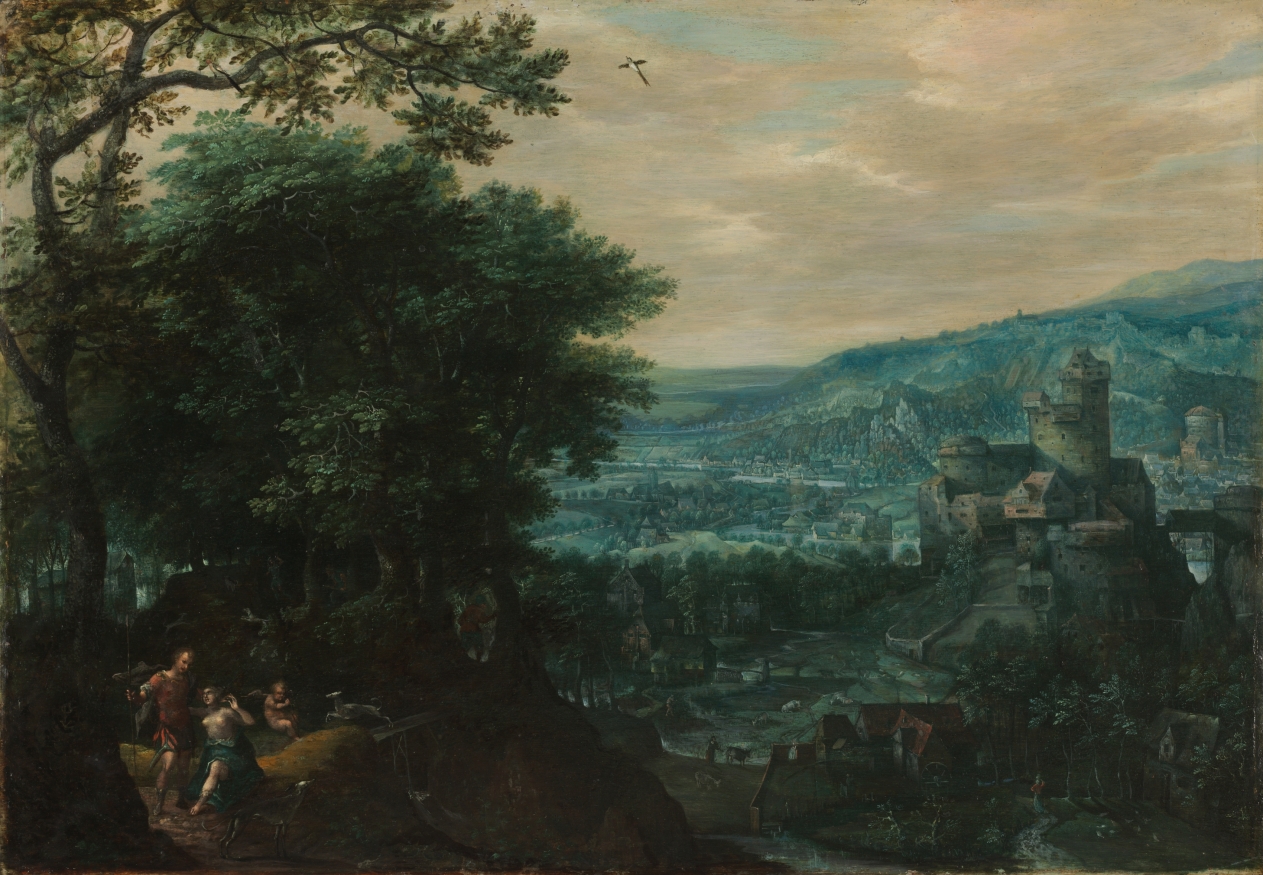 Gillis van Coninxloo (Netherlandish, 1544–1607) — Landscape
 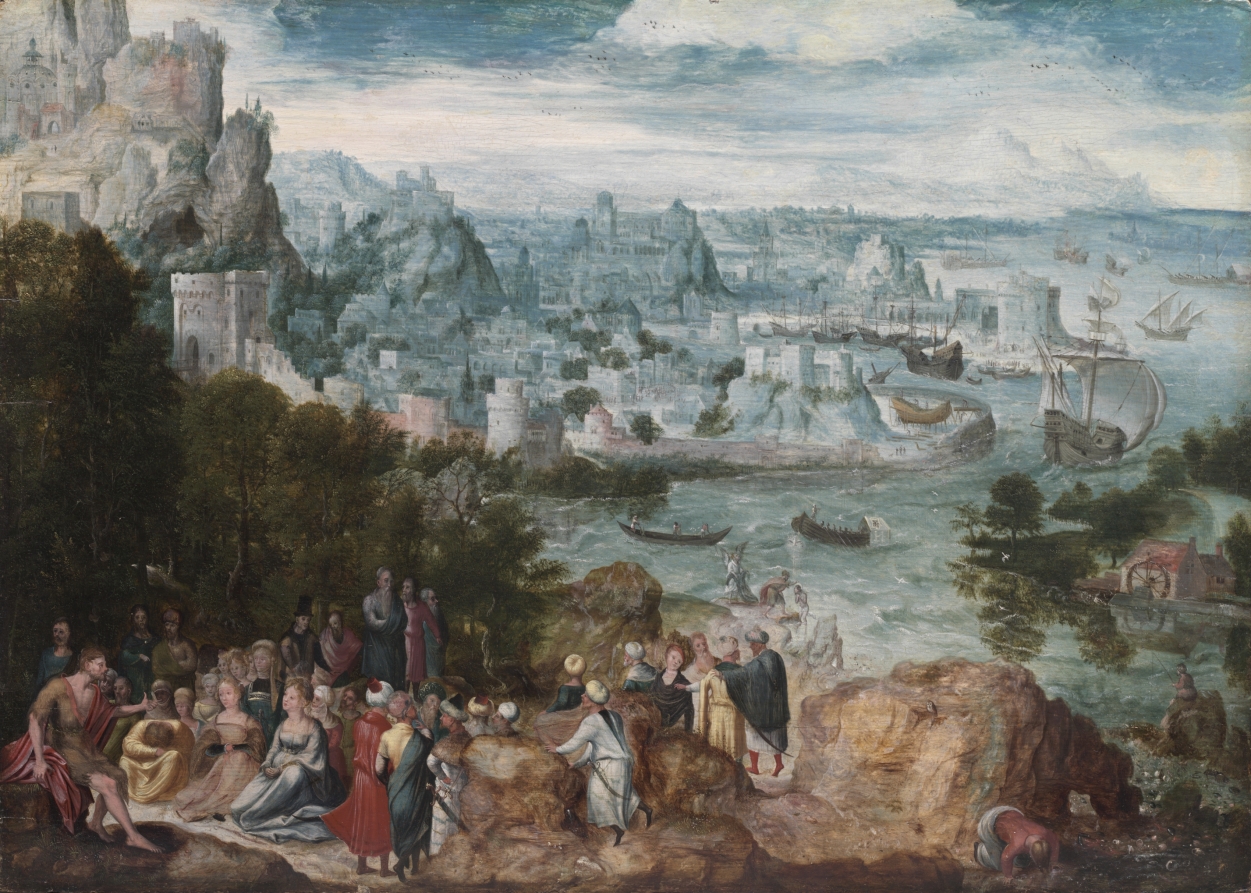 Herri met de Bles (Flemish, 1510–1572) — Landscape with Sain
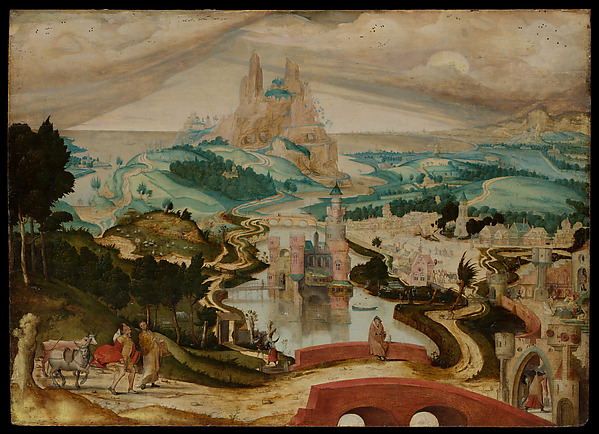 Master of the Brussels Calling of Saint Matthew — The Arriva
 Lucas van Valckenborch — Mountainous landscape
 Joos de Momper (II) — Mountain view
 anonymous — Landschap met de heilige Christoffel
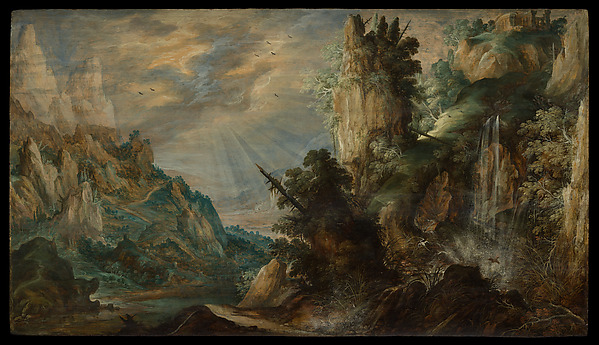 Kerstiaen de Keuninck — A Mountainous Landscape with a Water
 Pieter Bruegel, the elder — The Hare Hunters
 Hieronymus Cock — Mercury with the Head of Argus
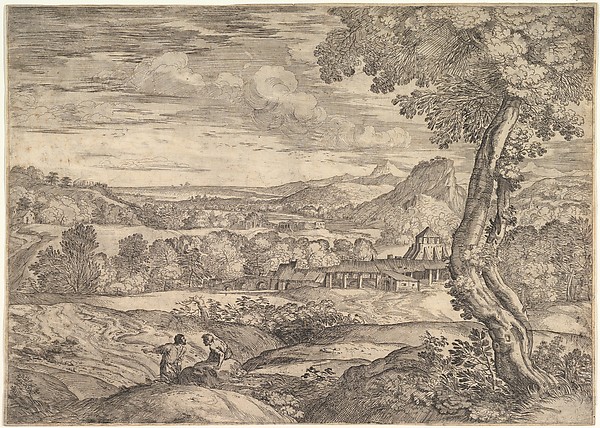 Giovanni Francesco Grimaldi — Landscape with a brick factory
 Jan Meerhout — Mountainous Landscape with River Valley and C
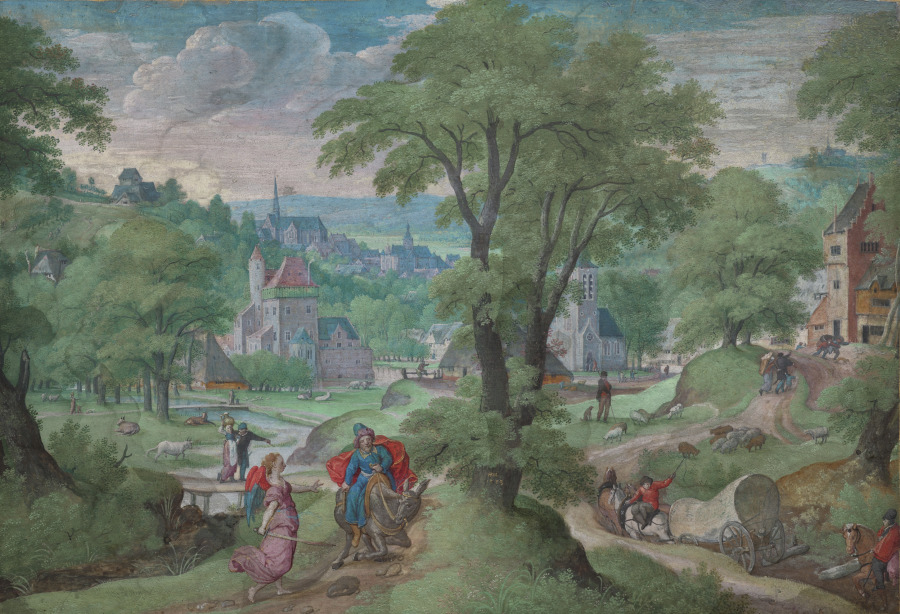 Hans Bol (Flemish, 1534–1593) — Balaam and the Ass