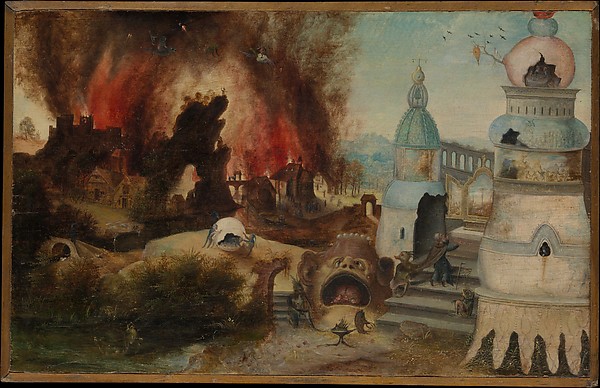
In the collection of Cleveland Museum of Art, Cleveland — check current display status with the museum.
FROM THE CLEVELAND MUSEUM OF ART’S CATALOG
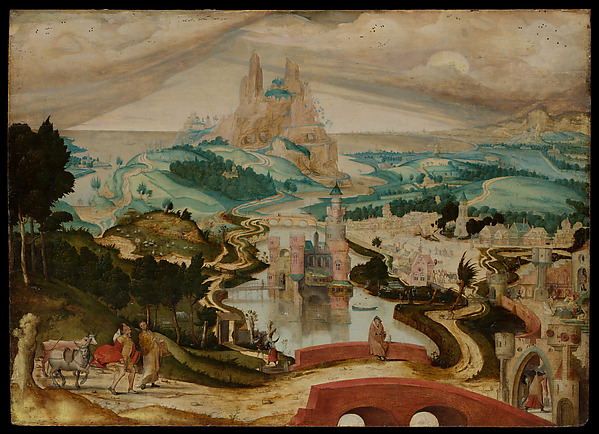
This picture is an example of the so-called world landscape, a term coined by art historians to characterize a type of Northern landscape painting with a vast panorama and a narrative religious subject in the foreground. This type of landscape, popularized by the Flemish painter Joachim Patinir (about 1485-1524), was fashionable throughout the 16th century. Bles placed the group of exotically dressed figures on a piece of land overlooking a great panorama of mountains, coast, and sea. The view of the harbor city is purely imaginative, and the fanciful cliffs and mountain peaks that crowd the distance seem to disappear into a light mist. This manner of creating depth in the landscape, called the atmospheric or aerial perspective, was an invention of Leonardo da Vinci (1452-1519). Bles was acclaimed in Italy as the Master of the Owl (il Civetta), after the bird he often put into his works. In this scene, the owl is situated on the rock in the lower-right foreground.
Be the first to share your thoughts.
Sign in to join the discussion.
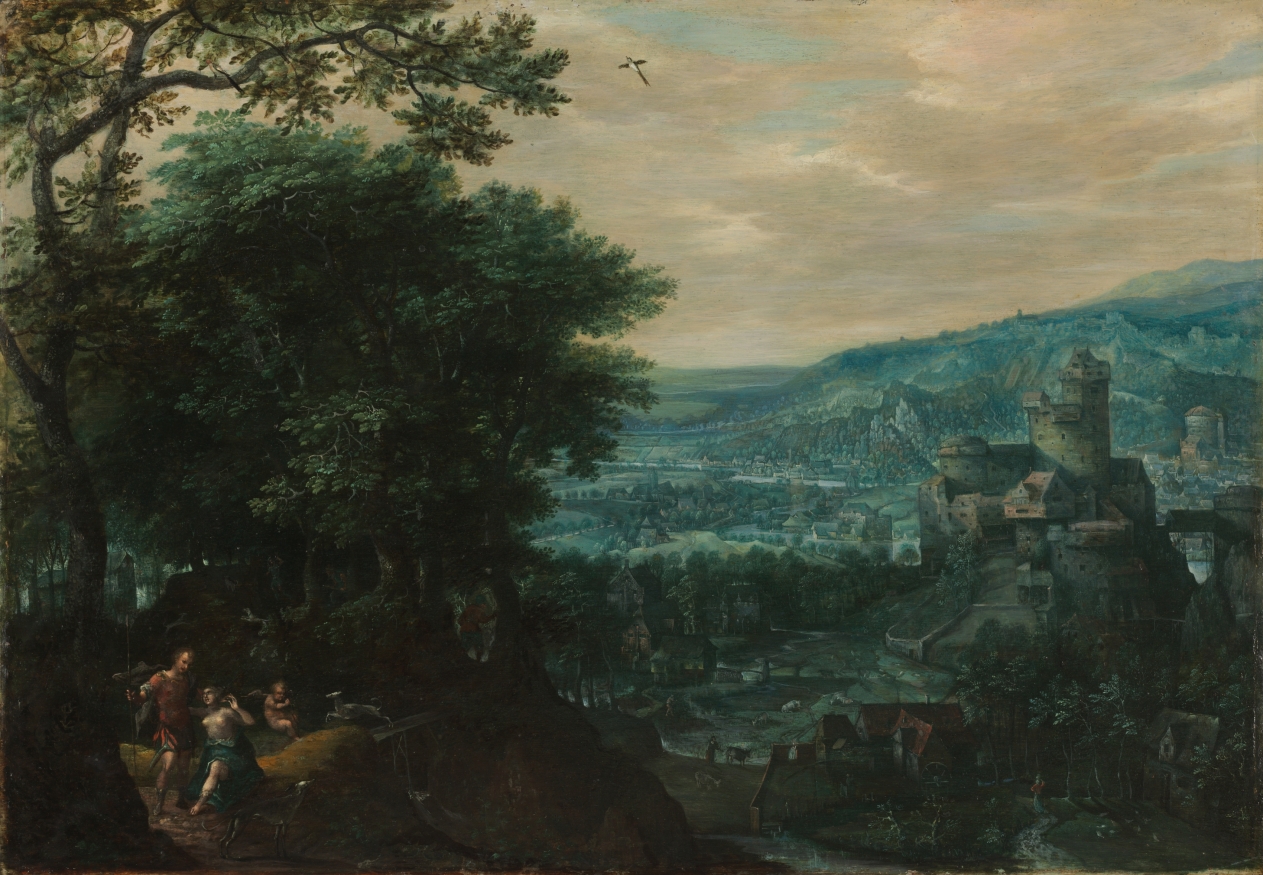 Gillis van Coninxloo (Netherlandish, 1544–1607) — Landscape
  Brunswick Monogrammist — Golgotha
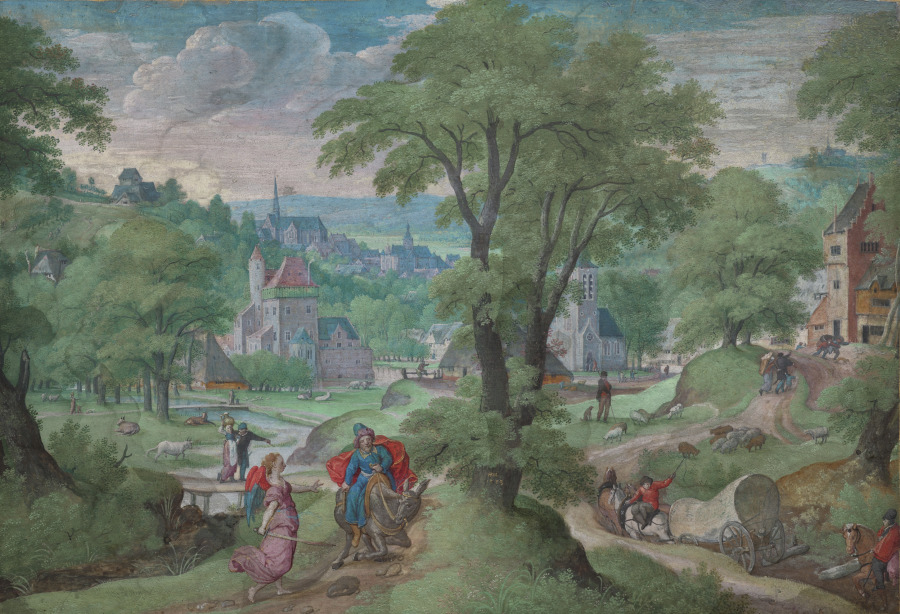 Hans Bol (Flemish, 1534–1593) — Balaam and the Ass
 anonymous — Landschap met de heilige Christoffel
 Herri met de Bles — The Road to Calvary
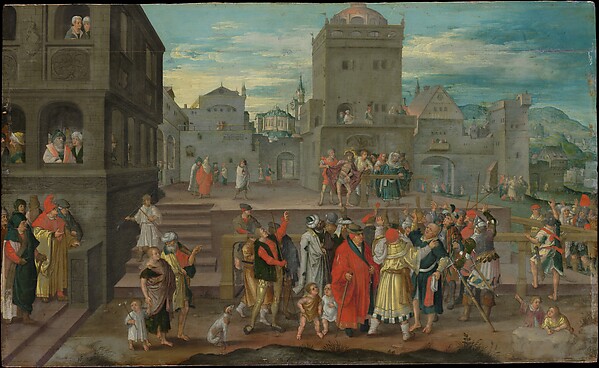 Lucas van Leyden — Christ Presented to the People
 Marten Ryckaert — Mining Operations along a River
 Master of the Brussels Calling of Saint Matthew — The Arriva
 Jan Brueghel the Elder — Der Weg zum Kalvarienberg
 Follower of Pieter Bruegel the Elder — The Temptation of Sai
 Jan Brueghel the Younger — Die Sintflut mit der Arche Noah
 Joachim Beuckelaer — Christ carrying the Cross