In the collection of Cleveland Museum of Art, Cleveland — check current display status with the museum.
FROM THE CLEVELAND MUSEUM OF ART’S CATALOG
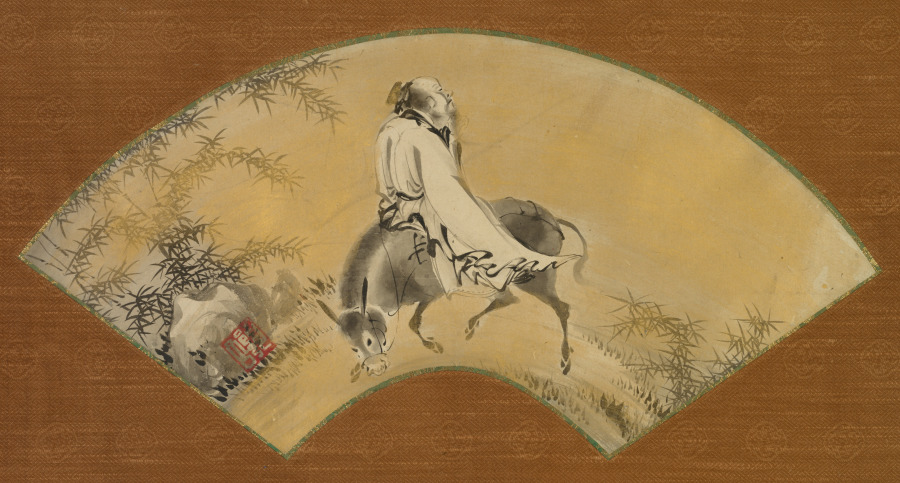
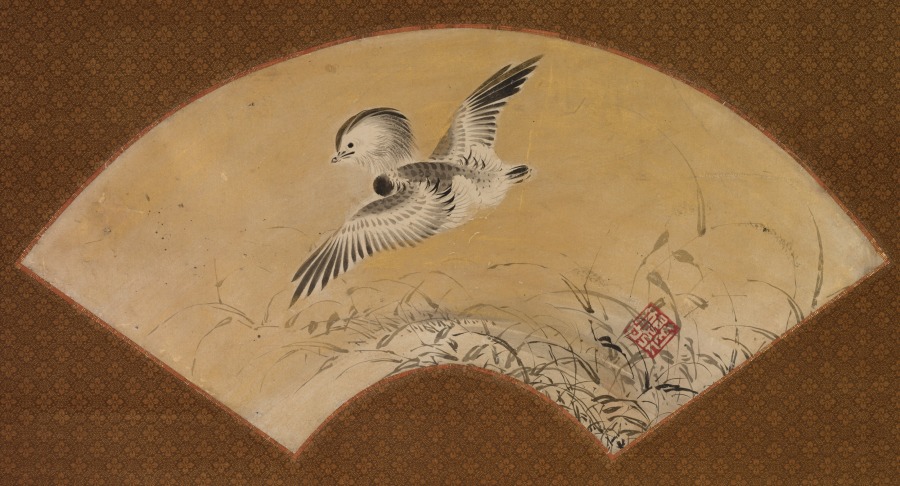
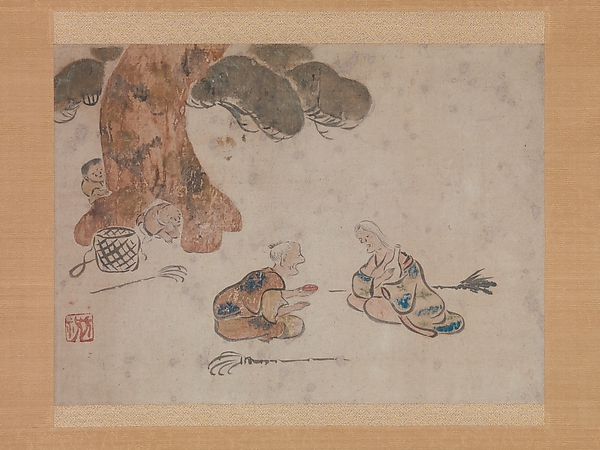
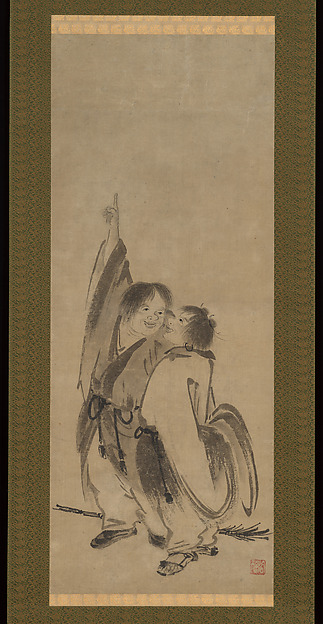
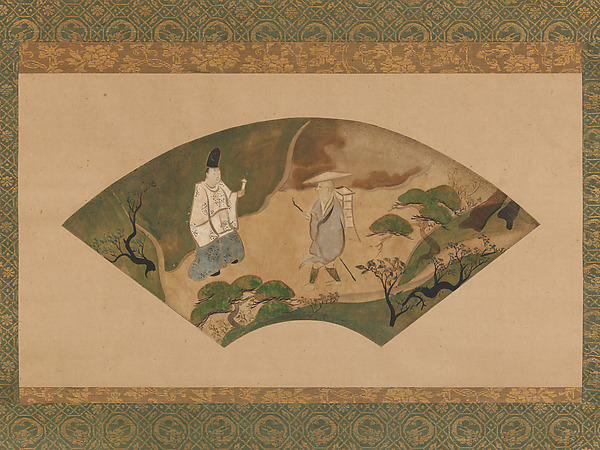
These three fan-shaped paintings, now mounted as individual hanging scrolls, were once part of a set of 20 mounted on a folding screen. They portray the Chinese subjects, from left to right, of the scholar-official Pan Lang, Hanshan reciting his poetry to Shide, and a duck in flight above reeds. Pan Lang grew so fond of the mountain in his place of exile that when he was ordered back to the capital, he rode backward on his donkey so he could see it until it receded into the distance. Hanshan and Shide worked in the kitchen of a Zen monastery, but were actually reincarnations of the bodhisattvas Manjushri and Samantabhadra. The combination of a mandarin duck and reeds may have signified a level of attainment in Chinese civil service exams. All three paintings bear the seal of the Kantobased artist Shikibu Terutada. Shikibu was familiar with Kano school painting, but he also modeled his early style after that of the prominent Kanto-based Kenkō Shōkei (active about 1470–after 1523).
Be the first to share your thoughts.
Sign in to join the discussion.
 Ogata Kōrin
 Hua Yan (Chinese, 1682–c. 1765) — Album of Landscape Paintin
 Hanzan (Matsukawa)
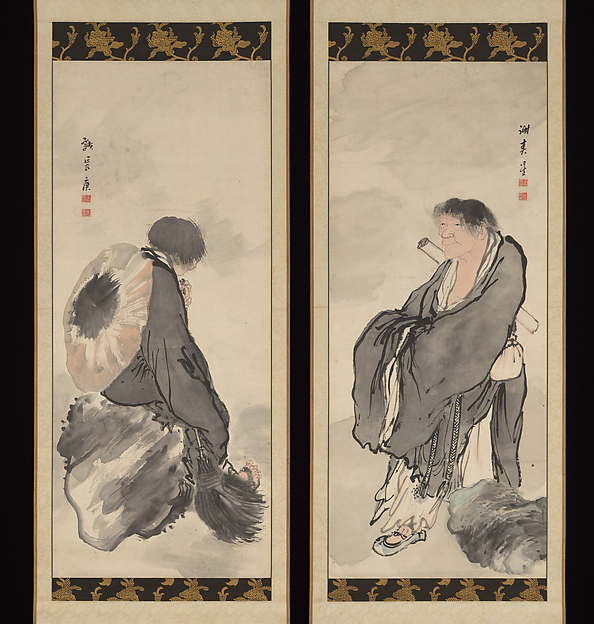 Yosa Buson 与謝蕪村 — 与謝蕪村筆 寒山拾得図|Hanshan and Shide
 Luo Ping (Chinese, 1733–1799) — Zhong Kui Supported by Ghost
 Hanabusa Itchō (Japanese, 1652–1724) — Daoist Immortal
 Hasegawa Sadanobu (Japanese, 1809–1879) — Ichikawa Norinosuk
 Kenkō Shōkei 賢江祥啓 — 寒山拾得図 (Kanzan Jittoku zu)|Hanshan and Sh
 Kano Tan’yū (Japanese, 1602–1674) — Chinese Sages
 Unidentified artist|Emperor Huizong
 Zha Shibiao (Chinese, 1615–1698) — Landscape Album in Variou
 Fukae Roshū