FROM THE CLEVELAND MUSEUM OF ART’S CATALOG
This painting depicts two playful putti, or cherub figures. One blows his horn into the other's ears; the other covers his ears to protect them. Now obscured by discolored varnish, the painting once had a greenish-blue background, now a mossy green. The pink flesh tones have turned bronze and the gray horn is now a brassy color. In 1519, Correggio painted playful putti in 16 oval ceiling frescoes in the Camera di San Paolo in Parma, Italy. These frescoes were commissioned by the Abbess Gioanna da Piacenza, as the room was her private quarters in the Benedictine nunnery of San Paolo. After the abbess's death, the house was strictly closed to the public for nearly two centuries. Thus Two Putti may be modeled after sketches of the frescoes made during the Abbess's lifetime, or, after the house reopened to the public, the artist may have admired the frescoes directly and modeled these putti after Correggio's originals.
Source ↗︎
Be the first to share your thoughts.
 Percival De Luce — Putto, after Titian
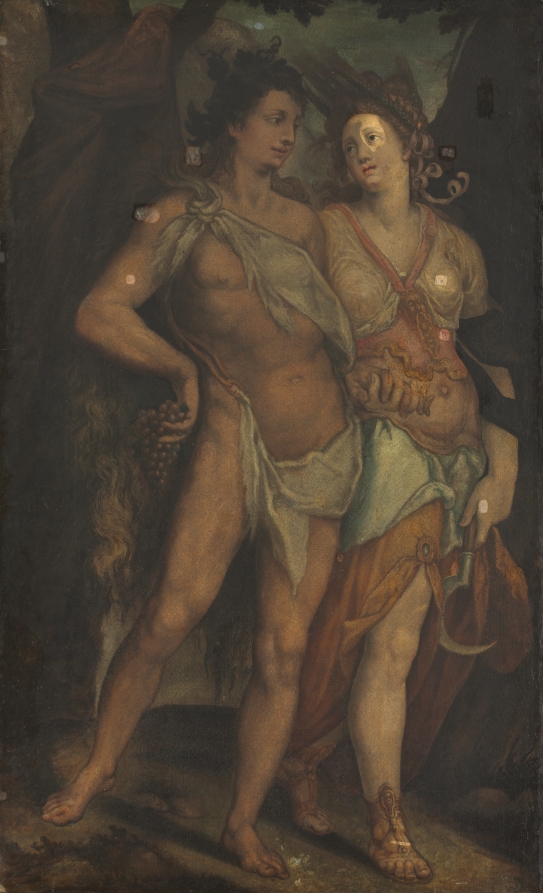 Bartholomaeus Spranger (Flemish, 1546–1611) — Ceres and Bacc
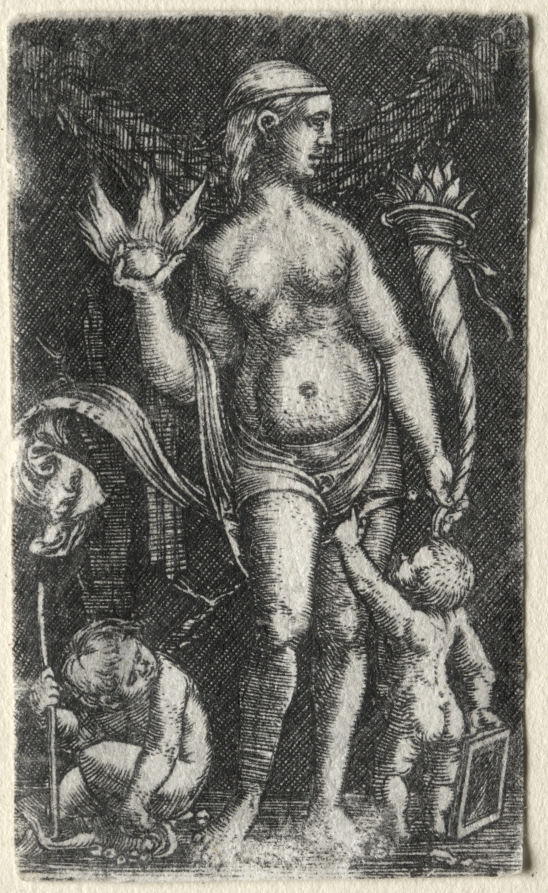 Albrecht Altdorfer (German, c. 1480–1538) — Venus between tw
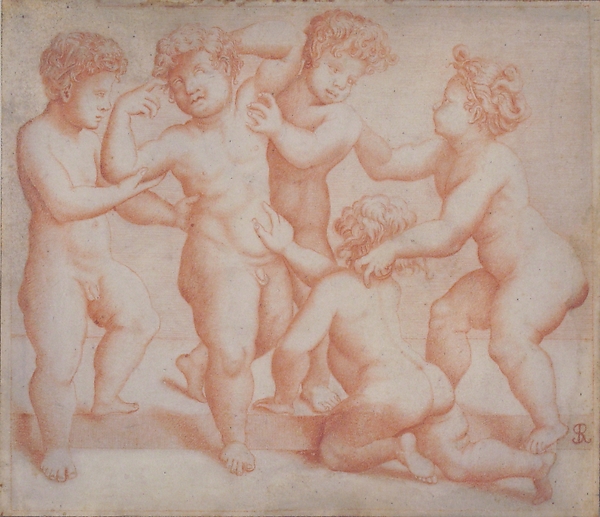 Marco Dente — Frieze of Five Putti
 Domenico Veneziano — Standing Youth Leaning on a Long Staff
  Maarten van Heemskerck — Triomf over de zonde: Simson verwoe
 Edward Burne-Jones — Troy Triptych
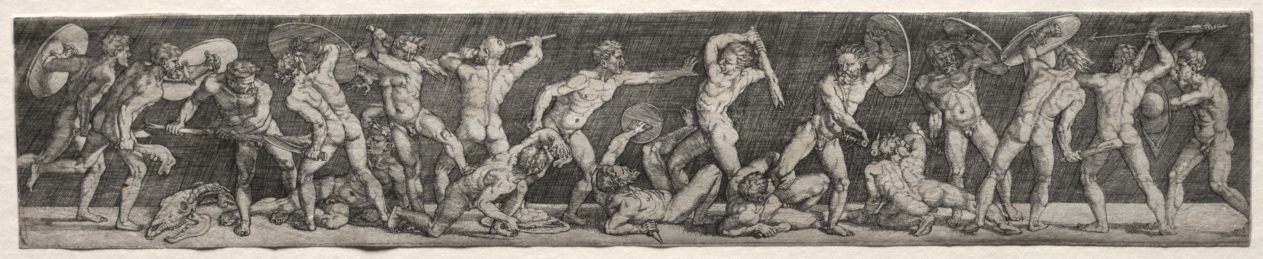 Barthel Beham (German, 1502–1540) — Battle of Naked Men
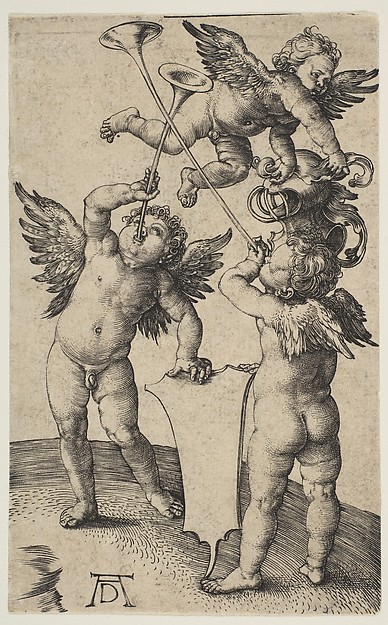 Albrecht Dürer — Three Putti with Trumpets
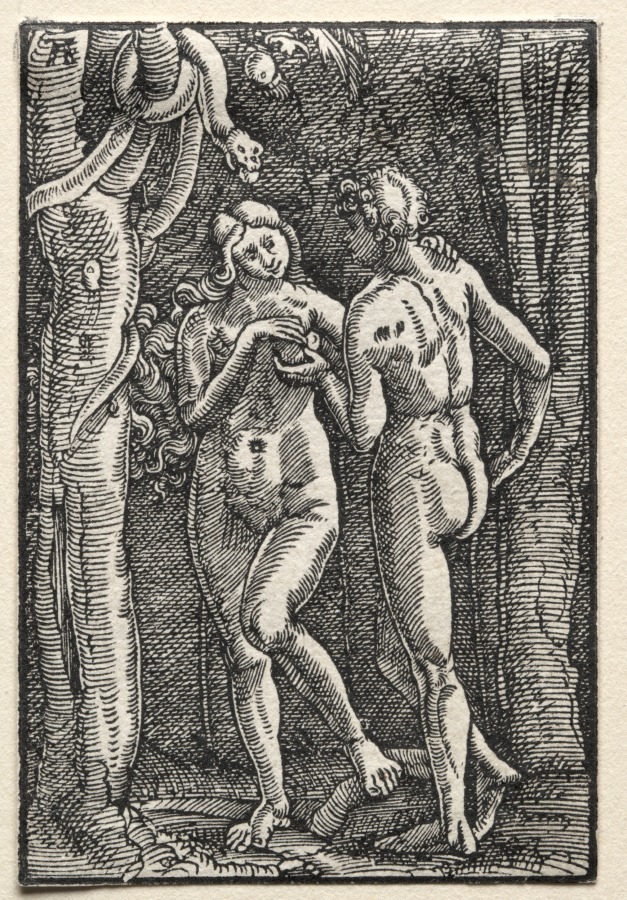 Albrecht Altdorfer (German, c. 1480–1538) — The Fall and Red
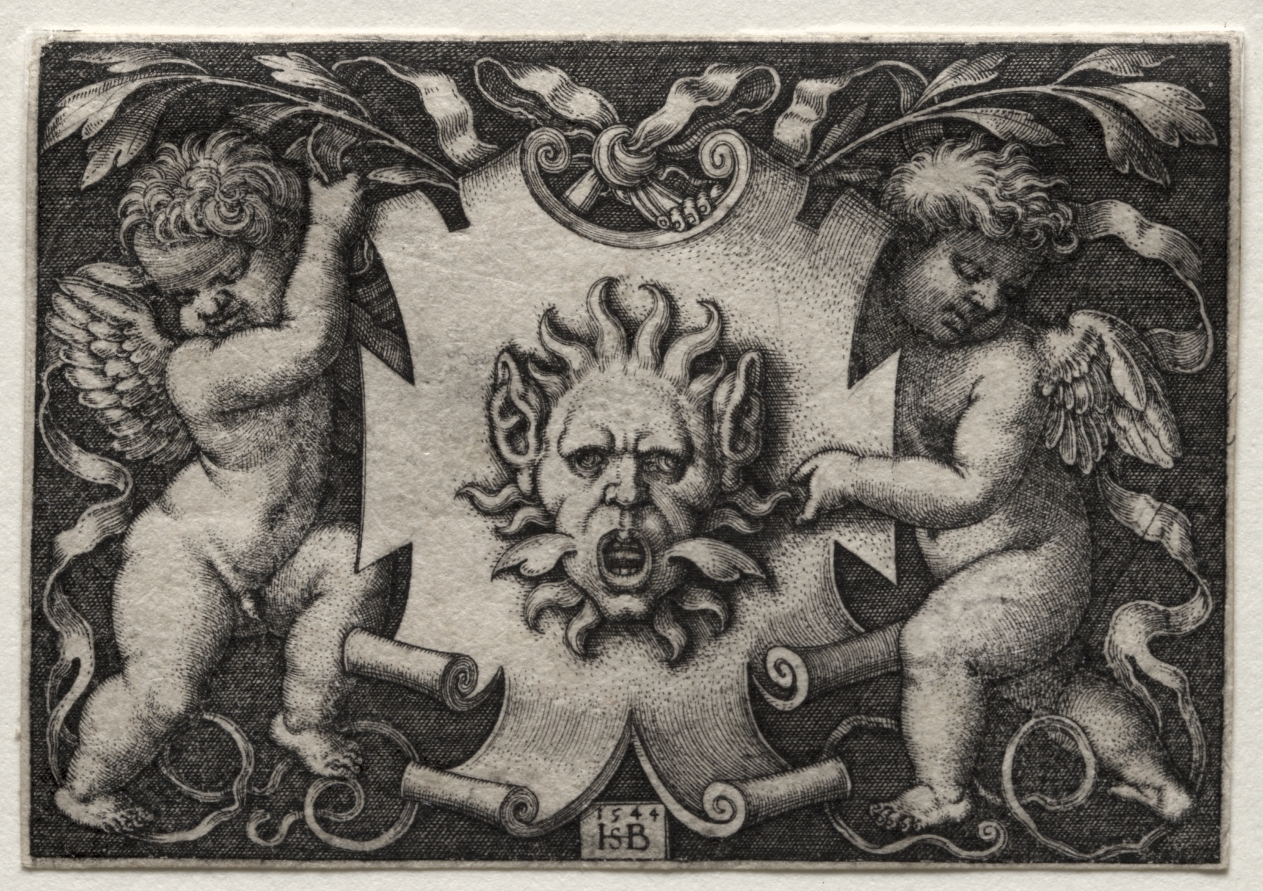 Hans Sebald Beham (German, 1500–1550) — Vignette au Mascaron
 Jacopo Tintoretto — Muse with Lute