In the collection of Cleveland Museum of Art, Cleveland — check current display status with the museum.
FROM THE CLEVELAND MUSEUM OF ART’S CATALOG
The Jewish synagogue was among Magnasco's most frequently painted subjects, here presented in a mystical and imaginative way. Expansive architectural space creates room for a multitude of tiny, fantastical figures with elongated limbs. These characters respond to the service with emotion and expressive gestures. Flashes of light dash across the surface against a dark, muted palette of earthy tones suggesting an otherworldly presence. The composition invites the viewer to enter the space and experience the service. Though he used characteristic elements of Baroque composition and was strongly influenced by Venetian painting, Magnasco's loose brushwork, elongated figures, and mysterious subject matter set him apart. Magnasco peers into a world of which he was not part: he was not Jewish and probably perceived Jews as outsiders. At the dawn of the Enlightenment in Europe progressive aristocratic families commissioned paintings by Magnasco, suggesting the painter's support for Enlightenment ideals which included religious tolerance, but Magnasco's personal views on Judaism in Italy remain unknown.
Be the first to share your thoughts.
Sign in to join the discussion.
 Alessandro Magnasco — The Synagogue
 Alessandro Magnasco — The Raising of Lazarus
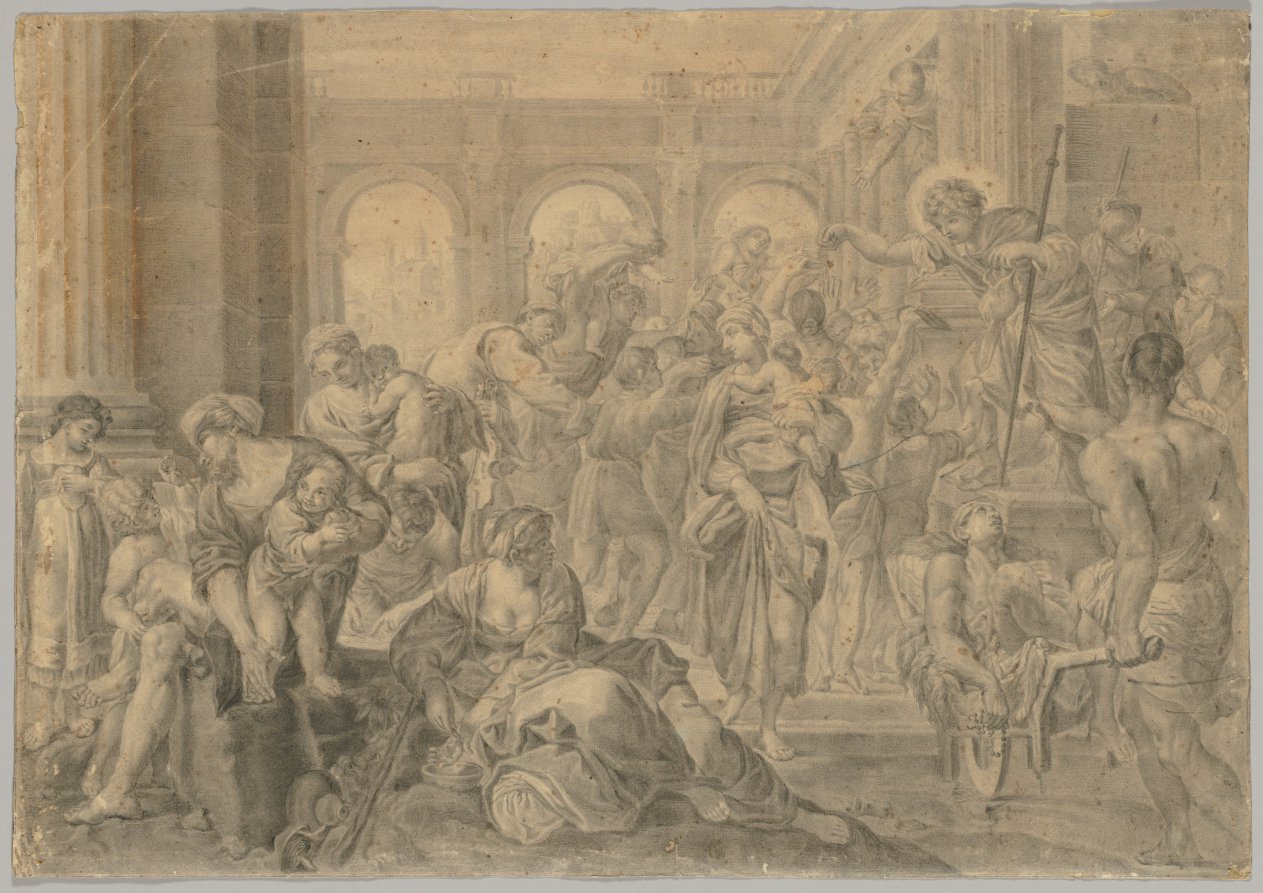 Annibale Carracci (Italian, c. 1560–1609) — Copy of Annibale
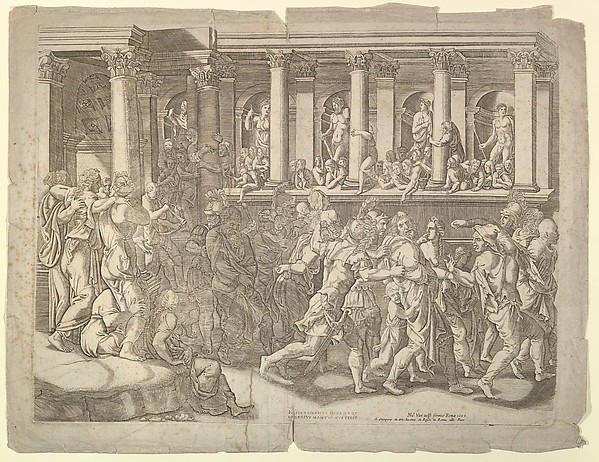 Giorgio Ghisi|Giulio Romano|Nicolaus van Aelst|Giovanni Giac
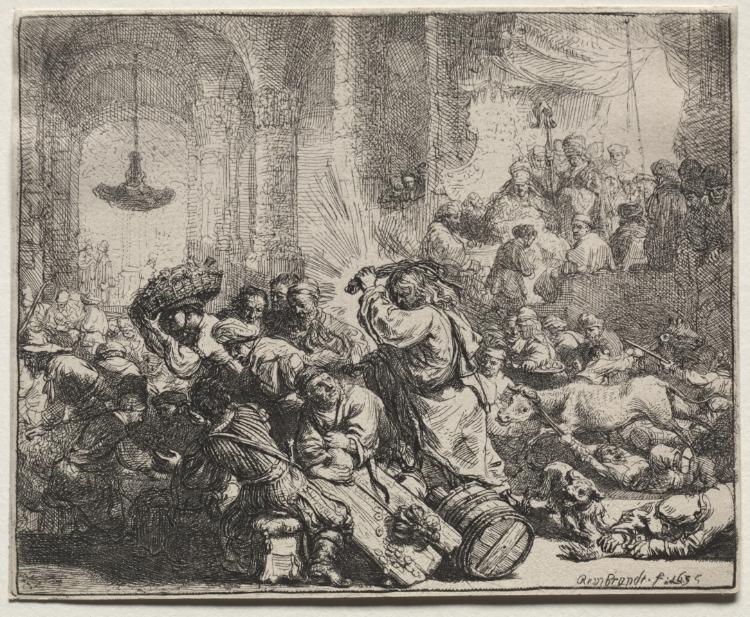 Rembrandt van Rijn (Dutch, 1606–1669) — Christ Driving the M
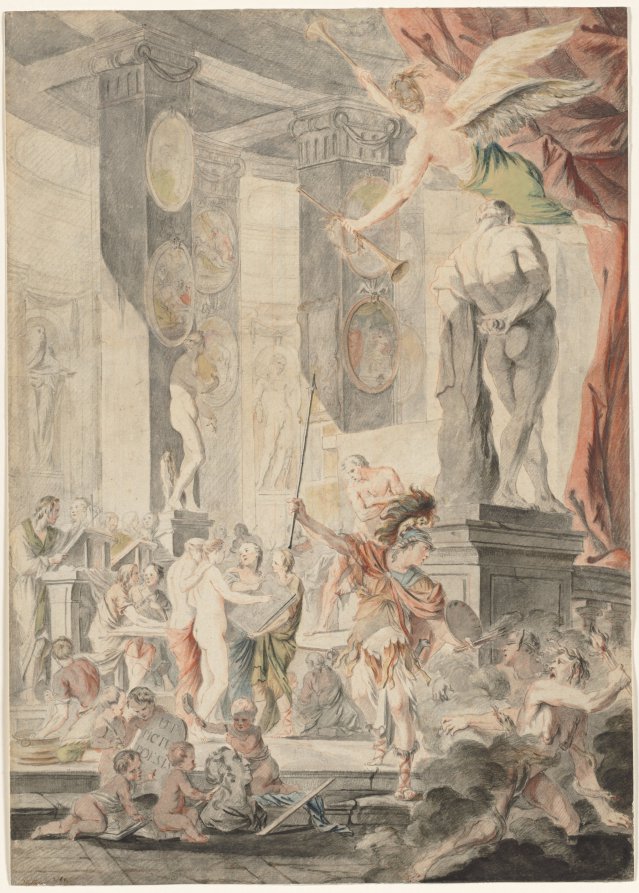 Charles-François Hutin (French, 1715–1776) — Ut Pictura Poes
 Jean-Baptiste Deshays — Phryne Before the Areopagus
 Rembrandt (Rembrandt van Rijn) — Christ Driving the Money-Ch
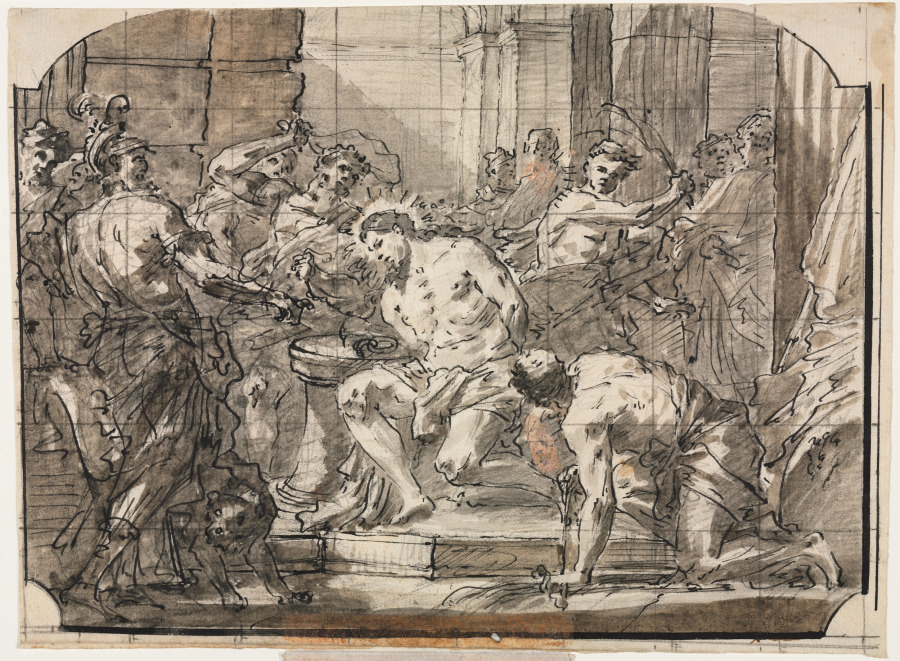 Gaspare Diziani (Italian, 1689–1767) — Flagellation of Chris
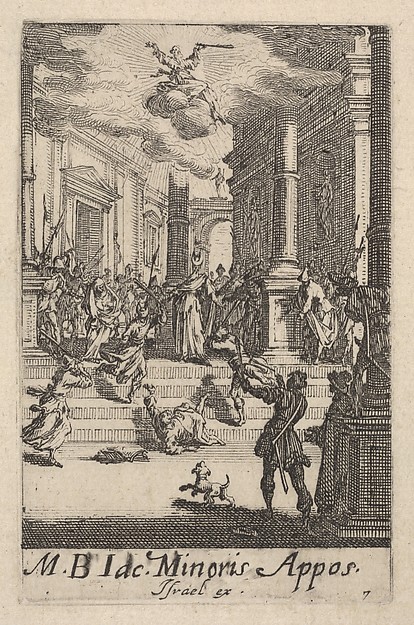 Jacques Callot|Israël Henriet — Martyrdom of Saint James the
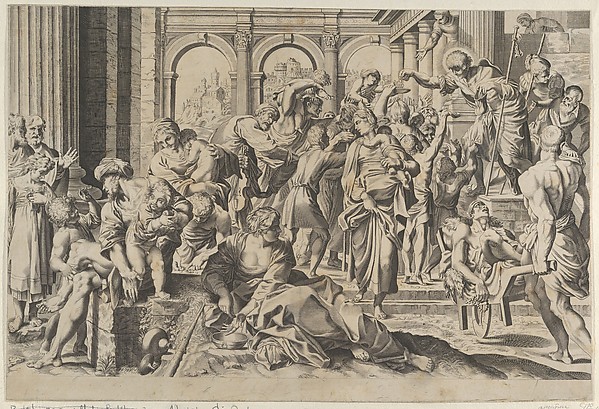 Annibale Carracci|Anonymous — Saint Roch at right distributi
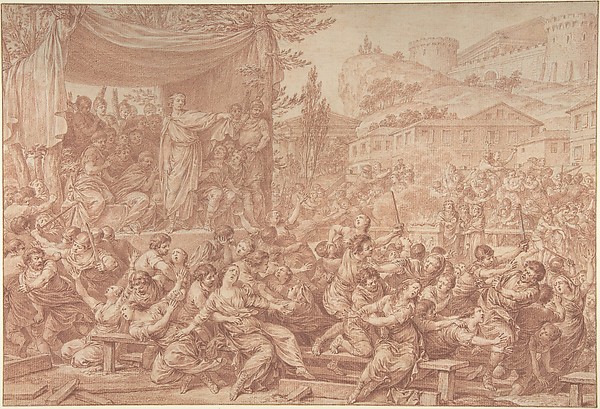 Charles Nicolas Cochin II — The Rape of the Sabine Women


