Armida Encounters the Sleeping Rinaldo
SEE IT IN PERSON
● On view now — Gallery 215
Art Institute of Chicago, Chicago · verified July 2026
Discussion
FROM THE ART INSTITUTE OF CHICAGO’S CATALOG
This painting likely once graced a large hall at the Palazzo Corner in Venice along with several others. The suite illustrates the ill-fated love of Armida and Rinaldo from Torquato Tasso’s 1581 epic poem Gerusalemme liberata (Jerusalem Delivered). The story takes place during the First Crusade, an eleventh-century military expedition in which Christian knights attempted to seize control of Jerusalem and check the power of the Muslims who ruled the city. In this scene, the beautiful sorceress Armida encounters the knight Rinaldo as he sleeps and decides to carry him away on her cloud-borne chariot. When Rinaldo wakes, he immediately falls for Armida and forgets his quest in Jerusalem. Giovanni Battista Tiepolo painted a vast, open expanse of sky and scenery and elaborately arranged the figures, draperies, clouds, and trees to animate the composition. Although Tasso’s story symbolizes the conflict between love and duty, Tiepolo’s depiction of a magical world—enhanced by effervescent colors and dense, creamy paint—seems to evoke only love’s enchantment. Tiepolo’s paintings combine virtuosic draftsmanship with seemingly spontaneous execution, a formula perfectly suited to the large-sc
Be the first to share your thoughts.
Sign in to join the discussion.
More by Giovanni Battista Tiepolo
 The Glorification of the Barbaro Family
 Rinaldo and Armida in Her Garden
 Study for "The Martyrdom of Saint Sebastian" (for the August
 Rinaldo and the Magus of Ascalon
 The Adoration of the Magi
 De Onbevlekte Ontvangenis (Joachim en Anna ontvangen de maag
 Allegory of the Planets and Continents
 Virgin and Child with Saints Dominic and Hyacinth
More like this
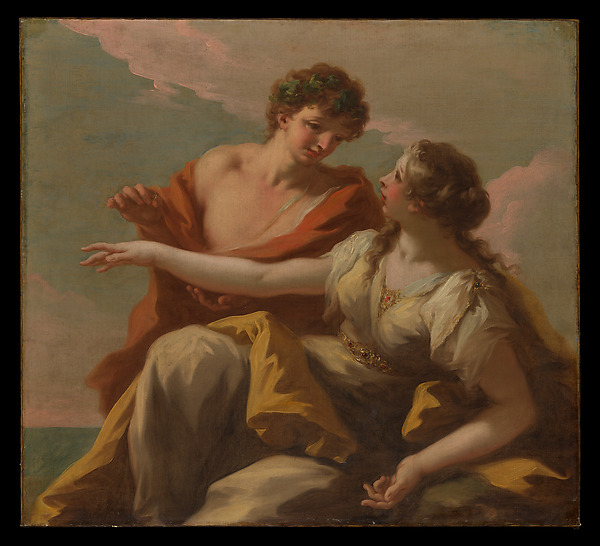 Giovanni Antonio Pellegrini — Bacchus and Ariadne
 Giovanni Domenico Ferretti — Sketch for a Ceiling Fresco
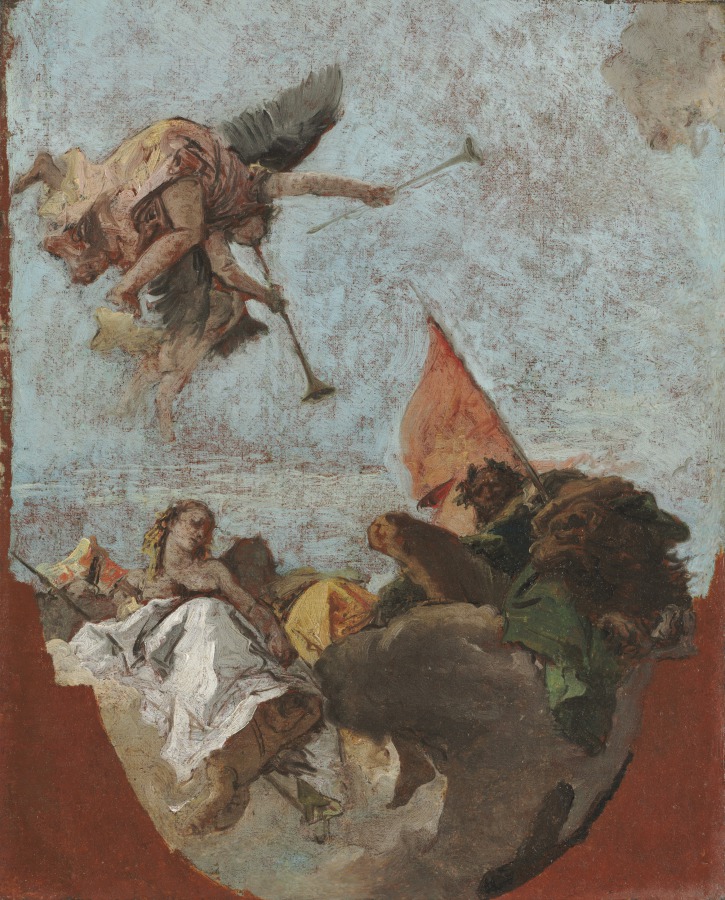 Giovanni Battista Tiepolo (Italian, 1696–1770) — Sketch for
  Pierre Victor Galland — Industry
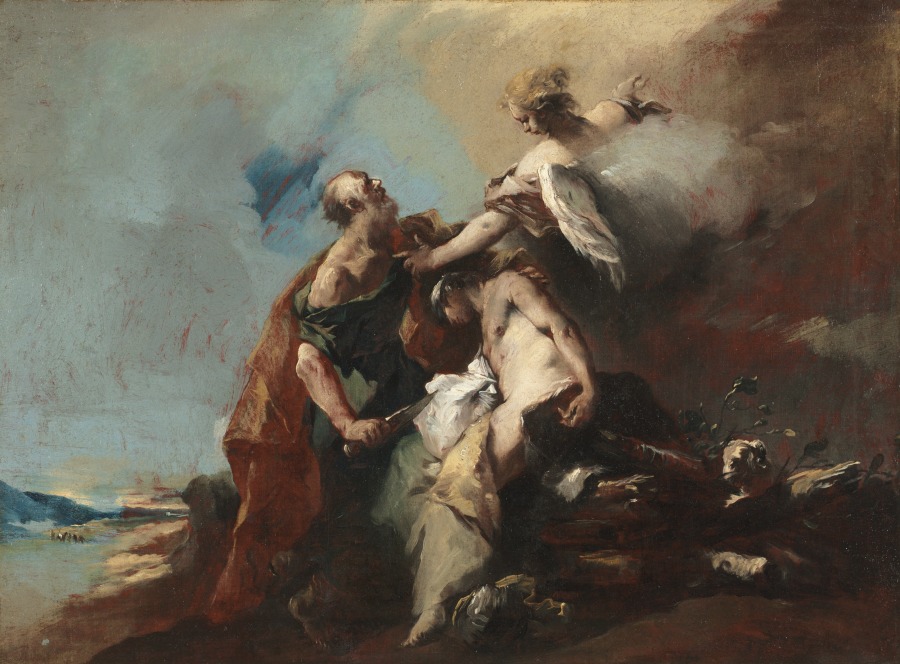 Francesco Guardi (Italian, 1712–1793) — The Sacrifice of Isa
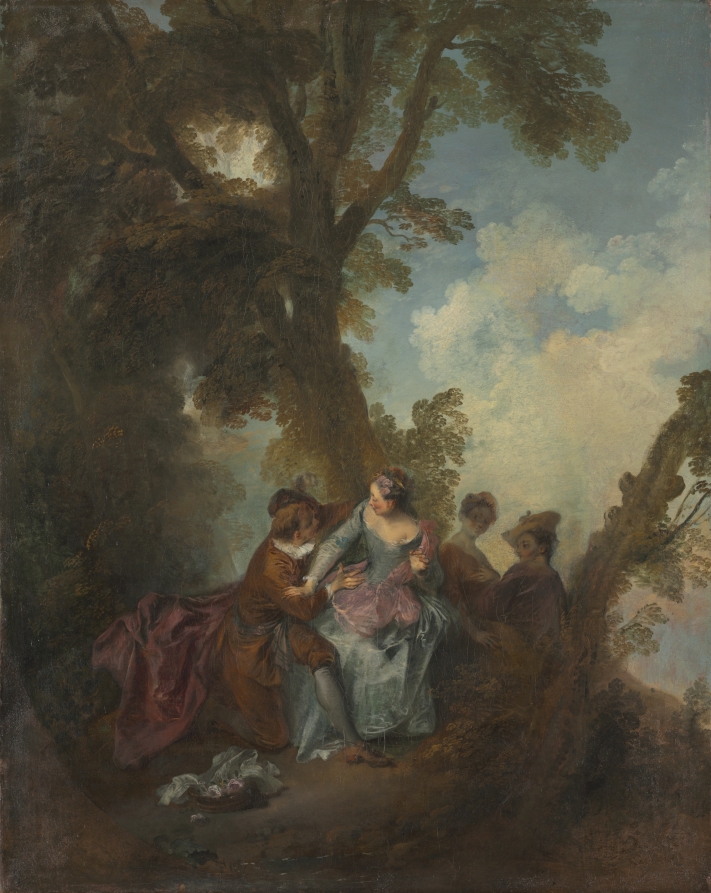 Nicolas Lancret (French, 1690–1743) — Declaration of Love
 Eglon van der Neer — Circe Punishes Glaucus by Turning Scyll
 Jacob de Wit — Jupiter, Disguised as Diana, Seducing the Nym
 François Boucher — Shepherd's Idyll
 Jean-Etienne Liotard — Apollo and Daphne, after Lorenzo Bern
 Laurent de La Hyre (French, 1606–1656) — The Kiss of Peace a
 François Boucher — Jupiter, in the Guise of Diana, and Calli