FROM THE CLEVELAND MUSEUM OF ART’S CATALOG
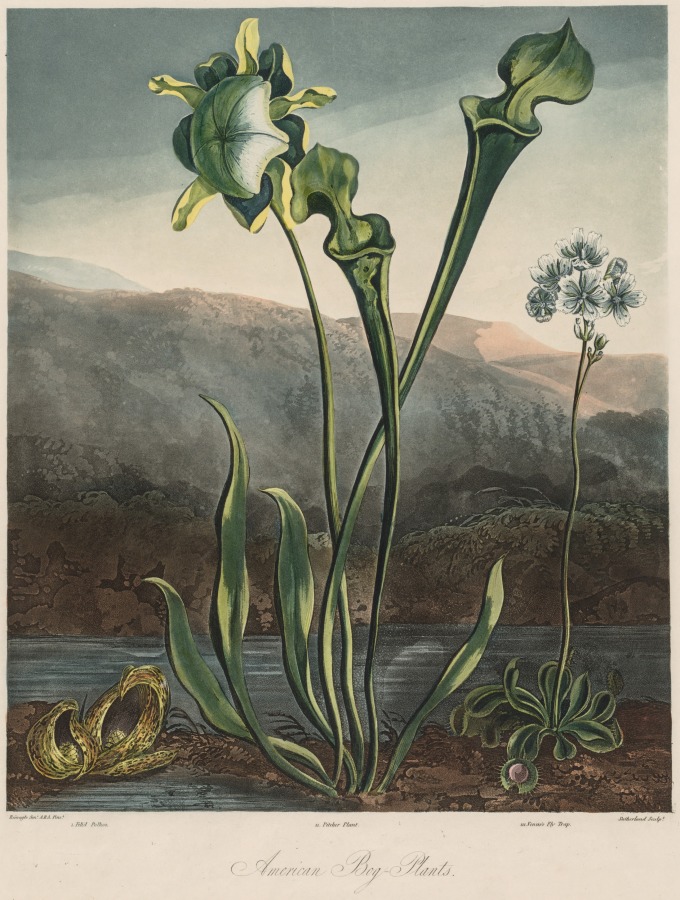
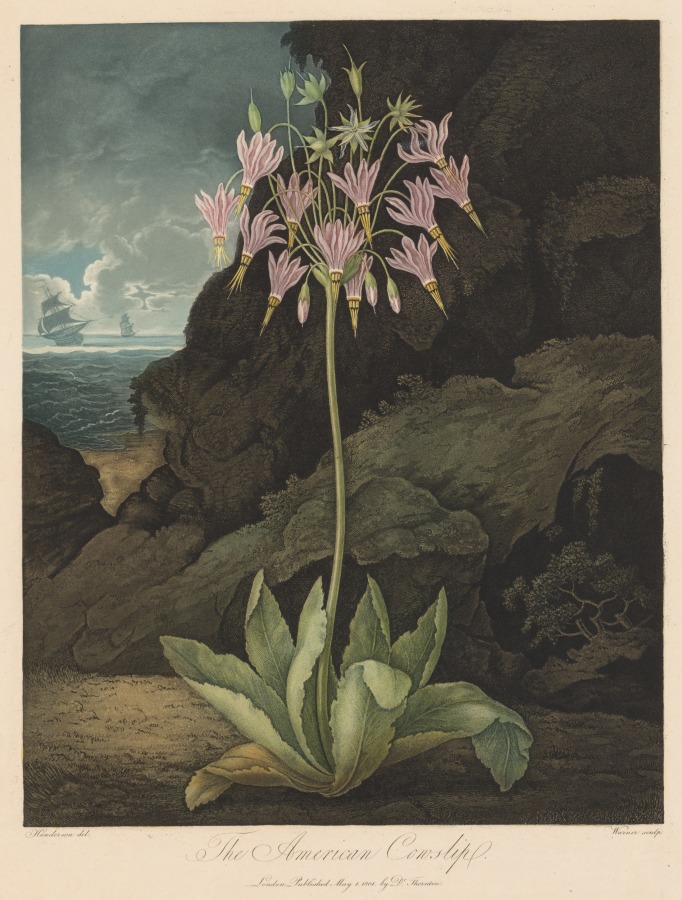
The greatest English botanical publication of the early 19th century was Dr. Robert John Thornton’s Temple of Flora. Although Thornton studied medicine, his passion was botany and he soon embarked upon a major publishing venture that brought him both fame and financial ruin. The work, New Illustrations of the Sexual System of Linnaeus, was the most sumptuous botanical publication ever produced. The third section, the famous Temple of Flora, has 28 flower portraits set not against a plain conventional background but in the full richness of their natural setting. Unfortunately the day of the great florilegia had passed and Thornton died in poverty in 1837.
Source ↗︎
Be the first to share your thoughts.
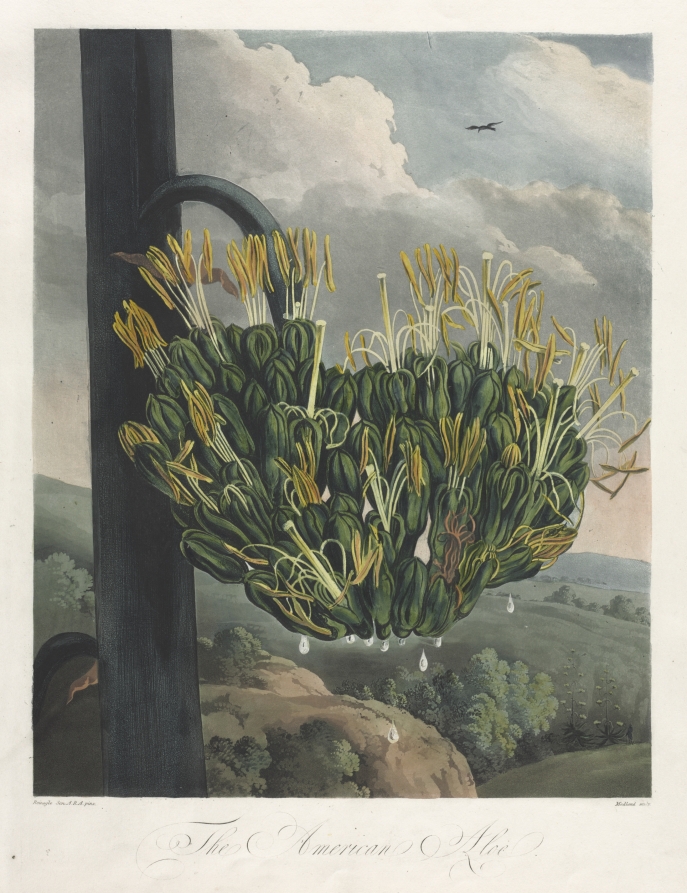 The Temple of Flora, or Garden of Nature: The American Aloe
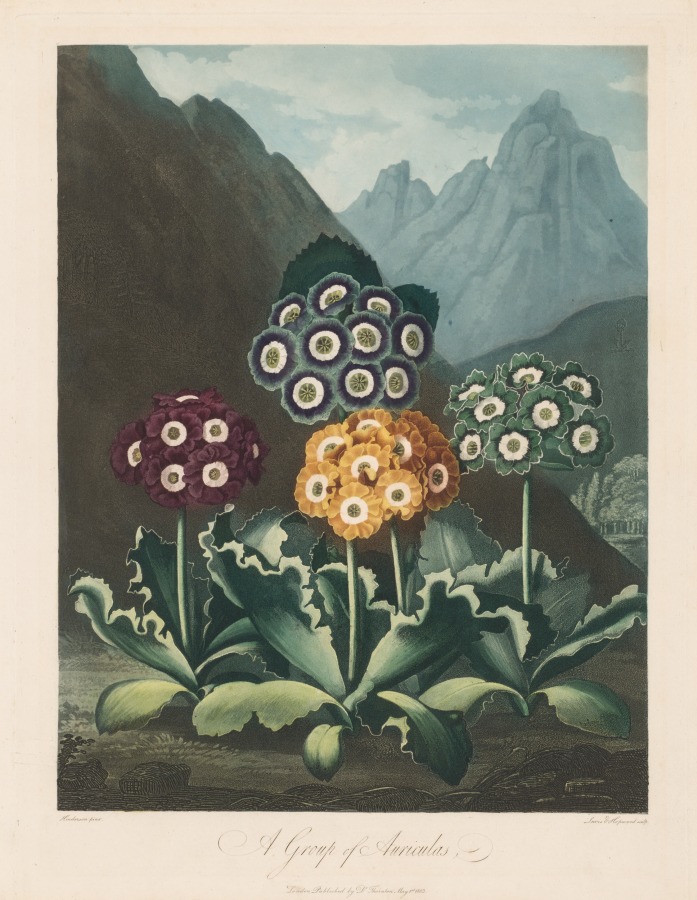 The Temple of Flora, or Garden of Nature: A Group of Auricu
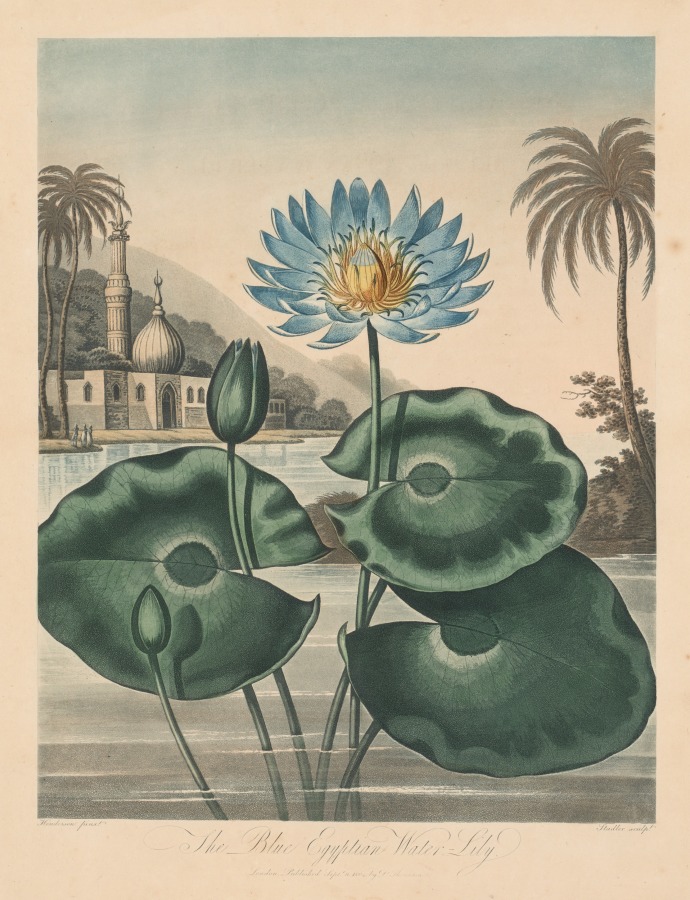 The Temple of Flora, or Garden of Nature: Blue Egyptian Wat
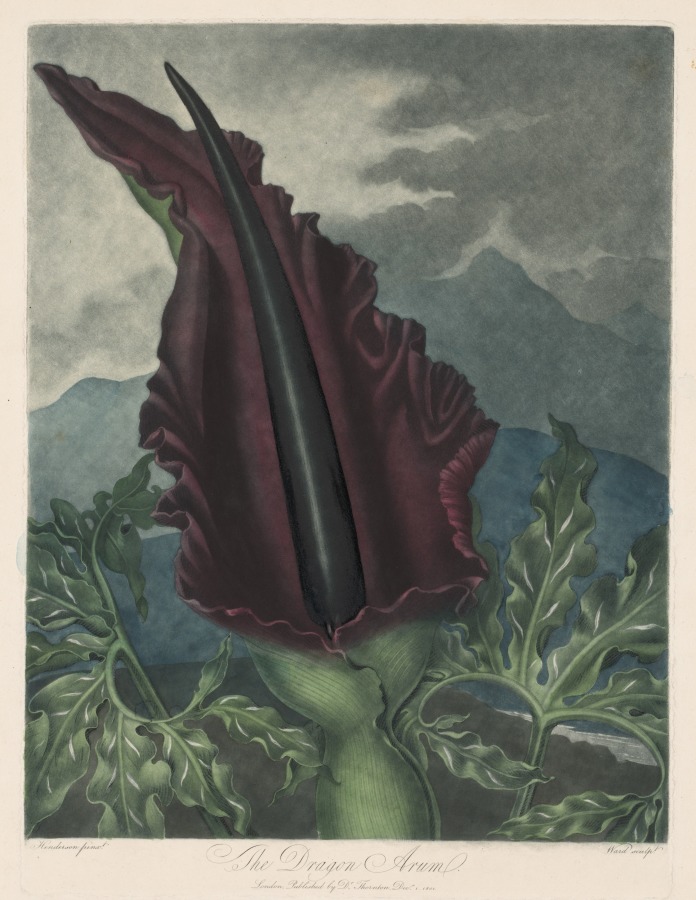 The Dragon Arum, Black Calla or Solomon's Lily
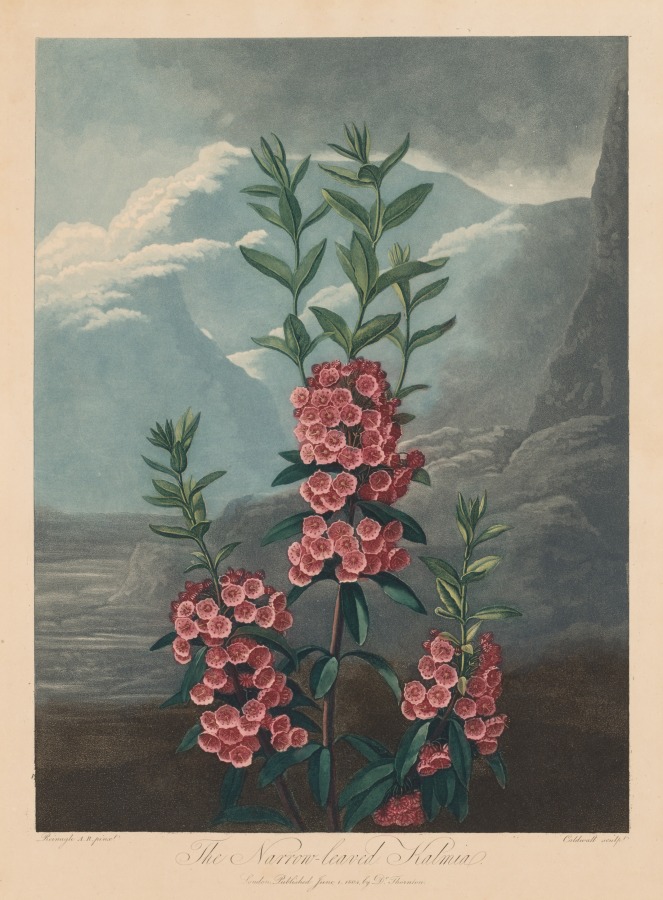 The Temple of Flora, or Garden of Nature: The Narrow-leaved
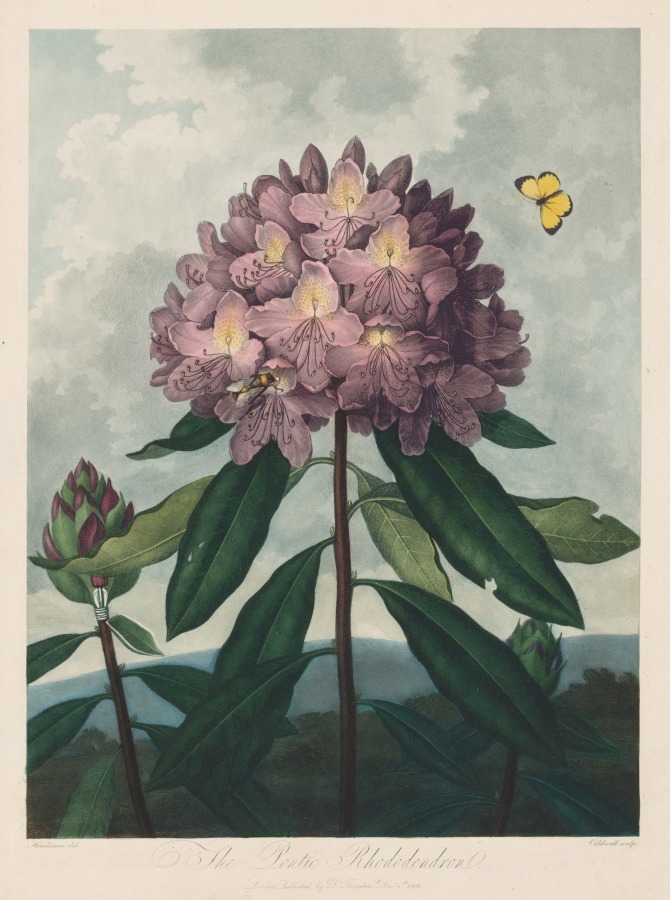 The Temple of Flora, or Garden of Nature: The Pontic Rhodod
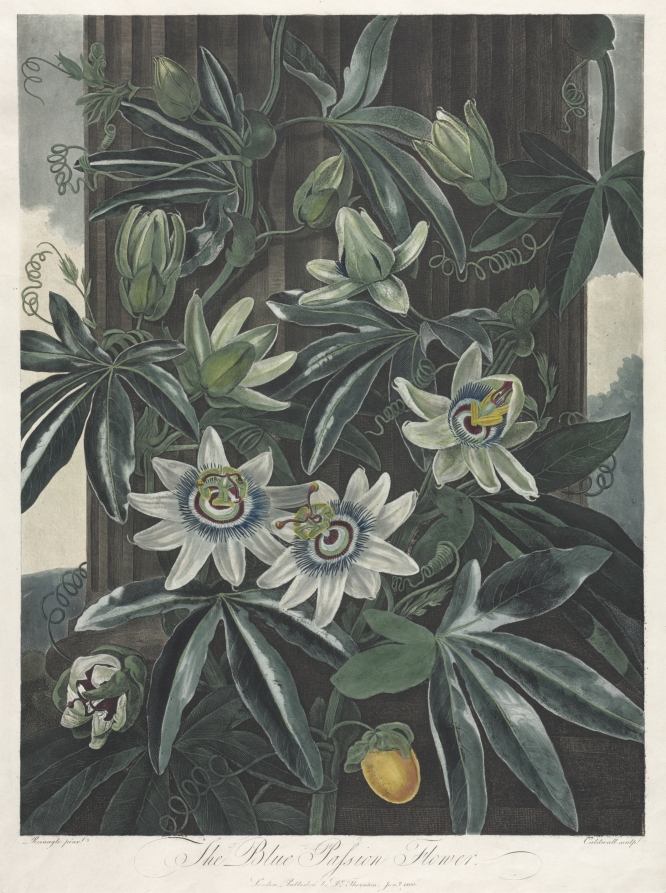 The Temple of Flora, or Garden of Nature: The Blue Passion
 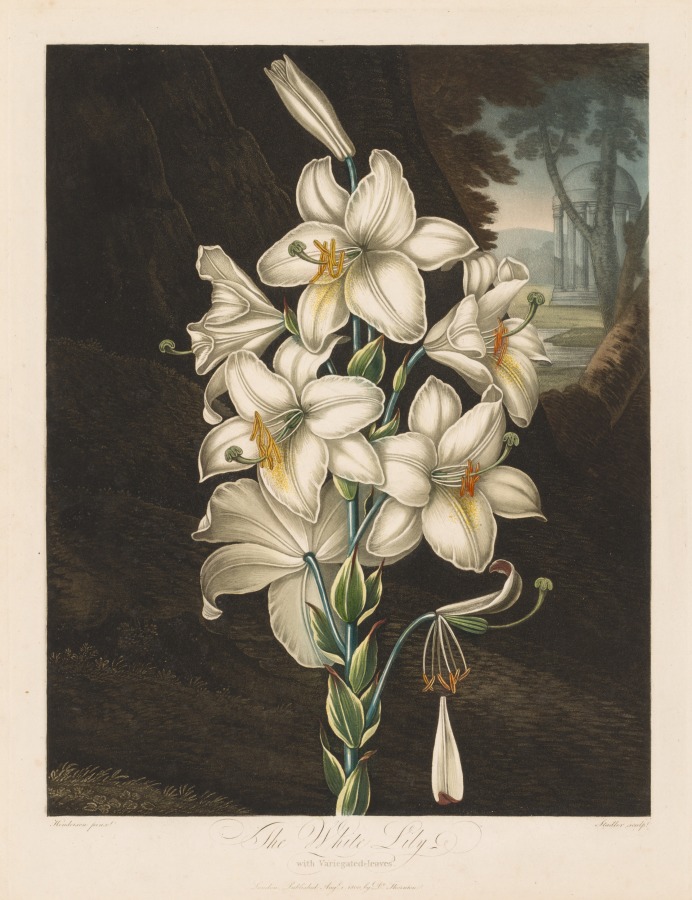 The Temple of Flora, or Garden of Nature: The White Lily wi