FROM THE CLEVELAND MUSEUM OF ART’S CATALOG
Two eagles, painted in fine brushwork, perch on top of rocks surrounded by water, flowering camellia, and other vegetation, brushed in sweeping and broad strokes. Among birds, a favorite subject in Chinese painting, depictions of eagles can be traced back to at least the fourth century. Due to dramatic sociopolitical changes during the foreign-ruled Yuan (1279–1368) and native Ming dynasties, an elaborate symbolic language of the eagle developed. It can represent a vicious attacker, a courageous hero, or an enlightened emperor. In this painting, the two eagles are depicted peacefully resting in a lofty position, perhaps an idealistic image for a wise emperor and empress.
Source ↗︎
Be the first to share your thoughts.
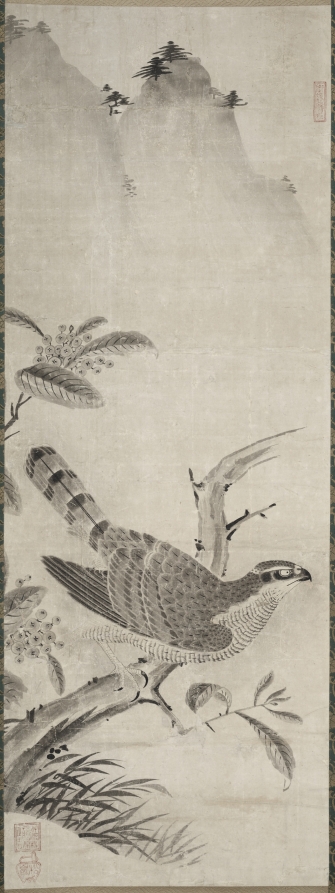 Fujiwara Masayoshi (Japanese) — Hawk
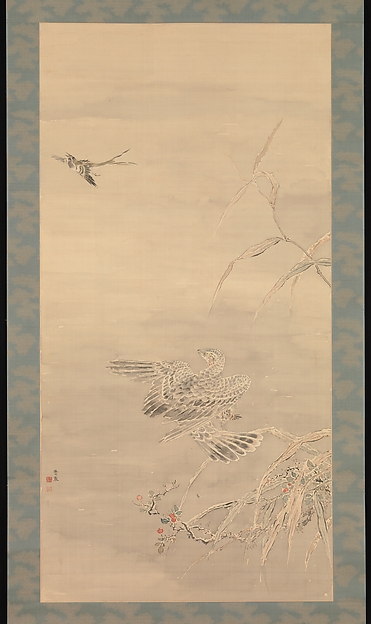 Tsubaki Chinzan
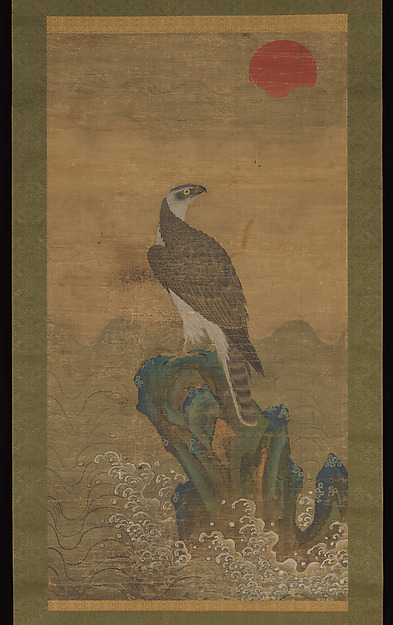 Jeong Hong-Rae 정홍래 鄭弘來
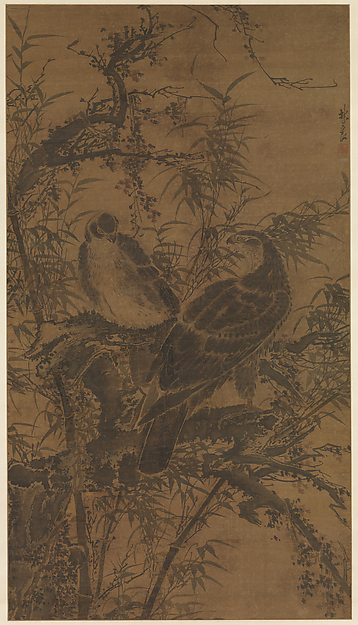 Lin Liang — 明 林良 二鷹圖 軸|Two hawks in a thicket
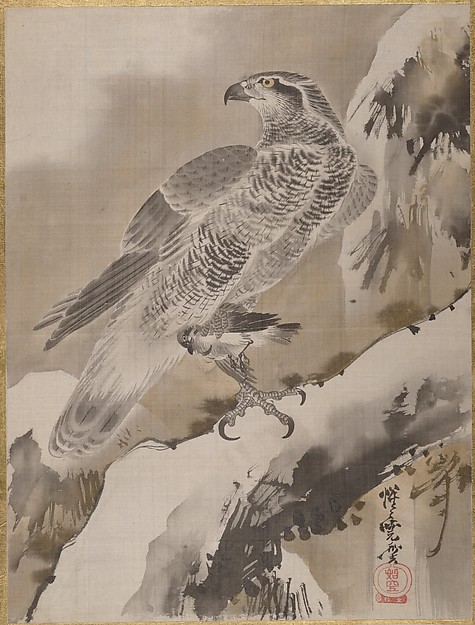 Kawanabe Kyōsai 河鍋暁斎
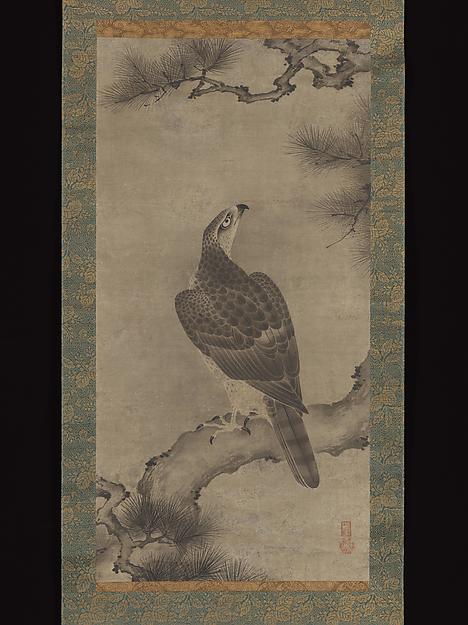 Kano Yukinobu 狩野之信 — 狩野之信筆 松鷹図|Hawk on a Pine
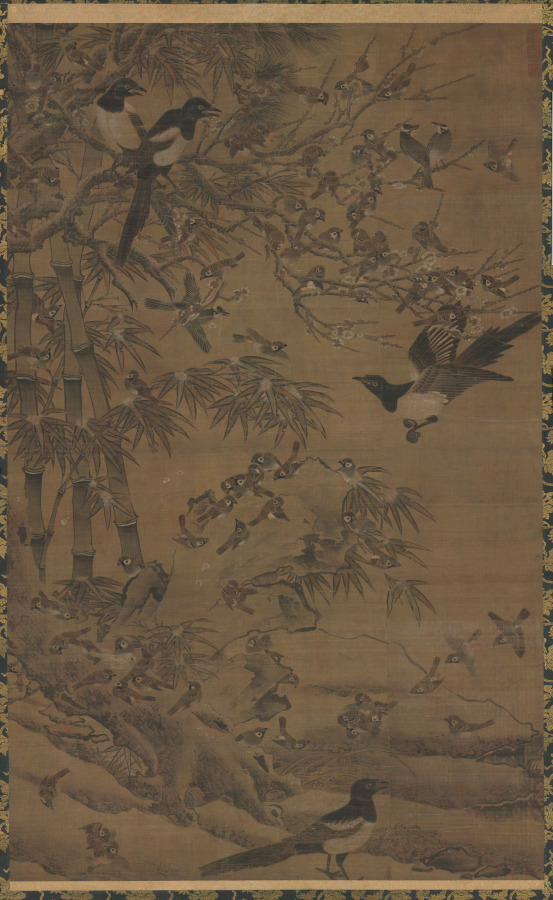 Bian Wenjin (Chinese, about 1354–1428) — A Hundred Birds and
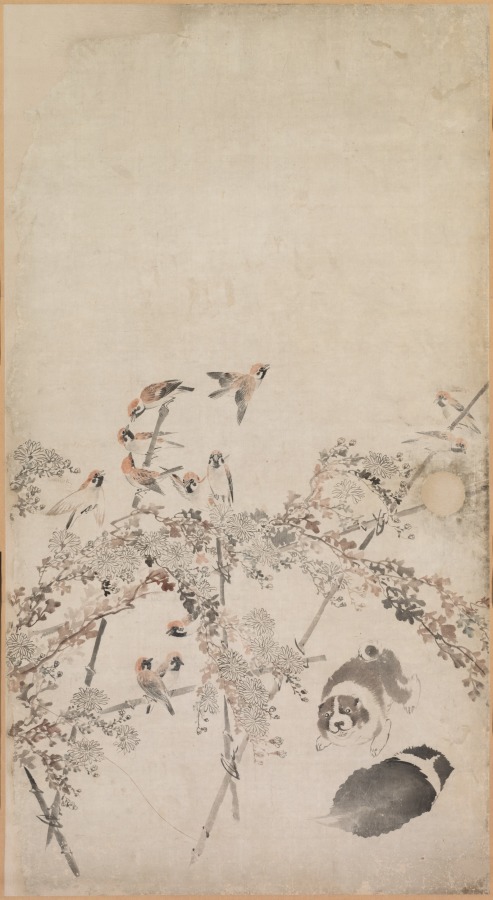 Nagasawa Rosetsu (Japanese, 1754–1799) — Puppies, Sparrows,
 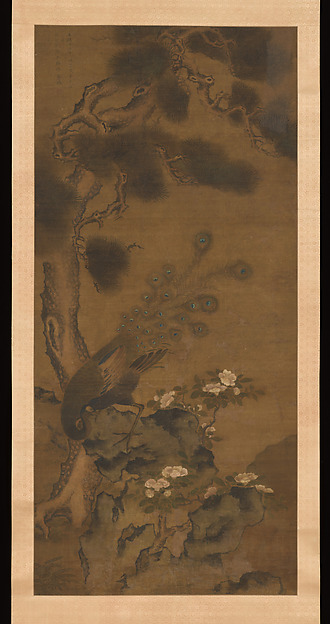 Zhu Duan
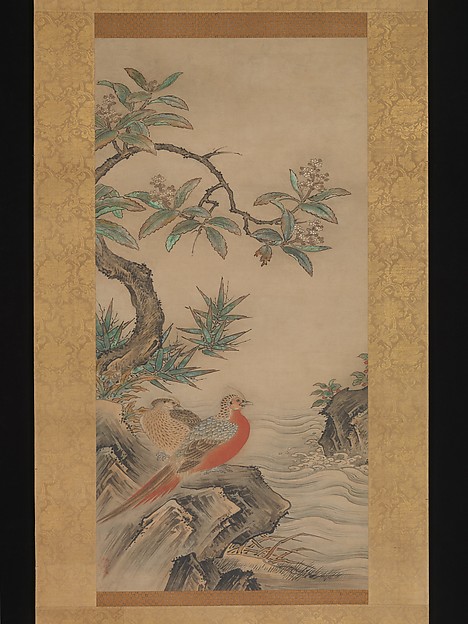 Kano Shōei — 狩野松栄筆 四季花鳥図|Pheasants among Trees: Flowers of
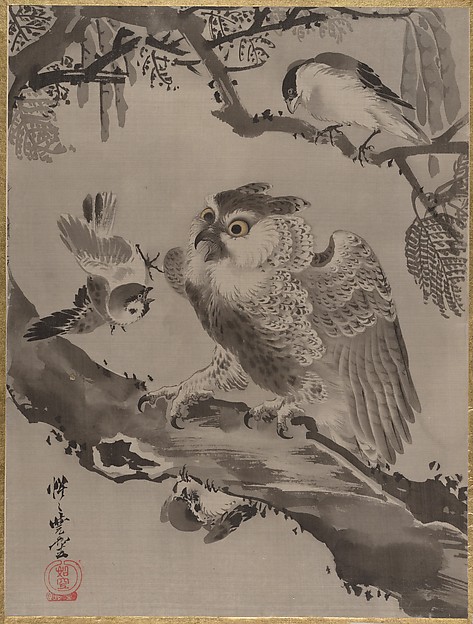 Kawanabe Kyōsai 河鍋暁斎
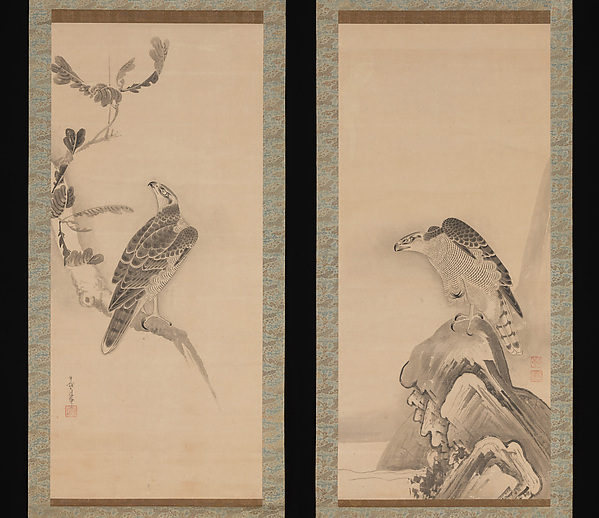 Soga Nichokuan — 曽我二直庵筆 鷹図|Hawks